
The Château des ducs de Bretagne stands in the medieval centre of Nantes, a granite fortress outside and a white-stone Renaissance residence around its courtyard. The courtyard, the ramparts and the gardens in the old moat are free to enter. Inside, the Nantes History Museum covers the city from the Middle Ages to today, including its years as a major port, the slave trade and the Second World War. The castle was home to Duke François II and his daughter Anne of Brittany, twice Queen of France. A visit combines a walk on the walls with a few hours of museum.
From ducal residence to city museum
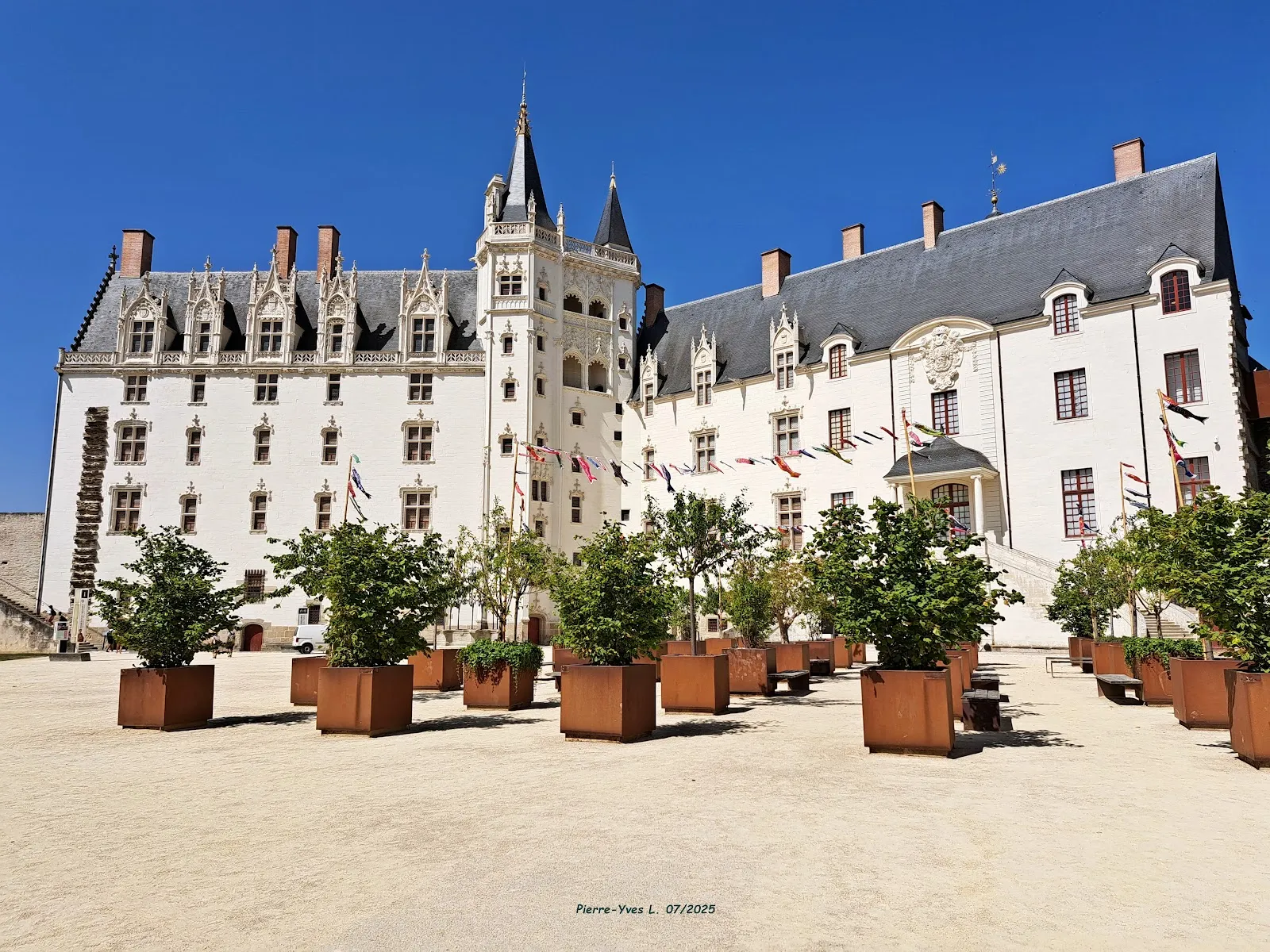
The first ducal residence on this site dates from the 13th century. In the 15th century François II, the last duke of an independent Brittany, had it demolished and built a castle that served as both a fortress against the King of France and the main residence of his court. A project launched in 1466 laid the foundations of the building seen today.
His daughter Anne of Brittany continued the work. She married two French kings in turn, Charles VIII and Louis XII, and is remembered as twice Queen of France. Brittany was joined to the French crown in 1532, and the château then became the Breton residence of the French monarchy. In 1598 Henri IV signed the Edict of Nantes here, which granted religious tolerance.
The buildings later served as the governor's seat and as a barracks, and during the German occupation of the Second World War as a bunker. A gunpowder explosion in 1800 destroyed one tower. The château was listed as a historic monument in 1862 and was sold to the city of Nantes in 1915. A long restoration beginning in the 1990s ended in 2007 and returned the facades and Renaissance loggias to their earlier appearance.
Walls, towers and courtyard
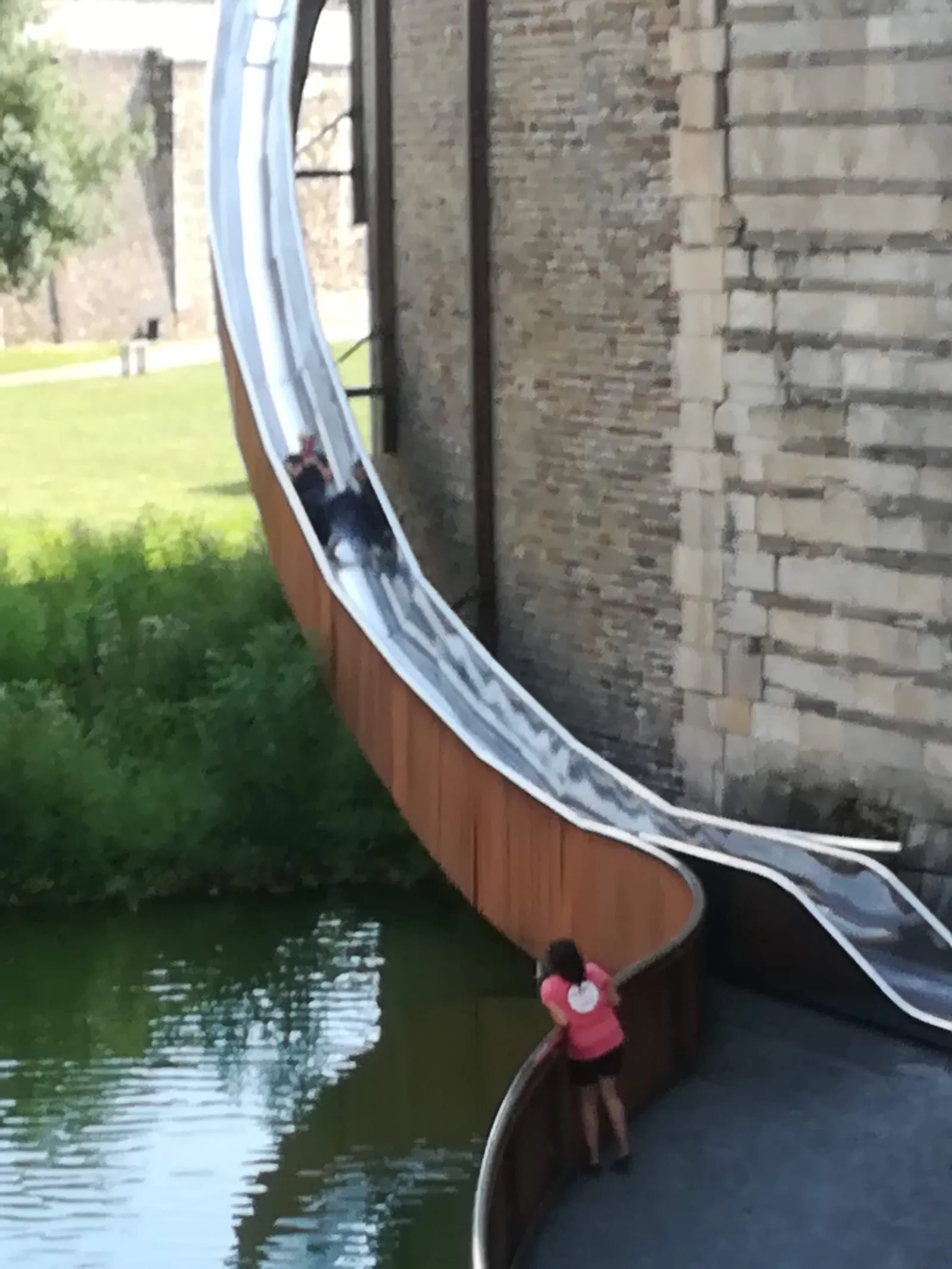
From outside, the château reads as a fortress. Seven towers are linked by about 500 metres of granite curtain walls, with a sentry walkway along the top and a moat that was once filled with water from the Loire. The river no longer reaches the walls, and the dry moat is now a garden where turtles bask in the sun.
The inner courtyard is a different scene. Its white tuffeau stone, sculpted details and loggias show the early Renaissance, and the ducal residence on one side is Gothic in style, with later buildings from the 16th and 18th centuries around it. The courtyard is open without a ticket and hosts concerts and events through the year.
The Nantes History Museum
The museum occupies 32 rooms of the castle and shows more than 850 objects with the help of multimedia displays. The route runs over several floors from the Middle Ages to the present day. It follows Nantes as a port, and gives clear space to the slave trade, colonialism and the two world wars.
There are interactive exhibits that hold the attention of children, even those who do not read French. Some panels have no English translation, so a guided tour in English helps. The château also stages temporary exhibitions. Past subjects have included the origins of Surrealism, pre-Hispanic gold treasures and Japanese engravings.
Ramparts and moat gardens
Walking the ramparts costs nothing and gives views over the castle grounds, the city rooftops and the LU Tower. The gardens in the old moat are a quiet place to sit between the museum and the walls, and the walkway makes a good photo spot.
The castle is lit at night, and the lighting picks out the detail of the towers and the courtyard facade. The site is also accessible: the entrance, restrooms and parking are wheelchair accessible, and there is a coat check, a hearing loop and assisted listening devices.
FAQ
Is there an entry fee for the Château des ducs de Bretagne?
The courtyard, the ramparts and the gardens in the moat are free. The Nantes History Museum inside charges a modest entry fee.
How long do you need at the château?
Allow about half a day for the museum, the ramparts and the gardens. A walk on the walls and through the courtyard alone takes much less.
Are there guided tours in English?
Yes, guided tours are available in English. Some museum panels are in French only, so a tour helps if you do not read French.
Is the château good for children?
Yes. The museum has interactive exhibits that children enjoy even without French, and the towers, moat and ramparts are free to explore.
Is the château accessible for wheelchair users?
The entrance, restrooms and parking lot are wheelchair accessible. There is also a hearing loop and assisted listening devices.


