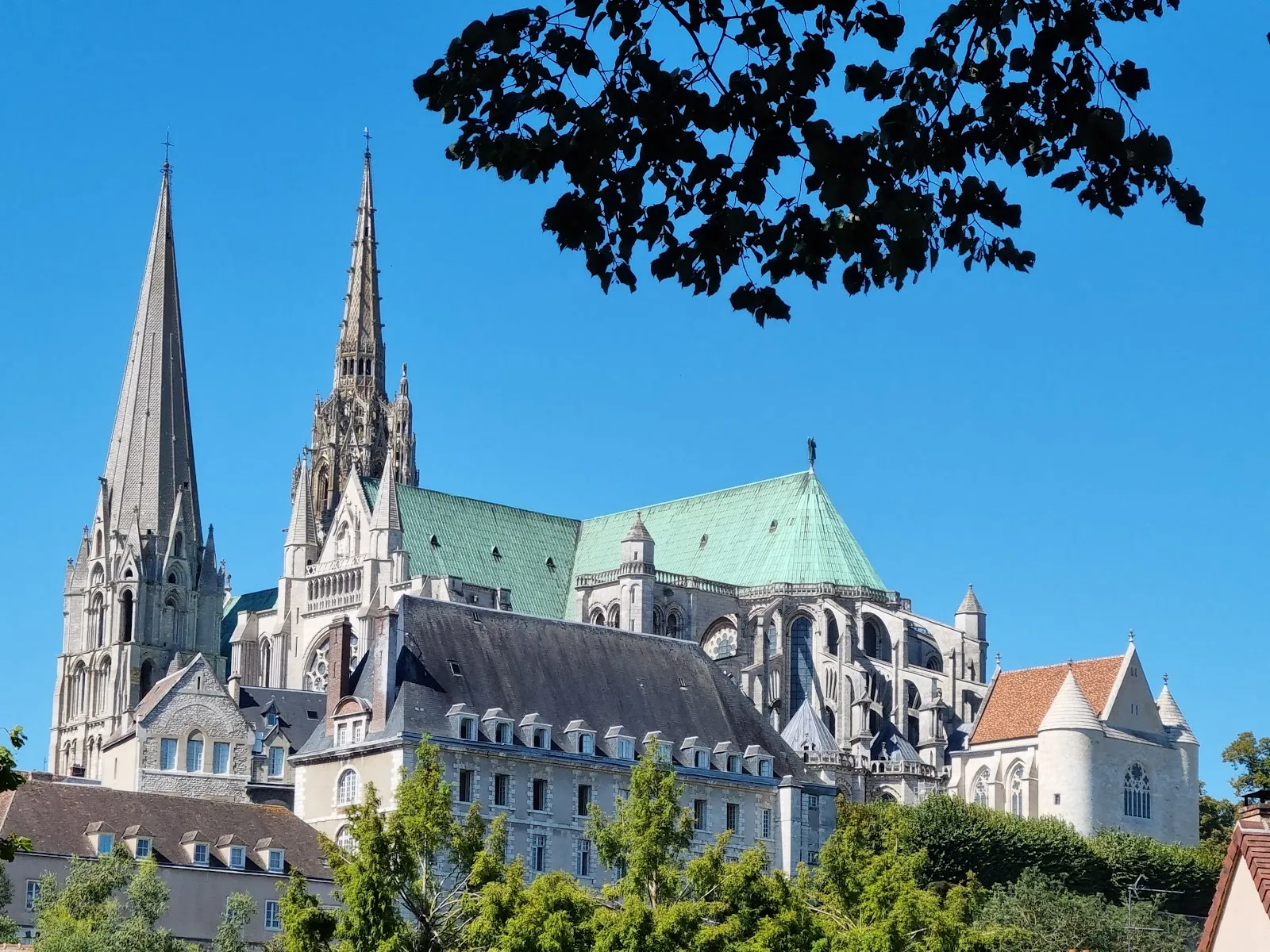
Our Lady of Chartres is a Gothic cathedral at 16 Cloître Notre-Dame in the old town of Chartres, and a UNESCO World Heritage Site since 1979. It keeps almost all of its 13th-century architecture, so the stone carving, the flying buttresses and the medieval stained glass are largely original. Inside, the deep blue glass known as Chartres blue tells biblical stories window by window, and a labyrinth is set into the floor. Entry to the cathedral is free. Leave time for the audio tour, then add the crypt, treasury or tower if you want more depth.
From the fire of 1194 to the present building
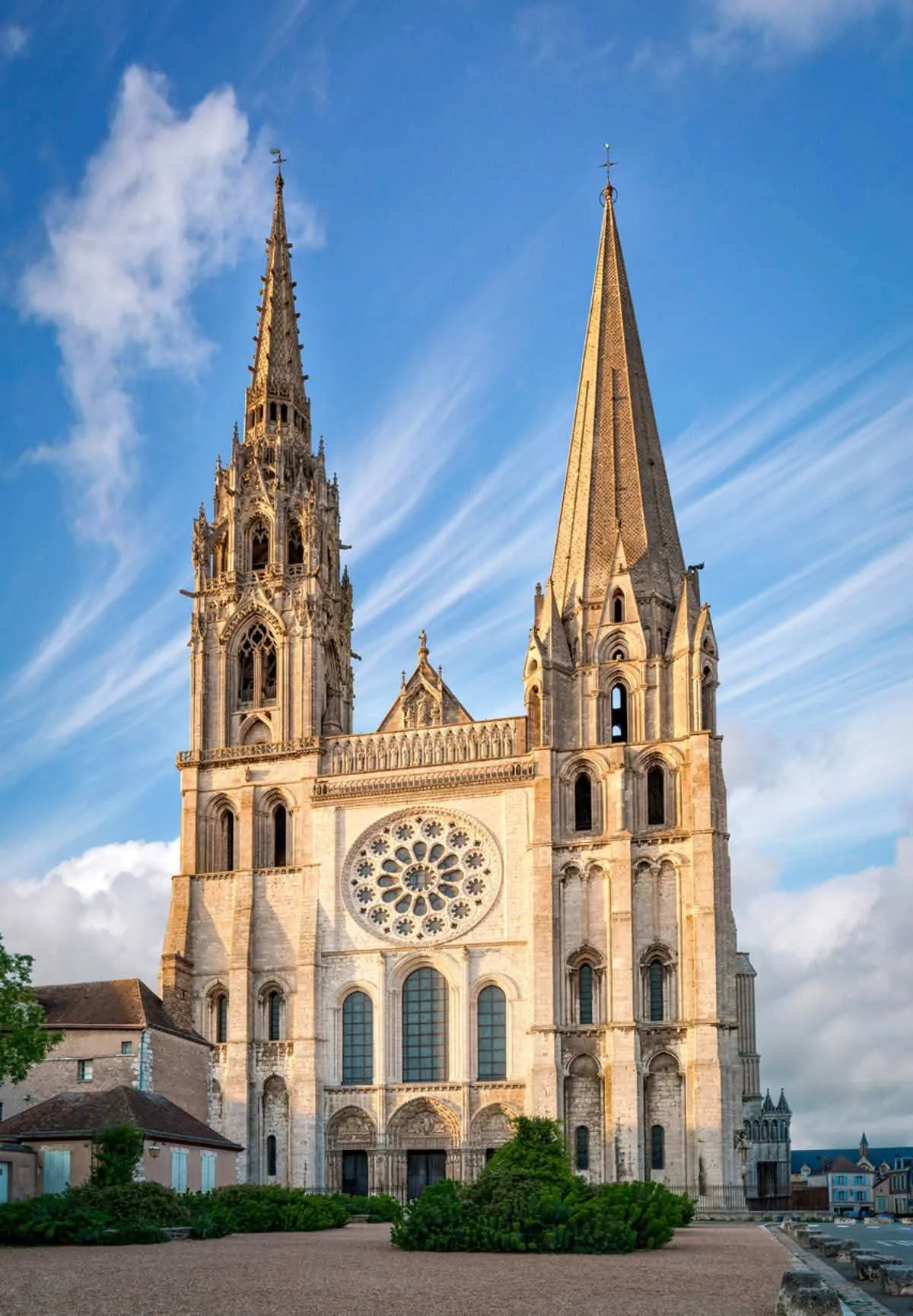
A religious building has stood on this hill since the 4th or 5th century, and worship on the site is older still. Several churches were damaged by fire over the centuries. The west façade and towers of today's cathedral date from around 1145. After the fire of 1194 the rest was rebuilt over about 26 years, and the cathedral was consecrated by King Louis IX in 1260.
Because the main structure went up in one campaign, the building is unusually consistent. It was not heavily altered later, unlike Notre-Dame in Paris, which was almost entirely rebuilt in the mid-1800s after damage in the French Revolution. Chartres also came close to destruction in the Revolution. It was spared when a local architect pointed out that the rubble from so large a building would block the surrounding streets for years.
The two towers show the change of period. One is Romanesque and the other Gothic. UNESCO listed the cathedral in 1979.
Windows, portals and the labyrinth
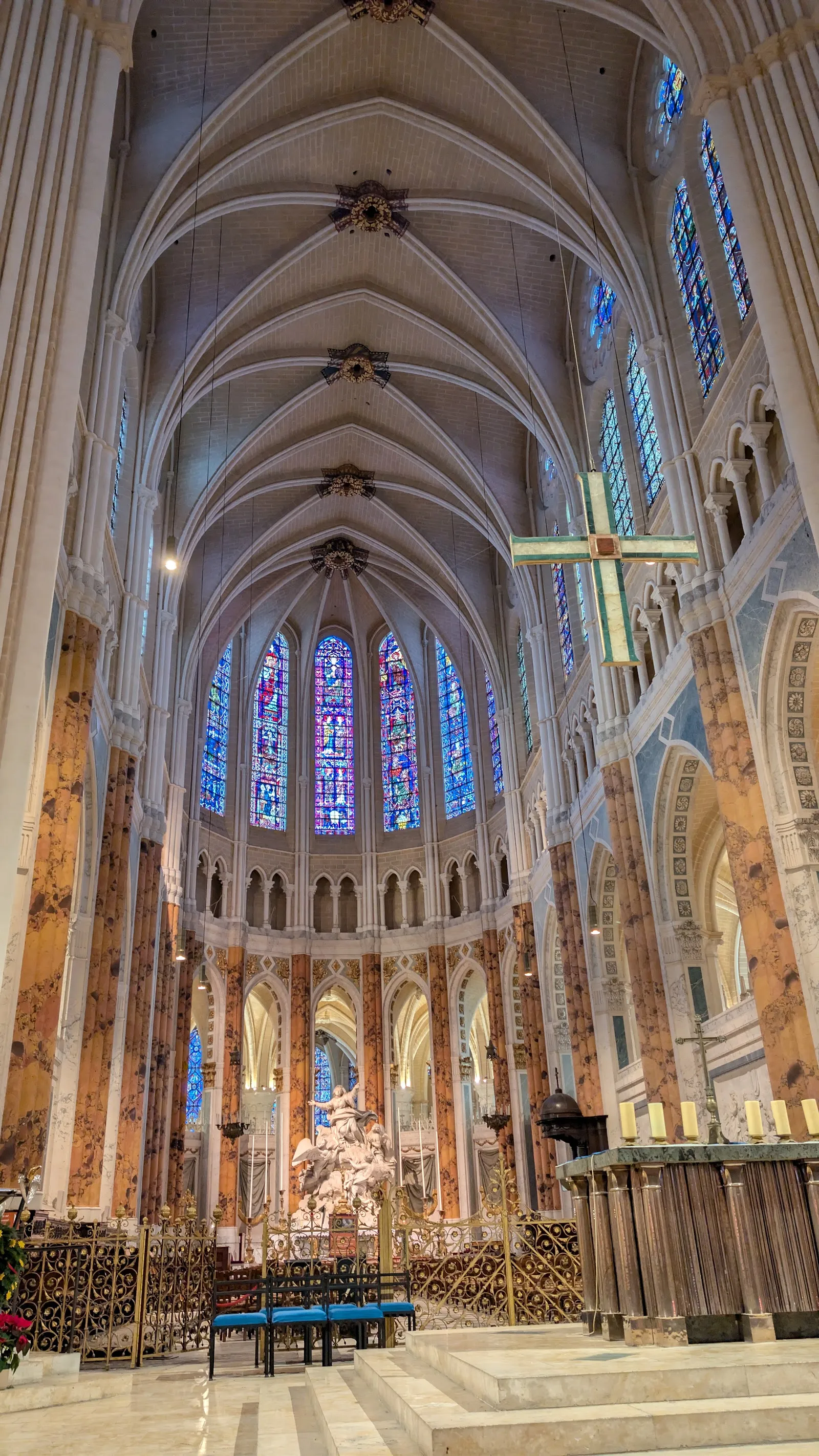
The stained glass dates from the 12th and 13th centuries and is mostly intact. Its blue is strong enough that the colour carries the name Chartres blue. Each window tells a story in panels, so a slow look from pane to pane works better than a glance at the whole.
Cleaning has so far covered the main section of the church. The side aisles are still untouched, and the difference between clean and soot-darkened stone and glass shows how much a century of grime hides.
Walk around the outside before you leave. The flying buttresses are best seen from the perimeter, and the three portals carry richly carved figures from the Bible. The façades hold more sculpture than any other cathedral. Inside, a monumental carved screen runs around the choir.
The labyrinth set into the floor is the largest in France. Chairs often cover much of it, so you may need to look for the visible sections. It is read as a symbol of a spiritual journey towards God.
Crypt, treasury and tower
The crypt is an ancient space beneath the church, often compared to an underground cathedral. The treasury is a paid extra, and it holds objects from the cathedral's history along with more stained glass.
The north tower and attic are also open on a ticketed visit. They give panoramic views and a close look at the structure above the vaults, with a guide to explain the history.
Prices listed for guided visits are €8 for the cathedral interior and exterior (€5 reduced), €5 for the crypt (free for children under 10) and €6 for the north tower and attic (free for visitors under 26).
The relic and the pilgrim road
Chartres became a pilgrimage destination in the 9th century. In 875 Charles the Bald, grandson of Charlemagne, gave the Sancta Camisia to the church after he became emperor. This relic is held to be the silk veil worn by Mary when she gave birth to Jesus, and pilgrims from around the world still come to see it.
The cathedral stands on a hill and can be seen from far away. Walkers coming from Paris see its silhouette on the horizon for much of the walk. It is a working church. Priests are available for confession, and machines for contactless donations stand inside.
Planning the visit
Opening hours are the same every day. Most people spend about an hour and a half on the cathedral with the audio tour, and a morning if they add the treasury or crypt. Cafes with outdoor tables stand next to the cathedral, so you can sit and look at the façade after your visit.
After dark the cathedral is lit in a light show projected onto the stone. One account has it starting around nine, as darkness falls, and the show makes an overnight stay in Chartres a practical option instead of a rushed day trip.
FAQ
Is there an entry fee for Chartres Cathedral?
Entry to the cathedral is free. Guided visits are charged: €8 for the cathedral (€5 reduced), €5 for the crypt and €6 for the north tower and attic.
How long do you need at Chartres Cathedral?
With the audio tour, about 1.5 hours is enough for the interior. Allow a morning or more if you add the treasury, crypt or tower.
Can you visit Chartres Cathedral as a day trip from Paris?
Yes. Chartres is about an hour from Paris by train. An overnight stay lets you see the evening light show on the cathedral.
Where do you park near the cathedral?
Use the cathedral's own car park. Street parking in the area is limited.
Is the cathedral wheelchair accessible?
The cathedral has a wheelchair accessible entrance and an accessible parking lot.