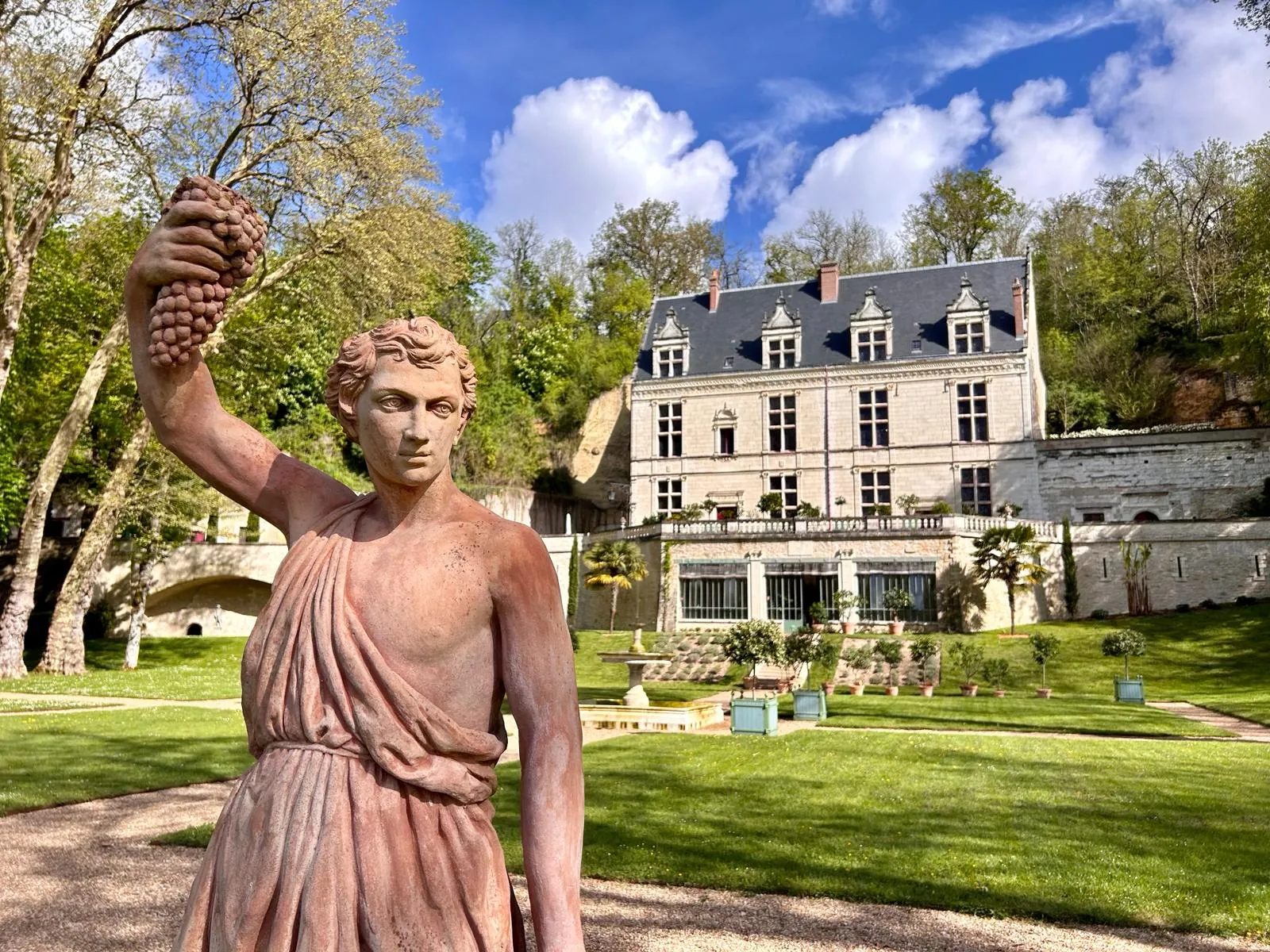
Château du Clos Lucé is the Renaissance manor in Amboise where Leonardo da Vinci spent his last years. It stands a short walk up Rue Victor-Hugo from the royal château. You can walk through the rooms he lived and worked in, including his bedroom, workshop and kitchen, then go down to the basement and the neighbouring building for his drawings and models of his inventions. Outside, a six-hectare park holds full-size versions of his machines, among them a paddle boat and a gun with many barrels. Plan on at least two hours.
From Château de Cloux to Clos Lucé
The house was first called the Château de Cloux, from a Latin word for a closed space. Etienne le Loup, a former kitchen hand who became a favourite of Louis XI, bought the land in 1471 and built the present residence with fortifications. Today only a watchtower and his original pigeon loft remain from that period.
Charles VIII bought the property on 2 July 1490 and made it a royal residence, and it was renovated in the Renaissance style. Anne de Bretagne is linked to the house, and her small chapel is part of the visit. The manor later housed the young Francis I, his sister Marguerite de Navarre and his mother Louise de Savoie. The name Clos Lucé dates only from 1660, long after Leonardo's death.
Leonardo in Amboise
Francis I invited Leonardo to France in early 1516 and gave him full use of the estate. The king named him First Painter, Engineer and Architect of the King. The Touraine countryside is said to have reminded the Tuscan-born artist of home.
Leonardo lived here with very few students until he died in the bedroom on 2 May 1519. The house is now a museum devoted to his life and work, and the visit follows the story of his years in Amboise and his relationship with the king.
What you see inside
The ground-floor rooms show how Leonardo lived. You can walk through his bedroom, his workshop and the kitchen, and small details such as his handwriting are on display.
The basement and the adjacent building are the part for anyone curious about how he worked. They hold his drawings, the history of how his inventions were used, and modern constructions of his more interesting machines. Many of these inventions were not actually built until centuries after his death. Some designs that failed in his lifetime have been recreated for display.
The garden and park
The park covers six hectares and is called Le jardin de Léonard. The garden was planted in the Italian manner of Leonardo's day and was completely restored in 2008. It now contains plants and trees that appear in his sketches, along with a dozen full-size renderings of machines he designed, including a paddle boat and a gun with many barrels.
Interactive installations and immersive exhibitions are spread through the grounds, so the park is more than a place to walk between buildings. Paths wind through the site, and the garden is well kept.
Getting there from the royal château
Clos Lucé is about an 11-minute walk from the Château d'Amboise. The route climbs Rue Victor-Hugo, a narrow street lined with old timbered houses. Many visitors combine the two sites in one day, and the walk is easy to do on foot without a car.
FAQ
Is there an entry fee for Château du Clos Lucé?
Yes, the house and gardens are open to the public for a fee. The input gives no price, so check the official website, vinci-closluce.com, before you go.
How long do you need at Clos Lucé?
Plan on at least two hours to see the house, the basement exhibitions and the gardens. Some visitors spend a full day on the house and grounds.
How far is Clos Lucé from the Château d'Amboise?
It is about an 11-minute walk. You go up Rue Victor-Hugo from the royal château.
Did Leonardo da Vinci die at Clos Lucé?
Yes. He lived here for his last three years and died in the house on 2 May 1519. You can see the bedroom where he died.
What is in the park at Clos Lucé?
The six-hectare park has a restored garden with plants from Leonardo's sketches. It also has a dozen full-size machines he designed and interactive installations.