Plan a trip
Language: English
Trip plannerPlan your trip on a map

Top destinations

EnglishDeutschFrançaisEspañolPortuguêsPortuguês (BR)Italiano
Travel advisory · EgyptSome governments advise against travel to parts of Egypt.The warnings cover only these areas: 50 km strip along the Libyan border, Gaza Strip, Libyan border (no set depth), North Sinai Governorate, Sudan border (no set depth), Western Desert, Ismailia Governorate (east of Suez Canal), Northern South Sinai Governorate (beyond St Catherine-Nuweiba road).Advice depends on your passport. Read your own government's advice before you book.Official advice
Areas with warnings
  • 50 km strip along the Libyan border · avoid all travel · Canada, New Zealand
  • Gaza Strip · avoid all travel · Canada, France, New Zealand
  • Libyan border (no set depth) · avoid all travel · Germany, Spain, France, Italy
  • North Sinai Governorate · avoid all travel · Canada, Spain, France, Ireland, New Zealand, UK
  • Sudan border (no set depth) · avoid all travel · Germany, Spain, France, Italy
  • Western Desert · avoid all travel · Canada, New Zealand, UK, US
  • Ismailia Governorate (east of Suez Canal) · avoid non-essential travel · Canada, UK
  • Northern South Sinai Governorate (beyond St Catherine-Nuweiba road) · avoid non-essential travel · Canada, New Zealand, UK

Also named by one government: 20 km strip along the Libyan border (UK), Egyptian border areas (military zones) (US), Egyptian-Israeli border area (Germany), Northern and Middle Sinai Peninsula (US), Port Said Governorate (east of Suez Canal) (Canada), Rafah border zone (Spain), Suez Governorate (east of Suez Canal) (Canada), Bahariya-Siwa road (UK), Bir Tawil Trapezoid (UK), Desert west of Marsa Matrouh, Faiyum and Abu Simbel (France), Gebel Al Uweynat to Gilf El Kebir region (Italy), Hala'ib Triangle (UK), Non-tourist desert areas (Italy), Rafah border crossing (Ireland), Southern Sinai Peninsula (Germany)

GovernmentAdviceUpdatedRead the advice
United Kingdom (FCDO)No advice against the whole country (regional advisories)–Read the advice
United States (State Dept)Exercise increased caution (regional advisories)Jul 15, 2025Read the advice
Canada (Global Affairs)Exercise a high degree of caution (regional advisories)–Read the advice
Germany (Auswärtiges Amt)Besondere Vorsicht walten lassen (keine Gesamtwarnung) (regional advisories)Oct 13, 2026Read the advice
New Zealand (SafeTravel)Exercise increased caution elsewhere in Egypt (regional advisories)–Read the advice
Ireland (Department of Foreign Affairs)High degree of caution (regional advisories)–Read the advice
France (Ministry for Europe and Foreign Affairs)Increased vigilance for the rest of the country (regional advisories)–Read the advice

Checked daily from the governments' published advice; last checked Nov 2, 2026. RoamLedger summarises official advice; it is not advice from any government.

Aqsunqur Mosque
Mosque

Aqsunqur Mosque

Visit Cairo’s Aqsunqur Mosque to see its blue Iznik-style tiles, planted courtyard and hieroglyphic-inscribed stones at the entrance.

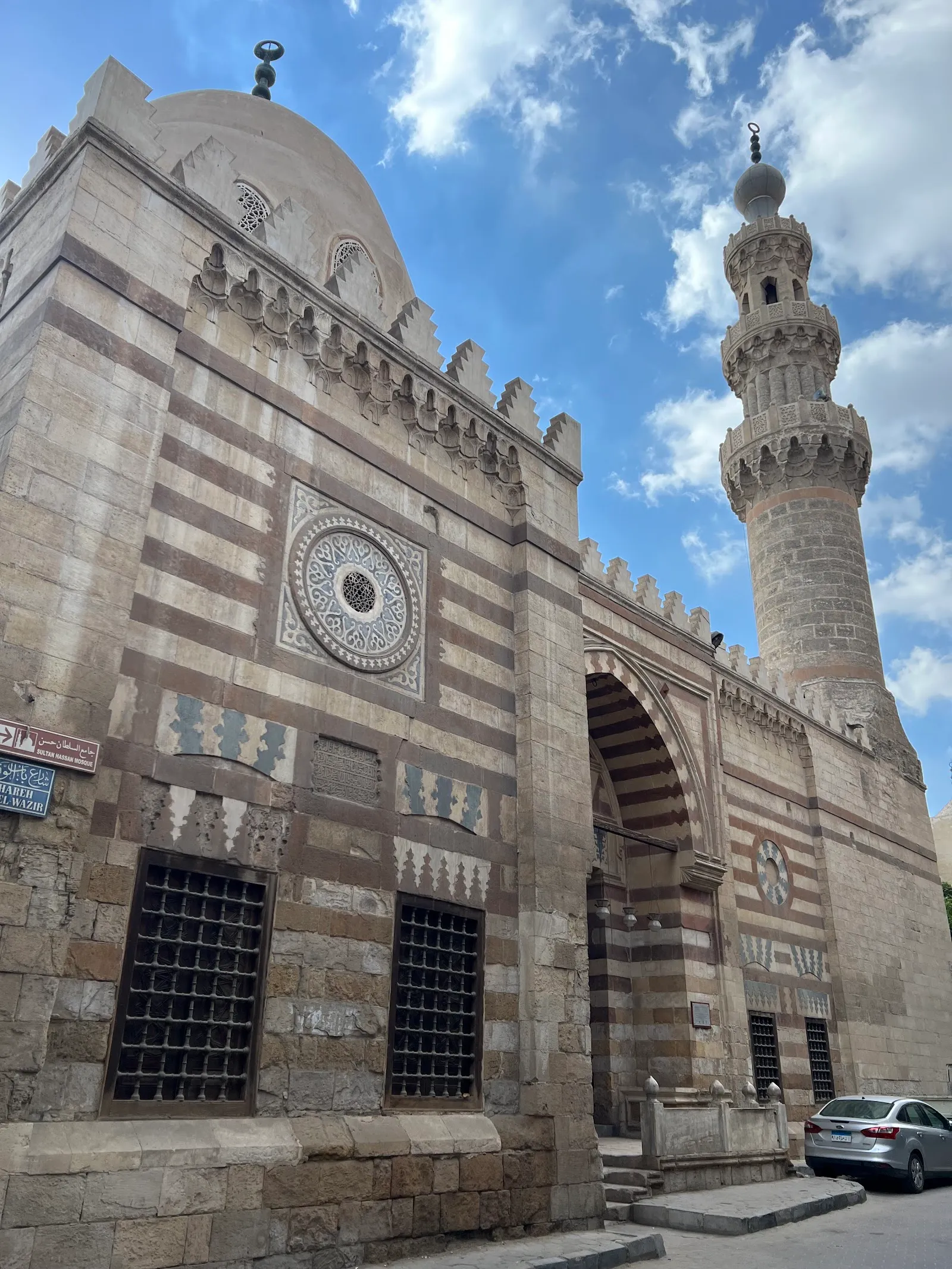
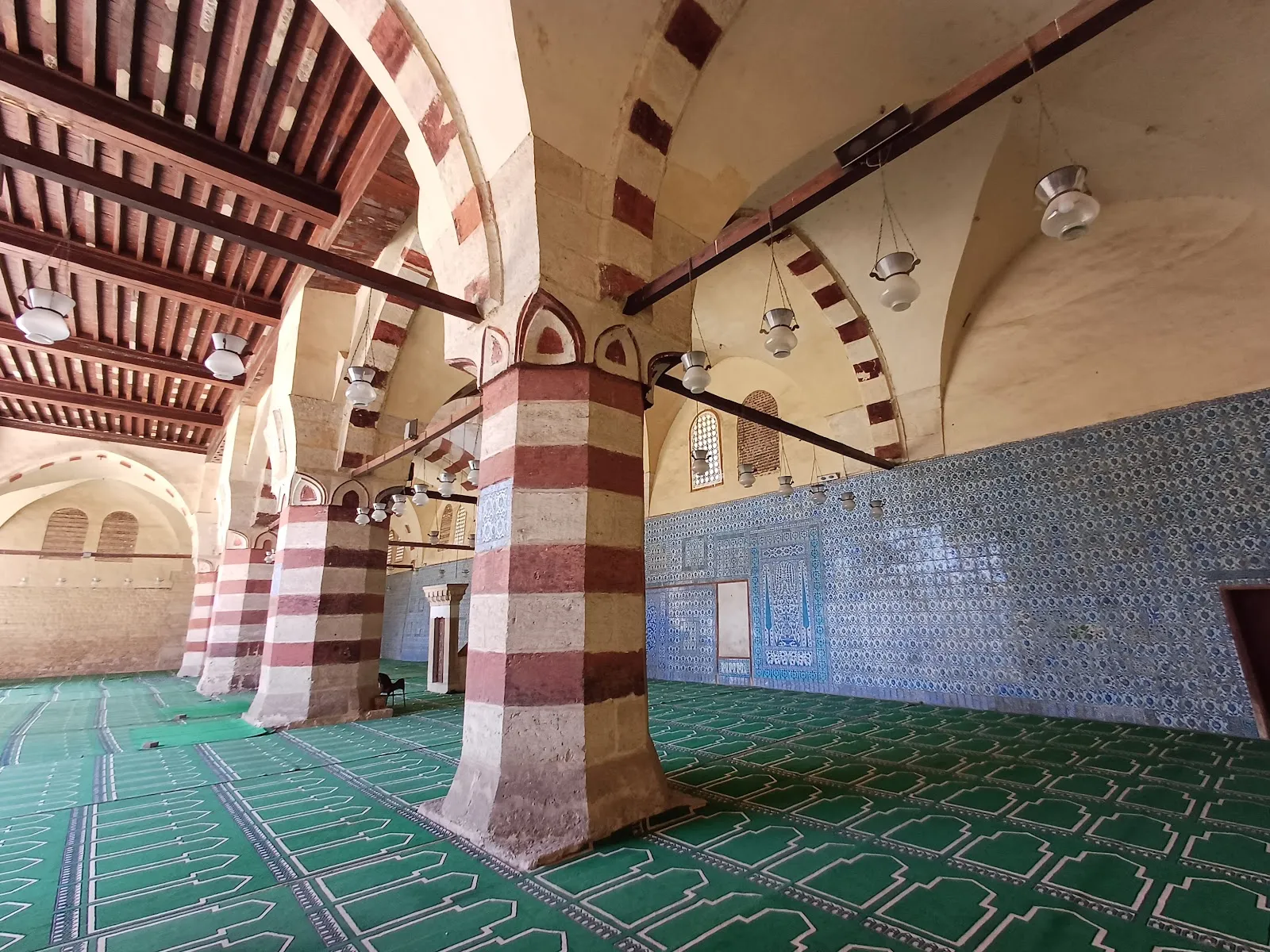
Aqsunqur Mosque, known as the Blue Mosque, is in Cairo’s Darb El-Ahmar district. Its blue and green Iznik-style tiles, added during Ottoman renovations, cover parts of the interior and give the mosque its familiar name. Look for floral motifs, calligraphy and reused stones with hieroglyphic inscriptions at the entrance. The courtyard, with trees and plants, offers a quieter pause among the historic buildings of Islamic Cairo. Dress modestly, as this is an active place of worship.

A Mamluk mosque with Ottoman tilework
Aqsunqur Mosque
Aqsunqur Mosque

Aqsunqur Mosque was completed in 1347 on the orders of the emir Shams ad-Din Aqsunqur, during the Mamluk sultanate of al-Muzaffar Hajji. Aqsunqur was the son-in-law of an-Nasir Muhammad and an influential emir. Medieval historian al-Maqrizi recorded that he oversaw the project and took part in the construction. The building followed a Syrian architectural style, reflecting Aqsunqur’s time as governor of Tripoli.

The mosque’s blue tiles belong to a later chapter. Between 1652 and 1654, Ottoman emir Ibrahim Agha al-Mustahfizan restored the building and introduced the blue and green Iznik-style decoration. Floral designs include cypress trees and tulips arranged in vases. These tiles, set against the earlier Mamluk structure, account for the name Blue Mosque.

Mausoleums and an irregular plan
Aqsunqur Mosque
Aqsunqur Mosque

The mosque was built around the mausoleum of the young sultan al-Ashraf Kujuk, which dates to 1341. Its position helps explain the building’s irregular layout. The complex also contains the tomb of Aqsunqur and those of his sons. The mausoleums are part of the site’s history, as well as a reason the mosque’s plan differs from a simple, regular arrangement.

At the entrance, some stones have hieroglyphic inscriptions. They were reused in the building, adding a visible detail from an earlier period to the mosque’s later layers. Inside, calligraphy and carved wooden doors sit alongside the tiled surfaces.

The courtyard and the mosque’s changing fortunes

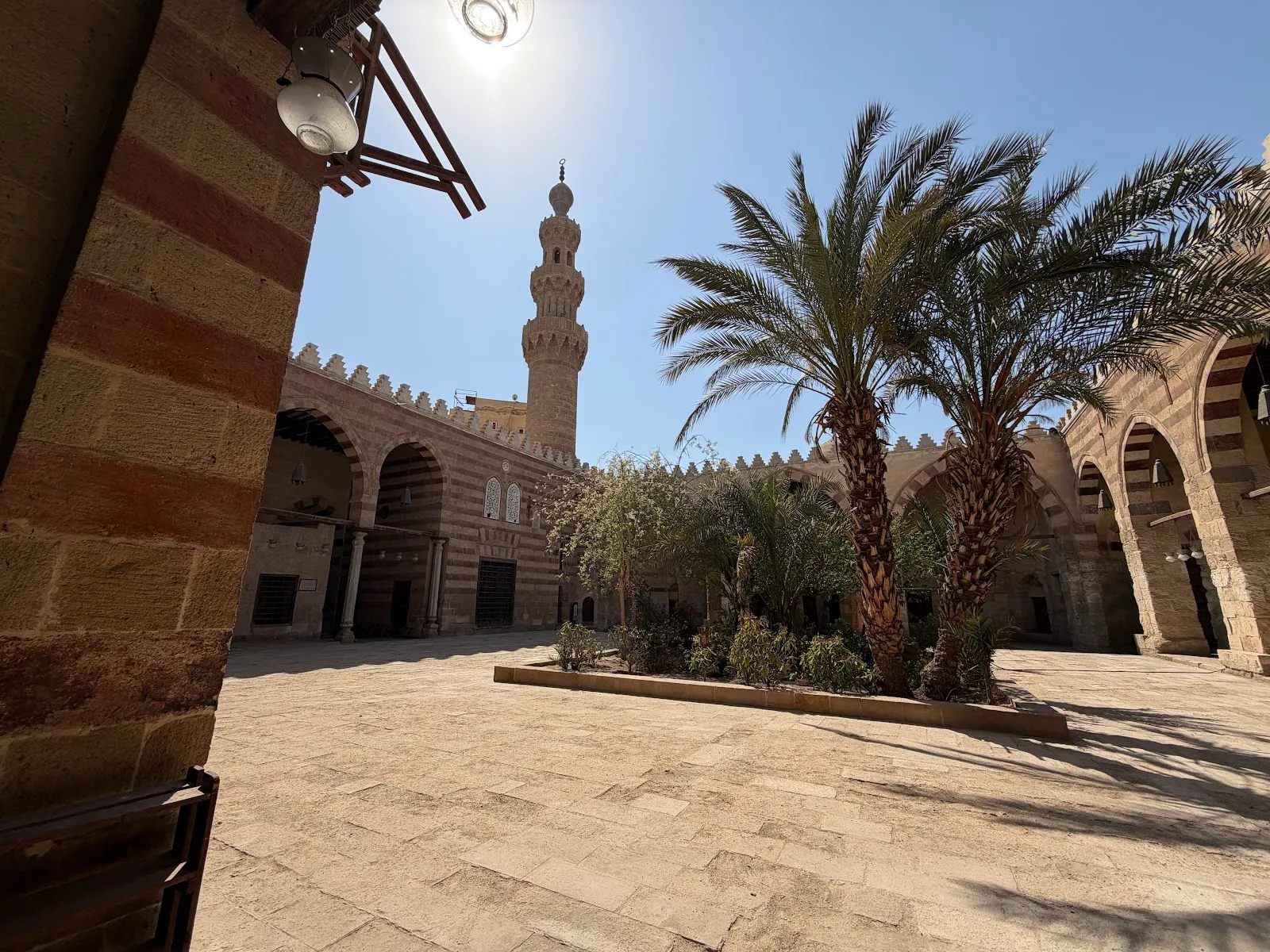
Aqsunqur Mosque experienced periods of decline. By the 15th century, it was reportedly in poor condition after the loss of endowment funds from Syria. In 1412, the Mamluk emir Tughan added an ablution fountain in the courtyard. Limited funding meant the mosque was used for Friday prayers and religious holidays during that period.

The courtyard remains a useful place to pause during a visit. Trees and other plants bring a green contrast to the tiled interior. The mosque has since undergone restoration, including work associated with the Aga Khan Foundation. It remains a place of worship, so visitors should dress modestly and treat the space with care.

FAQ

Why is Aqsunqur Mosque called the Blue Mosque?

Blue and green Iznik-style tiles added during Ottoman renovations in the 17th century decorate parts of its interior.

When was Aqsunqur Mosque built?

It was completed in 1347 under the Mamluk emir Shams ad-Din Aqsunqur.

What can you see inside Aqsunqur Mosque?

Look for the tilework, calligraphy, carved wooden doors and mausoleums. The courtyard has trees and plants.

What should I wear to Aqsunqur Mosque?

Dress modestly, as the mosque remains an active place of worship.

More must-sees in Cairo

Explore all