Pianifica un viaggio
Lingua: Italiano
Pianificatore di viaggiPianifica il tuo viaggio su una mappa

Le migliori destinazioni

EnglishDeutschFrançaisEspañolPortuguêsPortuguês (BR)Italiano
Avviso di viaggio · EgittoAlcuni governi sconsigliano di viaggiare in alcune zone di Egitto.Gli avvisi riguardano solo queste aree: Fascia di 50 km lungo il confine libico, Striscia di Gaza, Confine libico (senza profondità definita), Governatorato del Sinai settentrionale, Confine sudanese (senza profondità definita), Deserto Occidentale, Governatorato di Ismailia (a est del Canale di Suez), Nord del Governatorato del Sinai meridionale (oltre la strada Santa Caterina–Nuweiba).Le indicazioni dipendono dal tuo passaporto. Leggi quelle del tuo governo prima di prenotare.Indicazioni ufficiali
Aree con avvisi
  • Fascia di 50 km lungo il confine libico · evitare ogni viaggio · Canada, Nuova Zelanda
  • Striscia di Gaza · evitare ogni viaggio · Canada, Francia, Nuova Zelanda
  • Confine libico (senza profondità definita) · evitare ogni viaggio · Germania, Spagna, Francia, Italia
  • Governatorato del Sinai settentrionale · evitare ogni viaggio · Canada, Spagna, Francia, Irlanda, Nuova Zelanda, Regno Unito
  • Confine sudanese (senza profondità definita) · evitare ogni viaggio · Germania, Spagna, Francia, Italia
  • Deserto Occidentale · evitare ogni viaggio · Canada, Nuova Zelanda, Regno Unito, Stati Uniti
  • Governatorato di Ismailia (a est del Canale di Suez) · evitare i viaggi non essenziali · Canada, Regno Unito
  • Nord del Governatorato del Sinai meridionale (oltre la strada Santa Caterina–Nuweiba) · evitare i viaggi non essenziali · Canada, Nuova Zelanda, Regno Unito

Segnalata anche da un solo governo: Fascia di 20 km lungo il confine libico (Regno Unito), Zone di confine (zone militari) (Stati Uniti), Zona di confine egiziano-israeliana (Germania), Penisola del Sinai settentrionale e centrale (Stati Uniti), Governatorato di Port Said (a est del Canale di Suez) (Canada), Zona di confine di Rafah (Spagna), Governatorato di Suez (a est del Canale di Suez) (Canada), Strada Bahariya–Siwa (Regno Unito), Trapezio di Bir Tawil (Regno Unito), Deserto a ovest di Marsa Matruh, Fayyum e Abu Simbel (Francia), Regione dal Gebel Uweinat al Gilf el-Kebir (Italia), Triangolo di Halaib (Regno Unito), Aree desertiche non turistiche (Italia), Valico di frontiera di Rafah (Irlanda), Penisola del Sinai meridionale (Germania)

GovernoConsigliAggiornatoLeggi le indicazioni
Regno Unito (FCDO)No advice against the whole country (regional advisories)–Leggi le indicazioni
Stati Uniti (Dipartimento di Stato)Exercise increased caution (regional advisories)15 lug 2025Leggi le indicazioni
Canada (Affari globali)Exercise a high degree of caution (regional advisories)–Leggi le indicazioni
Germania (Auswärtiges Amt)Besondere Vorsicht walten lassen (keine Gesamtwarnung) (regional advisories)13 ott 2026Leggi le indicazioni
Nuova Zelanda (SafeTravel)Exercise increased caution elsewhere in Egypt (regional advisories)–Leggi le indicazioni
Irlanda (Dipartimento per gli Affari esteri)High degree of caution (regional advisories)–Leggi le indicazioni
Francia (Ministero per l'Europa e gli Affari esteri)Increased vigilance for the rest of the country (regional advisories)–Leggi le indicazioni

Verificato ogni giorno dalle indicazioni pubblicate dai governi; ultima verifica 2 nov 2026.RoamLedger riassume le indicazioni ufficiali; non è un consiglio di alcun governo.

Aqsunqur Mosque
Moschea

Aqsunqur Mosque

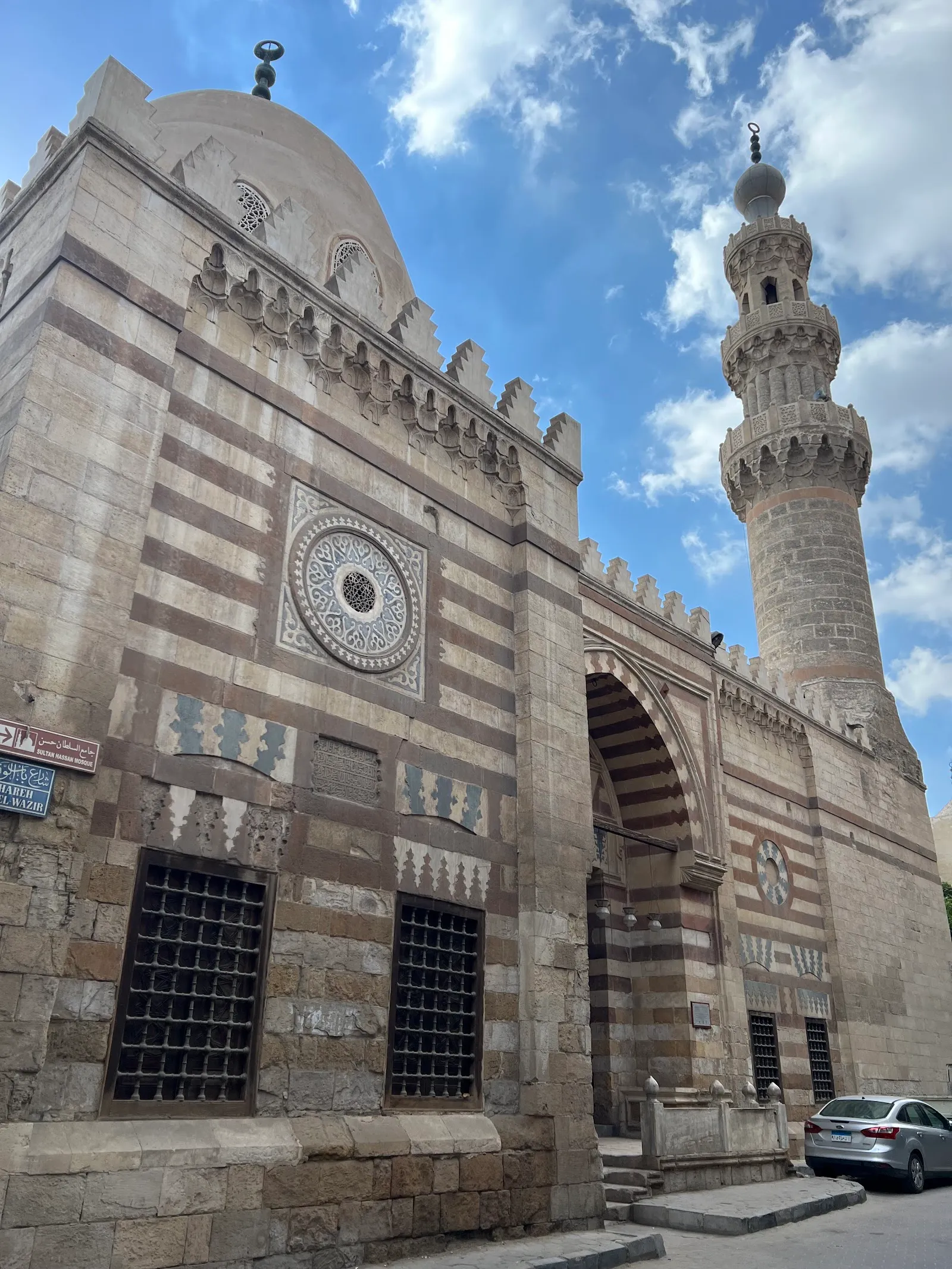
Aqsunqur Mosque, known as the Blue Mosque, is in Cairo’s Darb El-Ahmar district.

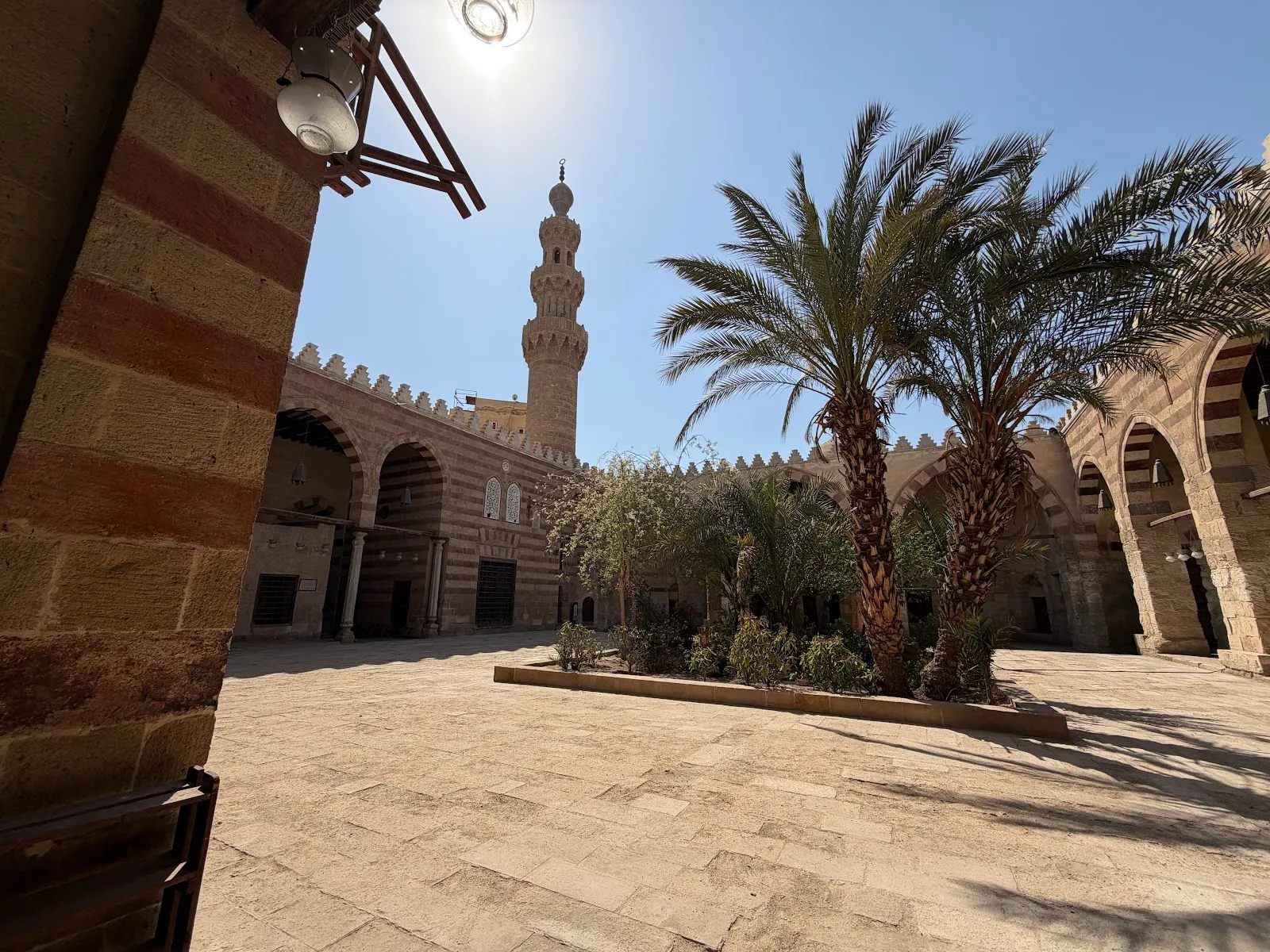
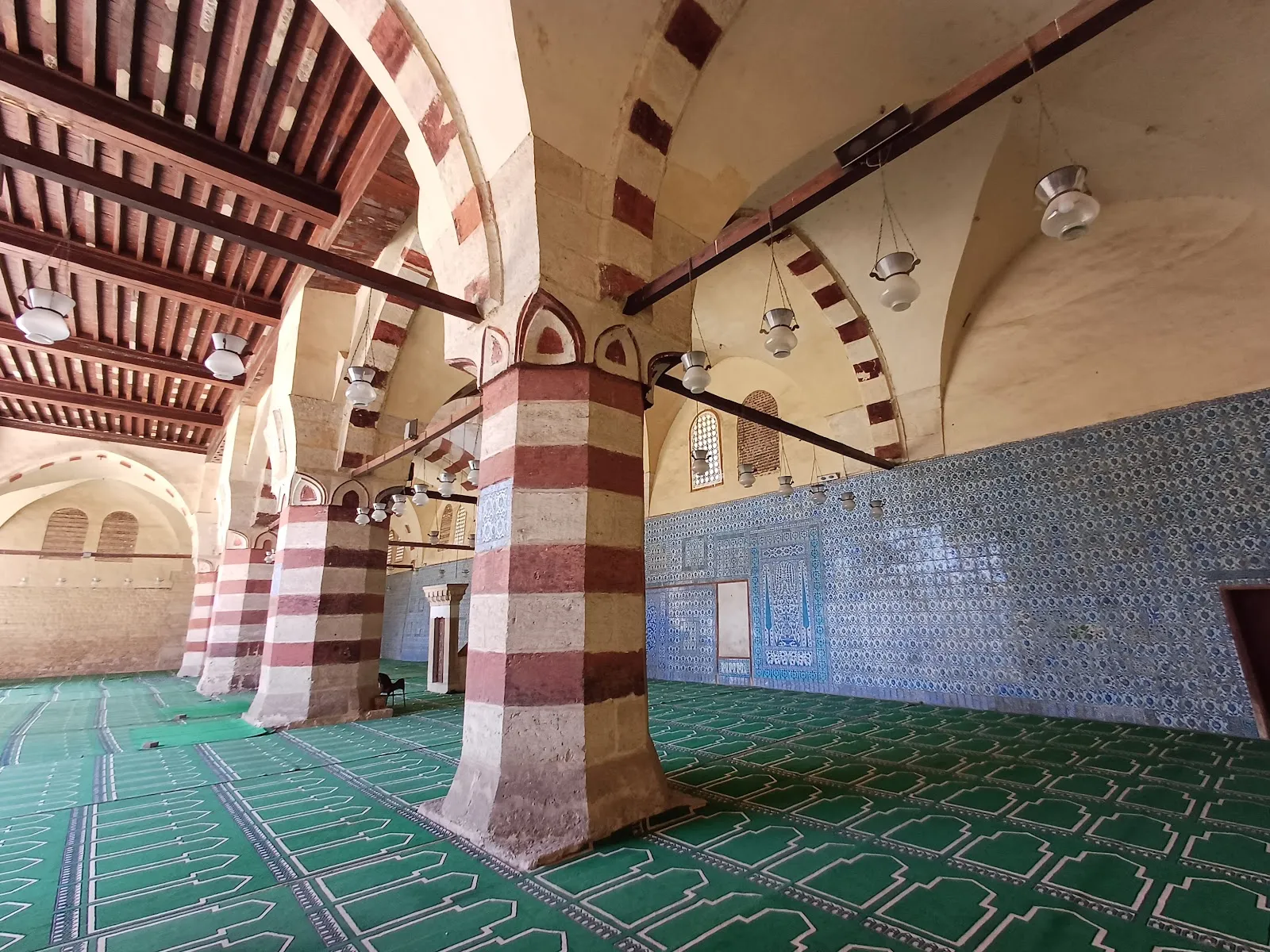
Aqsunqur Mosque, known as the Blue Mosque, is in Cairo’s Darb El-Ahmar district. Its blue and green Iznik-style tiles, added during Ottoman renovations, cover parts of the interior and give the mosque its familiar name. Look for floral motifs, calligraphy and reused stones with hieroglyphic inscriptions at the entrance. The courtyard, with trees and plants, offers a quieter pause among the historic buildings of Islamic Cairo. Dress modestly, as this is an active place of worship.

A Mamluk mosque with Ottoman tilework
Aqsunqur Mosque
Aqsunqur Mosque

Aqsunqur Mosque was completed in 1347 on the orders of the emir Shams ad-Din Aqsunqur, during the Mamluk sultanate of al-Muzaffar Hajji. Aqsunqur was the son-in-law of an-Nasir Muhammad and an influential emir. Medieval historian al-Maqrizi recorded that he oversaw the project and took part in the construction. The building followed a Syrian architectural style, reflecting Aqsunqur’s time as governor of Tripoli.

The mosque’s blue tiles belong to a later chapter. Between 1652 and 1654, Ottoman emir Ibrahim Agha al-Mustahfizan restored the building and introduced the blue and green Iznik-style decoration. Floral designs include cypress trees and tulips arranged in vases. These tiles, set against the earlier Mamluk structure, account for the name Blue Mosque.

Mausoleums and an irregular plan
Aqsunqur Mosque
Aqsunqur Mosque

The mosque was built around the mausoleum of the young sultan al-Ashraf Kujuk, which dates to 1341. Its position helps explain the building’s irregular layout. The complex also contains the tomb of Aqsunqur and those of his sons. The mausoleums are part of the site’s history, as well as a reason the mosque’s plan differs from a simple, regular arrangement.

At the entrance, some stones have hieroglyphic inscriptions. They were reused in the building, adding a visible detail from an earlier period to the mosque’s later layers. Inside, calligraphy and carved wooden doors sit alongside the tiled surfaces.

The courtyard and the mosque’s changing fortunes

Aqsunqur Mosque experienced periods of decline. By the 15th century, it was reportedly in poor condition after the loss of endowment funds from Syria. In 1412, the Mamluk emir Tughan added an ablution fountain in the courtyard. Limited funding meant the mosque was used for Friday prayers and religious holidays during that period.

The courtyard remains a useful place to pause during a visit. Trees and other plants bring a green contrast to the tiled interior. The mosque has since undergone restoration, including work associated with the Aga Khan Foundation. It remains a place of worship, so visitors should dress modestly and treat the space with care.

FAQ

Why is Aqsunqur Mosque called the Blue Mosque?

Blue and green Iznik-style tiles added during Ottoman renovations in the 17th century decorate parts of its interior.

When was Aqsunqur Mosque built?

It was completed in 1347 under the Mamluk emir Shams ad-Din Aqsunqur.

What can you see inside Aqsunqur Mosque?

Look for the tilework, calligraphy, carved wooden doors and mausoleums. The courtyard has trees and plants.

What should I wear to Aqsunqur Mosque?

Dress modestly, as the mosque remains an active place of worship.

Altre attrazioni imperdibili a Il Cairo

Esplora tutto