Plan a trip
Language: English
Trip plannerPlan your trip on a map

Top destinations

EnglishDeutschFrançaisEspañolPortuguêsPortuguês (BR)Italiano
Travel advisory · EcuadorGuayaquil is in or near an area where governments advise against all but essential travel: El Fortín, Flor de Bastión, Guayaquil city, Guayaquil south of Portete de Tarquí Avenue, Guayas province, Monte Sinaí, Nueva Prosperina, Paraíso de la Flor, Pascuales.Advice depends on your passport. Read your own government's advice before you book.Official advice
Areas with warnings
  • 20 km strip along the Colombian border · avoid all travel · Canada, Spain, France, Italy, New Zealand, UK
  • Durán · avoid all travel · Canada, Germany, Spain, New Zealand, US
  • Esmeraldas city and north · avoid all travel · Germany, US
  • El Fortín · avoid non-essential travel · Canada, New Zealand
  • El Oro province · avoid non-essential travel · Spain, France, UK
  • Esmeraldas province · avoid non-essential travel · Canada, Spain, France, Italy, New Zealand, UK
  • Flor de Bastión · avoid non-essential travel · Canada, New Zealand
  • Guayaquil city · avoid non-essential travel · France, New Zealand
  • Guayaquil south of Portete de Tarquí Avenue · avoid non-essential travel · Germany, US
  • Guayas province · avoid non-essential travel · Spain, France, UK
  • Huaquillas and Arenillas · avoid non-essential travel · Canada, US
  • Los Ríos province · avoid non-essential travel · Spain, France, UK
  • Manabí province · avoid non-essential travel · Spain, France, UK
  • Monte Sinaí · avoid non-essential travel · Canada, New Zealand
  • Nueva Prosperina · avoid non-essential travel · Canada, US
  • Paraíso de la Flor · avoid non-essential travel · Canada, New Zealand
  • Pascuales · avoid non-essential travel · Canada, US
  • Quevedo · avoid non-essential travel · Canada, US
  • Santa Elena province · avoid non-essential travel · Spain, France, UK
  • Santo Domingo de los Tsáchilas province · avoid non-essential travel · Spain, France, UK
  • Sucumbíos province · avoid non-essential travel · Spain, New Zealand

Also named by one government: Chinchipe (Canada), Ciudad de Dios (New Zealand), El Pangui (Canada), Entrada de la 8 (New Zealand), Nangaritza (Canada), Pueblo Viejo (US), Quinsaloma (US), Socio Vivienda (New Zealand), Yantzaza (Canada), Babahoyo (Canada), Bastión Popular (Canada), Esteros (Canada), La Florida (Canada), Las Orquídeas (Canada), Machala (Canada), Milagro (Canada), Monte Bello (Canada), Mucho Lote (Canada), Nueva Loja (Lago Agrío) (France), Orellana province (Spain), Portete (Canada), Southern and western Guayaquil (Spain), Sur (Canada)

GovernmentAdviceUpdatedRead the advice
United Kingdom (FCDO)No advice against the whole country (regional advisories)–Read the advice
United States (State Dept)Exercise increased caution (regional advisories)Aug 18, 2026Read the advice
Canada (Global Affairs)Exercise a high degree of caution (regional advisories)–Read the advice
Germany (Auswärtiges Amt)No advice against the whole country (regional advisories)Oct 13, 2026Read the advice
New Zealand (SafeTravel)Exercise increased caution (regional advisories)–Read the advice
France (Ministry for Europe and Foreign Affairs)Zone de vigilance renforcée (reste du pays) (regional advisories)–Read the advice

Checked daily from the governments' published advice; last checked Nov 2, 2026. RoamLedger summarises official advice; it is not advice from any government.

Iglesia de Santo Domingo
Church

Iglesia de Santo Domingo

Visit Iglesia de Santo Domingo in Quito for its ornate interiors, Quito School of Art sculptures and peaceful courtyard beside the historic plaza.

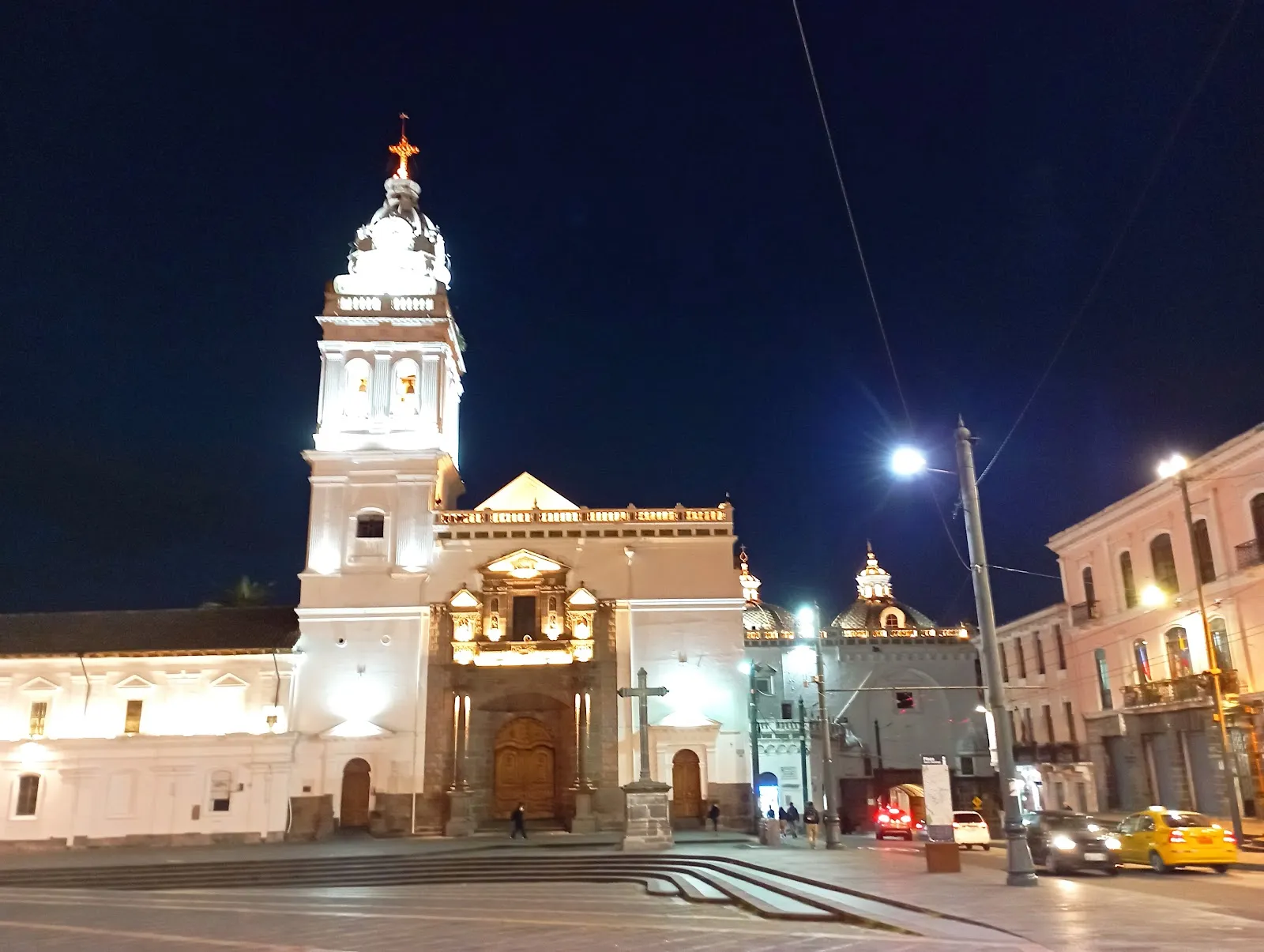
Iglesia de Santo Domingo faces Plaza de Santo Domingo in Quito’s historic centre. Built by the Dominican order, the church combines Baroque, Moorish and other architectural influences, with richly decorated interiors, paintings and sculptures linked to the Quito School of Art. Look for the Chapel of the Virgin of the Rosary, the church’s clock and its ornate ceilings. A central courtyard offers a quiet place to pause, and the nearby streets lead towards Calle La Ronda. Entry to the church is free; access to the museum and upper areas may involve a separate charge.

A church built by the Dominicans
Iglesia de Santo Domingo

Construction of the Dominican monastery began in 1540, after the order received land in the south of Quito. The church was completed in 1688. It faces Plaza de Santo Domingo, whose name comes from the church, and forms part of the historic centre’s group of colonial-era religious buildings.

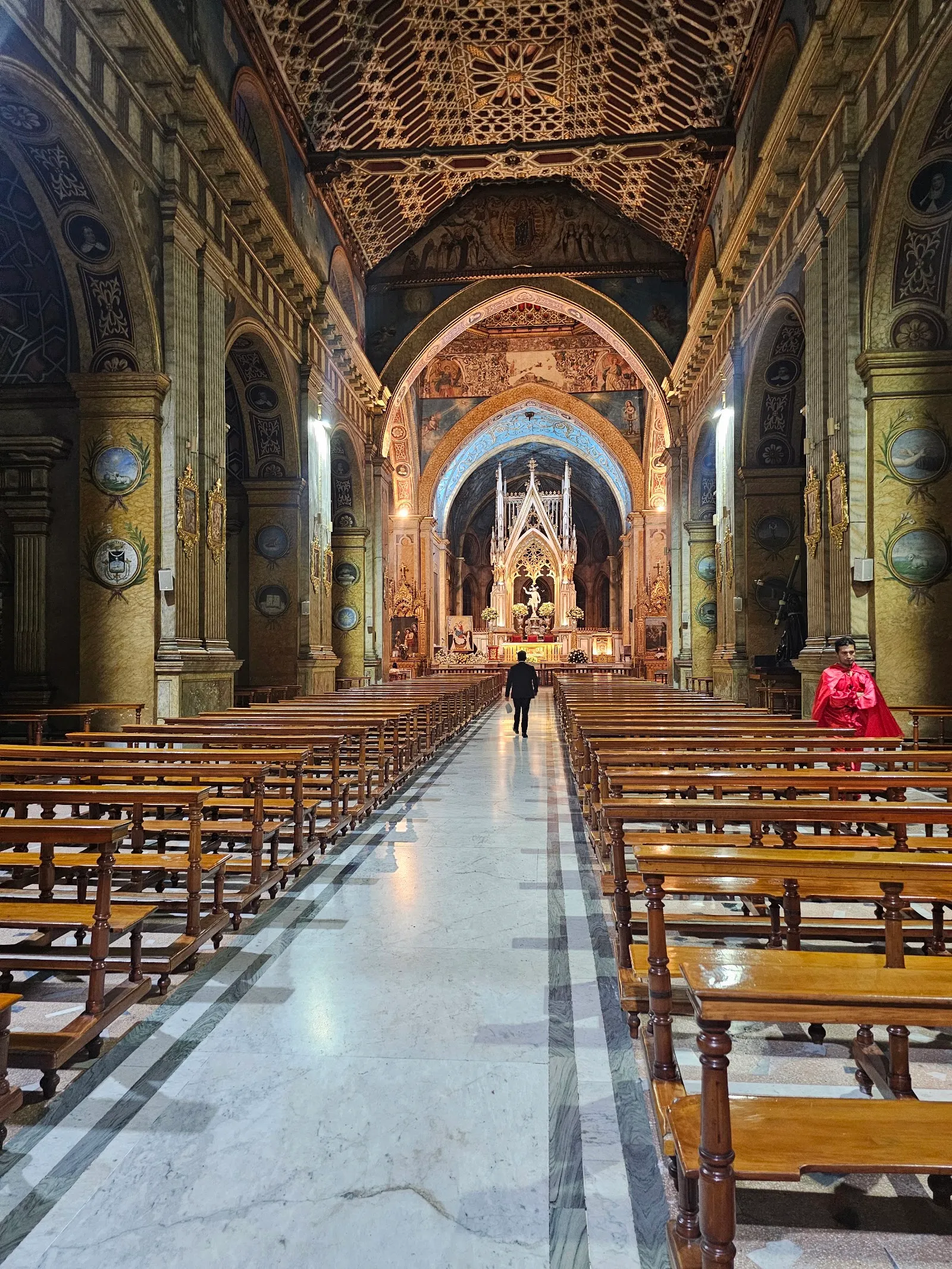
The architecture brings together several styles. Baroque and Moorish influences appear alongside Neoclassical elements, and details such as geometric patterns and sweeping ceilings give the interior its distinctive character. The church was also modified by priests from Italy. Its layered design reflects the different influences present in Quito’s colonial architecture.

Art inside the church
Iglesia de Santo Domingo

Paintings, carvings and sculptures fill the interior. Look for works connected with the Quito School of Art, a tradition known for realistic treatment and indigenous themes. Among the sculptures associated with the church are the Virgin of Legarda, made by Bernardo Legarda, and the Virgen del Rosario.

The Chapel of the Virgin of the Rosary is a notable part of the complex and is known for its 18th-century Baroque art. The church’s cedar nave, covered with gold leaf, is another detail to look for. A large clock and the church’s decorated surfaces provide further points of interest as you move through the building.

The courtyard, museum and surrounding streets

The central courtyard offers a calm place to sit away from the traffic and activity of the historic centre. The adjacent Dominican monastery contains a small museum of religious art, including old paintings and statues. Some ticketed visits also include access to an upper gallery and the tiled roof, from which the nearby Panecillo and the convent courtyard can be seen.

Outside, the church looks onto Plaza de Santo Domingo. On the Rocafuerte side, the arch and the adjoining Chapel of the Virgin of the Rosary are part of the plaza’s architectural setting. From the south of the plaza, narrow cobblestone streets lead towards Calle La Ronda, a historic street in the old town. The church can fit naturally into a walk through this part of Quito.

FAQ

Is entry to Iglesia de Santo Domingo free?

Entry to the church is described as free. The museum and access to upper areas may have a separate charge.

What should I see inside Iglesia de Santo Domingo?

Look for the Chapel of the Virgin of the Rosary, the gold-leaf-covered cedar nave, the church clock and sculptures associated with the Quito School of Art.

How long do you need at Iglesia de Santo Domingo?

The available information does not give a typical visit length. Allow extra time if you plan to see the museum or upper areas.

What can I visit near Iglesia de Santo Domingo?

Plaza de Santo Domingo is directly in front of the church. Streets to the south lead towards Calle La Ronda.

More must-sees in Guayaquil

Explore all