The José Martí National Library is Cuba’s principal library and legal repository, on Avenida 20 de Mayo beside Plaza de la Revolución in Havana. Founded in 1901, it preserves Cuban documentary, bibliographic, sound and artistic heritage, along with works from wider culture. The 15-story rationalist building is worth seeing for its stained glass and Martí artworks, including a statue shaped like the island with a palm tree for a neck, and a mural surrounded by hummingbirds. Staff can help visitors find materials, though recent books may be hard to locate.
A national collection in Havana
Founded in 1901, the library became Cuba’s legal repository and principal library. It took the name of national hero José Martí in 1949. Its collections preserve the country’s documentary, bibliographic, sound and artistic heritage, as well as works representing wider culture. The library is on Avenida 20 de Mayo, beside Plaza de la Revolución. Nearby government buildings and large portraits of Camilo Cienfuegos, Fidel Castro and Che Guevara form part of the surrounding civic setting.
The building and Martí artworks
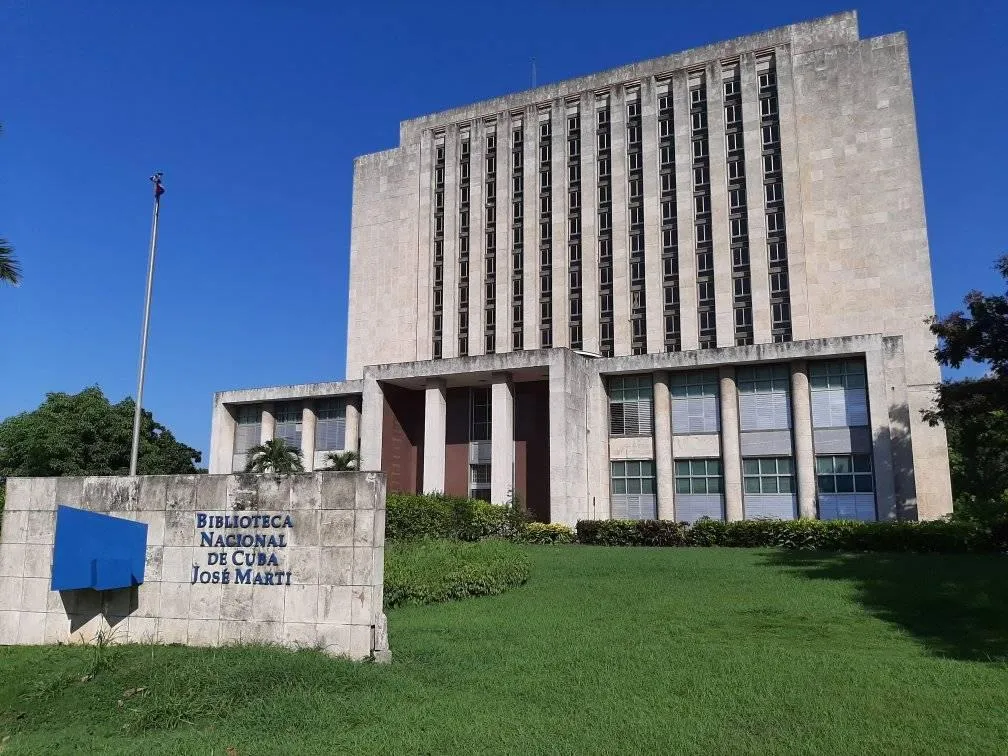
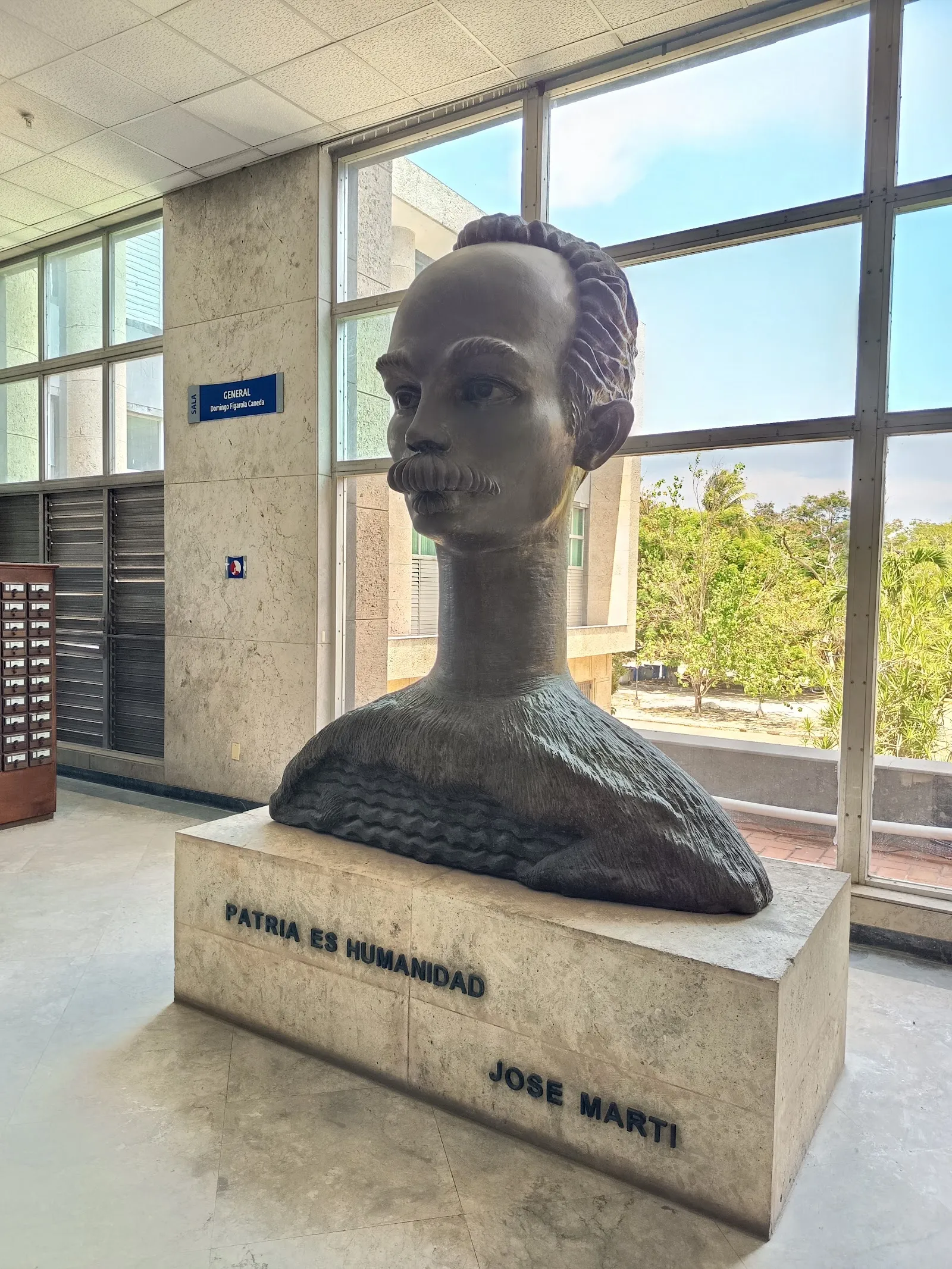
Construction began in 1952, when the square was known as Plaza Cívica. The 15-story building has a rationalist design and a spacious interior. Stained-glass windows are among its details to look for. Inside, a striking statue represents Martí as an island, with a palm tree forming his neck. A mural depicts him surrounded by hummingbirds. Staff can assist with finding material in the library.
Research and access
The library holds multiple collections and has a digital library. Its holdings are a resource for Cuban history and culture, as well as broader subjects. If your visit depends on finding recent publications, check their availability in advance; newer books may not be present. The library is open on weekdays and closed on Saturdays and Sundays. Check current access requirements before setting out, and dress appropriately for entry. If you plan to take photographs, ask permission before photographing people.
FAQ
Where is the José Martí National Library?
It is on Avenida 20 de Mayo in Havana, beside Plaza de la Revolución.
What can you see inside the library?
Look for stained glass, a statue of Martí shaped like an island with a palm tree for a neck, and a mural showing Martí among hummingbirds.
Does the library have recent books?
Recent publications may not be available, so check for the titles you need before visiting.