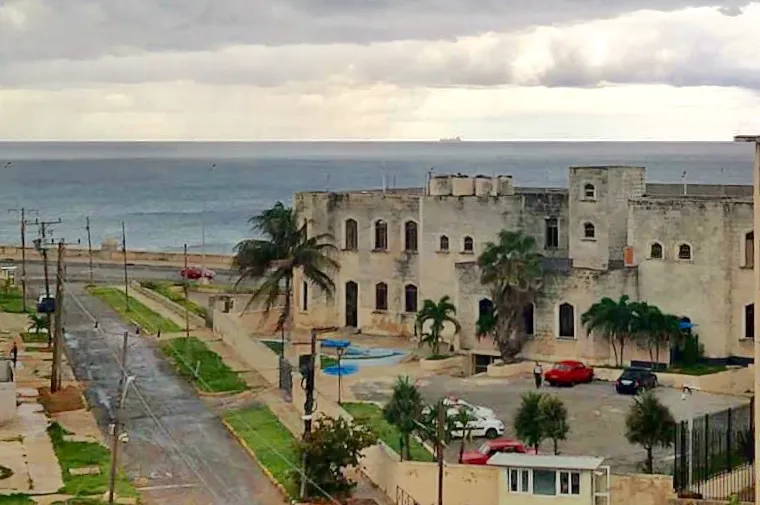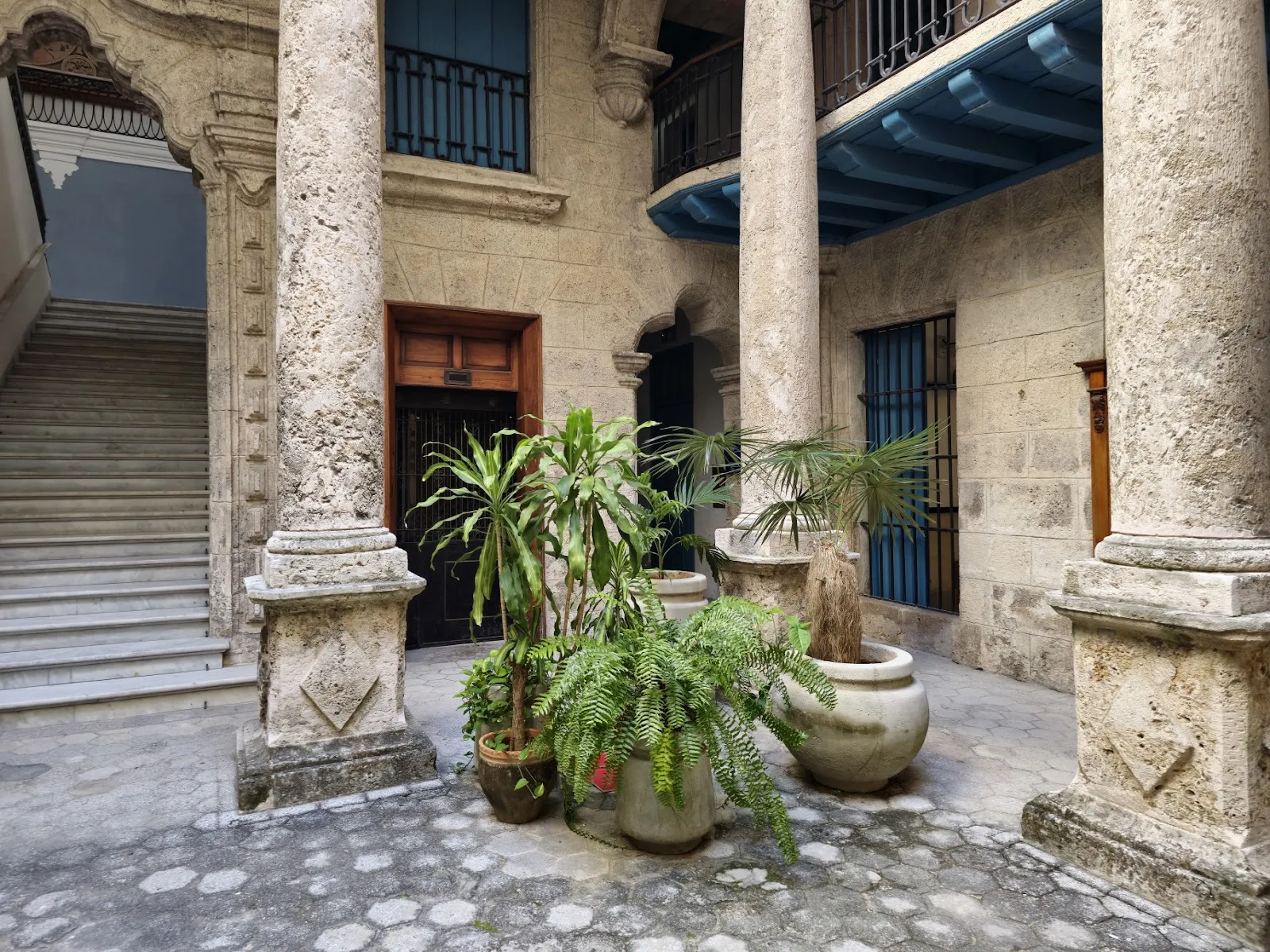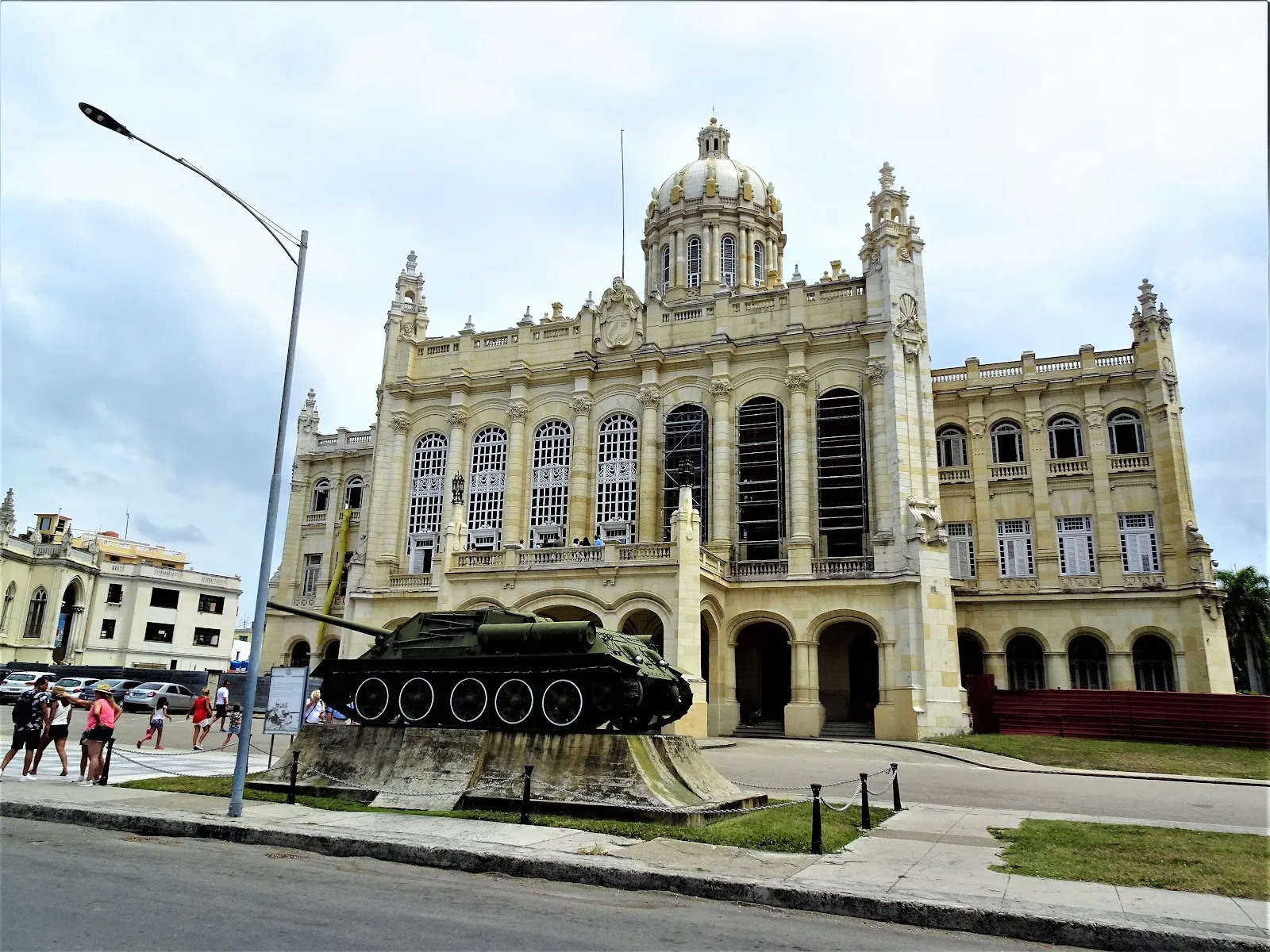
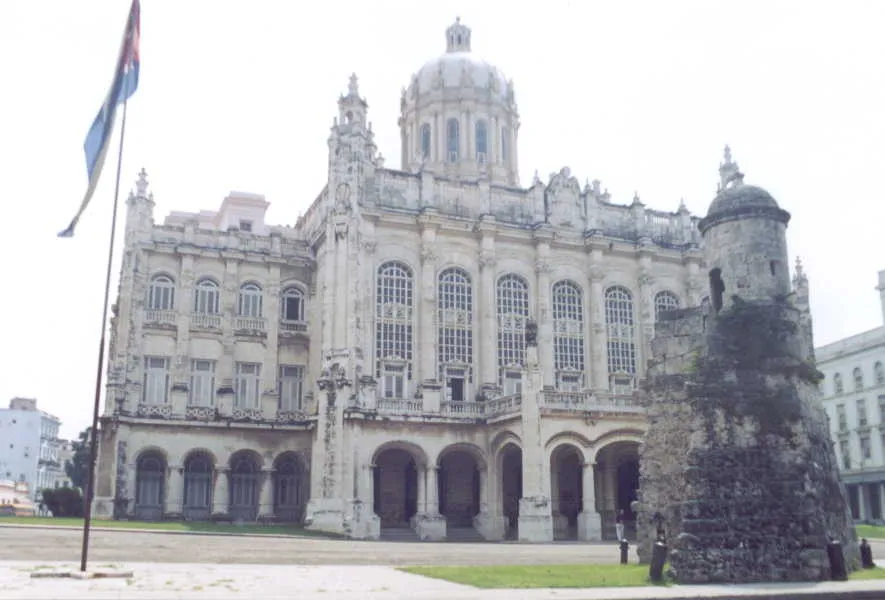
The Museo de la Revolución traces Cuba’s independence struggles and the events before and after the 1959 revolution. It occupies Havana’s former Presidential Palace, a neoclassical building with a marble staircase, a Golden Hall and a Hall of Mirrors. Inside, photographs, documents and personal belongings tell the story largely through the revolution’s own perspective; displays are mostly in Spanish, so some background reading or a guide can help. Behind the building, see military vehicles and the Granma, the boat that carried Fidel Castro from Mexico to Cuba in 1956.
A palace turned museum
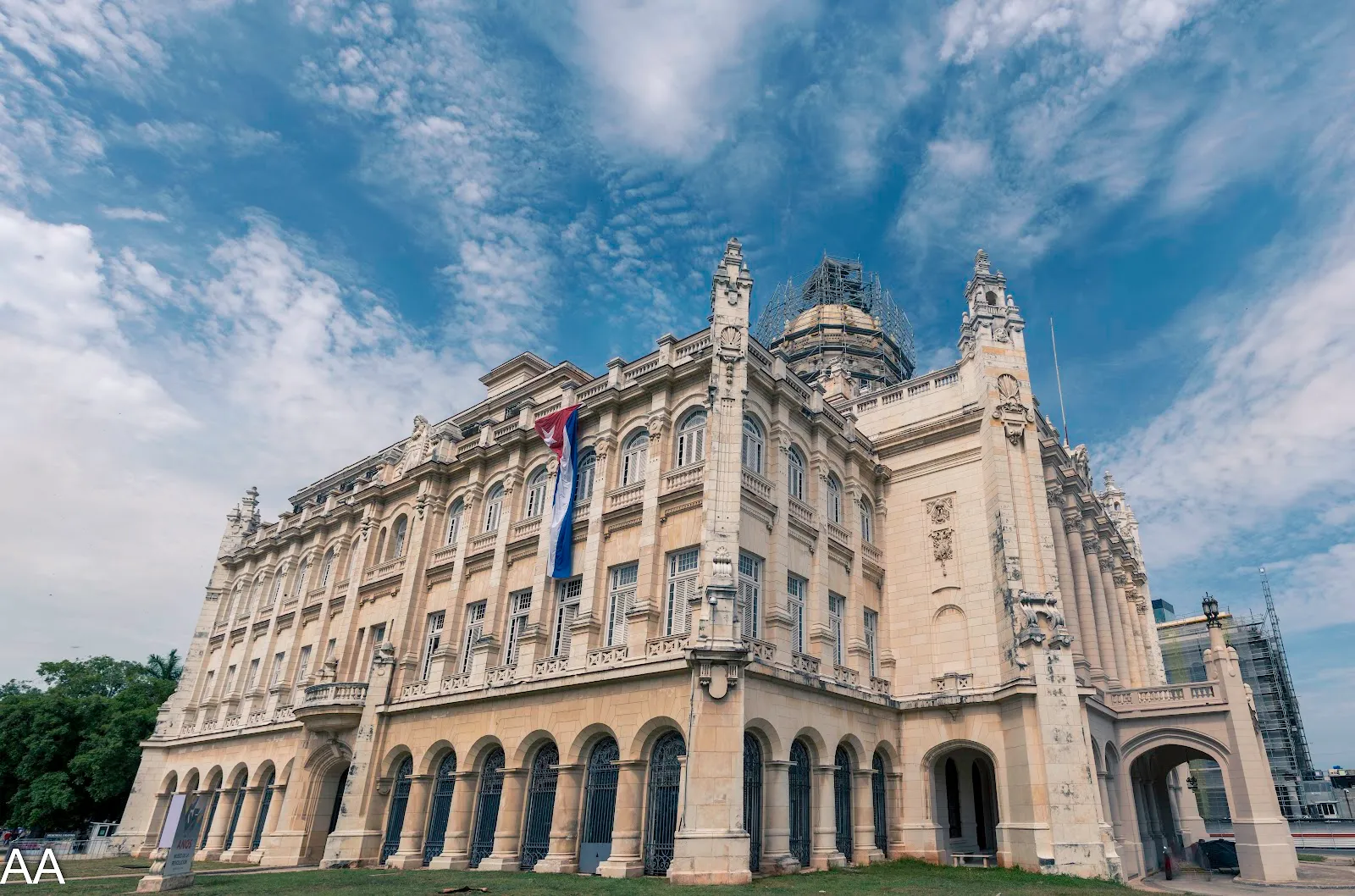
The museum occupies the former Presidential Palace, a building designed by Cuban architect Rodolfo Maruri and Belgian architect Paul Belau. It was inaugurated as the Presidential Palace in 1920 and served as the seat of successive Cuban presidents until the 1959 revolution. The building later became a government headquarters, then a museum dedicated to the revolution in 1974.
Its formal rooms give the history displays a striking setting. Look for the marble staircase, the Golden Hall with its yellow marble, and the Hall of Mirrors. The palace chapel has an elaborate chandelier; Tiffany’s of New York helped decorate the interiors in 1923.
Cuba’s history in the galleries
The exhibitions cover Cuba’s independence struggles, from the 19th century through the revolution and its aftermath. Alongside material on the 1959 revolution, displays include the 1895 to 1898 War of Independence against Spain and aspects of pre-revolutionary Cuba.
Photographs, original documents and personal belongings help tell the story of the revolt and its leaders. Other objects include maps, uniforms and weapons. Exhibitions also cover Ernesto “Che” Guevara, while a wall of caricatures depicts U.S. presidents Ronald Reagan and George Bush. The displays present events largely from the Cuban revolutionary perspective, and much of the explanatory text is in Spanish.
The outdoor exhibits and Granma
Behind the palace, an outdoor display includes military vehicles, aircraft and tanks. The Russian tank on view was used by Cuban forces during the Bay of Pigs invasion. The Granma memorial surrounds the boat that carried Fidel Castro and his group from Mexico to Cuba in 1956, at the start of the revolutionary campaign.
Renovation work has affected access to parts of the museum, and some visits have been limited to the annex and outdoor displays. Check current access before setting out, especially if seeing the palace galleries is central to your plans.
Planning a visit
The museum is a useful stop if you want to understand the history behind Havana’s revolutionary landmarks. The galleries contain many photographs and objects, but they do not explain every event in detail. Reading about the revolution beforehand can give the displays more context; a guide or image-translation app can help if you do not read Spanish.
Arrive early if you want to avoid the busiest period, when student groups may be visiting. Allow time for both the palace rooms and the outdoor exhibits, but check ahead because renovation work can change which areas are open.
FAQ
What is the Museo de la Revolución about?
It covers Cuba’s independence struggles, the 1959 revolution and its aftermath, with photographs, documents, personal belongings and military exhibits.
Where is the Granma boat displayed?
The Granma is enclosed in a memorial behind the former Presidential Palace, alongside outdoor military exhibits.
Are the museum exhibits in English?
Most exhibition text is in Spanish. A guide or image-translation app can help visitors who do not read Spanish.
Is the whole museum open during renovations?
Access has been limited during renovation, with some visits restricted to the annex and outdoor displays. Check ahead for current access.