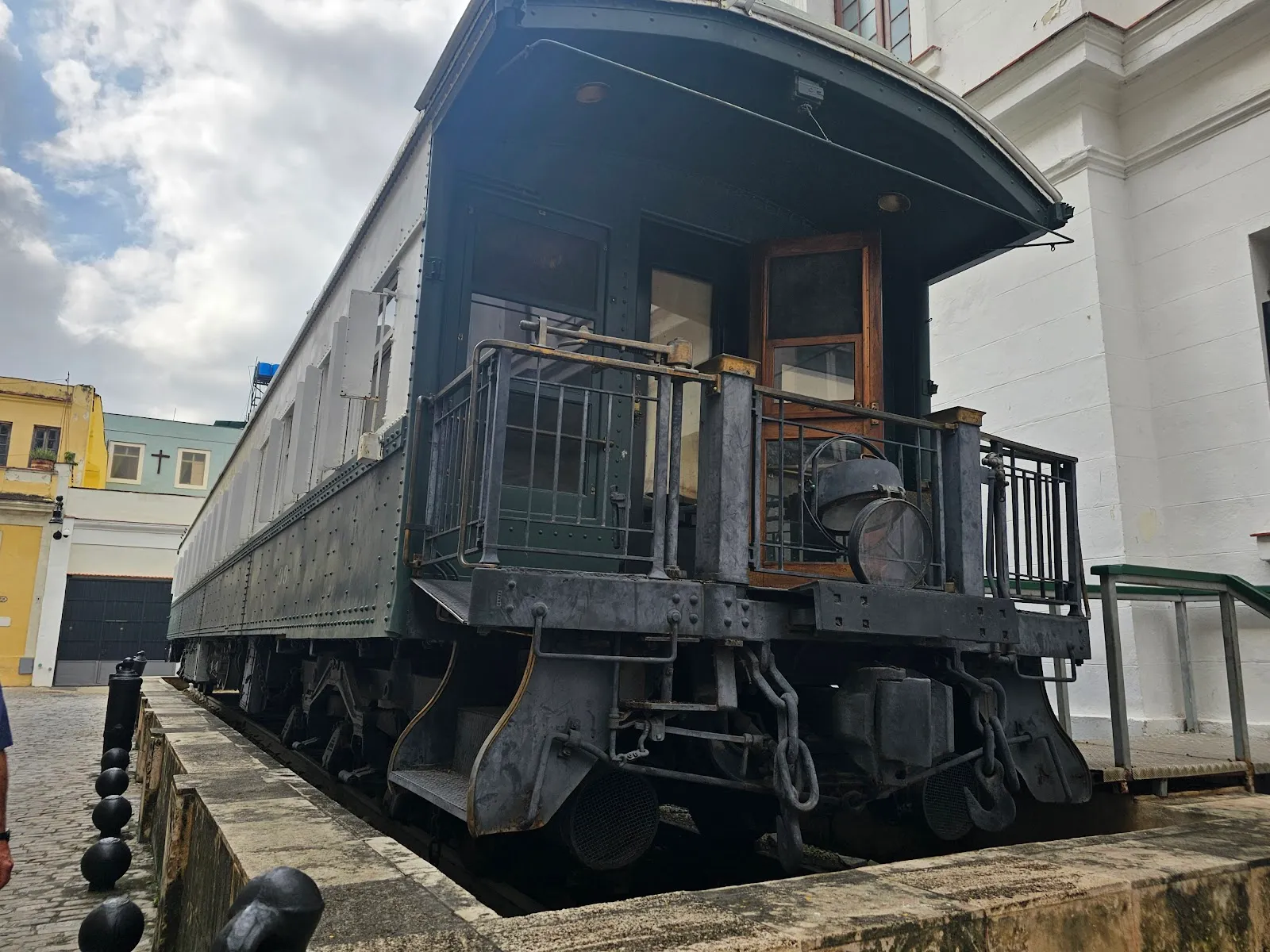
Coche Mambí is a presidential railway carriage on Oficios in Old Havana, built in the United States in 1900 and brought to Cuba in 1902. Cuban presidents used it for campaign journeys and official visits, and it became known as a palace on wheels. When access inside is available, you can see mahogany interiors, velvet upholstery, silverware and an ice-based cooling system. Staff may explain the carriage’s history. Admission is free, with donations welcomed for its preservation.
A carriage for presidential journeys
Coche Mambí was built in the United States in 1900 and brought to Cuba in 1902. It originally belonged to the Cuban Railroad Company. From 1902, Cuban presidents used it for campaign journeys and official visits, travelling across the island by rail.
The carriage’s association with presidential travel gave it the name “presidential train.” It was also used by high-ranking officials, and its rooms were designed for more than simply getting from one place to another.
Inside the carriage
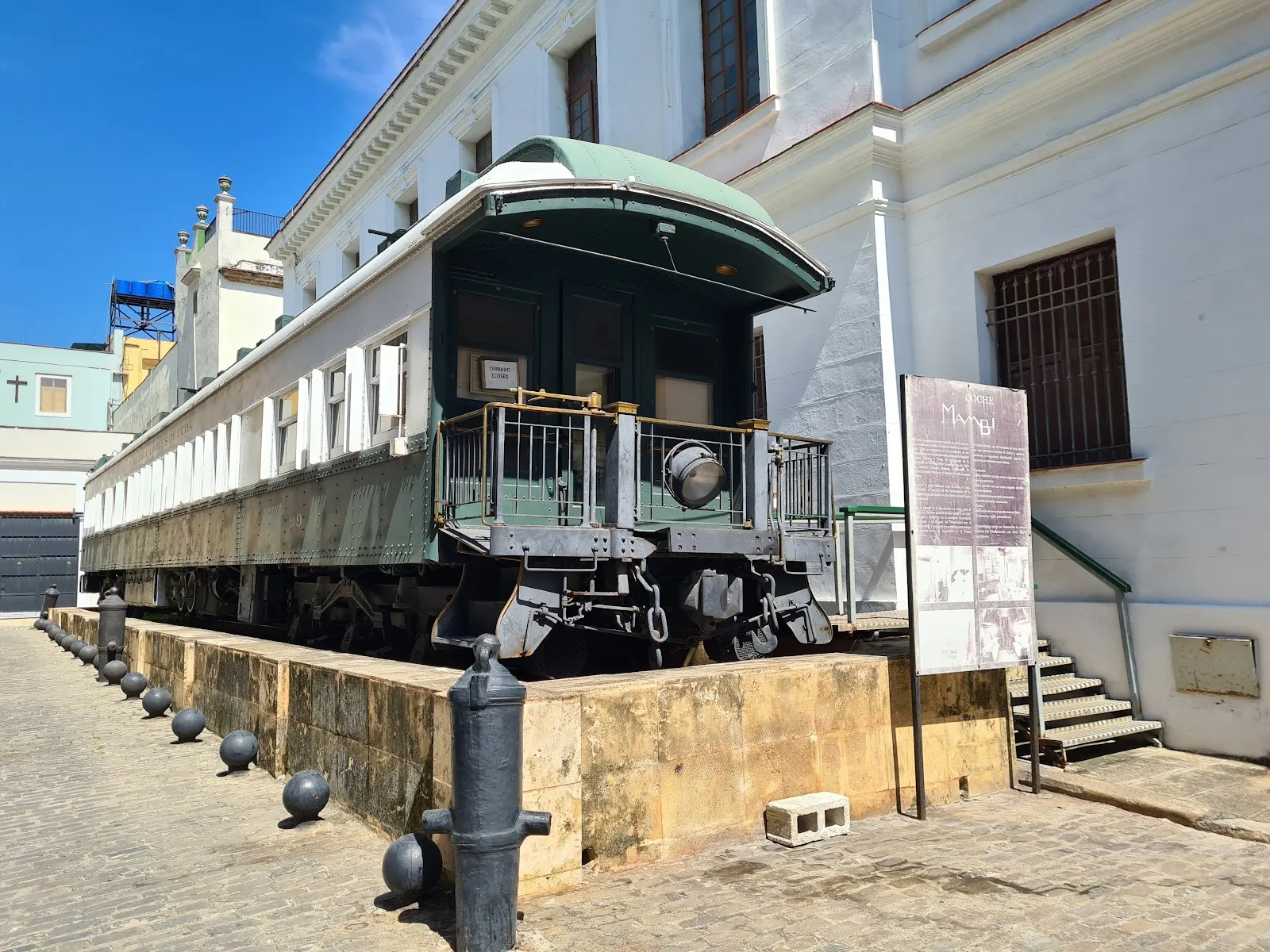
When visitors can enter, the interior gives a close look at the luxury of early twentieth-century rail travel. Mahogany furniture and detailed woodwork set the tone; velvet upholstery and metal fittings add to the elaborate finish. The carriage included a dining room, kitchen, bedroom, bathroom and office.
Silver tableware and fine porcelain were part of the dining setting. An ice-based cooling system helped keep the carriage comfortable. Together, these details show how a private railway car could function as a working and living space for presidents travelling on official business.
Planning a visit
The carriage stands on Oficios in Old Havana, outside the Museo Palacio de Gobierno. Admission is free, and donations support preservation. Staff may give visitors an explanation of the carriage and its history.
Access to the interior can vary: it has been closed to visitors at some times. Ask on arrival whether you can go inside, and plan to see the exterior if it is closed. Weekdays and early mornings are suggested for a quieter visit.
FAQ
Is admission to Coche Mambí free?
Yes. Admission is free, and visitors can leave a donation to support preservation.
Can you go inside Coche Mambí?
Interior access has not always been available. Ask on arrival whether the carriage is open to visitors.
What was Coche Mambí used for?
Cuban presidents used it for campaign journeys and official visits from 1902.
Where is Coche Mambí?
It is on Oficios in Old Havana, outside the Museo Palacio de Gobierno.