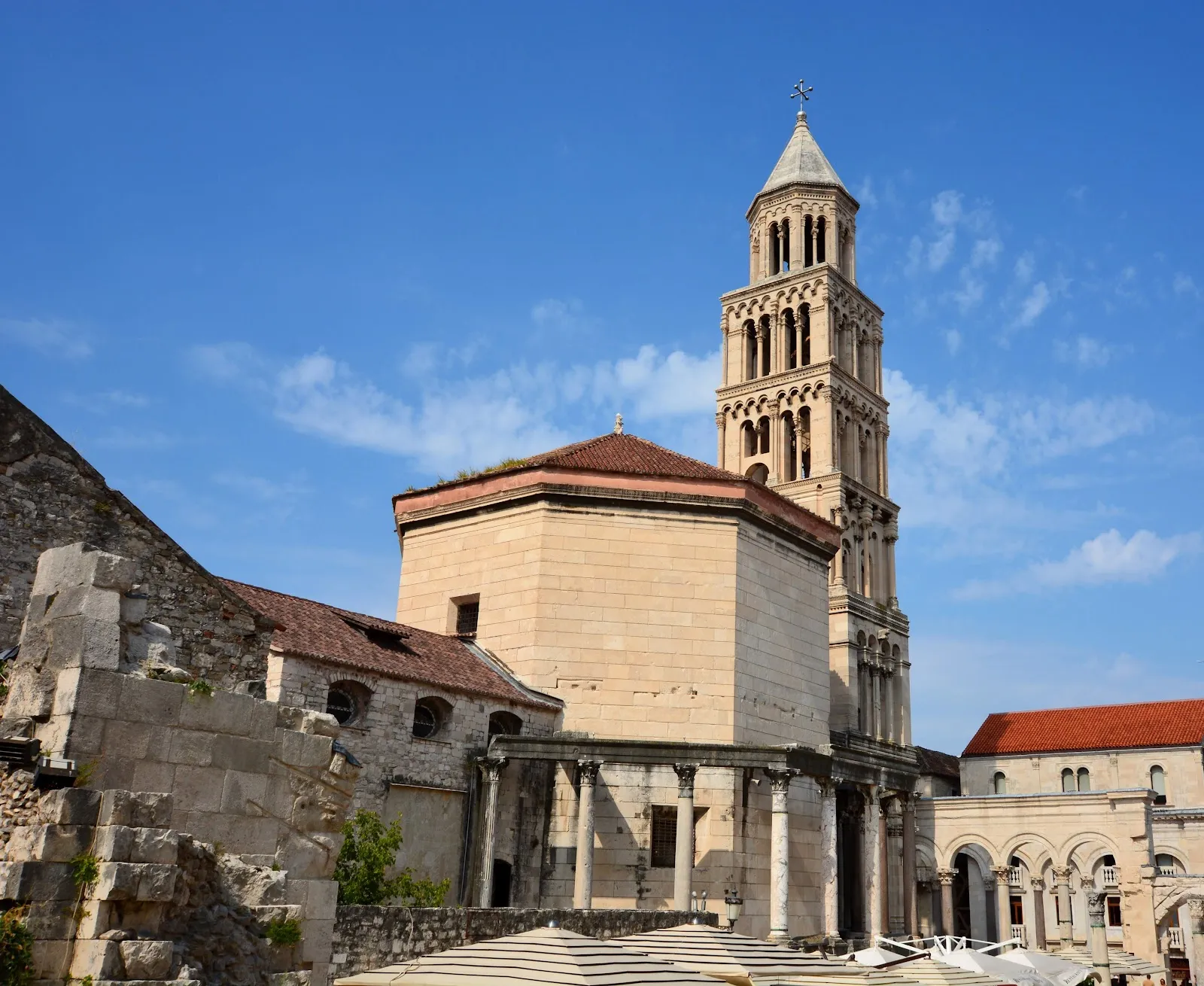
Saint Domnius Cathedral stands inside Diocletian's Palace in Split, Croatia, on the Peristyle square. It began as the mausoleum of the Roman emperor Diocletian, built around 305 AD, and became a church in the 7th century. Visitors come for the layers of history in one building, the bell tower with its views over the old town and harbour, and the Romanesque and Gothic details that show centuries of change. Inside, the main altar stands where the emperor's tomb once was.
From imperial tomb to church
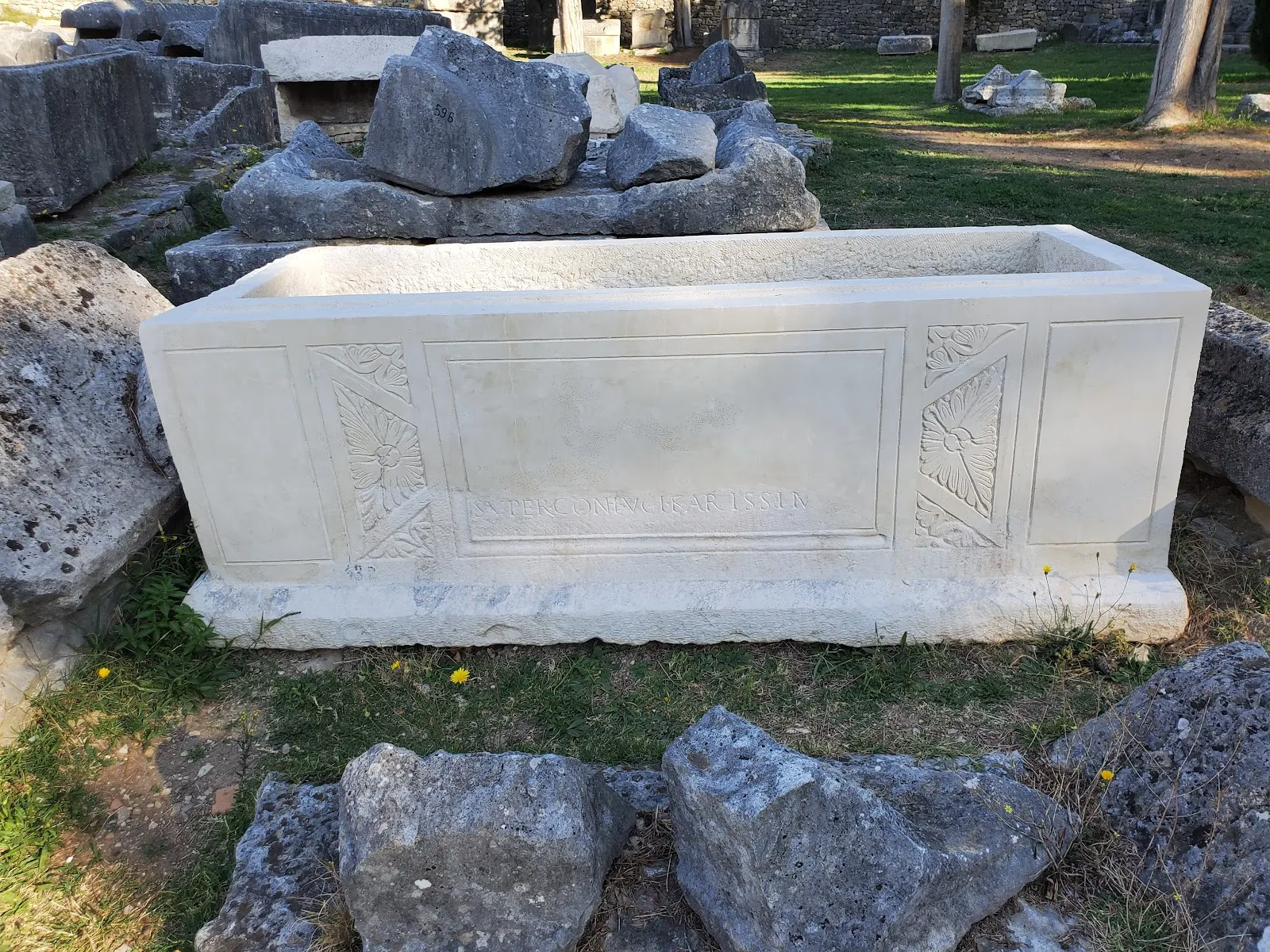
Diocletian was born in Dalmatia and ruled Rome in the late 3rd and early 4th centuries. He had the palace built as a retirement villa of limestone and marble, and the octagonal mausoleum at its centre was meant to hold his remains. He was one of the few Roman emperors who died of natural causes, and he is said to have been buried here.
After the emperor's sarcophagus was destroyed, the building became a church. It is dedicated to the Virgin Mary. Altars in the cathedral hold relics of two martyrs, Saint Domnius and Saint Anastasius, who were executed in nearby Solin.
The cathedral is regarded as the oldest Catholic cathedral still in use in its original structure. Its bell tower is a later addition, with a base from the 12th century.
Inside the cathedral
The interior is octagonal in plan, with white limestone and marble walls and a dome. The main altar stands in the middle of the room, close to where Diocletian's tomb once was. The different sections were built in different centuries, and the stone changes from one part to another, which is easiest to notice when you look closely at the walls.
Next to the cathedral, the Temple of Jupiter was built between 295 and 305 as a temple to Rome's chief god. It was later turned into a baptistery. The combined ticket covers the cathedral, the crypt, the treasury and the baptistery.
One tip for the interior: the cathedral is still an active church. Visitors may be asked to leave during mass and other religious or formal events, so check the timing before you plan a visit around a set time.
Climbing the bell tower
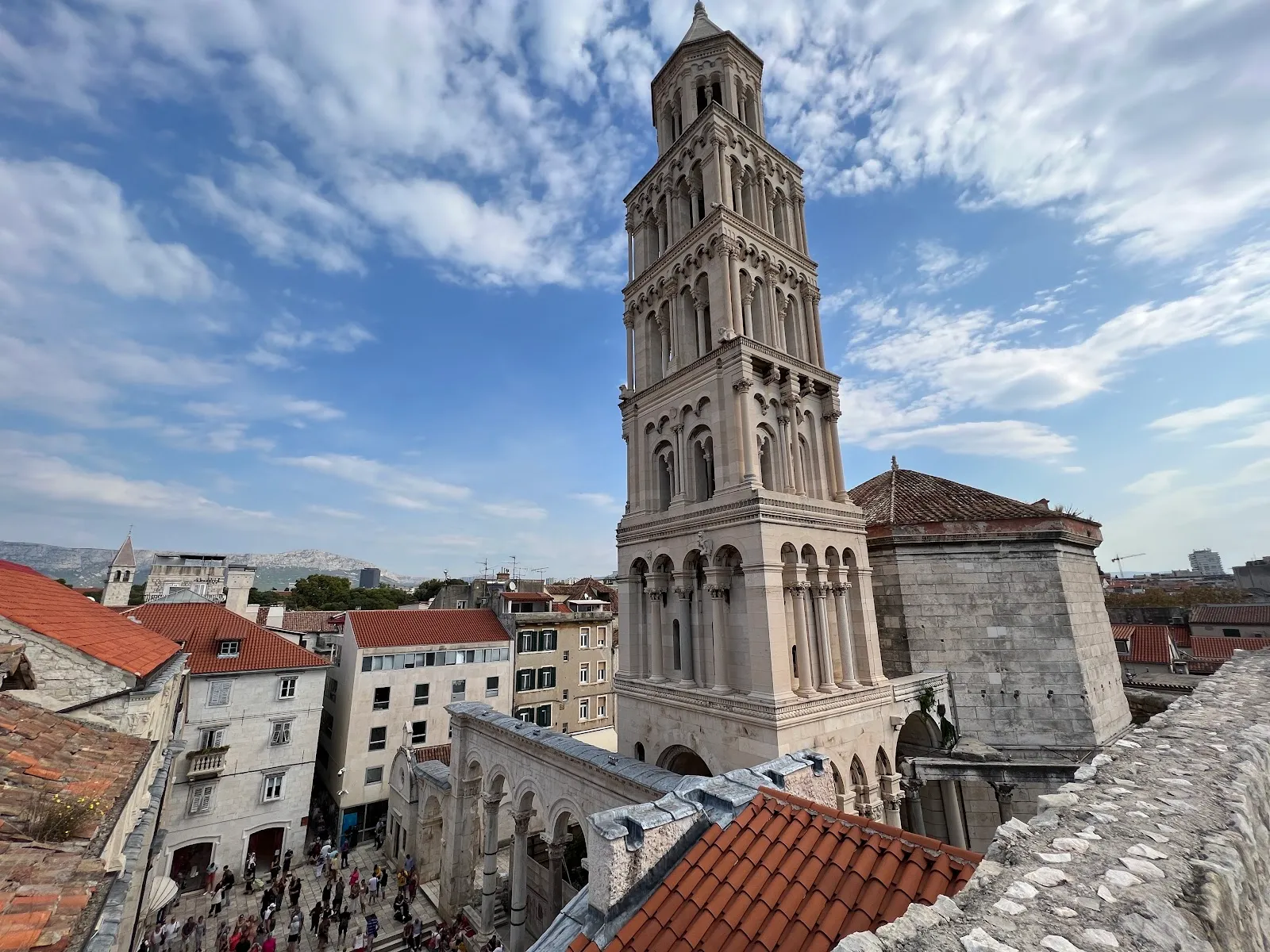
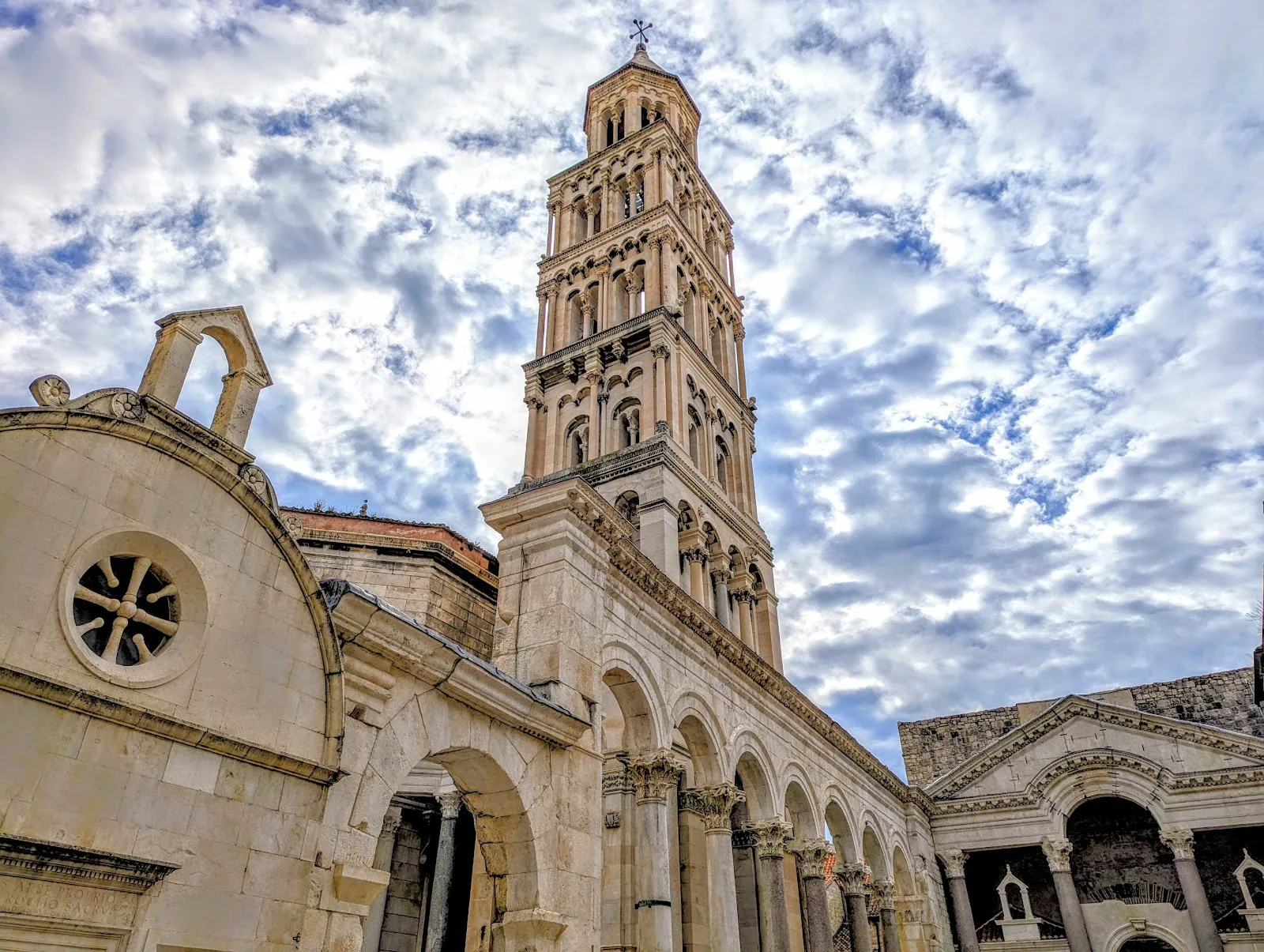
The tower stands about 57 metres high. Its Romanesque and Gothic elements reflect construction over several centuries. A restoration in 1908 followed a collapse, and the tower has been rebuilt since then.
The climb is narrow and can get crowded, especially on hot days. The steps are metal with gaps you can see through. At the top, the view covers Split's rooftops, the harbour, the Adriatic Sea and the central Dalmatian islands. The Peristyle and the palace walls are visible below.
One stretch of the stairs has a low ceiling with no marker, so keep your head down there.
Planning the visit
Tickets are sold at the ticket office across the square from the cathedral. Basic admission has been priced at 7 euros, covering the cathedral, crypt and baptistery. Check the current price when you go.
The site has a restroom, a wheelchair accessible entrance and a wheelchair accessible parking lot. A guided walking tour can explain the different periods of the building in order, which helps when the layers of history are hard to separate on your own.
Dress modestly, as you would for any active church.
Around the palace
Peristyle square lies in front of the cathedral, ringed by tall columns. Below the square are the Substructures, sometimes called the Cellars of Diocletian's Palace. They are easy to miss. The rooms raised the emperor's chambers above and were used for storage and other work that kept the palace running.
The Riva waterfront is a short walk from the cathedral. The Split City Museum and the Ethnographic Museum are both within easy reach of the old town.
FAQ
Is there an entry fee?
Yes. Basic admission has been priced at 7 euros and covers the cathedral, crypt and baptistery. Check the current price at the ticket office across the square.
Can you climb the bell tower?
Yes. The stairs are narrow with metal steps you can see through, so the climb is not suited to anyone who is afraid of heights.
Is it the oldest cathedral in the world?
It is regarded as the oldest Catholic cathedral still in use in its original structure. It was built as a mausoleum around 305 AD and became a church in the 7th century.
Is it still used for worship?
Yes, it is an active church. The cathedral may close to visitors during mass and other religious or formal events.
Is the cathedral accessible?
The site has a wheelchair accessible entrance and a wheelchair accessible parking lot.