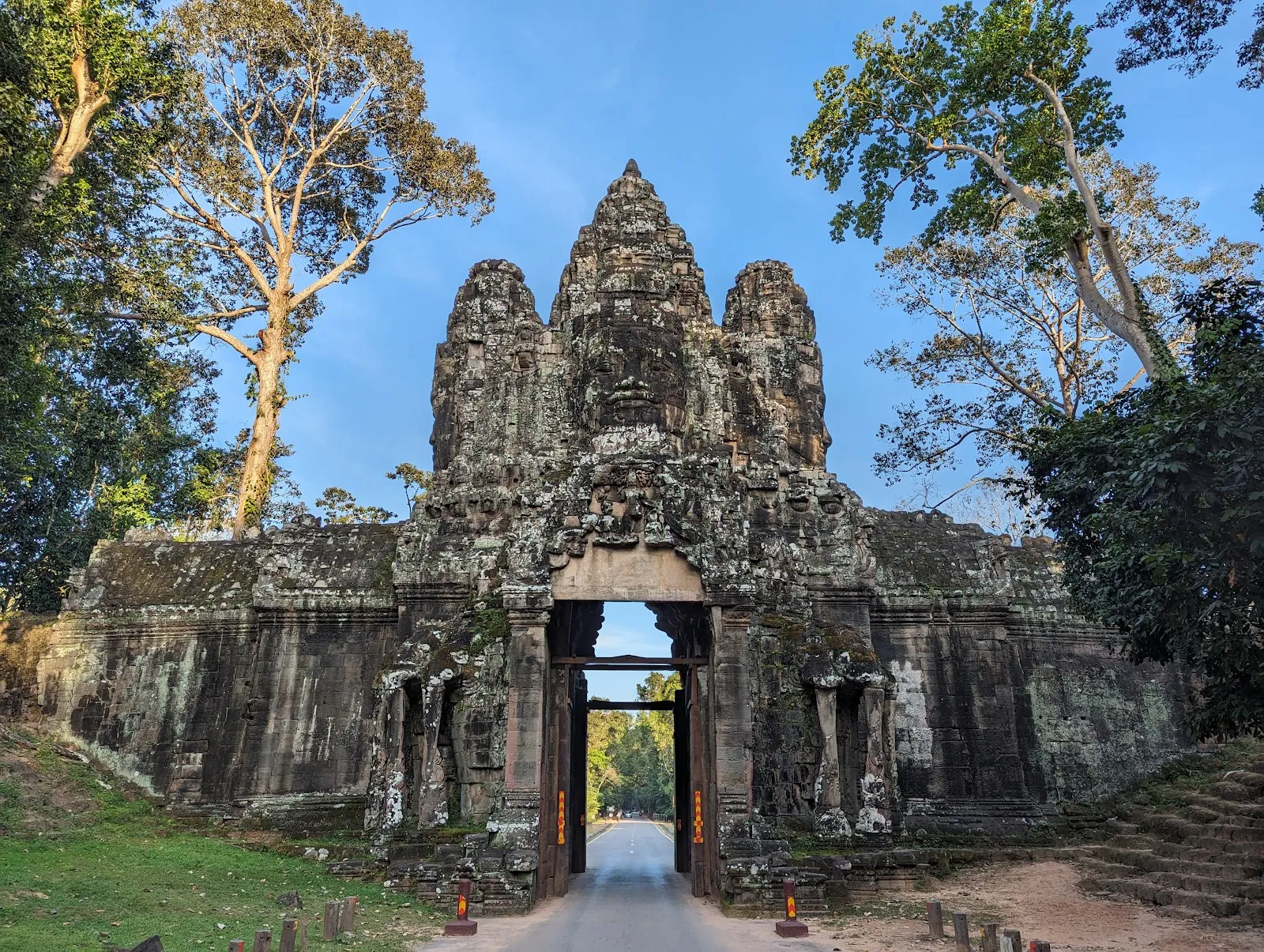
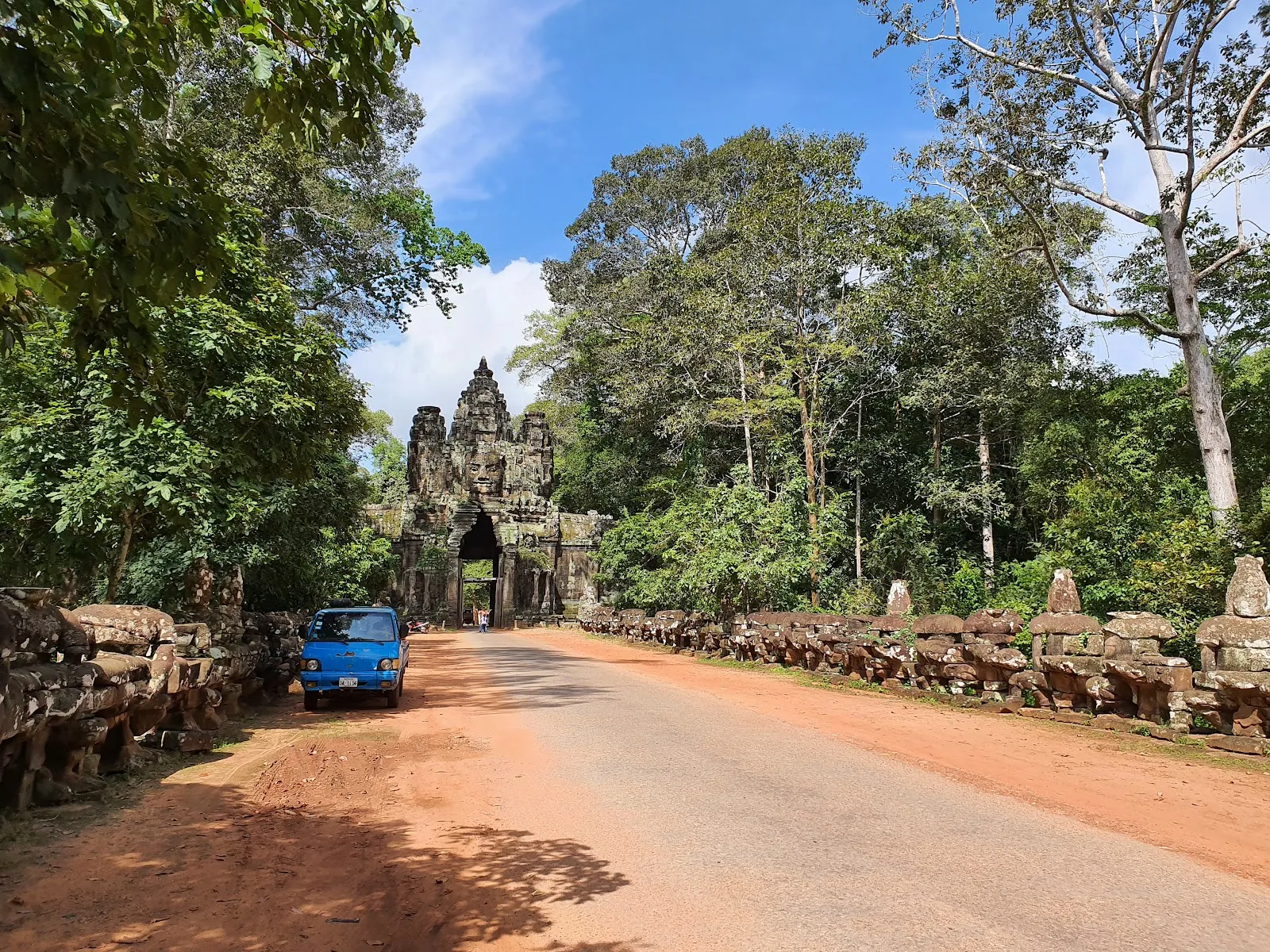
Victory Gate is the eastern entrance to Angkor Thom, the walled city of temples near Siem Reap. Its stone towers rise above a causeway, with large carved faces and traces of figures from Hindu mythology along the approach. The gate is quieter than Angkor Thom’s South Gate, so you can take time with the carvings and surrounding trees. Stop here on the route between Bayon and Ta Prohm, and walk along the causeway for closer views.
An entrance on Angkor Thom’s eastern side
Victory Gate is one of the entrances through the walls of Angkor Thom. Its Khmer name, Thvéa-chey, was recorded in 1883 and translated as Gate of Victory, though the victory it refers to is not known. Stories connecting the gate to a triumphant army or a victory procession are not confirmed as Angkor-period history.
The road through this area may predate the gate. It ran east from the palace sector towards the East Baray landscape. When Angkor Thom’s later walls crossed this older route, the road continued through an additional eastern entrance, outside the four roads centred on Bayon. This inherited alignment helps explain why the gate has a distinct position within the city’s layout.
Towers, faces and causeway carvings
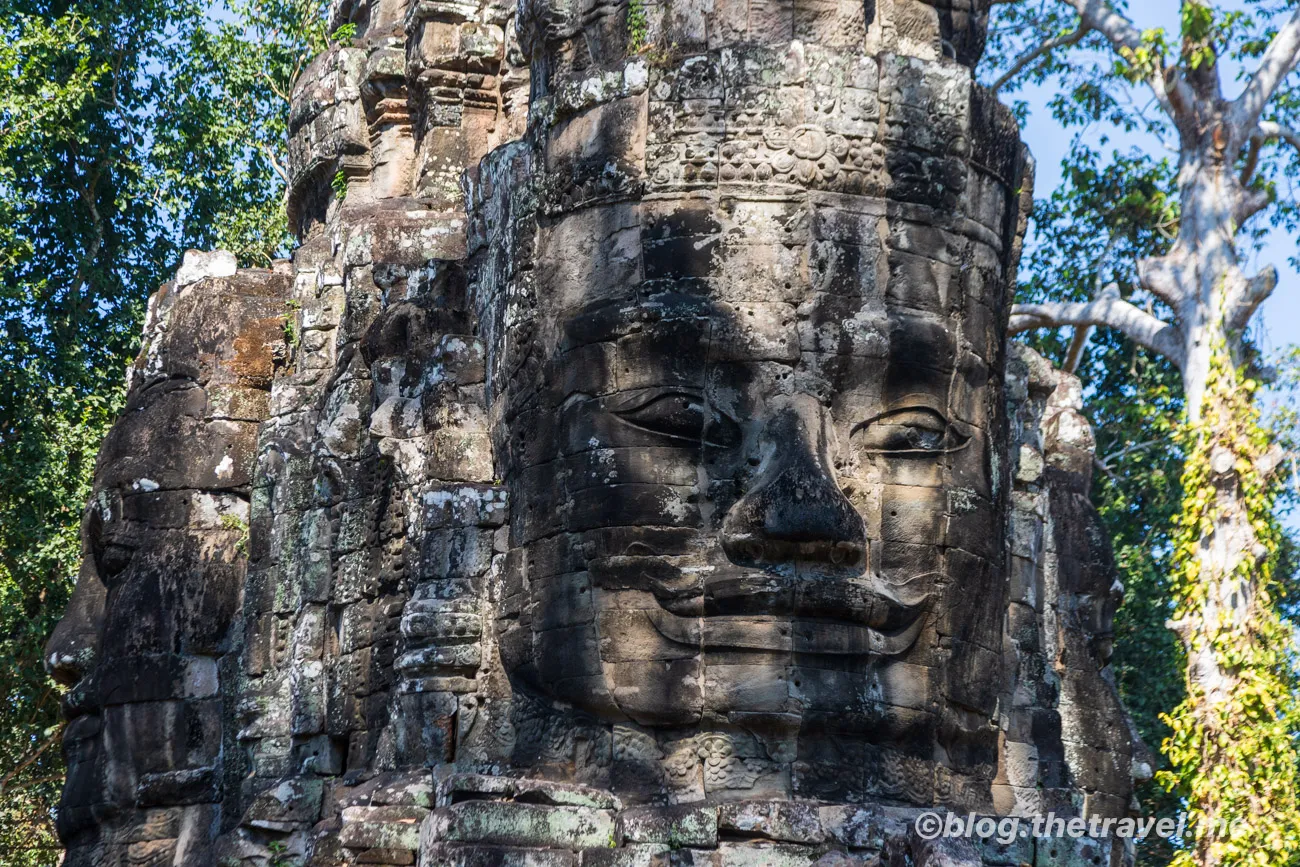
The first version of the gateway had three tower elements. Its upper stonework was later cut, rearranged and built up to support the large faces visible today. Repairs and archaeological work also changed the causeway, so what you see includes later interventions alongside Angkorian stonework.
Walk along the approach to inspect the surviving carved figures and details on the gate. Some of the figures are identified as devas and asuras, linked to the Hindu story of the Churning of the Ocean of Milk. Their remaining heads and carvings are among the details to look for as you cross the causeway. The faces above and the carved stone below give the entrance much of its visual character.
A stop between Bayon and Ta Prohm
Victory Gate fits naturally into a visit that links Bayon with Ta Prohm. It is an entrance to Angkor Thom, not a temple in its own right, so plan it as a short architectural and photographic stop along the way. The calmer setting compared with the South Gate gives you more room to pause and take in the stonework and trees.
For a closer look, walk along the causeway and climb the nearby city wall if you are comfortable with rough steps. The gate is also a useful place to appreciate how Angkor Thom’s walls and older routes meet. The present arrangement has changed over time, so the carved entrance is best understood as a layered structure rather than an untouched single-phase monument.
FAQ
Is Victory Gate a temple?
No. It is one of the gates into Angkor Thom, the walled city of temples.
What should I look for at Victory Gate?
Look at the large carved faces on the towers and the remaining figures on the causeway, including figures associated with the Hindu Churning of the Ocean of Milk.
How long should I spend at Victory Gate?
Allow about 15 to 30 minutes for a short walk, a closer look at the carvings and photographs.
Can you climb near Victory Gate?
Yes. You can climb the nearby city wall for views of the gate and jungle. The steps are rough.