Lalbagh Fort is a Mughal fort in Old Dhaka, begun in 1678 and never finished. Inside the walls stand the tomb of Pari Bibi, a three-domed mosque and the Diwan-i-Aam audience hall, set among lawns with walking paths, fountains and water channels. Part of the complex is a museum. The red-brick grounds are calm compared with the streets outside. Plan on 1.5 to 2 hours, and go in the late afternoon, when the light suits photos.
An unfinished Mughal fort
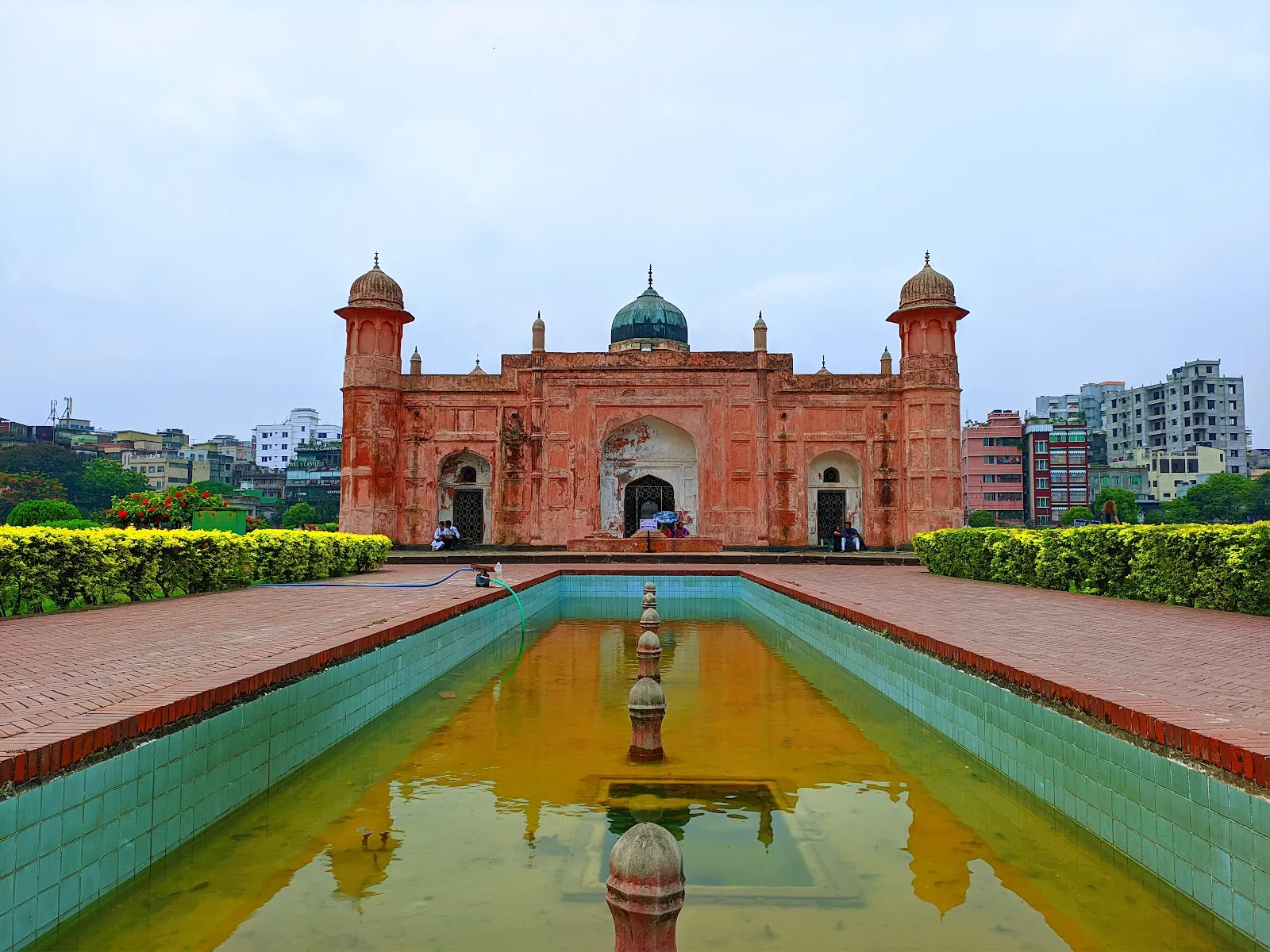
Lalbagh Fort stands in the southwestern part of Old Dhaka, in the Lalbagh neighbourhood. Construction began in 1678 under Prince Muhammad Azam, the third son of Emperor Aurangzeb, while he was governor of Bengal. The fort was first called Aurangabad Fort, and the work was never completed.
The name Lalbagh means Red Garden and comes from the neighbourhood. The Buriganga River once ran close to the walls. It has since shifted south and now flows at some distance from the fort.
What stands inside the walls

The plan is rectangular, about 1,082 by 800 feet, with a smaller, plain gateway on the north side. Three buildings form the core of the complex.
The tomb of Pari Bibi is decorated with marble. The mosque has three domes. The Diwan-i-Aam, the audience hall, belongs to the residence of the Mughal governor, Shaista Khan. A historic hammam, or bathhouse, is also part of the complex.
The governor's residence and durbar hall now hold a museum. It is the best place to follow the Mughal history of the site before you walk the grounds.
The gardens and the walk
Lawns, fountains and water channels cover much of the complex, and paths run between the buildings. The grounds are kept clean and are quiet compared with the streets just outside. This makes the fort a place to walk slowly and take photos.
The red-brick buildings look their best in the low light of late afternoon. Families and groups of friends come for a stroll, and the complex is considered good for children.
Planning the visit
Allow 1.5 to 2 hours to see the monuments, the museum and the gardens without hurrying. The fort has free and paid parking, and a wheelchair accessible entrance and parking area.
For a view of the fort from outside, there is a cafe across the road. In the neighbourhood, Old Dhaka's traditional food is close by, and Birani at Nazira Bazaar is a local suggestion. The Dhakeshwari Mandir temple and Ahsan Manzil are also in the area, so the fort fits easily into a day around the old city.
FAQ
How long do you need at Lalbagh Fort?
Allow 1.5 to 2 hours. That is enough for the tomb, the mosque, the Diwan-i-Aam, the museum and a walk through the gardens.
When is the best time to visit Lalbagh Fort?
Late afternoon, when the light suits photos and the weather is more pleasant. Weekdays are calmer, as weekends and public holidays get crowded.
Is Lalbagh Fort open every day?
No. It is closed on Sundays and opens in the afternoon on the other days. Check the opening hours on the page before you go.
Is the entry ticket expensive?
The ticket is affordable. Buying tickets in advance is recommended.
Is Lalbagh Fort suitable for children and wheelchair users?
Yes, the fort is good for children and families. The entrance and parking lot are wheelchair accessible.