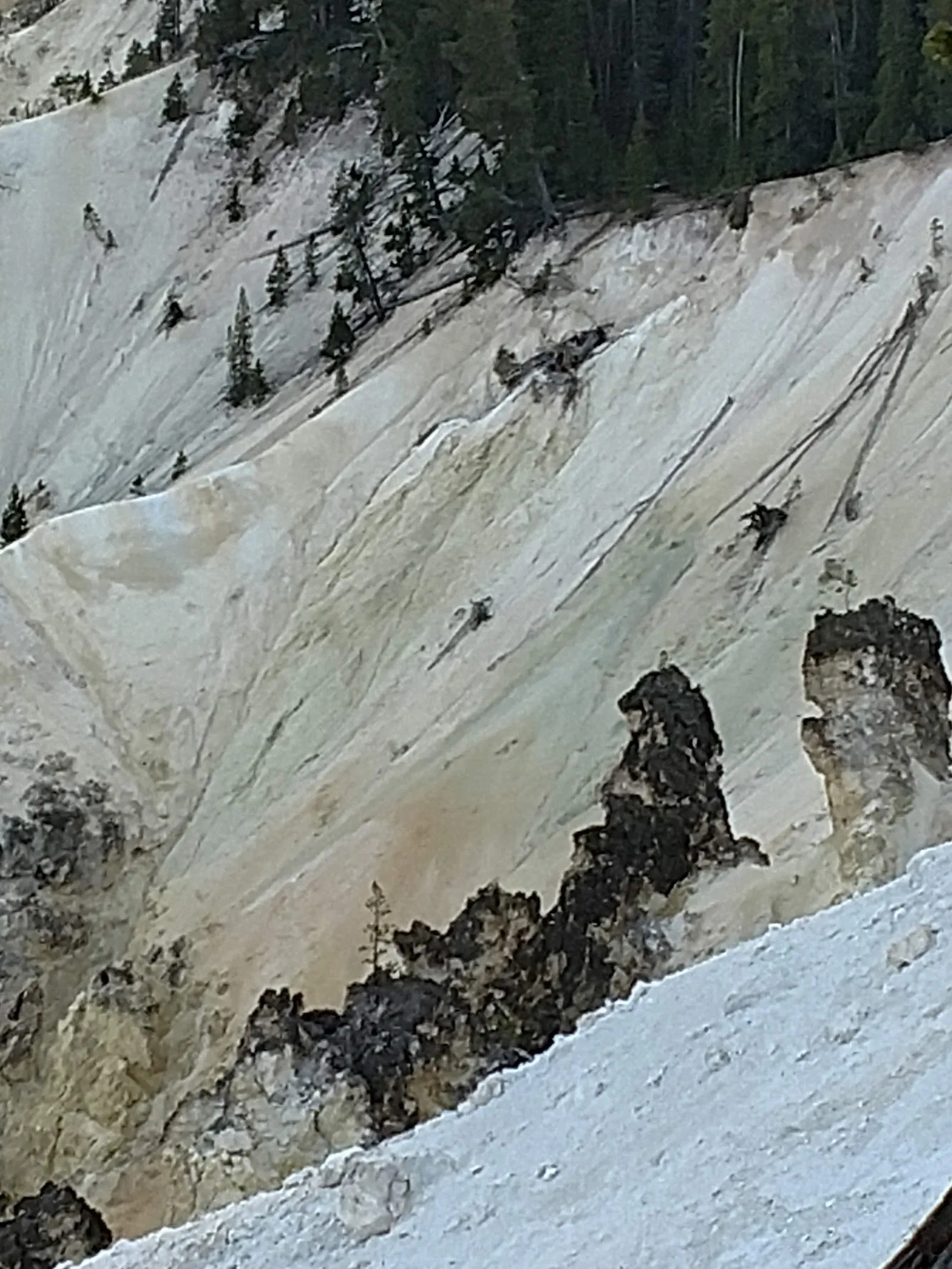
Mammoth Hot Springs is a geothermal area in northern Yellowstone National Park, near the North Entrance and the town of Gardiner. Hot, mineral-rich water deposits limestone as it reaches the surface, building pale, sometimes orange terraces that change as water flows shift. Wooden boardwalks cross the Lower and Upper Terraces, with stairs between levels; you can also drive the Upper Terrace loop. Look for Minerva Terrace, Canary Spring and Liberty Cap, and watch for elk around the nearby village.
How the terraces form
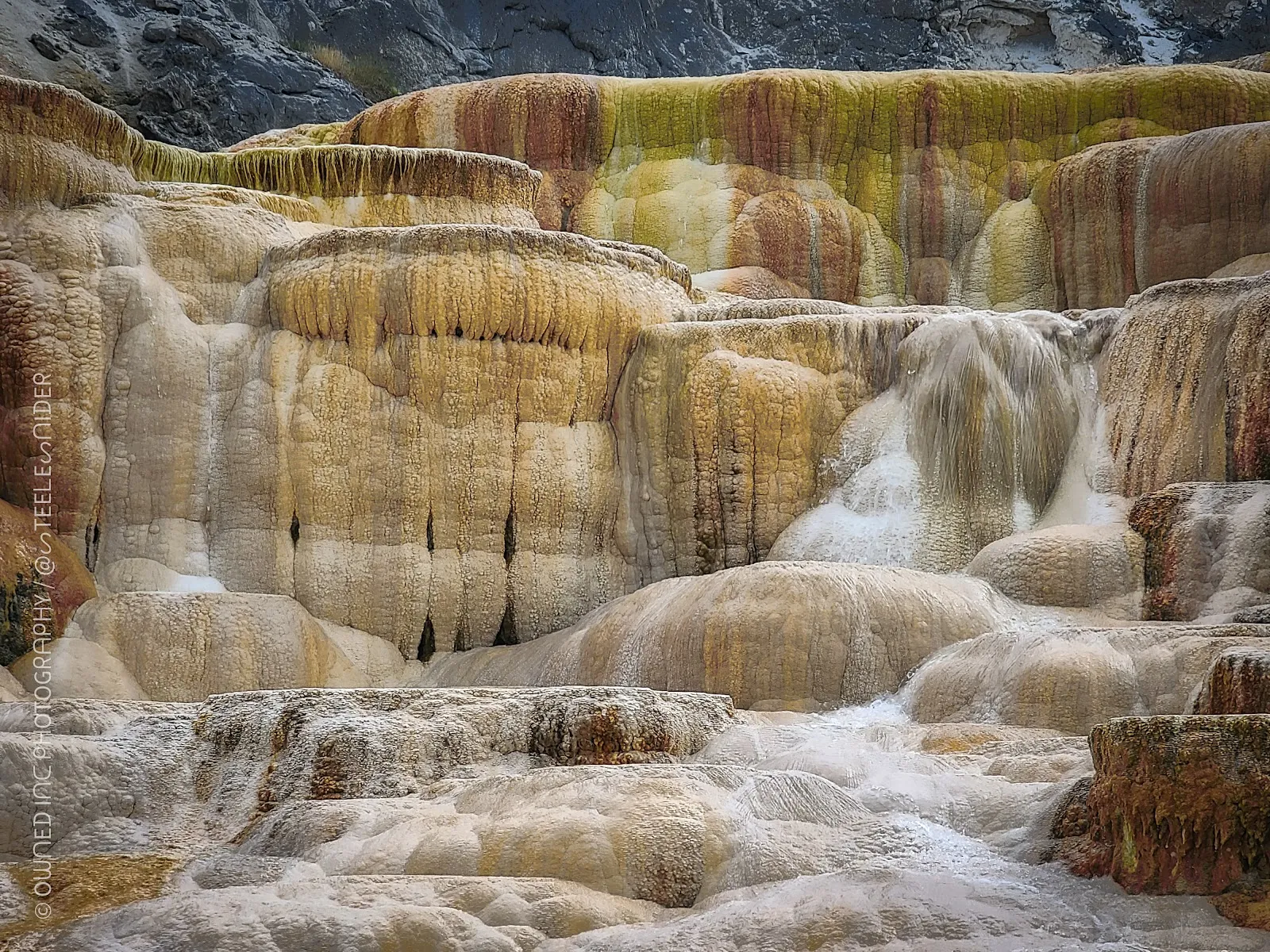
Mammoth’s terraces are made of travertine, a form of calcium carbonate. Hot water travels through limestone underground, dissolves minerals and carries them toward the surface. As the water emerges and cools, it leaves mineral deposits behind, building pale shelves, ridges and pools down the hillside.
The changing flow of water means the scene does not stay fixed. Some springs and terraces dry up, while new flows appear elsewhere. The rock can look white or cream, with yellow and brown tones among the deposits. The shapes have been compared to cave formations and frozen cascades, but their appearance is the result of mineral-rich water moving over limestone.
Exploring the Upper and Lower Terraces
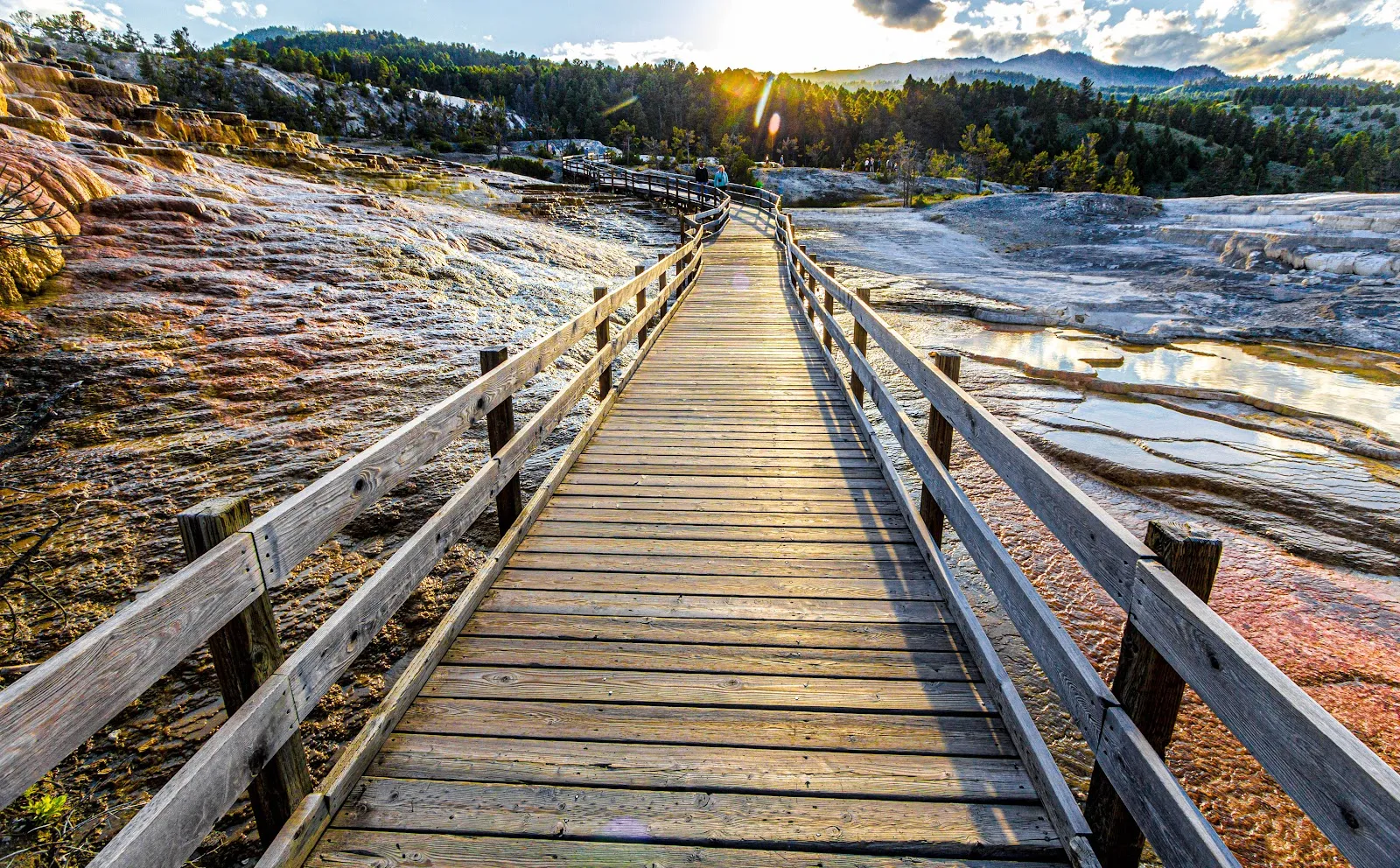
Boardwalks give access to both levels of the thermal area. The Lower Terrace Interpretive Trail passes formations including Minerva Terrace, whose layered ridges resemble a staircase. Palette Spring, Liberty Cap and the Main Terrace are other named features in the area. Conditions at individual springs can change, so a formation may look different from one visit to the next.
The Upper Terrace can be reached by car as well as on foot. The two levels are connected by boardwalks with stairs, so walking the whole route involves climbing. If you want a shorter visit, choose a section of the boardwalk or use the upper drive rather than completing the full walk. Keep to the paths: the springs are far too hot for swimming, and visitors are not permitted to bathe in them.
Fort Yellowstone and wildlife
Mammoth is also a historic part of the park. Fort Yellowstone includes surviving buildings from the 1890s and early 1900s, when the US Army administered Yellowstone. The Albright Visitor Center is housed in the historic district, and the wider Mammoth area includes the Heritage and Research Center, where exhibits include Native American materials and early Yellowstone documents.
Elk are often seen around Mammoth village and the historic buildings. Bison and other wildlife may also move through the area. Give animals plenty of distance and stay alert, especially around roads and parking areas. The village has a hotel, restaurant and general store alongside park services.
FAQ
Can you swim at Mammoth Hot Springs?
No. The hot springs are too hot for swimming, and bathing is not permitted in the thermal area.
How long should you spend at Mammoth Hot Springs?
Allow about 1 to 2 hours to explore the terraces. You can shorten the visit by walking only part of the boardwalks or driving the Upper Terrace loop.
Are there stairs at Mammoth Hot Springs?
Yes. Stairs connect the Upper and Lower Terraces. The Upper Terrace can also be reached by car.
What wildlife might you see near Mammoth Hot Springs?
Elk are often seen around Mammoth village. Bison and other wildlife may also be in the area, so keep your distance.