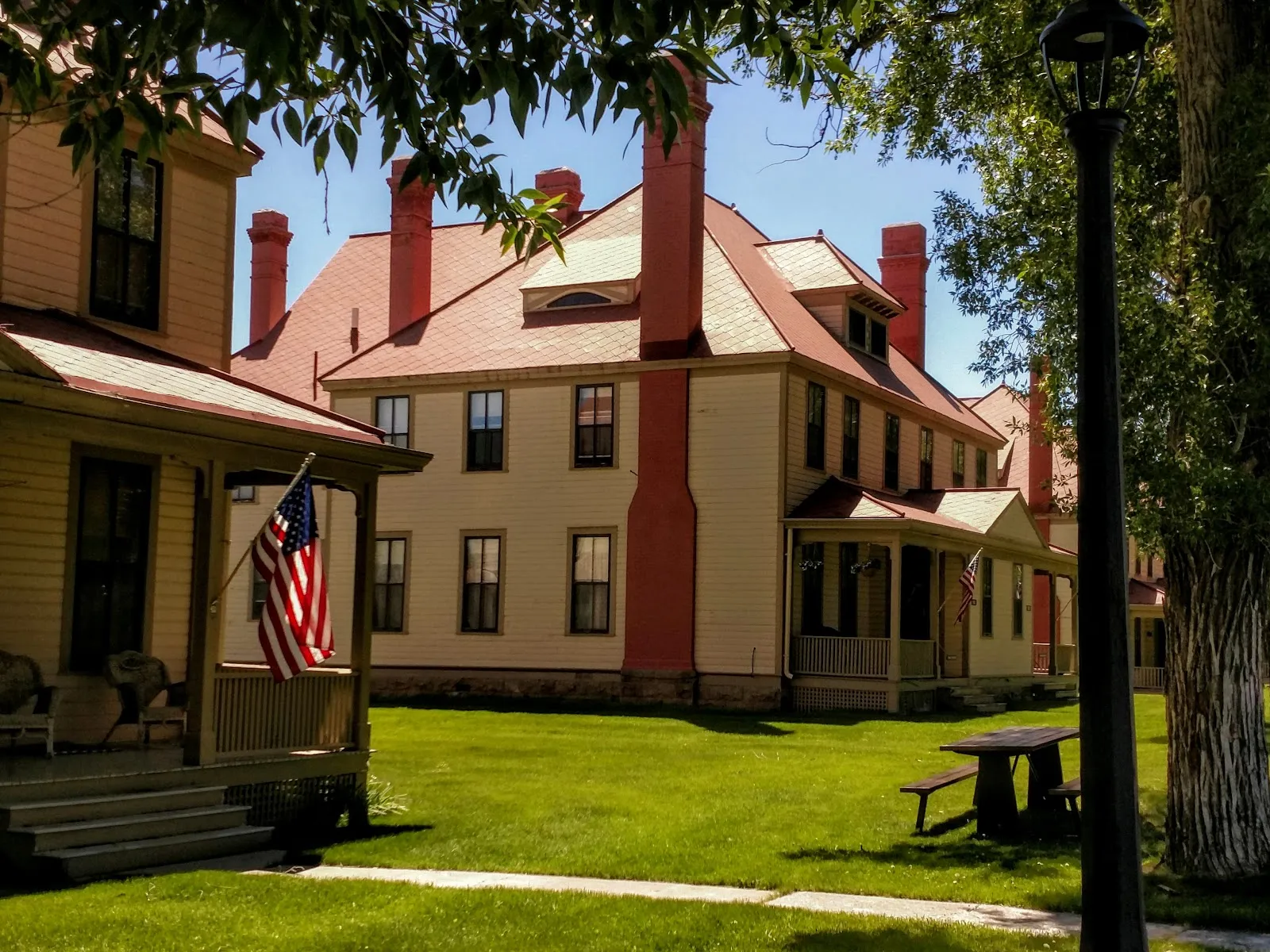
Fort Yellowstone is a group of historic buildings in the Mammoth Hot Springs Historic District, at the north end of Yellowstone National Park. The U.S. Army managed the park here from 1886 to 1918, and many of the old fort buildings remain in use by the National Park Service. Walk among the buildings to see their architecture and read the outdoor placards about their past and present purposes. The Albright Visitor Center and Museum, inside a former fort building, has exhibits on park history, wildlife and geothermal features.
The army years at Mammoth
Fort Yellowstone is in the Mammoth Hot Springs Historic District, near the north entrance area of Yellowstone National Park. The U.S. Army began managing the park in 1886. The fort was formally established in 1891 as a military outpost tasked with protecting the park’s natural resources and wildlife.
The army’s time managing Yellowstone ended in 1918. Fort Yellowstone is now part of the park’s administrative center, and many of its historic buildings are used by the National Park Service. The complex is a National Historic Landmark. Walking through it gives a sense of how park protection and administration took shape in Yellowstone’s early years.
Buildings around the parade ground
The historic complex includes 35 structures dating from 1890 and the early 1900s. Red-brick buildings with red roofs and multiple chimneys cluster around an open area known as the Parade Ground. The buildings have been maintained and adapted for current uses, so the walk takes you past both historic architecture and working park facilities.
Outdoor placards explain the original and current purpose of individual buildings. Take time to read them as you go; the details help distinguish the former fort from the surrounding Mammoth community. The buildings are spread through the area rather than gathered inside a single museum, so the visit is best done on foot.
Inside the Albright Visitor Center
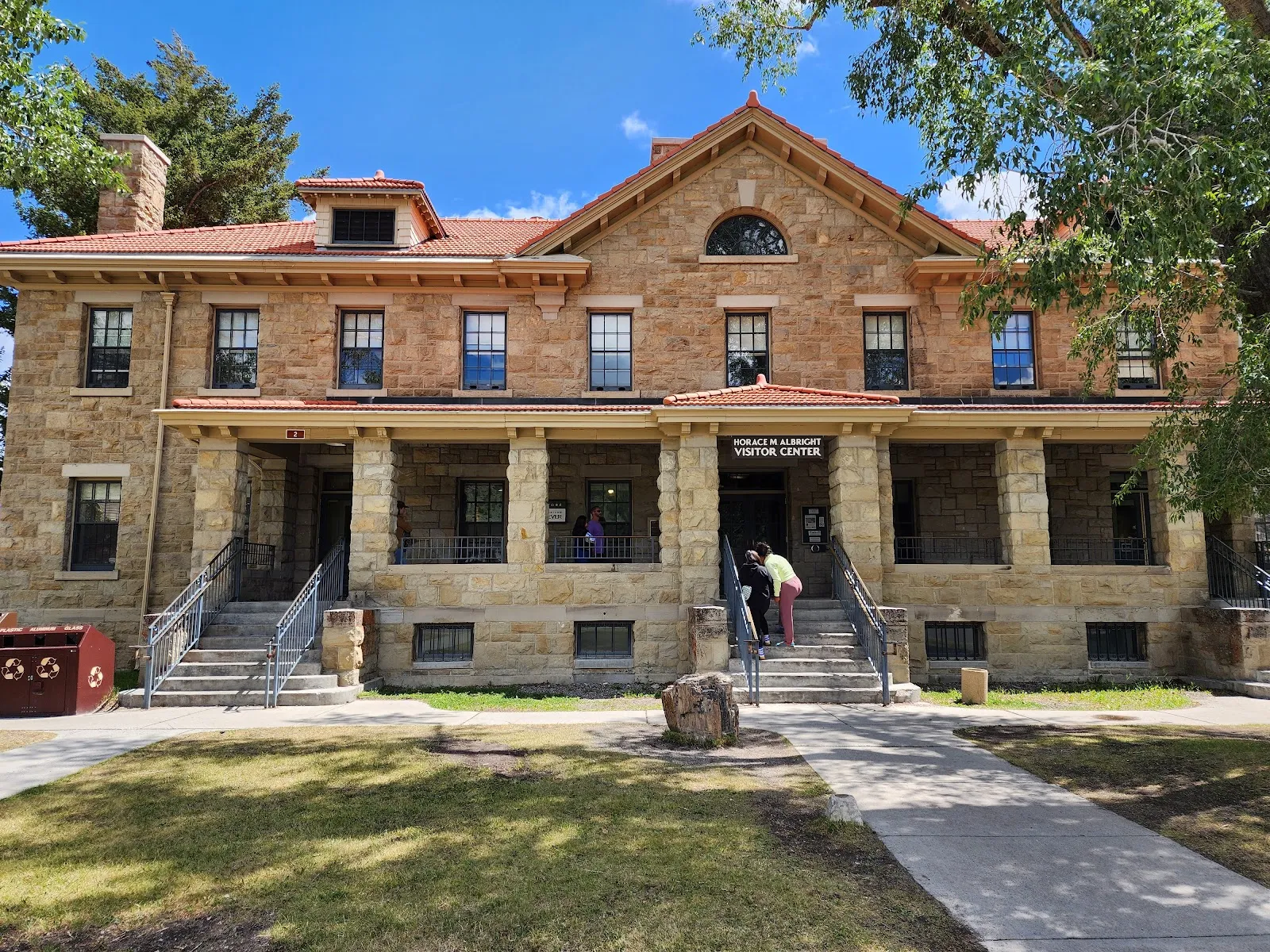
The Albright Visitor Center and Museum occupies a historic building that once served as bachelor officers’ quarters. Its exhibits cover Yellowstone’s history, wildlife and geothermal features, making it a useful indoor stop alongside the outdoor walk. A display of local wildlife is also noted at the center.
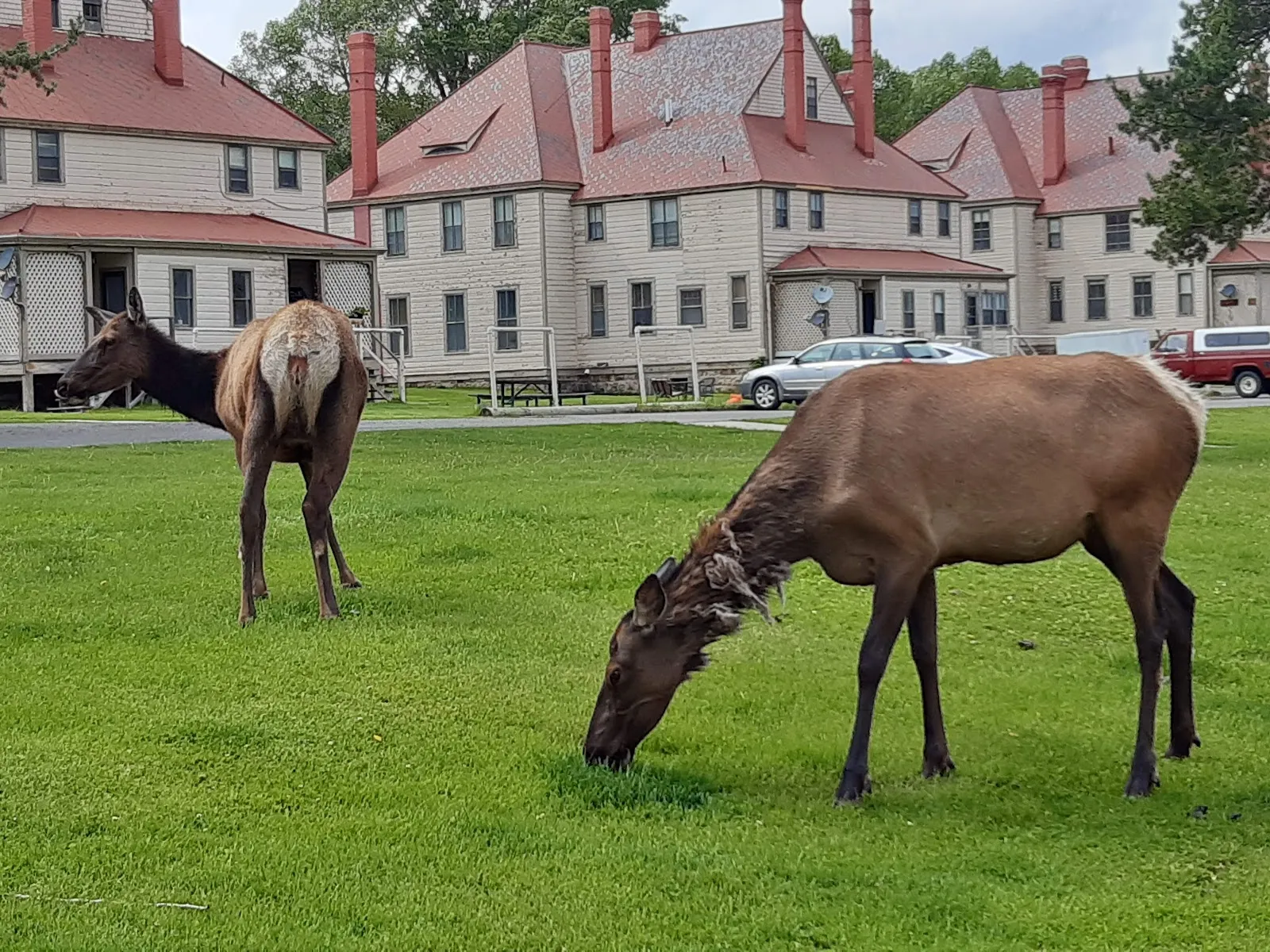
Fort Yellowstone sits close to Mammoth Hot Springs and the nearby terraces, so the historic district can be combined with a visit to those features. Wildlife may also be present around the buildings. Elk and bison are wild animals: observe them from a safe distance and follow any directions from park staff.
FAQ
How long does it take to visit Fort Yellowstone?
Allow about an hour to walk around and read the placards outside the buildings. An audio tour is also available.
What is the Albright Visitor Center?
It is a visitor center and museum housed in a former Fort Yellowstone building. Exhibits cover Yellowstone’s history, wildlife and geothermal features.
When is a quieter time to visit Fort Yellowstone?
March and October can be quieter. Some facilities or trails may be closed seasonally.
Can you see wildlife near Fort Yellowstone?
Elk and bison may be in the area. Keep a safe distance from both.