At 701 Constitution Ave. NW, just north of the National Mall, the National Archives Museum displays the original Declaration of Independence, U.S. Constitution and Bill of Rights in its Rotunda. These founding documents are the main reason to visit, but the galleries also bring together other records, photographs and objects tied to the country’s past. Look for the Magna Carta and interactive displays on citizenship and free speech. Admission is free; reserve a timed entry, particularly during the busy season, and leave time for exhibits beyond the Rotunda.
The Charters of Freedom in the Rotunda
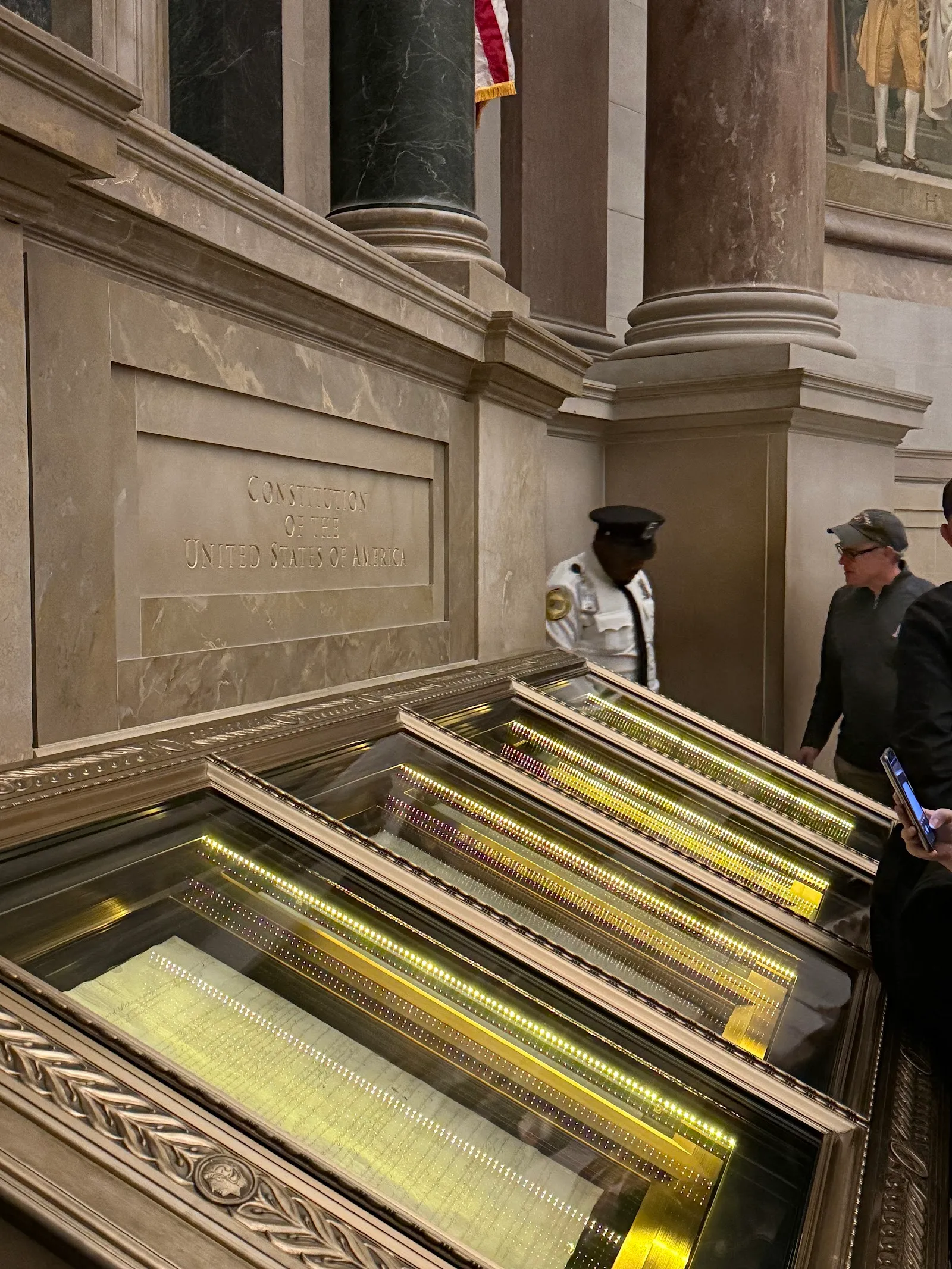
The Rotunda holds the original Declaration of Independence, U.S. Constitution and Bill of Rights, displayed in separate cases. The room is dimly lit to help protect the documents, and photography and video are prohibited there. Take a moment to look closely at the writing and signatures; these are physical records, not replicas created for display.
The museum calls these three documents the Charters of Freedom. They record foundational ideas about the country’s government and rights, and seeing them together gives the Rotunda its focus. The documents are displayed behind protective glass in a setting designed for preservation.
Beyond the founding documents
The galleries contain more than the documents at the heart of the visit. The museum’s collection includes photographs, recordings and records connected to significant events and public life. Examples mentioned in the museum material include the Emancipation Proclamation, the Louisiana Purchase Treaty and the Articles of Confederation. Other displays have included presidential papers and documents relating to the history of women’s voting rights; exhibits can change, so check the museum’s website for current details.
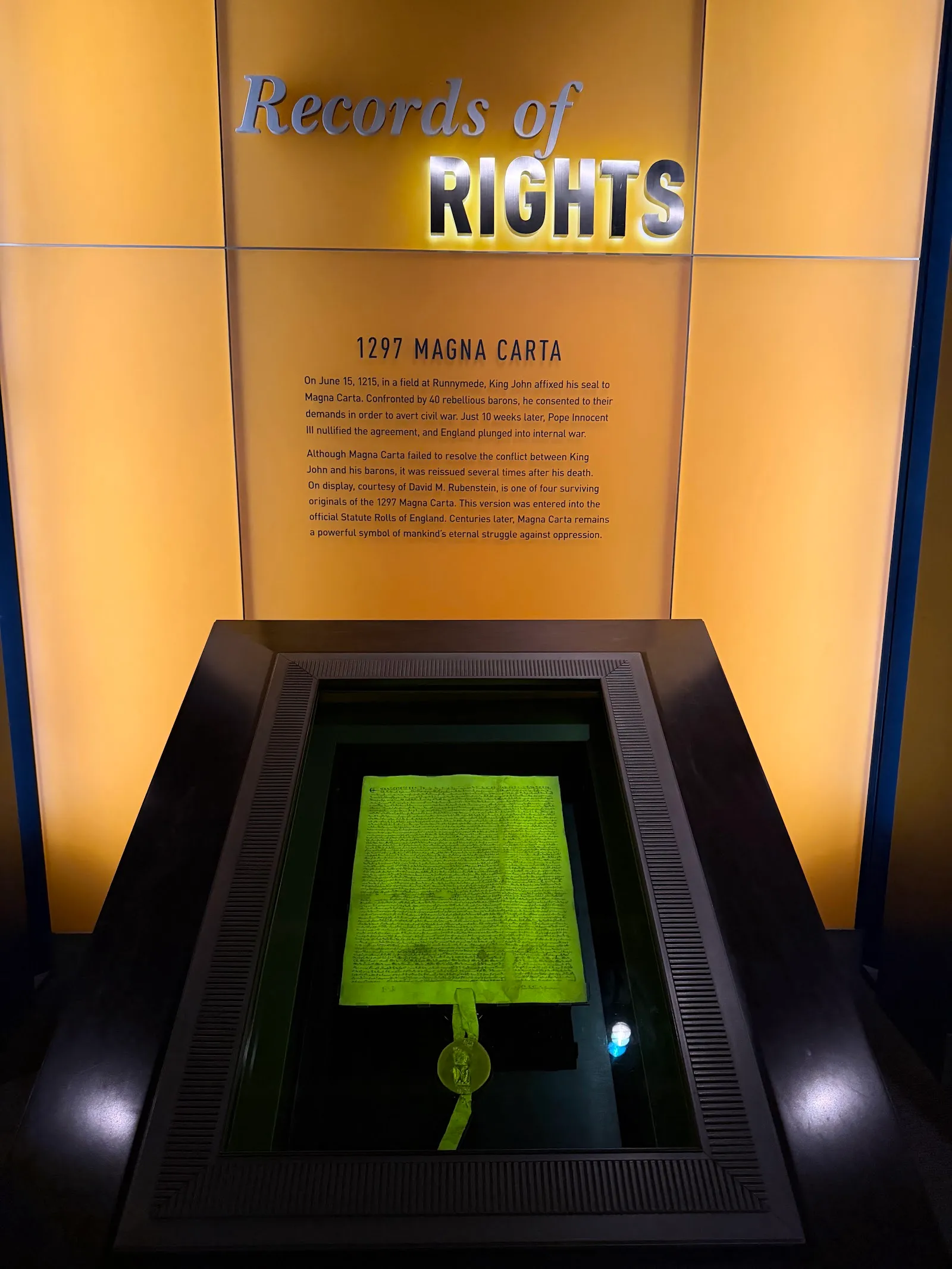
The David M. Rubenstein Gallery includes an interactive display about national debates over issues such as citizenship and free speech. A surviving copy of the 1297 Magna Carta is another notable document. Allow time to read the displays around the objects, which add context to the records themselves.
Records of government and everyday lives
The National Archives preserves historically significant records created by the U.S. government. Its holdings extend beyond landmark laws and declarations to documents connected with individual lives. Examples include military and naturalization records, as well as records associated with major events in the country’s history.
The museum also gives visitors a way to encounter records that are less famous than the founding documents. Historical objects mentioned in its displays include a speech card used by President Ronald Reagan and an arrest warrant for Lee Harvey Oswald. These items offer different points of entry into the past, from presidential remarks to records tied to a major criminal investigation.
The building is on Constitution Avenue, a short distance north of the National Mall. Admission is free. Timed-entry reservations are recommended during busy periods, particularly from March through Labor Day, and weekday visits may be less crowded. Check the official museum website before your trip for current entry arrangements and exhibit information.
FAQ
Is admission to the National Archives Museum free?
Yes. Admission is free.
What documents can you see at the National Archives Museum?
The Rotunda displays the original Declaration of Independence, U.S. Constitution and Bill of Rights. The museum also has a surviving copy of the Magna Carta and other historical records.
Should I reserve a timed entry?
Timed-entry reservations are recommended during busy periods, particularly from March through Labor Day.
Can you take photos in the Rotunda?
No. Photography and video are not allowed in the Rotunda.