In San Francisco’s Marina District, the Palace of Fine Arts pairs a Greco-Roman-style rotunda and colonnades with a lagoon and landscaped grounds. Built for the 1915 Panama-Pacific International Exposition, it is a striking place to walk, sit by the water or photograph the architecture reflected in the lagoon. Look for birds and turtles around the grounds, then pause beneath the open-air dome to take in its scale. The site is also used for events and performances, so parts may be closed during private functions.
Built for the 1915 exposition
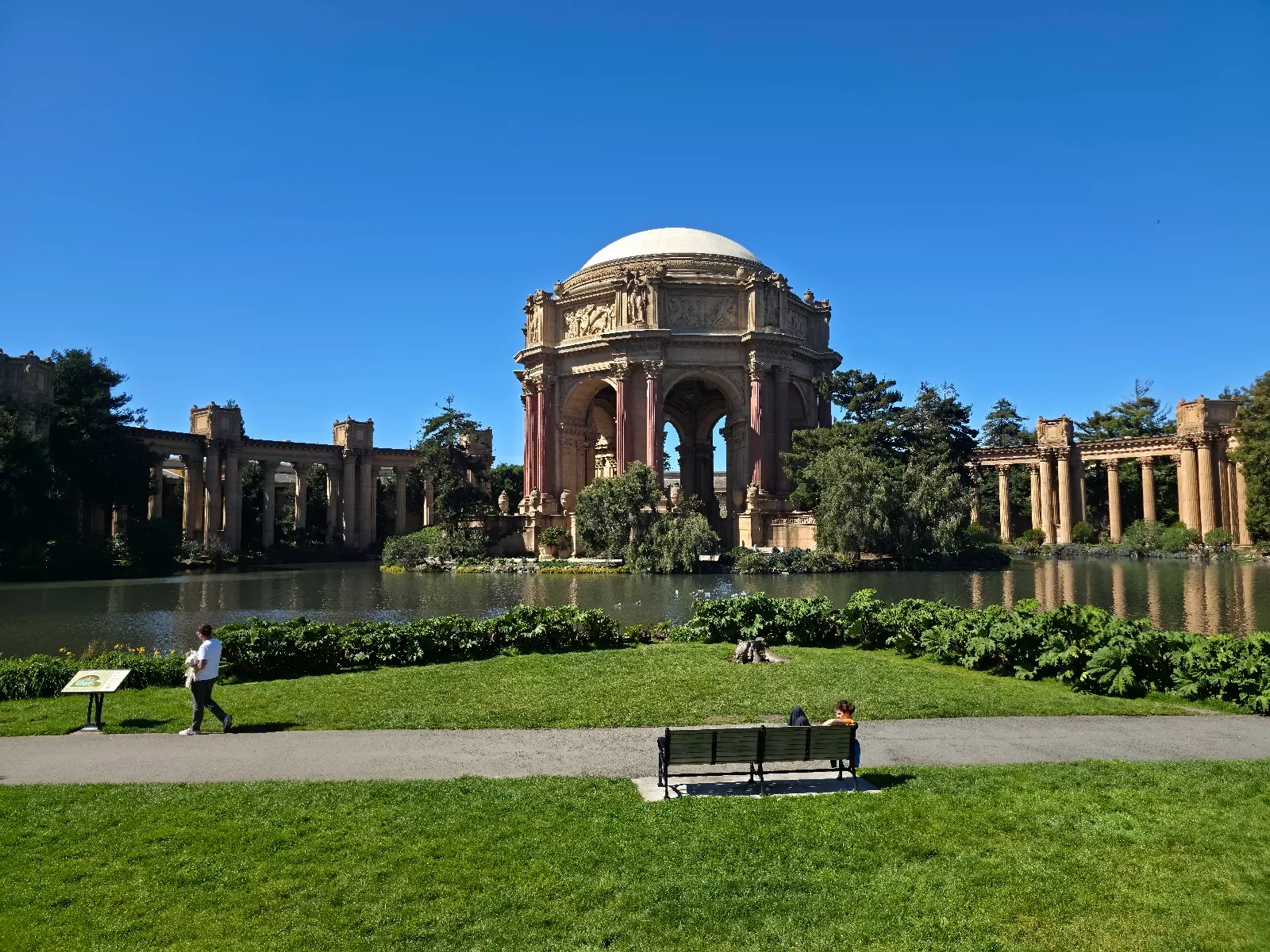
The Palace of Fine Arts was designed by architect Bernard Maybeck for the Panama-Pacific International Exposition, a world’s fair held in San Francisco in 1915. The event marked the completion of the Panama Canal and presented a city rebuilding after the 1906 earthquake and fire. The palace was intended to display art during the exposition, and its design drew on classical Greek and Roman forms.
Many of the fair’s structures were temporary. The Palace of Fine Arts was the one that local efforts helped preserve, but its original construction deteriorated. It was rebuilt in more permanent materials during the 1960s. The present complex stands on the original site and remains a reminder of the exposition’s architecture.
The rotunda, colonnades and lagoon
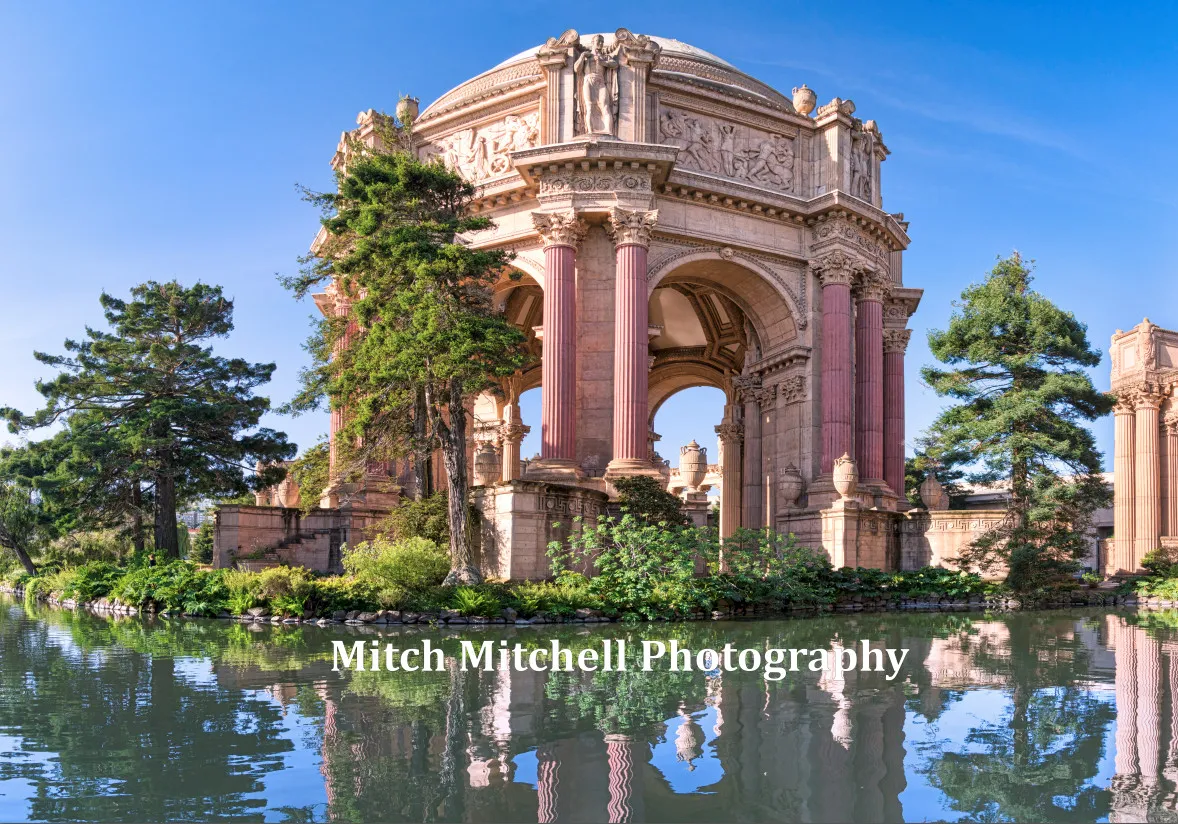
The open rotunda is the central landmark, with rows of columns extending around the lagoon. From the water’s edge, the curved structure and dome create a broad view; the lagoon can also reflect the building on a clear day. Walk around the water to see the composition from different angles, or step beneath the dome to look up at its interior.
The grounds add space to linger between the architecture and the water. Paths run alongside the lagoon, and grassy areas and benches provide places to pause. Birds and turtles are among the wildlife around the water. The setting is popular for photography, including wedding portraits, so the central area can feel busy even when the surrounding grounds remain a place for a slower walk.
A public landmark and event venue
The Palace of Fine Arts is also used for events, including weddings and corporate gatherings, and performances take place at its theater. This means the site can serve as both an architectural stop and a venue, but private functions may temporarily limit access to part of the grounds. If a section is closed, continue along the accessible paths and take in the building from the lagoon’s edge.
The location works well as part of a wider outing in the Marina District. Nearby sights mentioned for pairing with a visit include Lombard Street and the Golden Gate Bridge. The grounds are wheelchair accessible, with accessible seating, an entrance, restrooms and parking listed on site. Parking is available, with both free and paid options noted; street parking may also be free or paid.
FAQ
Is the Palace of Fine Arts free to visit?
The outdoor attraction is free to visit.
How long should I spend at the Palace of Fine Arts?
Allow about 1 to 2 hours to walk around the grounds, see the rotunda and lagoon, and take a break.
What is the Palace of Fine Arts known for?
It is known for its classical-style rotunda and colonnades beside a lagoon. It was built for San Francisco’s 1915 Panama-Pacific International Exposition.
Is the Palace of Fine Arts wheelchair accessible?
The site lists an accessible entrance, seating, restrooms and parking.