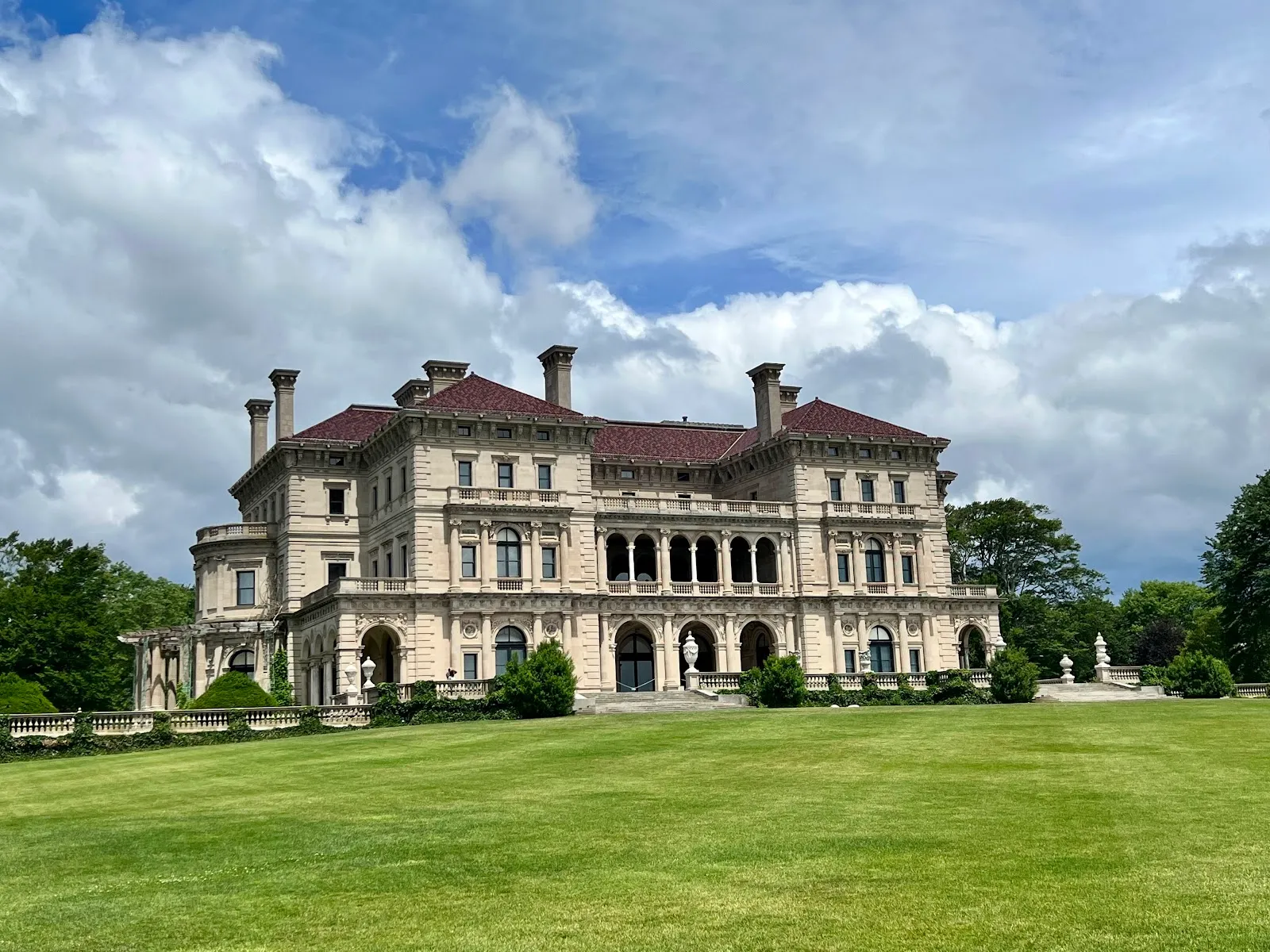
Marble House is a Vanderbilt mansion at 596 Bellevue Avenue in Newport, Rhode Island, built between 1888 and 1892. Architect Richard Morris Hunt took inspiration from the Petit Trianon at Versailles, and marble runs through the exterior and lavish rooms, including a ballroom with gold decoration. A self-guided audio tour gives context as you move through the house, while Alva Vanderbilt’s connection to women’s suffrage adds a story beyond its Gilded Age wealth. Allow time to look closely at the interiors and visit the grounds, which include a Chinese Tea House by the water.
A mansion inspired by Versailles
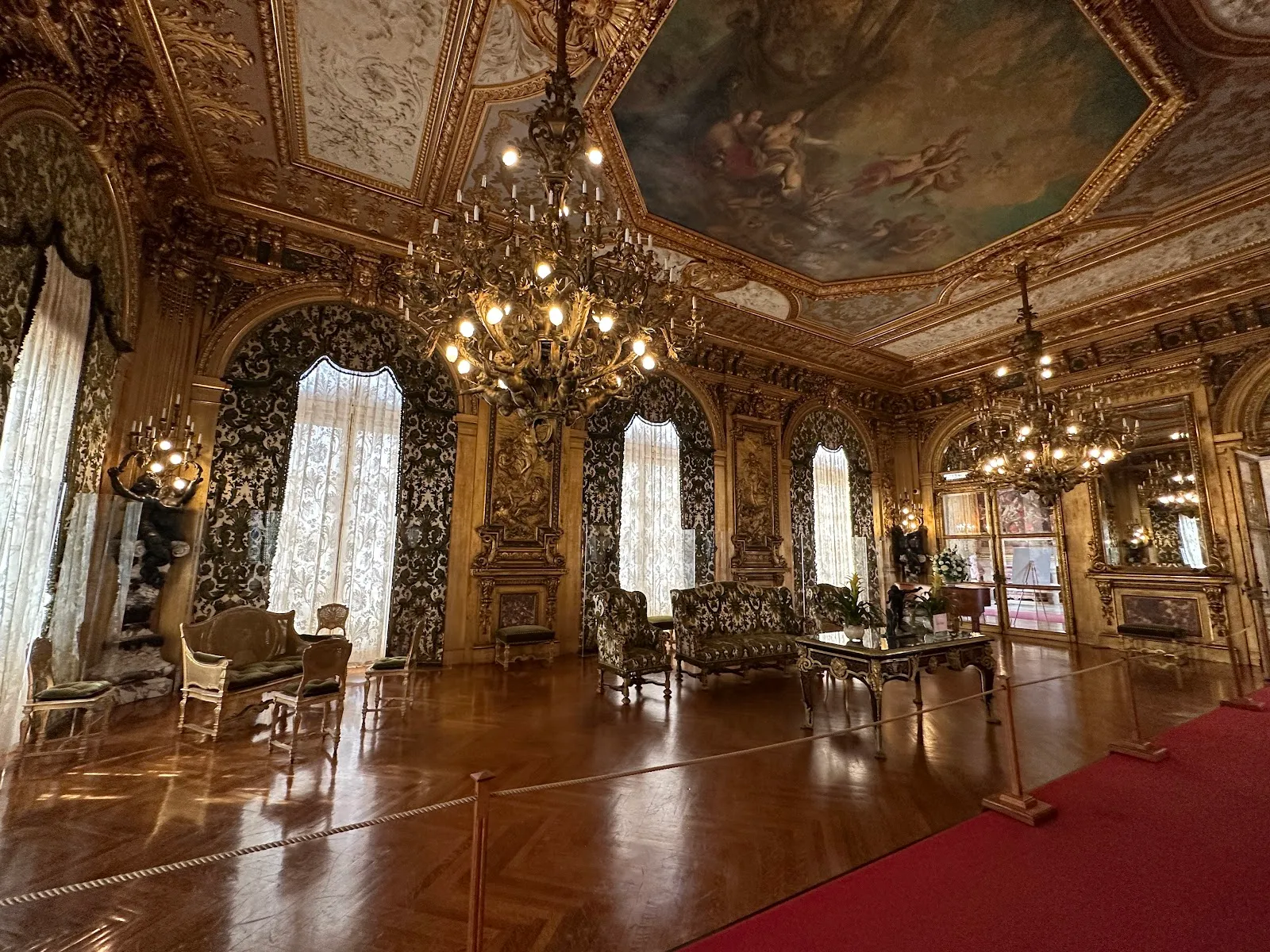
Marble House was built for William K. Vanderbilt and Alva Vanderbilt between 1888 and 1892. Richard Morris Hunt designed the house with the Petit Trianon at Versailles as his model. Its scale and stone construction helped set a new direction for Newport, where wealthy families had previously built wooden summer houses.
The name is literal: marble covers the exterior and appears throughout the interior. The house contains about 500,000 cubic feet of the stone, including American, Italian and African varieties. Contemporary accounts put the construction cost at $11 million, with a substantial share spent on the marble. Alva took an active role in creating the house, which she called a temple to the arts.
Inside the house
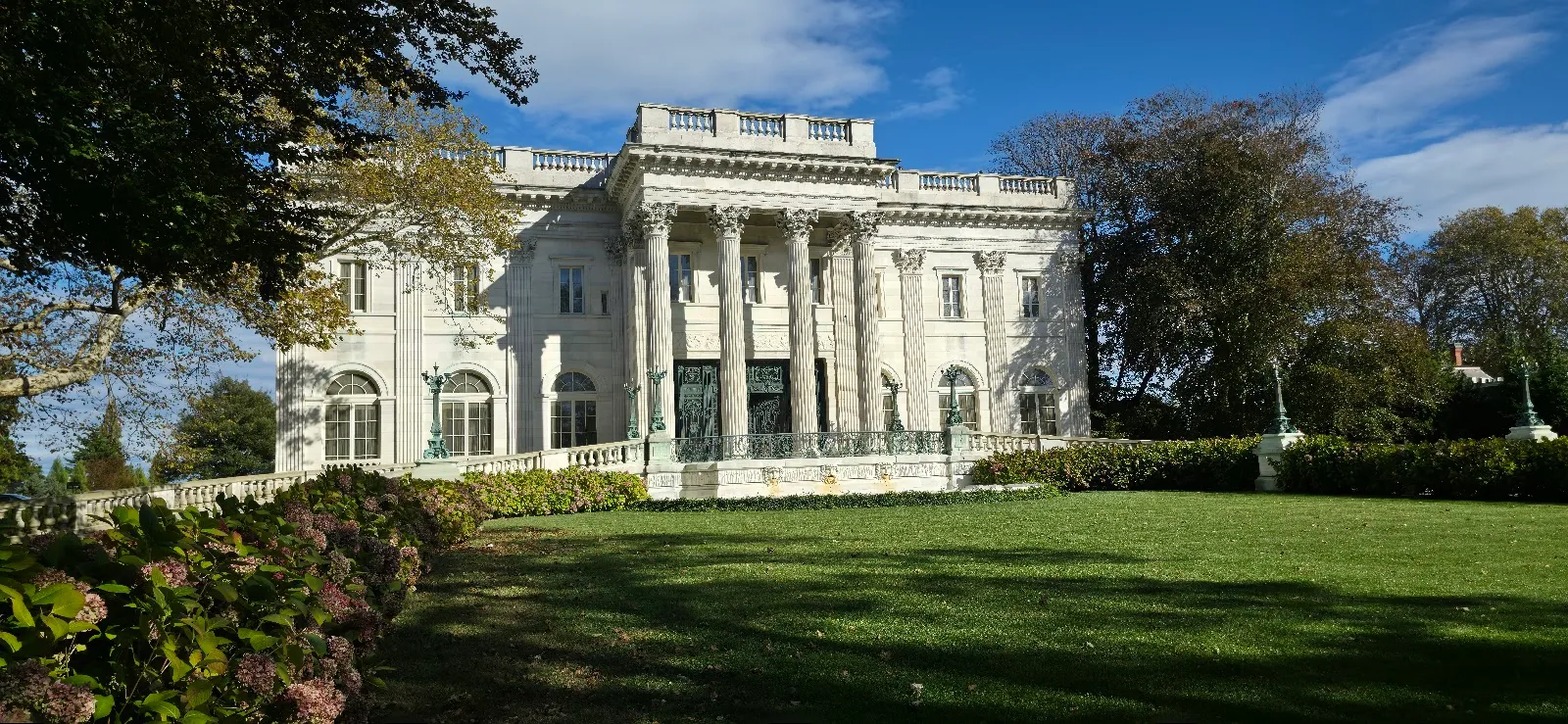
The rooms combine marble, bronze, furnishings and elaborate ceiling work. The ballroom is a particular focal point, with gold decoration and a design that recalls French palaces. Move slowly through the interiors: their materials and craftsmanship are easier to appreciate when you look beyond the overall scale to the details in each room.
The mansion has 50 rooms across four levels. The Newport Mansions app provides a self-guided audio tour, so you can follow the house’s history at your own pace. Paper tour sheets are also available in several languages. If you use your phone for the audio, headphones make it easier to listen as you walk.
Alva Vanderbilt and women’s suffrage
Marble House also connects its Gilded Age setting to the campaign for women’s voting rights. After her marriage to William ended, Alva used the property to host rallies for women’s suffrage. The house’s social history therefore extends beyond its role as a display of family wealth: it became a place where Alva advanced a public cause.
That history gives the rooms another dimension as you tour them. The mansion’s architecture and decoration speak to the wealth of its owners; Alva’s activism points to the political work she pursued from the same estate.
The grounds and Chinese Tea House
The estate includes a Chinese Tea House by the water, a later addition to the property. It is one of the outdoor stops to include alongside the main house, and the grounds provide views toward the coastline. A cafe associated with the Tea House has been noted at the property, but its availability can vary, so check before making it part of your plan.
Marble House is at 596 Bellevue Avenue. Free parking is available in a lot across the street, though nearby parking can be difficult at busy times. The mansion has stairs between floors; an elevator is available on request. During the Christmas season, holiday decorations add another reason to visit, with displays arranged through the house.
FAQ
How long should you spend at Marble House?
Allow about one to one and a half hours to tour the rooms and grounds at a relaxed pace.
Is there an audio tour at Marble House?
Yes. A self-guided audio tour is available through the Newport Mansions app. Download it before your visit and bring headphones if you plan to listen on your phone.
Is parking available at Marble House?
Free parking is available in a lot across the street. Nearby parking can be difficult at busy times.
Is there an elevator at Marble House?
Yes. An elevator is available on request; the house also has stairs between levels.
Can you visit the Chinese Tea House?
The Chinese Tea House is on the grounds by the water. Check ahead if you plan to visit its cafe, as it may not be open.