Across North Broad Street from Philadelphia City Hall, the Masonic Temple is the headquarters of Pennsylvania’s Grand Lodge of Freemasons and a landmark for architecture and art. Completed in 1873, it pairs a fortress-like exterior with richly decorated lodge rooms inspired by styles including Egyptian, Moorish, Renaissance and Corinthian. A guided tour takes you through the interiors and explains their design, while the museum displays Masonic artifacts, including objects connected with the American Revolution. Look for the Benjamin Franklin Room and the sculptures by William Rush.
A landmark across from City Hall
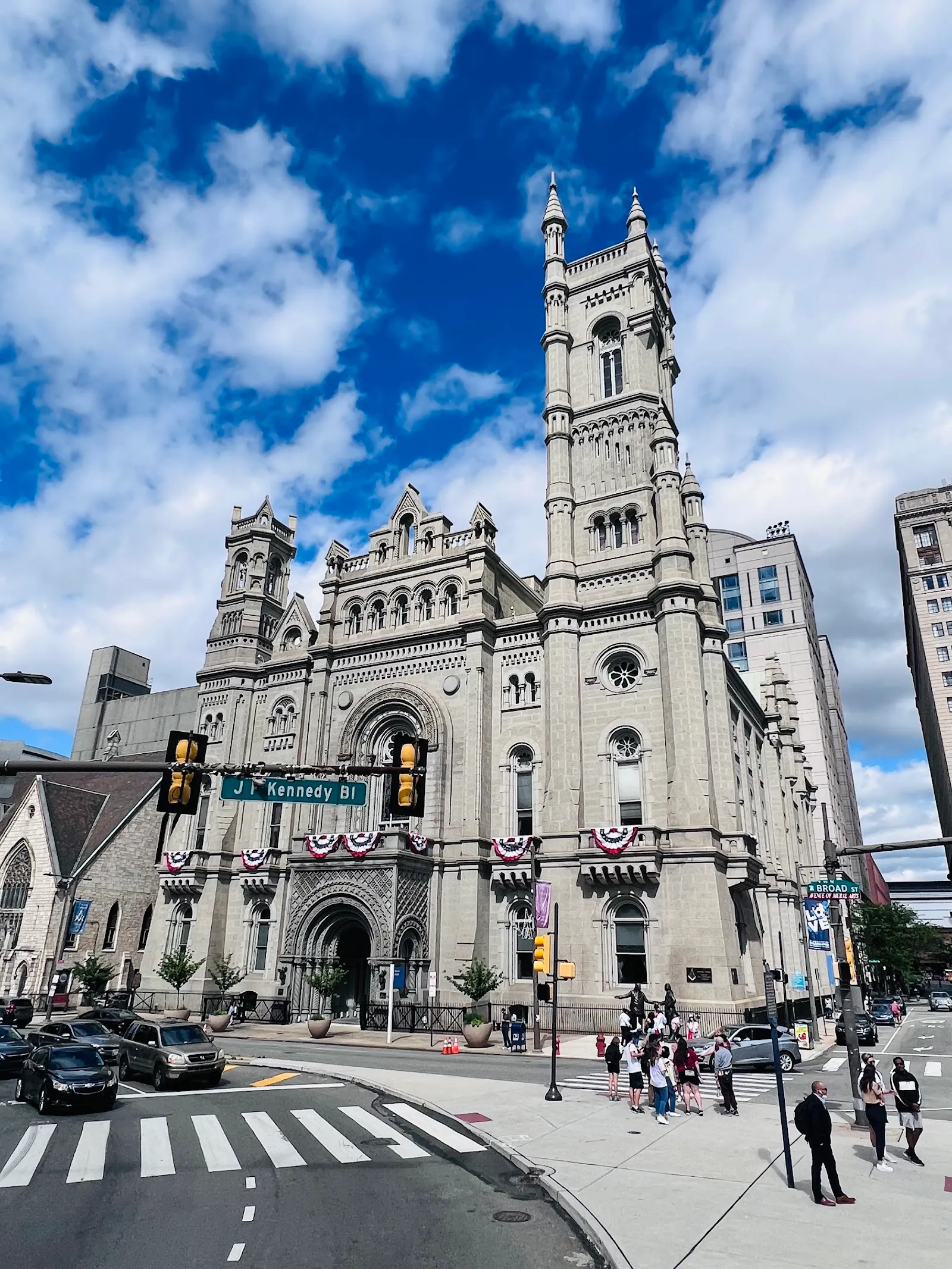
The Masonic Temple stands at 1 North Broad Street, directly across from Philadelphia City Hall. Completed in 1873, it is the headquarters of the Grand Lodge of Pennsylvania, Free and Accepted Masons. Architect James H. Windrim designed the building, whose imposing exterior has a medieval, Norman cathedral-like character.
The interior took another 15 years to complete. Its elaborate rooms and staircases make the temple a rewarding stop for visitors interested in Victorian-era architecture, decorative arts or the history of Freemasonry. You do not need prior knowledge of the organization to appreciate the building’s craftsmanship.
Rooms with distinct designs
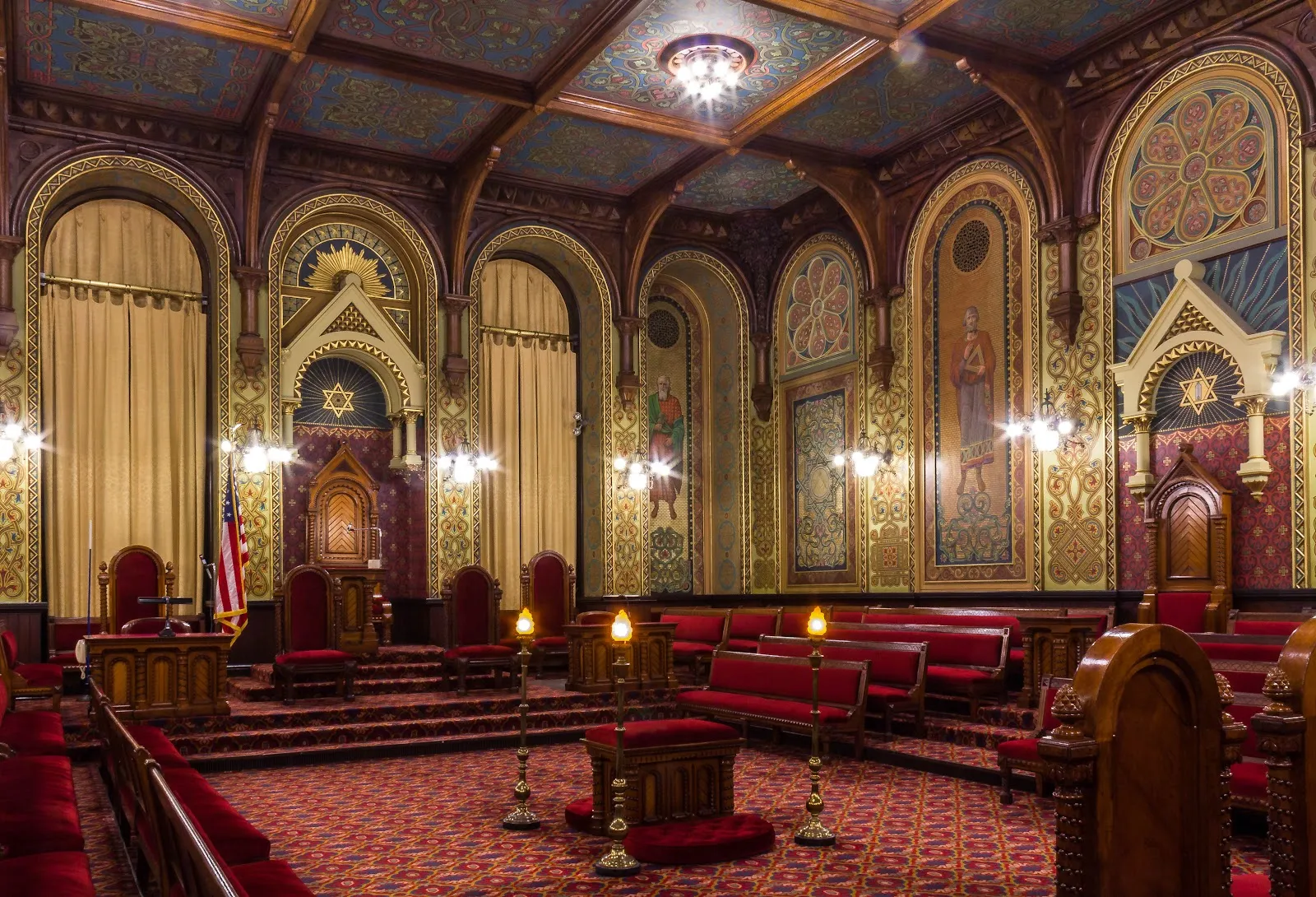
Guided tours lead through rooms decorated in different architectural styles and themes. Egyptian, Moorish, Renaissance and Corinthian influences appear across the halls, with ornate details, paintings, frescoes, stained glass and sculpture. The Benjamin Franklin Room is among the named spaces, alongside the Egyptian Hall, Renaissance Room, Ionic Hall, Norman Hall and Corinthian Hall.
The building contains seven lodge rooms. These spaces are used by Philadelphia lodges and the Grand Lodge, so a tour offers a look at rooms designed for both ceremonial use and visual impact. Guides explain features and displays as you move through the temple; check the tour schedule before planning your visit.
Art and Masonic objects
The temple’s art collection includes painted wood sculptures by Philadelphia sculptor William Rush, as well as a large statue of Benjamin Franklin. The museum presents Masonic artifacts, with some objects dating to the American Revolution. Together, the displays add historical context to the decorative program of the rooms.
Give yourself time to examine details rather than rushing from hall to hall. The architecture, artwork and symbolism are closely woven into the interiors, and a guide can help explain what you are seeing.
Planning your visit
The temple is open to visitors Wednesday through Saturday, with tours and exhibits available during those days. Tours are guided, and advance tickets are recommended. Arriving early gives you time to explore artifacts before the tour starts. Elevators are available for moving through the building.
The temple is a short walk from the center of Philadelphia’s civic district, across from City Hall. If your visit falls on Benjamin Franklin’s birthday, the building has held special exhibits in his honor; check current information when planning around that date.
FAQ
Where is the Masonic Temple in Philadelphia?
It is at 1 North Broad Street, directly across from Philadelphia City Hall.
Can you visit the Masonic Temple without a tour?
Visitor access is organized around guided tours. Check tour times before arriving.
How long should I allow for a visit?
Plan for about one to two hours to take the tour and spend time with the exhibits.
Is the Masonic Temple accessible by elevator?
Yes. Elevators are available in the building.