West of Wailuku in Central Maui, ʻĪao Valley State Monument pairs a short, easy walk with views of the green-clad Kūkaʻemoku, better known as the ʻĪao Needle. The paved route crosses a stream and climbs to a viewpoint; shorter unpaved paths offer other ways to explore the valley. Look for native plants along the way, and take time to read about the area’s cultural history. The valley is a meaningful place in Hawaiian history and a peaceful stop for mountain scenery, though the walk itself is brief.
The valley and Kūkaʻemoku
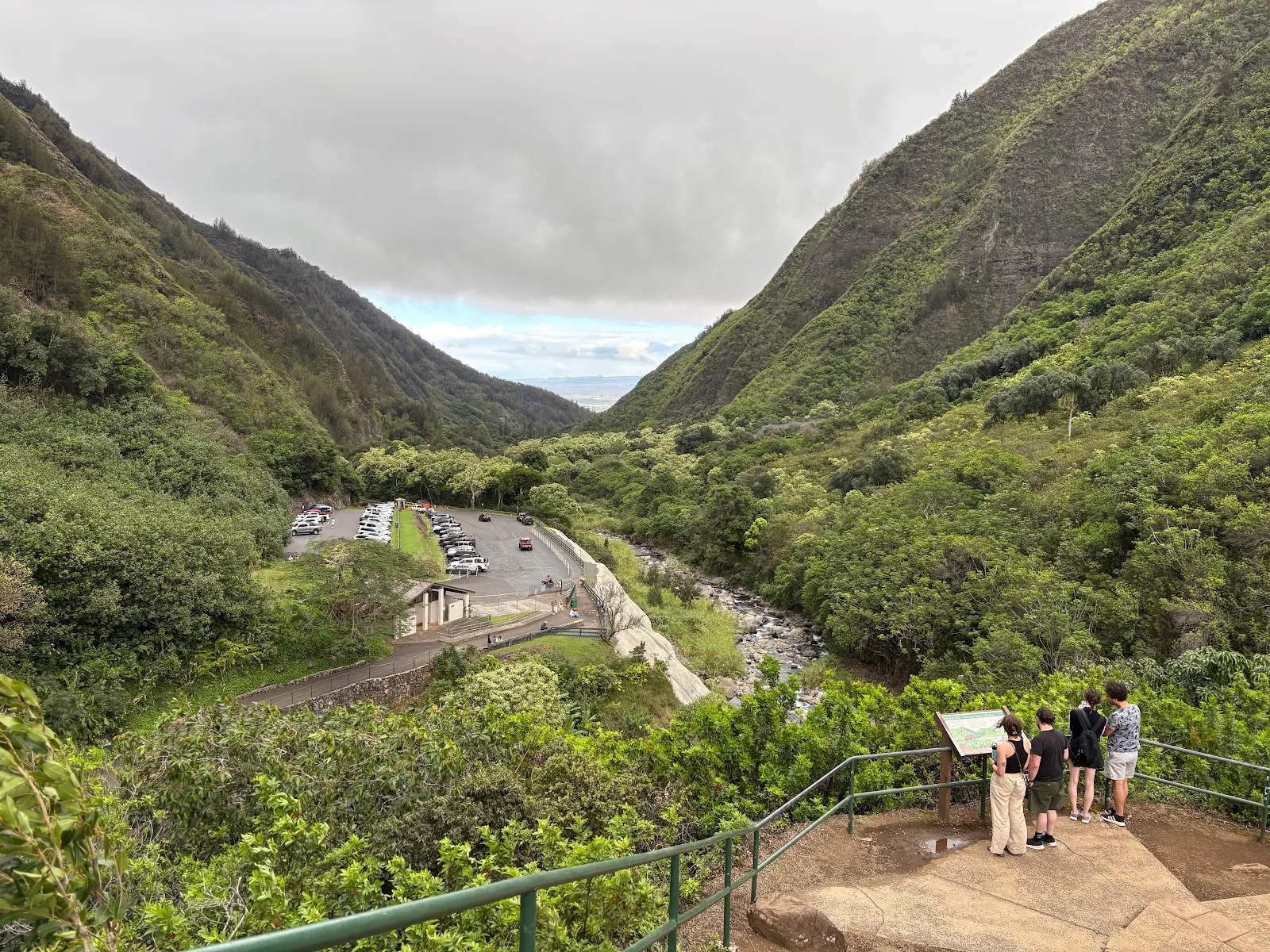
The feature most visitors come to see is Kūkaʻemoku, the narrow rock formation known as the ʻĪao Needle. This green-covered erosional pinnacle rises about 1,200 feet above the valley floor. Its shape stands out against the steep mountain walls, and the surrounding landscape can shift as clouds and mist move through the valley.
A paved walking route leads from the parking area to a viewpoint. It is about 0.6 miles long and includes steps, a bridge over the stream and a climb to the lookout. The route is short and considered easy, but the steps are worth factoring in if you have limited mobility. Some unpaved paths provide a different perspective, though access can depend on trail conditions.
Plants and the stream
The walking paths pass through a botanical area with native plants and flowers. Signs identify plants and offer information about the valley, so the route can be a way to learn as well as a scenic walk. The plants brought by Hawaiians who settled in the valley are among the subjects covered along the path.
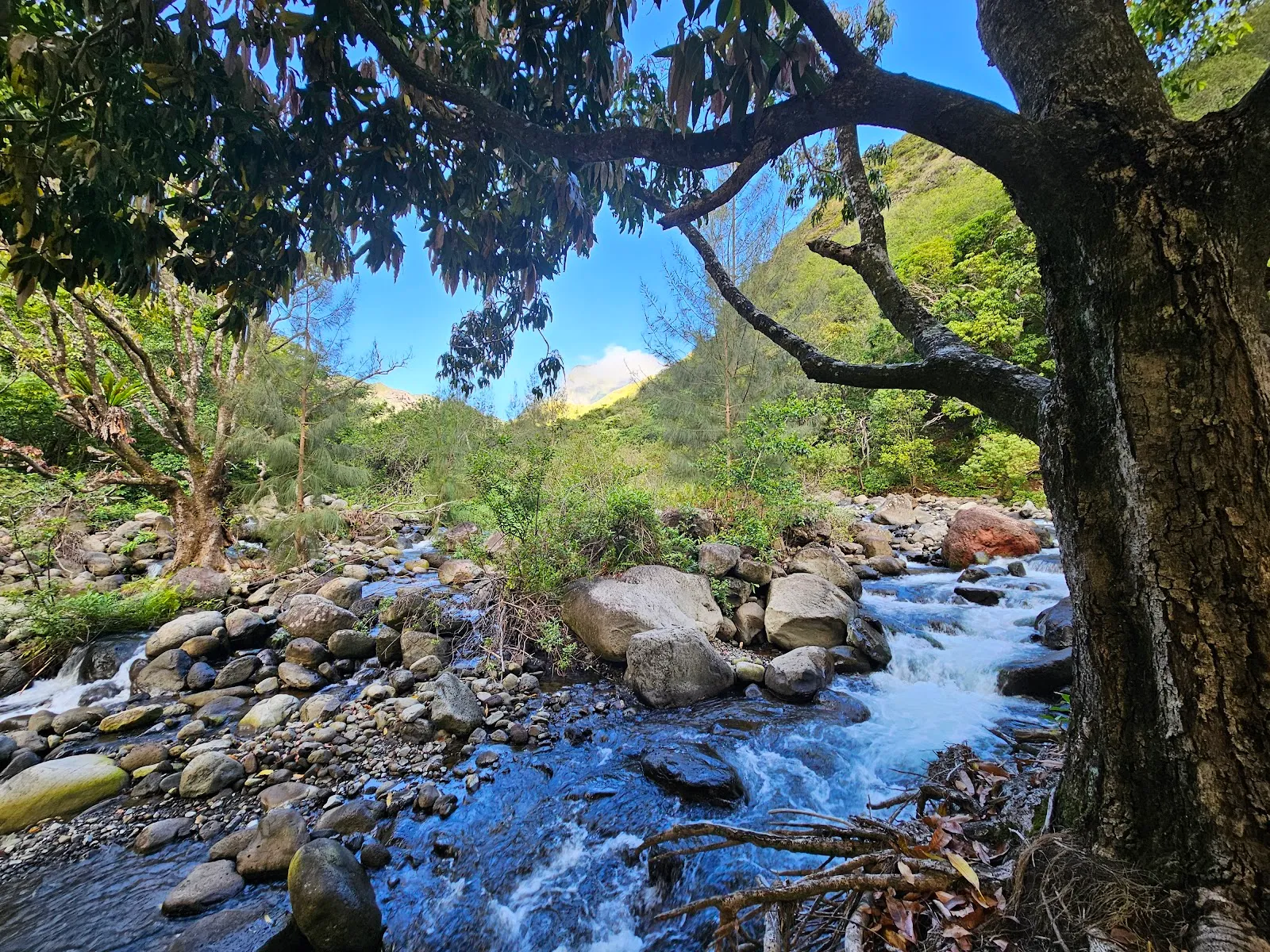
ʻĪao Stream runs through the valley below the trails. From the paths, you can hear the water and see it flowing among the greenery. The stream and surrounding mountain scenery are especially atmospheric when clouds gather, although that can also obscure views of the Needle. Conditions in the valley can change, and signs mark areas visitors should not enter. Keep to the designated paths rather than crossing barriers for a closer view.
The Battle of Kepaniwai
The valley is the site of the Battle of Kepaniwai, fought in 1790. King Kamehameha I’s forces defeated the Maui army there as he pursued the unification of the Hawaiian Islands. The battle is part of the place’s cultural and historical significance, alongside its importance as a natural landscape.
Plaques along the route explain the battle and the history connected to the valley. Take a moment to read them as you walk, and treat the area with respect: ʻĪao Valley has spiritual value for Hawaiians. The paths are short, but the signs give the visit context beyond the viewpoint and help connect the landscape to the events that took place here.
FAQ
Do you need a reservation for ʻĪao Valley State Monument?
Yes. Paid reservations are required for entry. Arrange yours online before travelling and keep the confirmation accessible.
How long is the walk at ʻĪao Valley?
The paved walking route is about 0.6 miles and leads to a viewpoint of the ʻĪao Needle. Most visits take around 45 minutes to an hour.
What is the Battle of Kepaniwai?
It was fought in ʻĪao Valley in 1790, when King Kamehameha I’s forces defeated Maui’s army during his campaign to unite the Hawaiian Islands.
What is the ʻĪao Needle?
Kūkaʻemoku, commonly called the ʻĪao Needle, is a green-covered rock formation shaped by erosion. It rises about 1,200 feet above the valley floor.