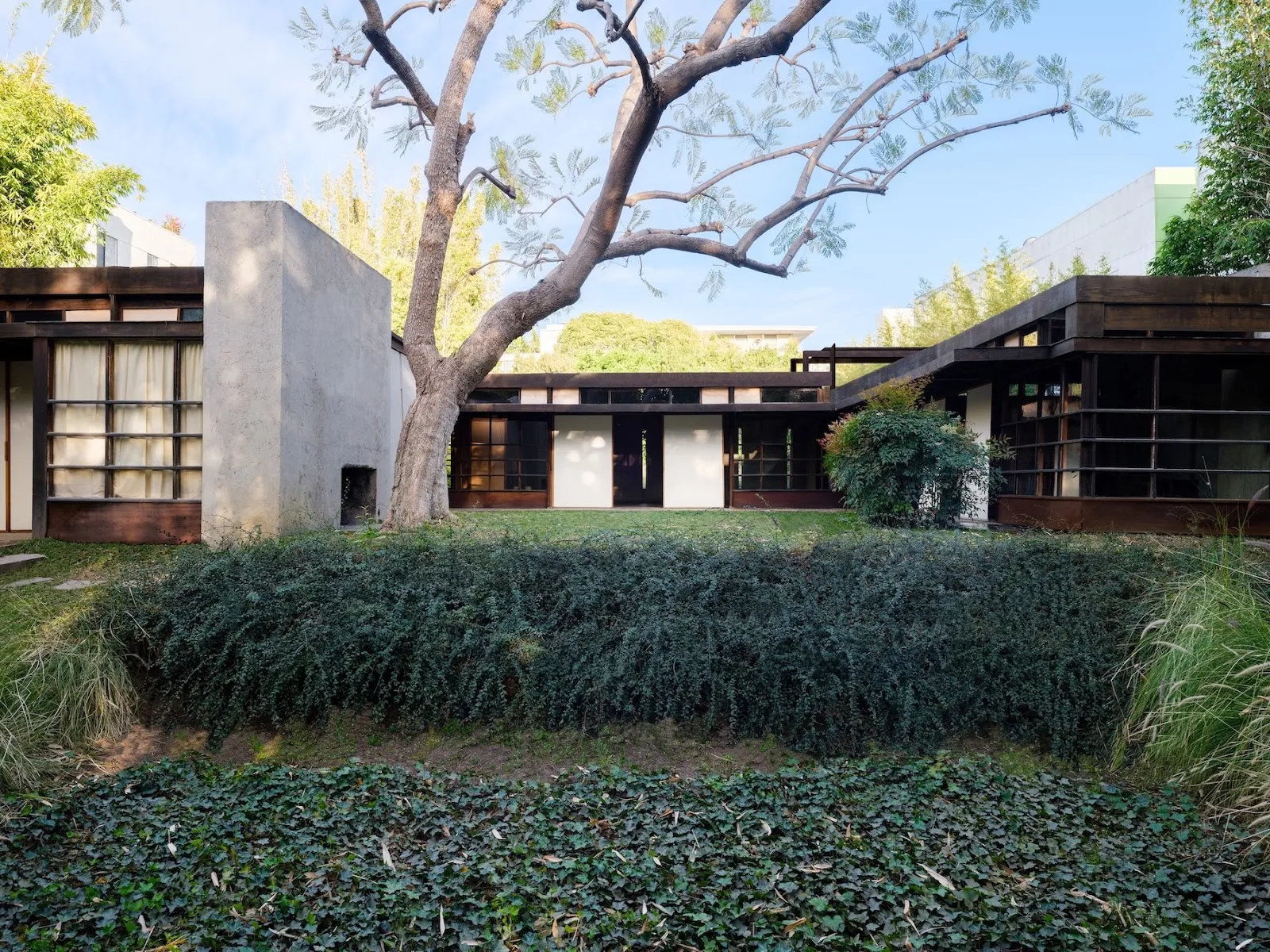
The MAK Center for Art and Architecture occupies the Schindler House, Rudolf M. Schindler’s 1922 home and studio on Kings Road in West Hollywood. The building is the main attraction: its concrete walls, redwood roof, sliding panels and interlocking spaces make it an early experiment in California modernism. Explore the rooms, courtyards and gardens, and ask a docent about the design. Exhibitions and public programs bring contemporary art and architecture into the historic house, so check what is on before you go.
A home designed for shared living
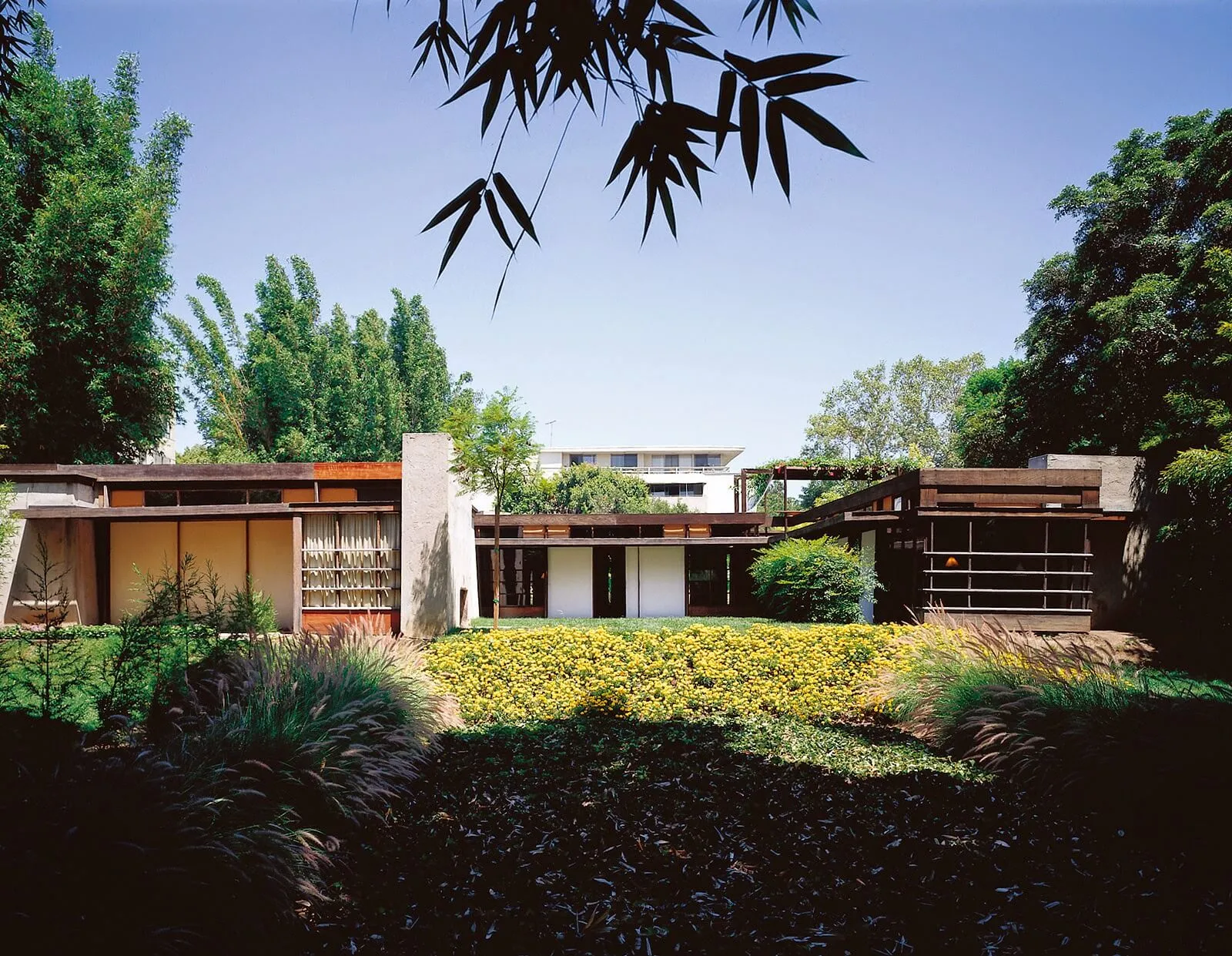
Rudolf M. Schindler designed the house for himself and his wife, Pauline, and another couple. Completed in 1922, it began as a cooperative live-work space, with the residents sharing the property. Its unusual arrangement reflected an experiment in how a home could support both living and working.
Schindler, an Austrian-born architect who had worked with Frank Lloyd Wright, drew inspiration from a trip to Yosemite. The house’s design took cues from the park’s camp buildings, including Curry Village. That reference helps explain why the home feels unlike a conventional residence of its time.
Concrete, canvas and open rooms
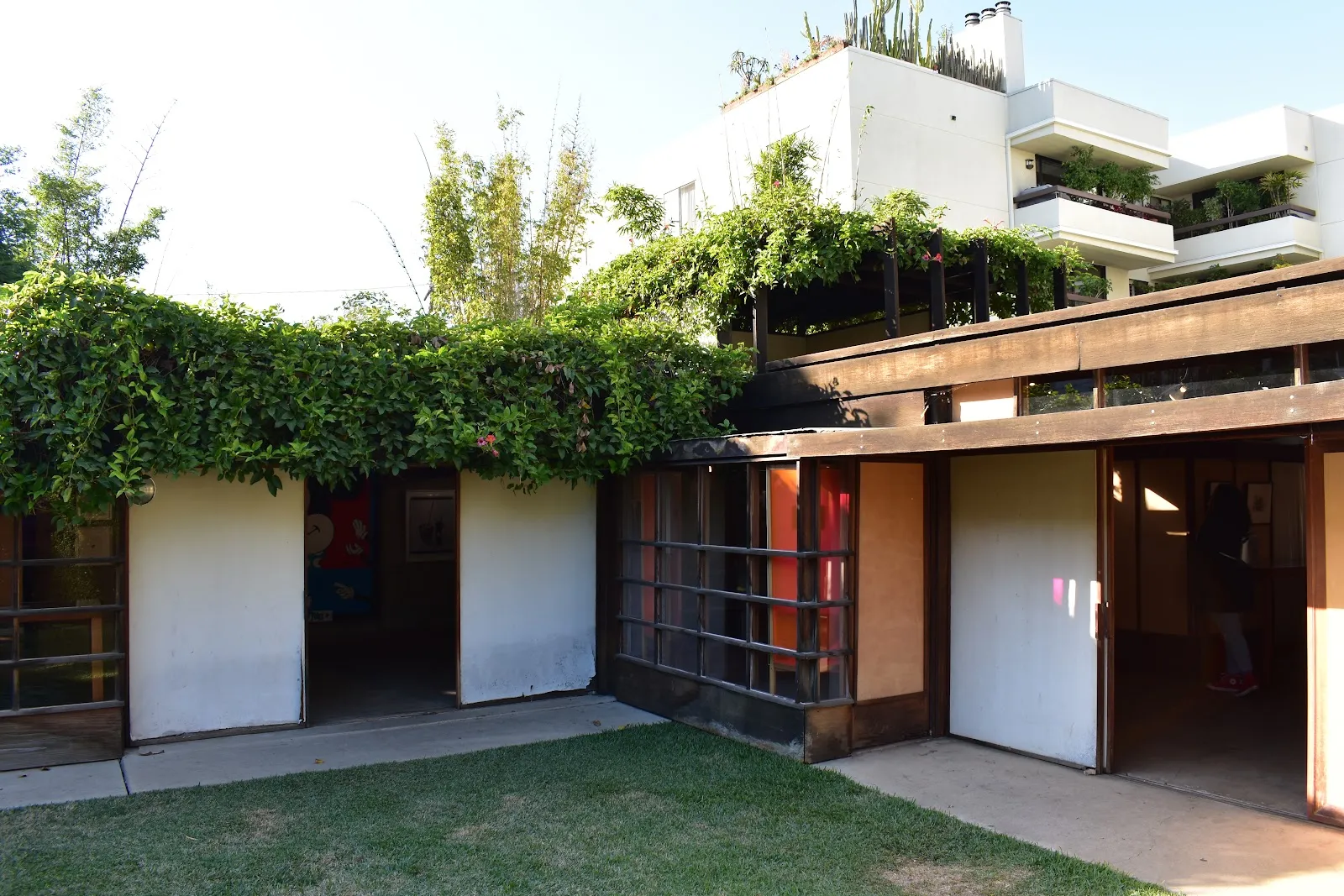
The house uses exposed concrete walls and sliding canvas panels, materials that gave Schindler new ways to shape rooms and openings. Its plan is open and its spaces interlock, so the boundaries between indoors and outdoors are less fixed than in a traditional home.
Look for the tilt-slab concrete construction and the redwood roof. Movable panels let the house open towards its surroundings, while the courtyards and gardens extend the living spaces outside. Together, these choices make the building useful to explore as a work of architecture, not only as a historic home.
The house today
The Schindler House now serves as the MAK Center for Art and Architecture’s Los Angeles base. The center was established in 1994 and is connected to Vienna’s Museum of Applied Arts. Its wider work spans architecture and contemporary art, with exhibitions, residencies and public programs.
The building remains central to the visit. Temporary art installations can appear inside the home, alongside programs such as lectures and concerts. A docent can help explain the house’s design and history; the centre also has a gift shop.
FAQ
When was the Schindler House built?
Rudolf M. Schindler designed the house in the early 1920s, and it was completed in 1922.
What makes the Schindler House distinctive?
Its open plan, exposed concrete walls, sliding canvas panels and interlocking indoor and outdoor spaces set it apart from conventional houses of its era.
What can you see at the MAK Center?
You can explore the historic house, its courtyards and gardens, and any exhibitions or temporary art installations on view. The centre also hosts public programs.