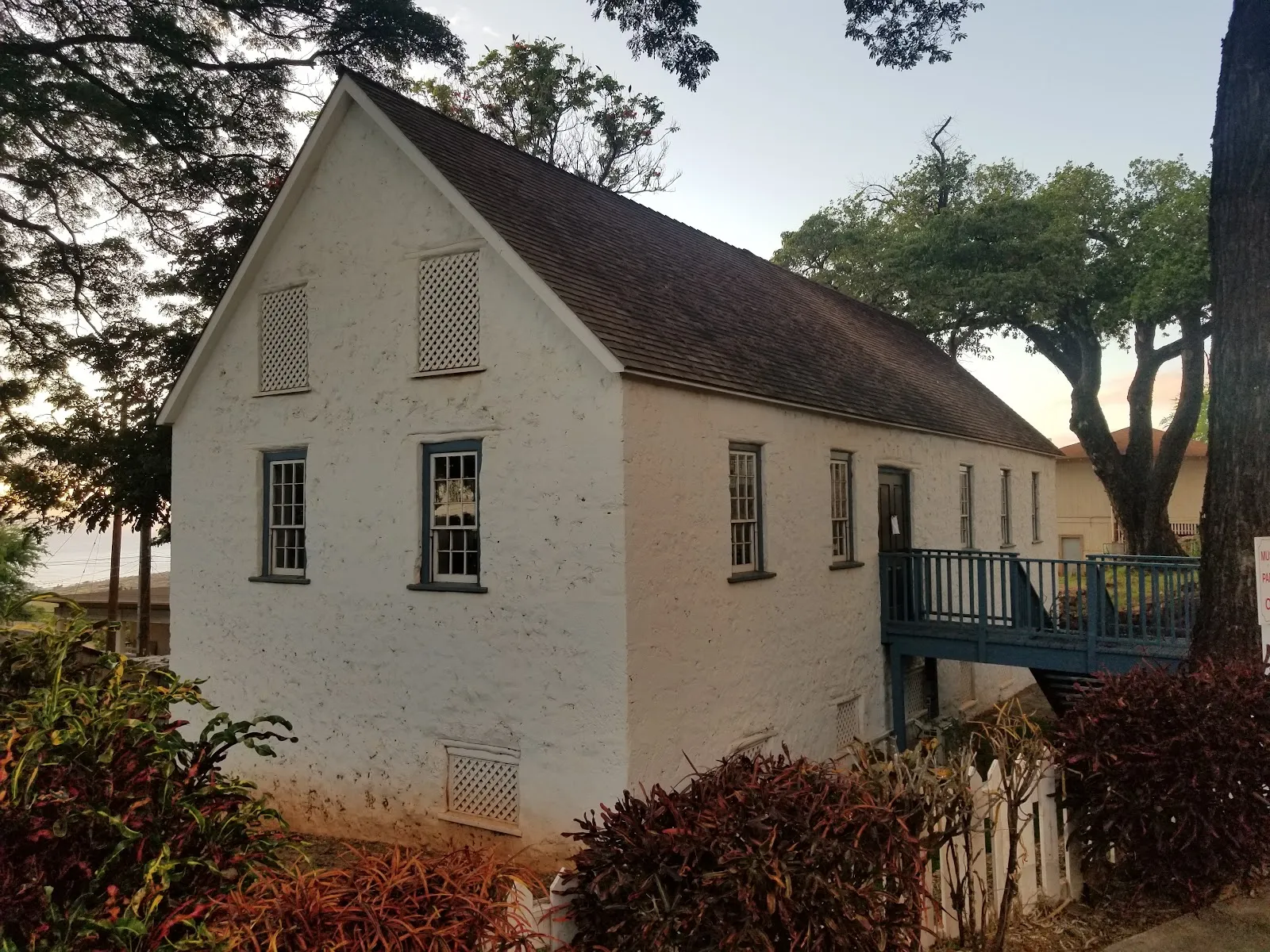
On Front Street in Lahaina, the Wo Hing Temple Museum traces the Chinese community’s history in Hawaiʻi through artifacts in a compact former society hall. Upstairs, a shrine recalls the building’s religious role; downstairs, displays explore Chinese life and work on Maui. The original cookhouse next door screens a film about Chinese immigrants in Hawaiʻi, along with Thomas Edison footage filmed in the islands around 1898. Allow time to look closely at the objects and watch part of the film, which runs continuously.
A society hall for Lahaina’s Chinese community
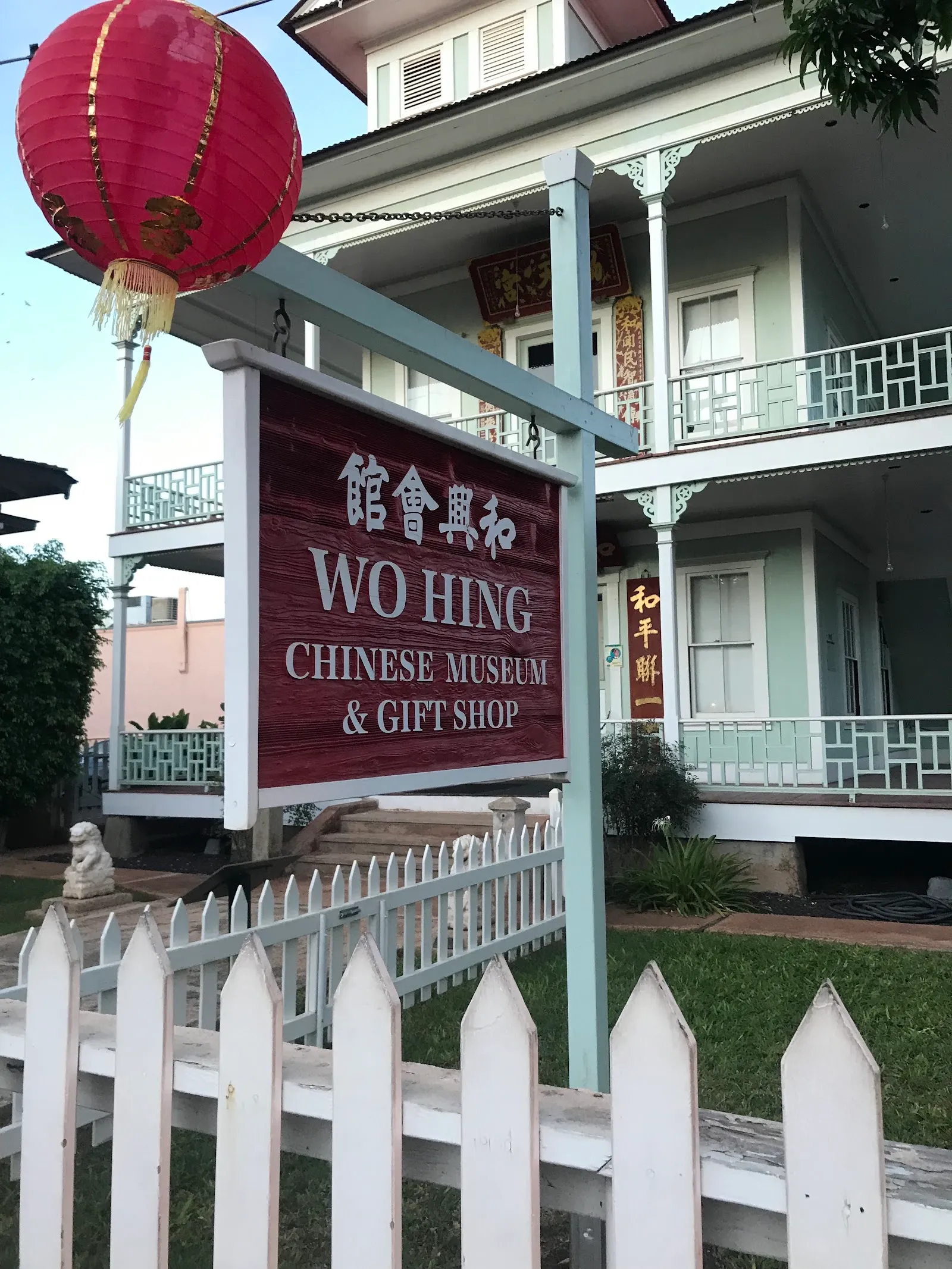
Chinese immigrants came to Maui on trading and whaling ships, and many later worked on sugar plantations and mills. As the community grew, people sought ways to maintain cultural traditions and gather with one another. In 1909, Chinese immigrants in Lahaina formed the Wo Hing Society, a branch of the Chee Kung Tong, a fraternal organization that provided mutual aid and religious and political support.
The society’s two-story hall was built in the early 20th century. It served as a meeting place for Chinese workers and included a temple upstairs, where religious ceremonies took place. The name Wo Hing is associated with peace, harmony and prosperity. The building’s woodwork and its role as both a social hall and place of worship offer clues to how community life was organized.
Objects, a shrine and the cookhouse film
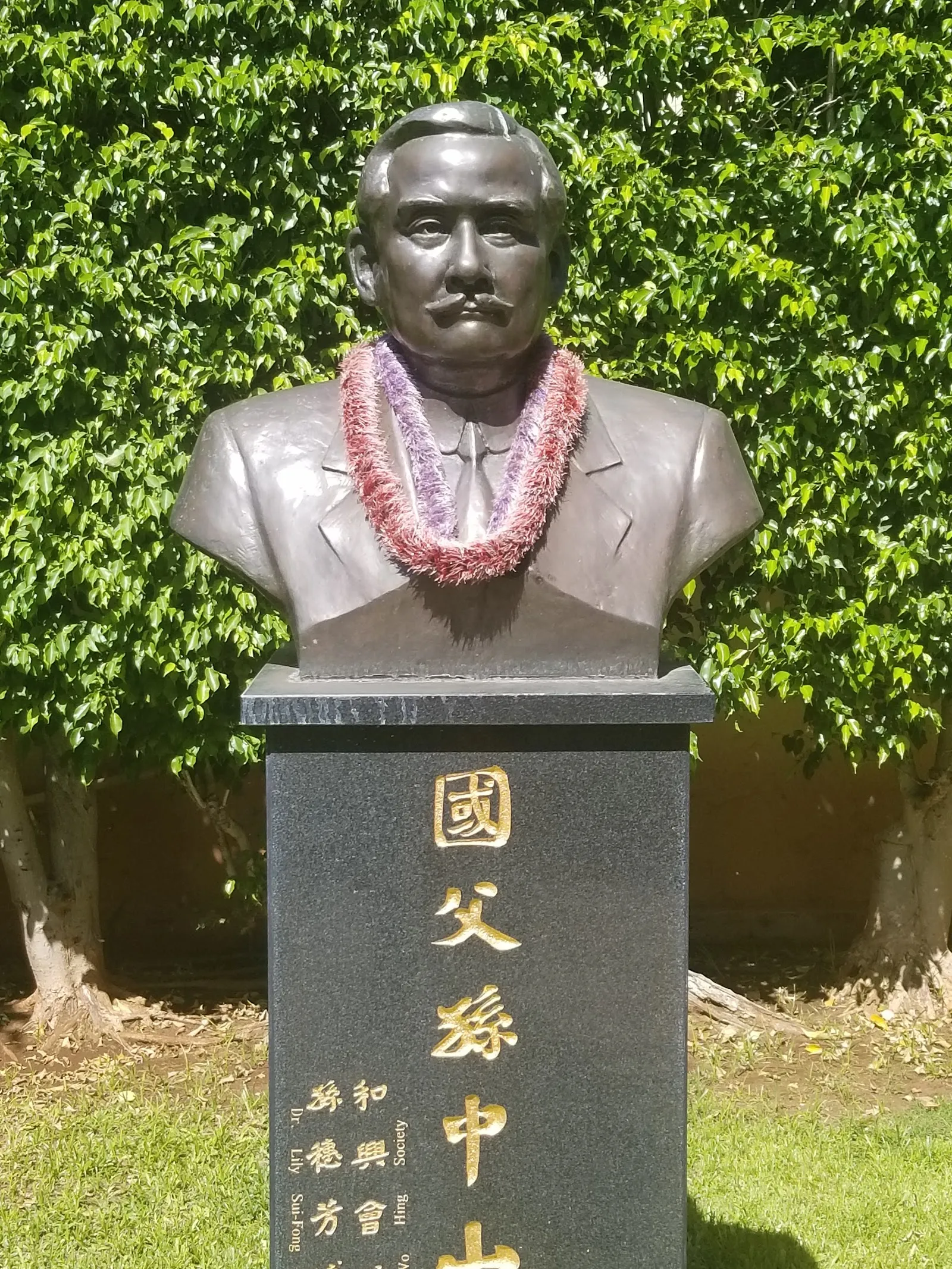
The museum’s collection brings together objects connected to Chinese life in Hawaiʻi. Displays include ceremonial instruments, jade pieces and a teak medicine cabinet dating to around 1900. An upstairs Taoist shrine recalls the building’s religious use. Outside, a bust of Sun Yat-sen stands on a marble pedestal, linking the site to the history of the Chinese revolutionary leader.
Next to the main building, the society’s original cookhouse has been adapted as a small screening space. Its film covers the history of Chinese immigrants in Hawaiʻi and includes footage Thomas Edison filmed in the islands around 1898. The film plays continuously, so you can fit in a section rather than wait for a scheduled start. The cookhouse may feel stuffy, which can make a shorter viewing more comfortable.
Chinese history and Maui’s plantation era
The museum connects Lahaina’s Chinese community with wider changes on Maui. In the 19th century, plantation work drew people to Hawaiʻi from many parts of the world. Chinese workers also contributed to infrastructure, including irrigation systems that supported sugar cultivation. The objects and film help place those experiences alongside the lives of Hawaiians and other communities on the island.
The hall’s history also changed as Lahaina changed. After the Second World War, the local Chinese population spread out, and the temple fell into decline. Its later use as a cultural museum preserves a record of the society and the people who met there. Cultural celebrations at the site have included New Year events with drumming and Lion Dance performances, bringing the building’s community role into view.
FAQ
What can you see at the Wo Hing Temple Museum?
The collection includes ceremonial instruments, jade pieces, a teak medicine cabinet dating to around 1900 and an upstairs Taoist shrine. Outside is a bust of Sun Yat-sen on a marble pedestal.
Is there a film at the museum?
Yes. The original cookhouse next door screens a film about Chinese immigrants in Hawaiʻi, including Thomas Edison footage filmed in the islands around 1898. It plays continuously.
How long should I plan for a visit?
Allow about 1 to 2 hours to explore the displays and watch some of the film. The full film is about an hour long.
What events are held at the museum?
Cultural celebrations have included New Year events with drumming and Lion Dance performances.