Everglades National Park covers more than 1.5 million acres at the southern end of the Florida peninsula. Most of it is sawgrass marsh, mangrove forest and cypress domes, and the park is a UNESCO World Heritage Site. Visitors come to see alligators, crocodiles, manatees and wading birds, and to paddle its waterways or cycle its paths. The main visitor center is the Ernest F. Coe Visitor Center near Homestead, and the Main Park Road runs about 40 miles from there to Flamingo.
Entrances and getting around
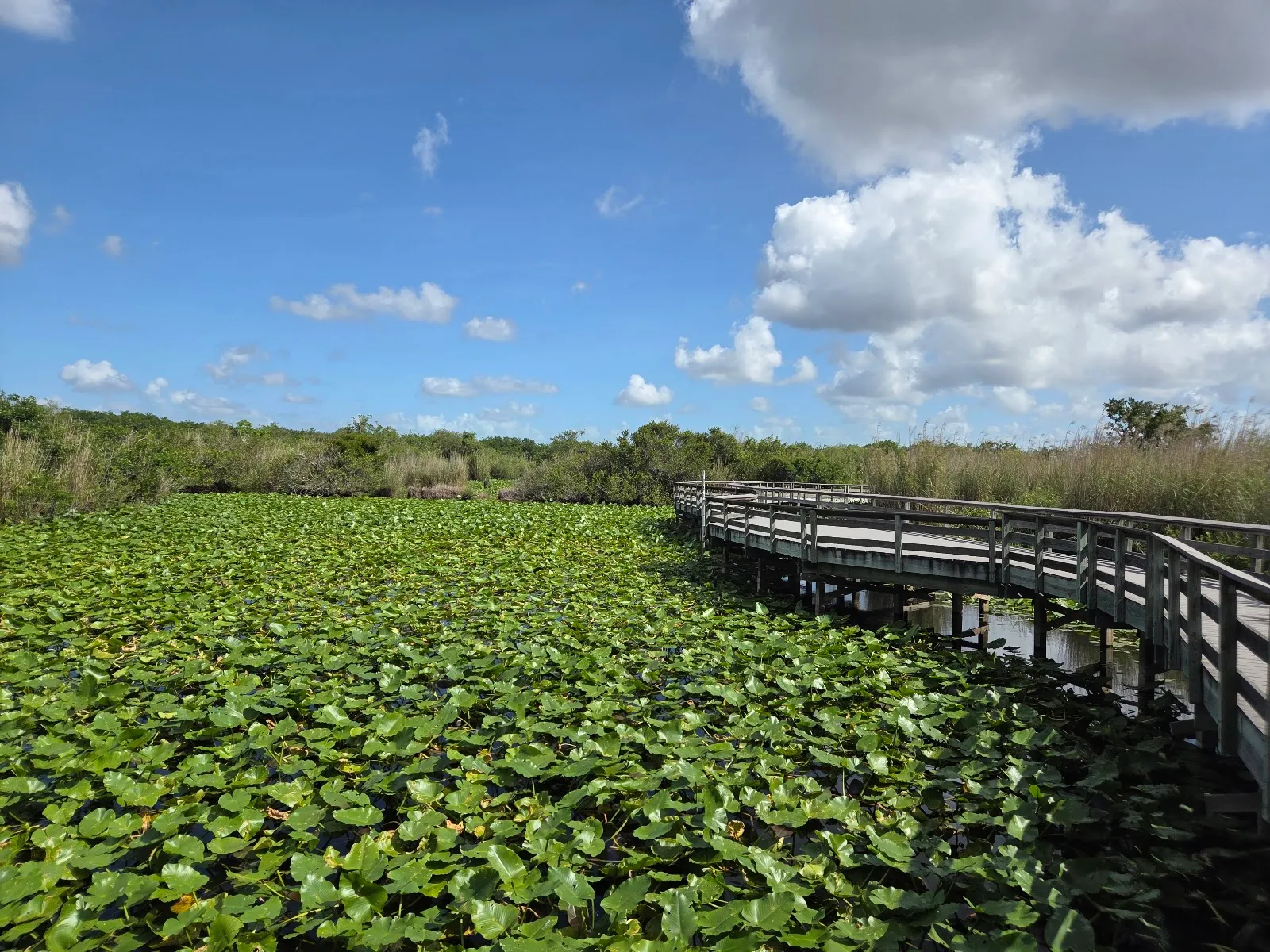
The park has several entrances, and they are not linked to each other by road. The Ernest F. Coe Visitor Center near Homestead is the main headquarters and the usual starting point. It shows an introductory film and has exhibits, and rangers hand out maps and Junior Ranger books for children.
The Shark Valley entrance is reached from US 41, also called the Tamiami Trail. The Gulf Coast Visitor Center is in Everglades City, closest to Naples. From Miami, the Shark Valley and Florida City entrances each take about an hour by car.
The Main Park Road runs about 40 miles from the Coe center to Flamingo, at the southern end of the park. Along the way the drive passes pineland, cypress forest, hardwood hammock, sawgrass marsh and coastal prairie. There is no road from Flamingo to the Gulf Coast. The only route that links the two areas is the Wilderness Waterway, a canoe or kayak trip that can take 7 to 10 days.
Ecosystems inside the park
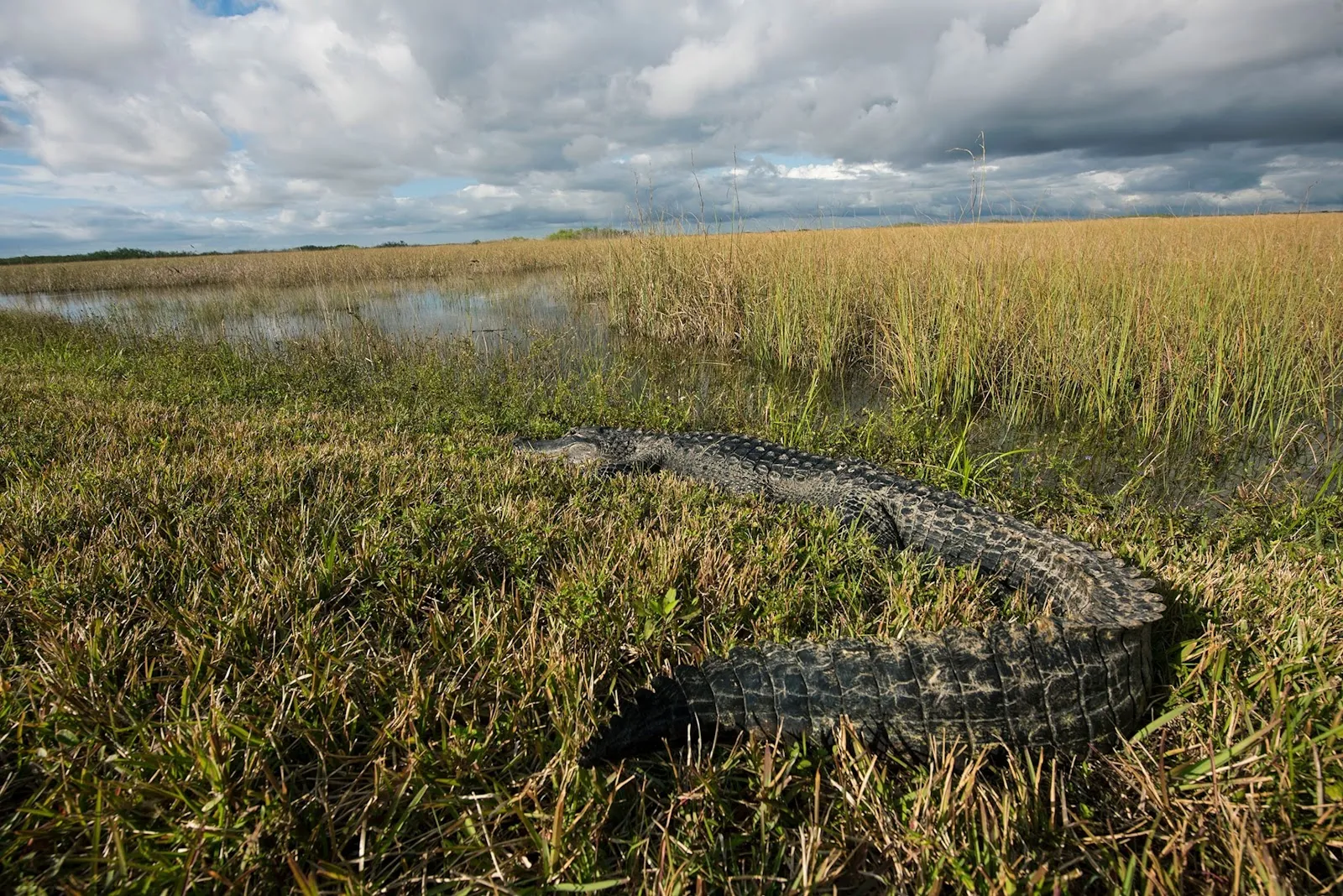
Sawgrass prairie covers much of the park. A freshwater slough moves slowly through the marsh toward the Gulf. Hammocks and bayheads sit slightly higher than the surrounding water, and they shelter cypress, mahogany and palm trees.
The pine rocklands of the Miami Rock Ridge are a separate habitat. Slash pines rise above saw palmetto there, and the rocklands are considered internationally significant. Near the coast, mangrove swamps and buttonwood forests line the shore.
The Ten Thousand Islands stretch about 40 miles along the southwest Gulf coast, from Cape Romano to the mouth of the Lostmans River. Mangrove islands in this area form a maze that is hard to navigate without a map. At the south end, Florida Bay mixes fresh water from the Everglades with marine water.
Wildlife and where to look
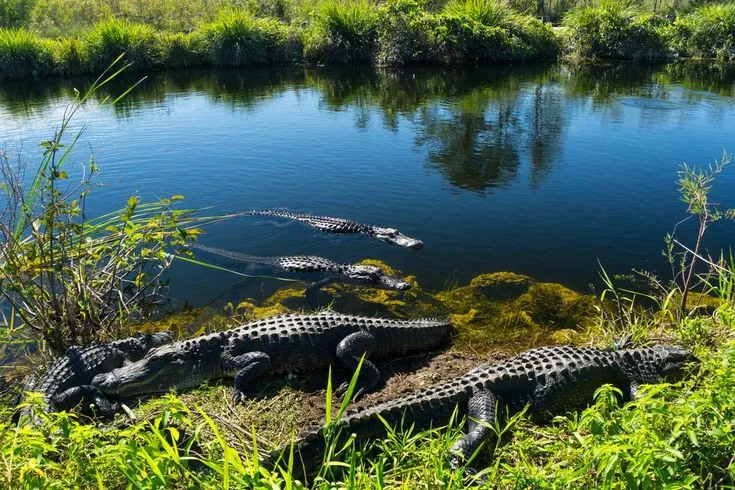
Alligators are usually the first animals visitors see. The Anhinga Trail is the common place to watch them, along with migratory birds. Crocodiles, manatees and the Florida panther are also found in the park, and several of these species are threatened or endangered.
Wading birds are the park's main draw. The park is considered the most significant breeding ground for wading birds in North America. Look for roseate spoonbills, wood storks, great blue herons, egrets and anhingas.
How the park was created
In 1934, a federal act authorized a park to be acquired through public donations. The act called for a wilderness where no development or visitor entertainment would interfere with the preservation of the plants and animals. Thirteen years later, the park was dedicated on December 6, 1947. President Harry S. Truman described it as an irreplaceable primitive area.
Earlier water projects, built for flood control and water supply, changed the wetlands. The park still depends on water that flows from Lake Okeechobee, which reaches it at a much slower pace than it once did.
Planning a visit
The entrance fee is $35 per vehicle, and it is valid for seven consecutive days from the day of purchase.
Flamingo Marina rents kayaks, and there are two routes to paddle from there. A ten-mile paddle from Flamingo to Cape Sable is possible, and paddlers with a tent can camp on a white sand beach at the end. The Flamingo campground is open all year.
FAQ
Is there an entrance fee?
Yes. The entrance fee is $35 per vehicle, and it is valid for seven consecutive days from the day of purchase.
How long do you need in the park?
Several hours to a full day. The trailheads are spread out and each one needs a short drive, so plan to move between them.
When is the best time to visit?
November to mid-April, when the weather is best. Hurricane season runs from June to October.
Are there restrooms on the trails?
The Anhinga Trail has restrooms. The Pa-hay-okee Trail does not.
Can you camp in the park?
Yes. The Flamingo campground is open all year, and paddlers with a tent can camp on the beach at Cape Sable.