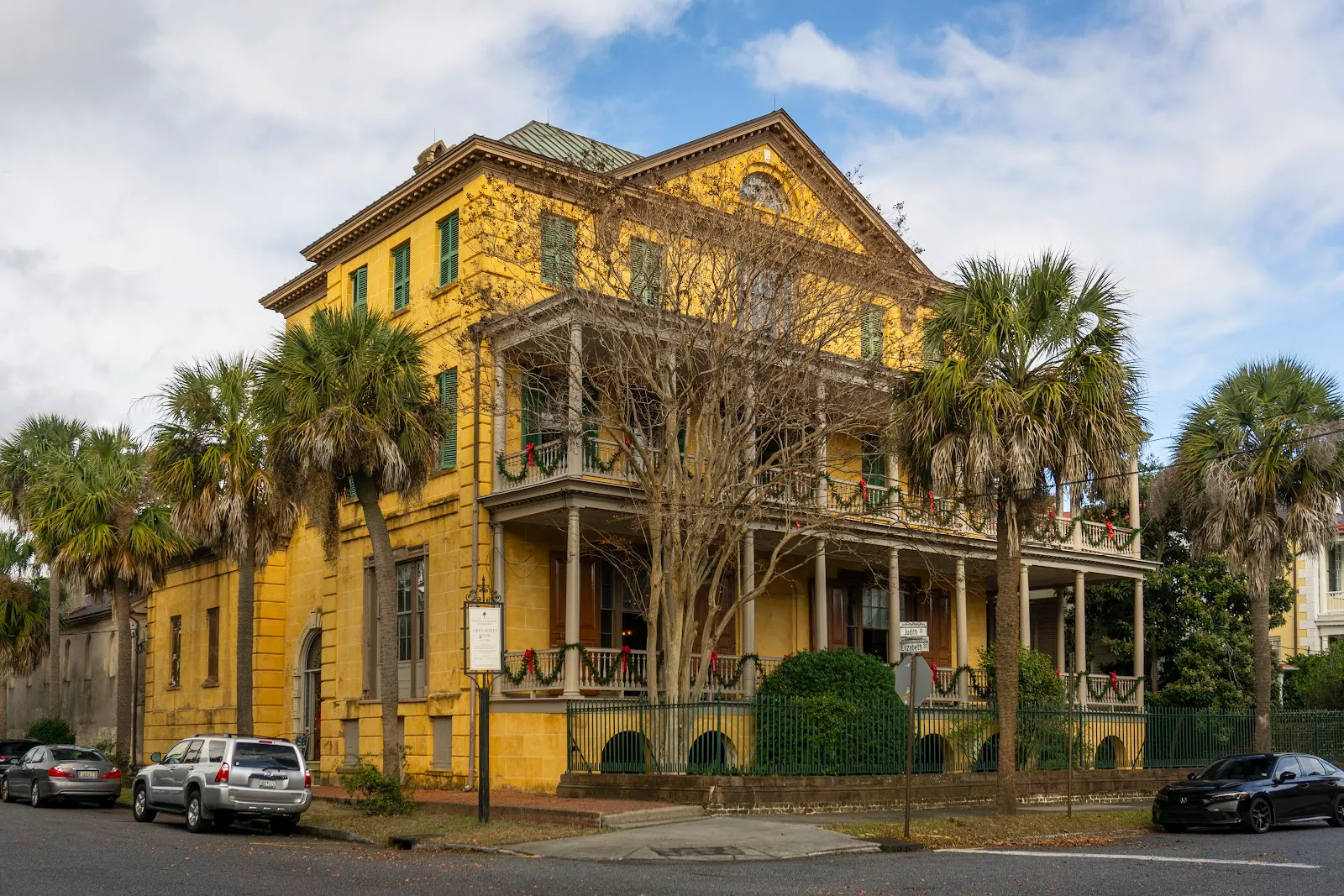
At 48 Elizabeth St in Charleston’s Mazyck-Wraggborough neighborhood, the Aiken-Rhett House Museum preserves a townhouse and its outbuildings in an as-found state. Built in 1820 and enlarged by Governor William Aiken Jr. and his wife, the complex includes original furnishings, artwork, a kitchen and the quarters where enslaved people lived. A self-guided audio tour lets you explore at your own pace and consider the lives of both the Aiken family and the people whose labor sustained the household. Look closely at the aged interiors as well as the grounds and gallery.
A townhouse expanded over time
Merchant John Robinson built the house in 1820. William Aiken Sr. acquired it in 1827, and his son, William Aiken Jr., later enlarged the property with his wife. The family’s changes in the 1830s and 1850s shaped the complex visitors see today.
The property includes the main house and a group of outbuildings, among them a kitchen, carriage block and work yard. Together, these buildings show how an affluent urban household operated. The complex is often described as an urban plantation, a useful frame for understanding that the residence and its grounds depended on enslaved labor.
Preserved, not restored
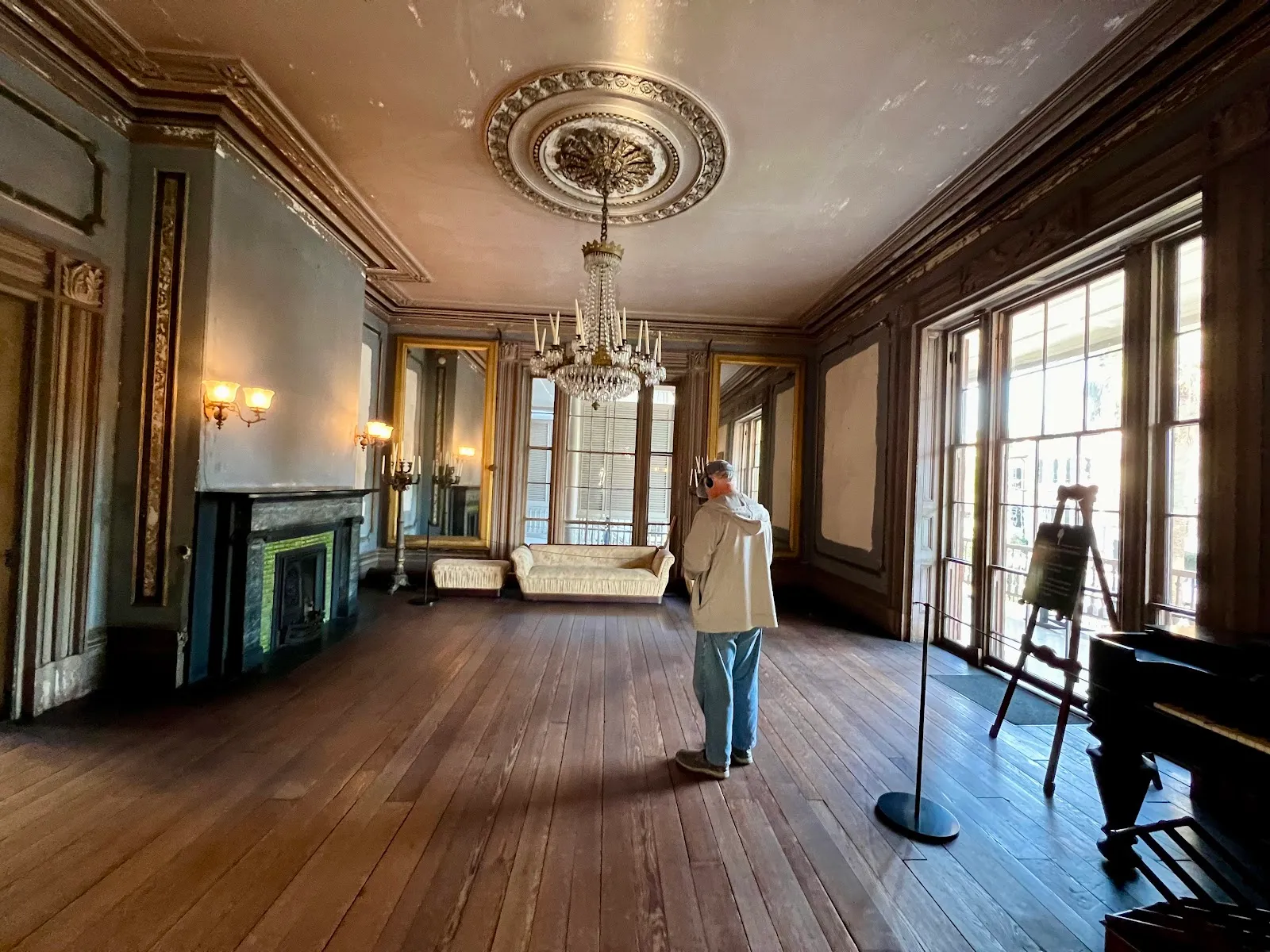
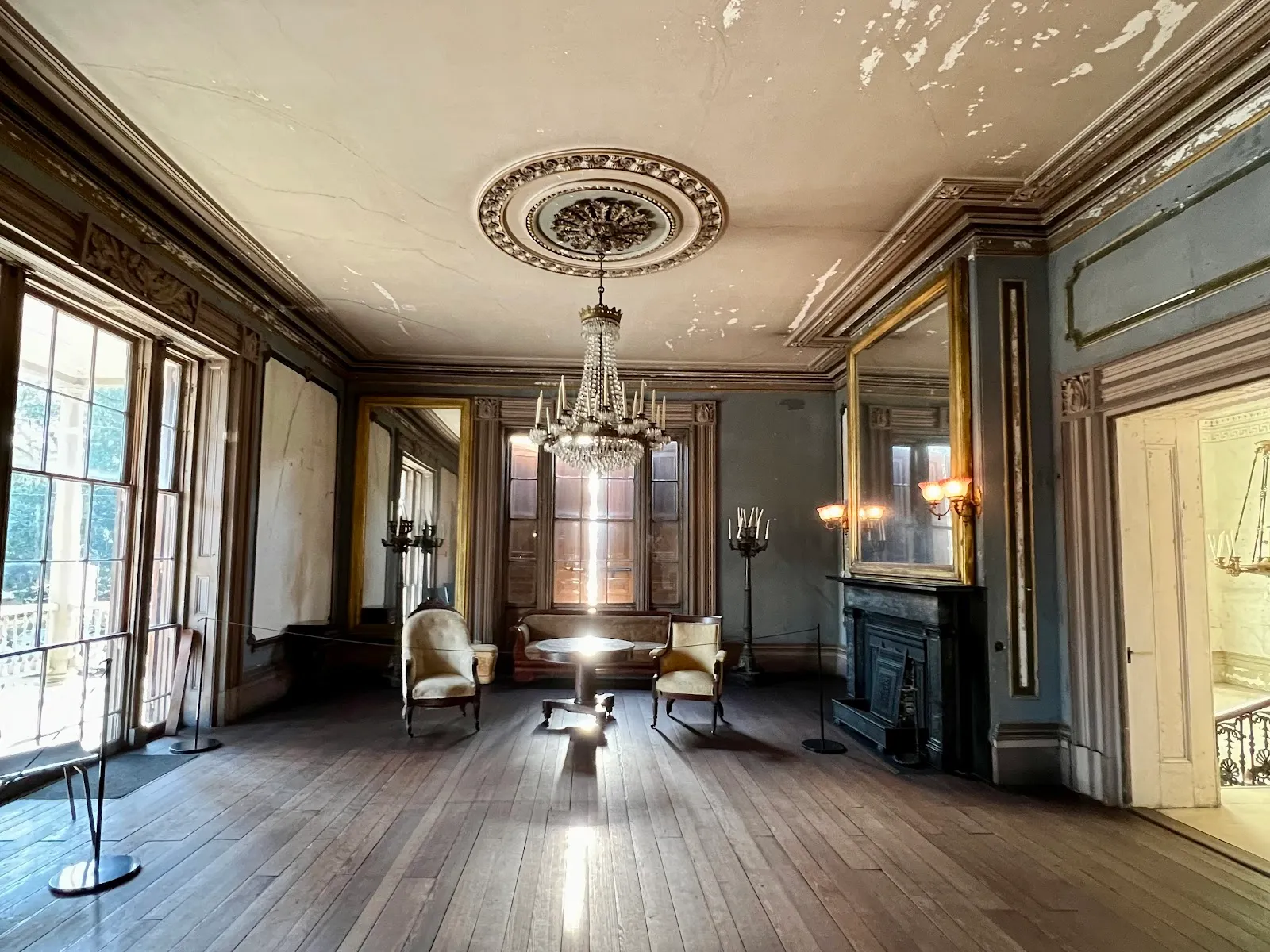
The house is maintained in an as-found condition rather than returned to a chosen moment in its past. That approach leaves layers of time visible: wallpaper peels in places, and different paint colors remain on the walls. Some rooms and surfaces show wear, while furnishings and other objects survive from the house’s earlier life.
This is a different experience from visiting a fully restored interior. The visible changes and deterioration are part of what the preservation approach retains. Look at the rooms as evidence of a house altered and occupied across generations, not as a single polished period setting.
A tour that includes enslaved lives
The self-guided audio tour moves through the house and its grounds, with recordings and visual aids to help you follow the route. It covers the main residence and the quarters where enslaved people lived. The story includes the Aiken family’s position and the people whose work maintained the household and its way of life.
An interactive guided tour is another option for a more conversational visit. However you explore, the outbuildings are essential to understanding the full complex. They place the grand rooms in context and bring attention to the stark differences between the lives lived within the same property.
Art and original interiors
The house contains original furnishings, antiques, paintings and sculptures. A gallery on the property displays paintings and sculptures, and its collection can reward a slower look after you have walked through the rooms.
The interiors combine the traces of age with the scale and detail of a wealthy Charleston home. The property’s preserved state lets you see both its architectural character and the changes time has left behind. Give yourself room to move through the different areas rather than treating the tour as a quick walk through the main house.
FAQ
How long does a visit to the Aiken-Rhett House take?
The self-guided audio tour takes about an hour or a little longer. The grounds and gallery are also part of the visit.
Can you explore the Aiken-Rhett House without a guide?
Yes. A self-guided audio tour takes you through the house and grounds, with recordings and visual aids. Guided tours are also available.
What can you see at the Aiken-Rhett House?
The complex includes the main house, outbuildings, a kitchen, carriage block, yard and the quarters where enslaved people lived. Inside, you can see original furnishings, antiques and artwork.
Is the Aiken-Rhett House restored?
The property is preserved in an as-found state rather than restored to one period. The interiors retain visible signs of age, including worn surfaces and layers of paint and wallpaper.