In downtown Hilo, the Pacific Tsunami Museum explores how tsunamis have shaped the town and the wider Pacific. Its exhibits combine photographs, maps, artifacts, scientific explanations and personal accounts, with a particular focus on the 1946 and 1960 disasters that devastated Hilo. You can learn how tsunami waves form, see how warning systems work and hear about the human experience of loss and recovery. The museum occupies a concrete building constructed in 1930 that survived both events. Allow about 45 minutes to an hour to look through the displays.
A building that survived Hilo’s tsunamis
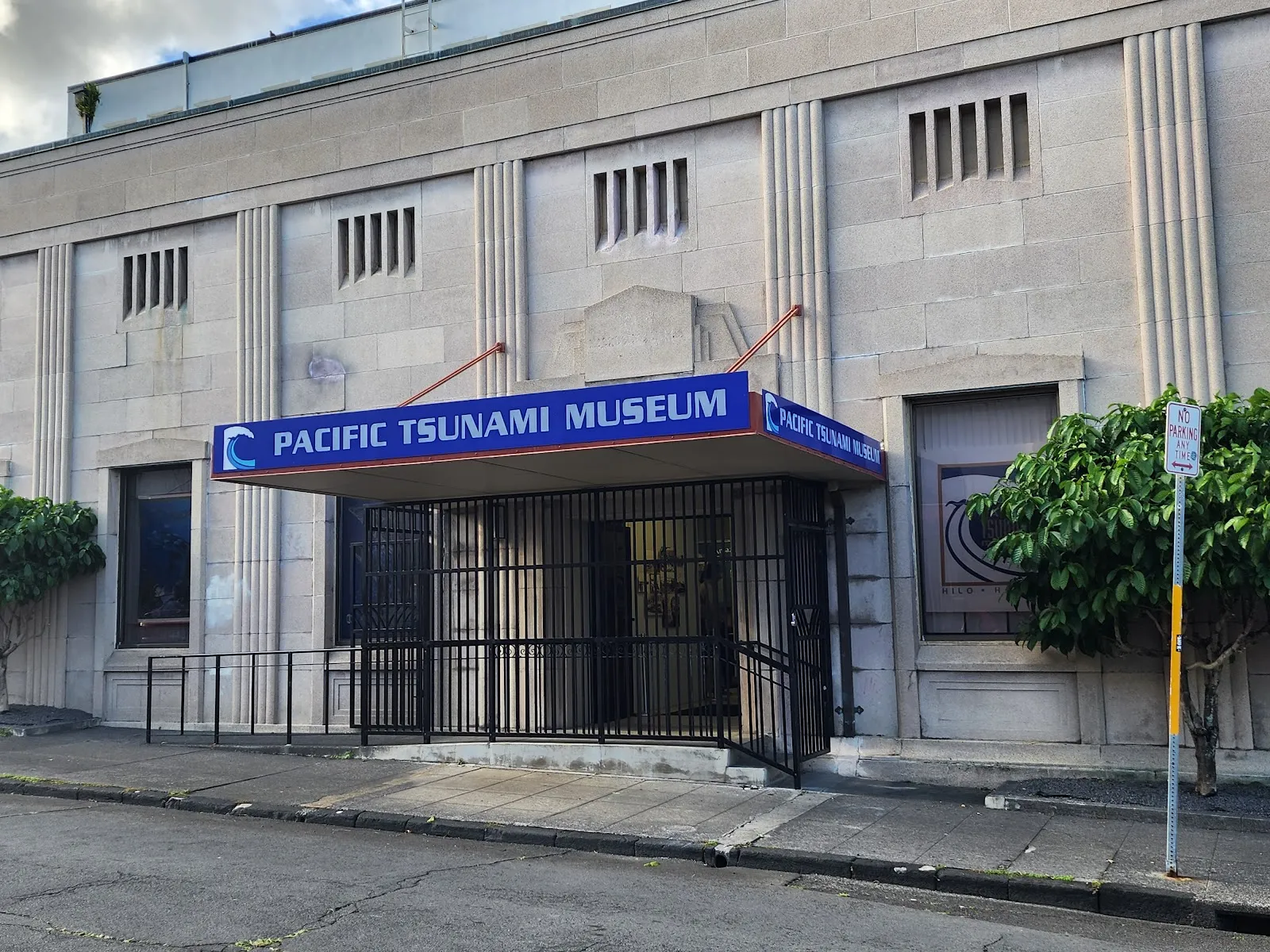
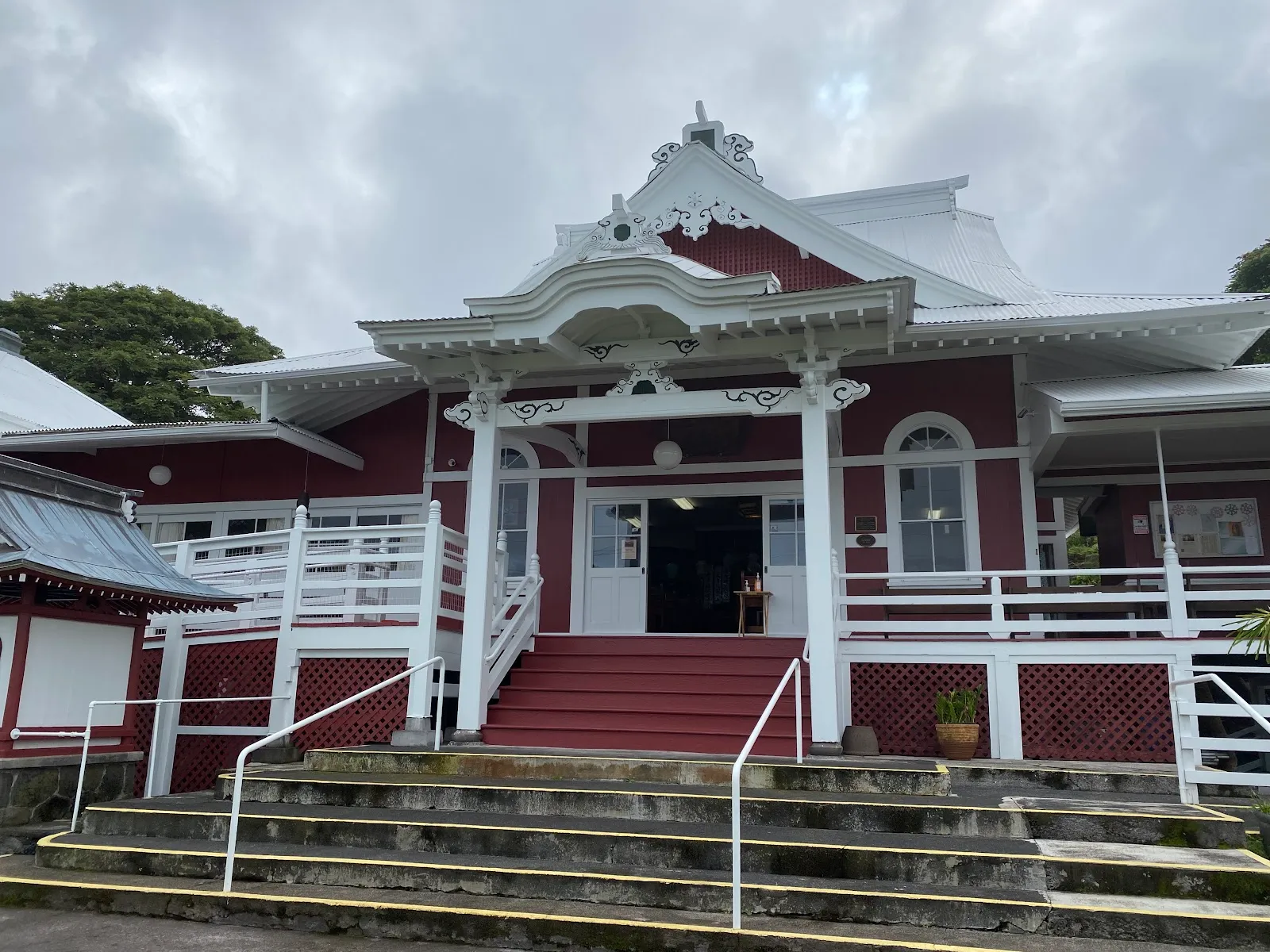
The museum is housed in a concrete building constructed in 1930. Its strong structure survived the tsunamis that struck Hilo in 1946 and 1960, disasters that also changed the town around it. The building’s parapet, fluted columns and wrought-iron details reflect its early twentieth-century design. It was once a First Hawaiian Bank branch; the bank donated the property for the museum in 1997.
That history gives the exhibits a direct connection to their subject. The museum preserves the story of the waves that transformed Hilo and helps explain the city’s continuing attention to tsunami awareness and preparedness.
The 1946 and 1960 disasters
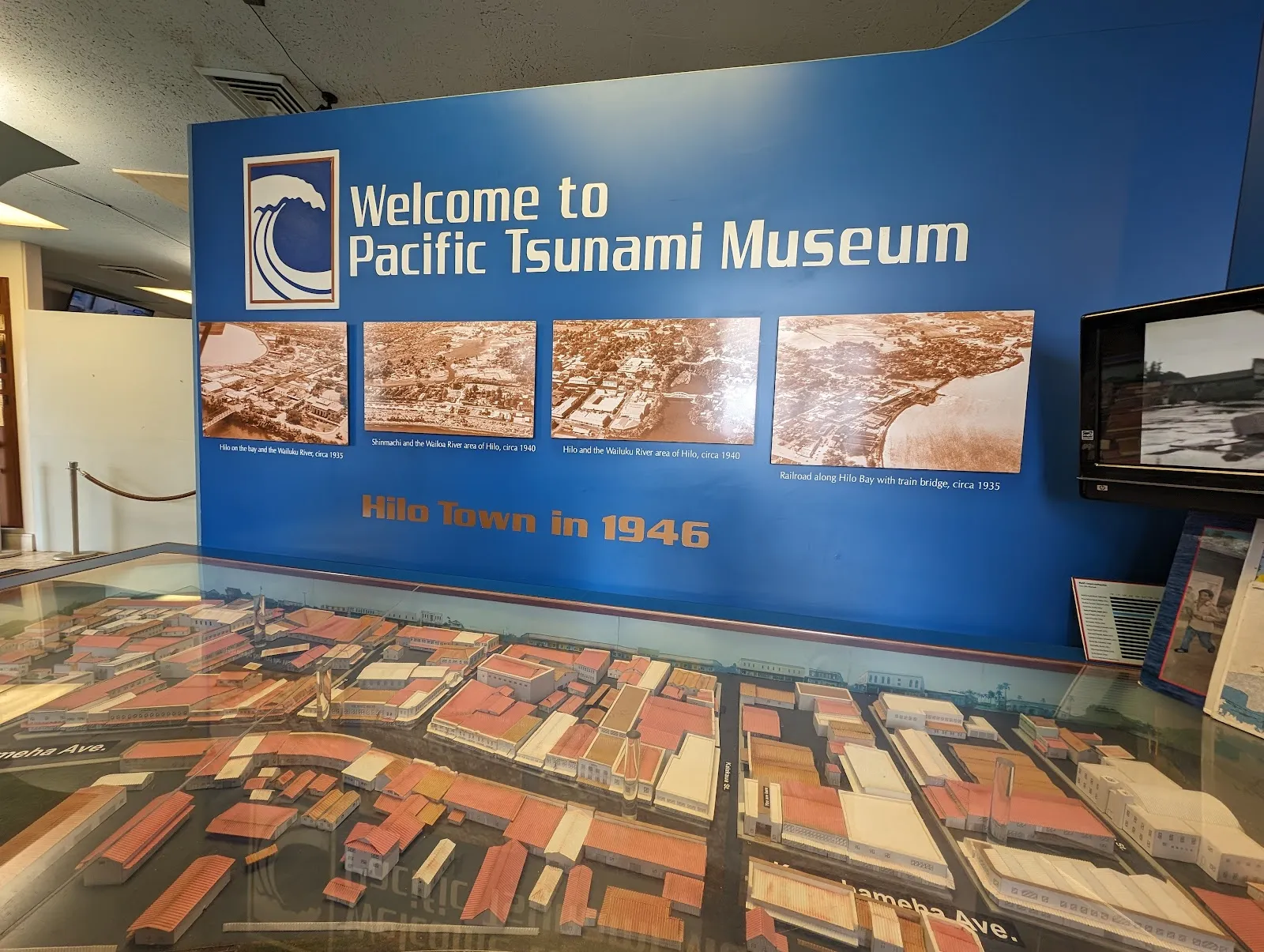
The museum focuses especially on two tsunamis that devastated Hilo. On April 1, 1946, an earthquake in Alaska’s Aleutian Islands generated waves that reached Hawaiʻi with little warning. On May 23, 1960, an earthquake off Chile sent another destructive tsunami across the Pacific. In Hilo, both events caused widespread damage and loss of life.
Photographs, maps and displays document what happened to the town and its residents. Rooms dedicated to the local disasters place Hilo’s experience within a wider Pacific history. The museum also covers the 1975 tsunami, as well as tsunami events elsewhere in the region.
Science, warnings and preparedness
Exhibits explain how tsunamis form and how earthquakes can send waves across the ocean. Displays cover the Pacific Tsunami Warning System and the steps people can take when a warning is issued. Interactive elements help visitors explore how a tsunami develops and why decisions about evacuation matter.
The educational focus is practical as well as historical: the museum aims to build public awareness and preparedness. Its displays address the effects of tsunamis on communities and the science behind these events, giving context to the warning signs and evacuation information found around Hilo.
Personal accounts and local memory
Survivor stories are central to the museum’s account of the disasters. Photographs and written and recorded recollections connect the events to individual lives, while volunteer guides share detailed explanations of the displays. Some guides have personal ties to tsunami history in Hawaiʻi.
The museum also honors Hilo police officer and local historian Robert “Steamy” Chow. He witnessed the 1946 and 1960 tsunamis as a young officer and took part in evacuation, rescue and recovery work. Later, he helped preserve local history and shared his experiences with students and museum visitors.
Planning a visit
The museum is at 130 Kamehameha Avenue in downtown Hilo, near shops and restaurants. Street parking is available on Kalakaua Street and Kamehameha Avenue. A visit takes about 45 minutes to an hour, giving you time to explore the historical displays and tsunami science exhibits.
Volunteer presentations can add context before you walk through the galleries. The museum has accessible entrance, elevator and restroom facilities, along with assisted-listening equipment. If you have a dog allergy, be aware that a dog may be present.
FAQ
How long does a visit to the Pacific Tsunami Museum take?
Allow about 45 minutes to an hour to explore the exhibits.
What can you see at the Pacific Tsunami Museum?
Displays cover the 1946 and 1960 tsunamis, other Pacific events, tsunami science and preparedness. They include photographs, maps, artifacts and personal accounts.
Where is the Pacific Tsunami Museum?
It is at 130 Kamehameha Avenue in downtown Hilo.
Is parking available at the museum?
Street parking is available on Kalakaua Street and Kamehameha Avenue.