
Oakland Cemetery is a historic garden cemetery and public park at 374 M.L.K. Jr Dr SE, just east of downtown Atlanta. Founded in 1850, it combines shaded paths and gardens with Victorian-era monuments, mausoleums and sculpture. Walk among the graves of notable Atlantans, including author Margaret Mitchell, golfer Bobby Jones and musician Kenny Rogers, and look for flowers, butterflies and stained glass in some crypts. Regular visits are free; ticketed events such as Illumine bring music, art installations and lighting to the grounds after dark.
A cemetery designed as a park

Oakland Cemetery opened in 1850 as Atlanta Cemetery, beginning with a six-acre site near downtown. Its name came from the oak trees that once grew in the area. The grounds later expanded, and the cemetery became one of Atlanta’s oldest public parks.
Its layout reflects the Victorian-era garden cemetery movement, which treated burial grounds as landscaped public spaces. Walking paths run among trees, headstones, decorative sculpture and mausoleums. Oaks and magnolias shade parts of the grounds, while gardens and flowers add seasonal color. The result is a place to learn about the city’s past at a walking pace, with green space woven through the memorial landscape.
Atlanta stories among the graves
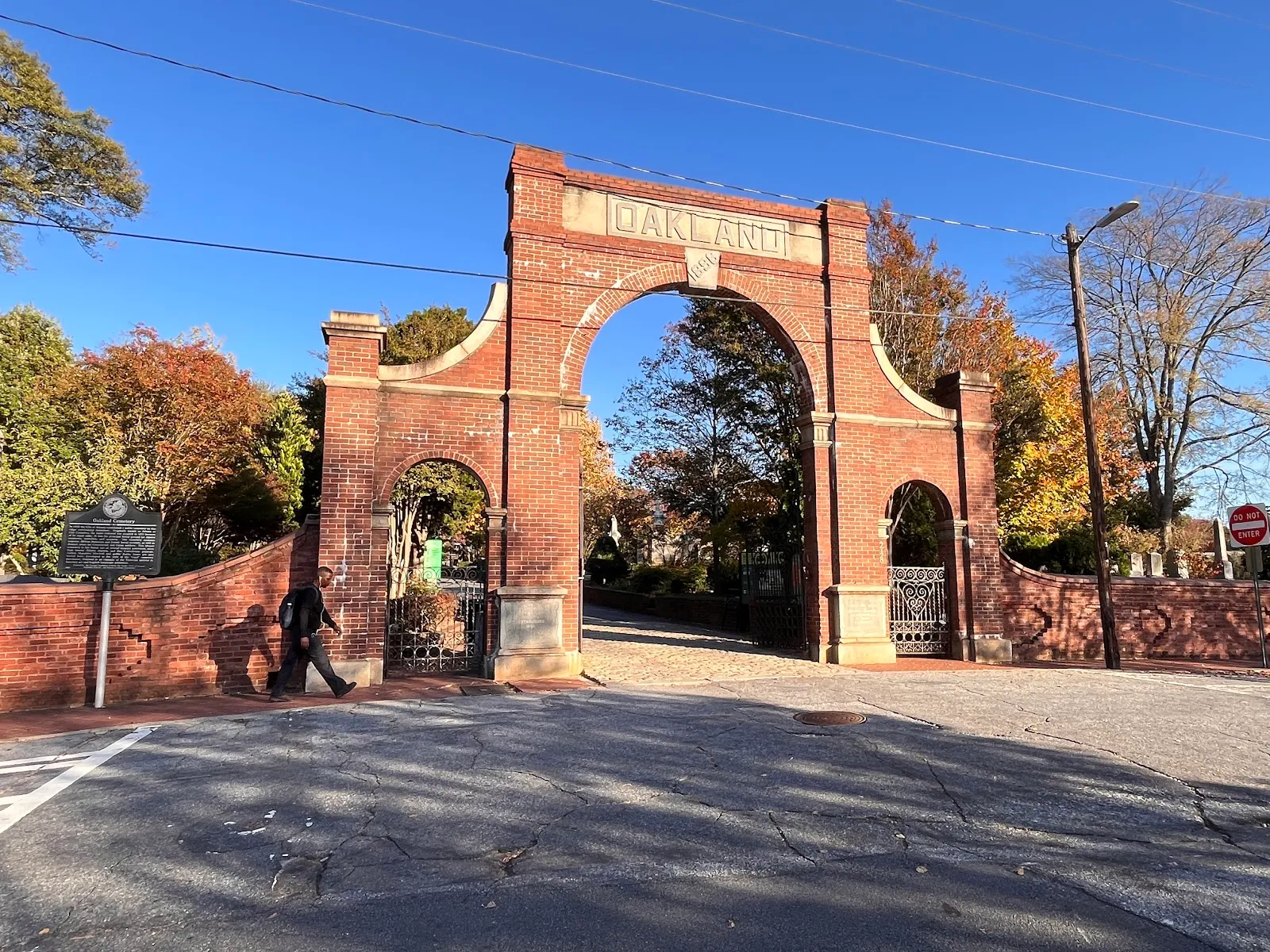
Many people connected to Atlanta’s history are buried here. Notable graves include those of novelist Margaret Mitchell, golfer Bobby Jones, former mayor Maynard Jackson and country musician Kenny Rogers. The cemetery is also the resting place of Confederate and Union soldiers, as well as Black Atlantans whose lives and work shaped the city.
The grounds record difficult parts of the region’s history alongside the lives of public figures. Sections associated with enslaved people were renamed over time, and later burials include Black doctors, politicians, preachers, artists and business owners. Take time to read inscriptions where they are legible; the headstones and epitaphs span generations and offer different glimpses of the people remembered here.
What to notice on a walk
Look beyond the best-known graves. The cemetery’s monuments range from carved headstones and statues to elaborate family mausoleums. Some crypts contain stained glass that catches the sunlight. Gardens, flowers, butterflies and the mix of plant life give the paths a changing character through the seasons.
You can explore independently, and the grounds have miles of walking paths. A welcome center and gift shop sit across from the cemetery. Volunteers help preserve the site and can share information about its history, so consider asking questions as you explore.
Events and practical details
Regular visits are free. Special events are different: Illumine is a ticketed after-dark experience with music, art installations and lighting. It offers a distinct way to see the grounds, but check event details and arrange tickets before going.
Parking near the main entrance can be challenging, so consider walking from a nearby area or taking an Uber from downtown. If you visit in hot weather, bring water. Give yourself time to walk rather than treating the cemetery as a quick stop; the paths, gardens and monuments are spread across the grounds.
FAQ
Is Oakland Cemetery free to visit?
Entry is free on regular days. Special events such as Illumine are ticketed.
How long should I spend at Oakland Cemetery?
Allow 1 to 2 hours for a walk among the paths, gardens and monuments. You could spend longer exploring the grounds.
Which notable people are buried at Oakland Cemetery?
The cemetery includes the graves of Margaret Mitchell, Bobby Jones, Maynard Jackson and Kenny Rogers.
What is Illumine at Oakland Cemetery?
Illumine is a ticketed after-dark event with music, art installations and lighting across the cemetery grounds.


