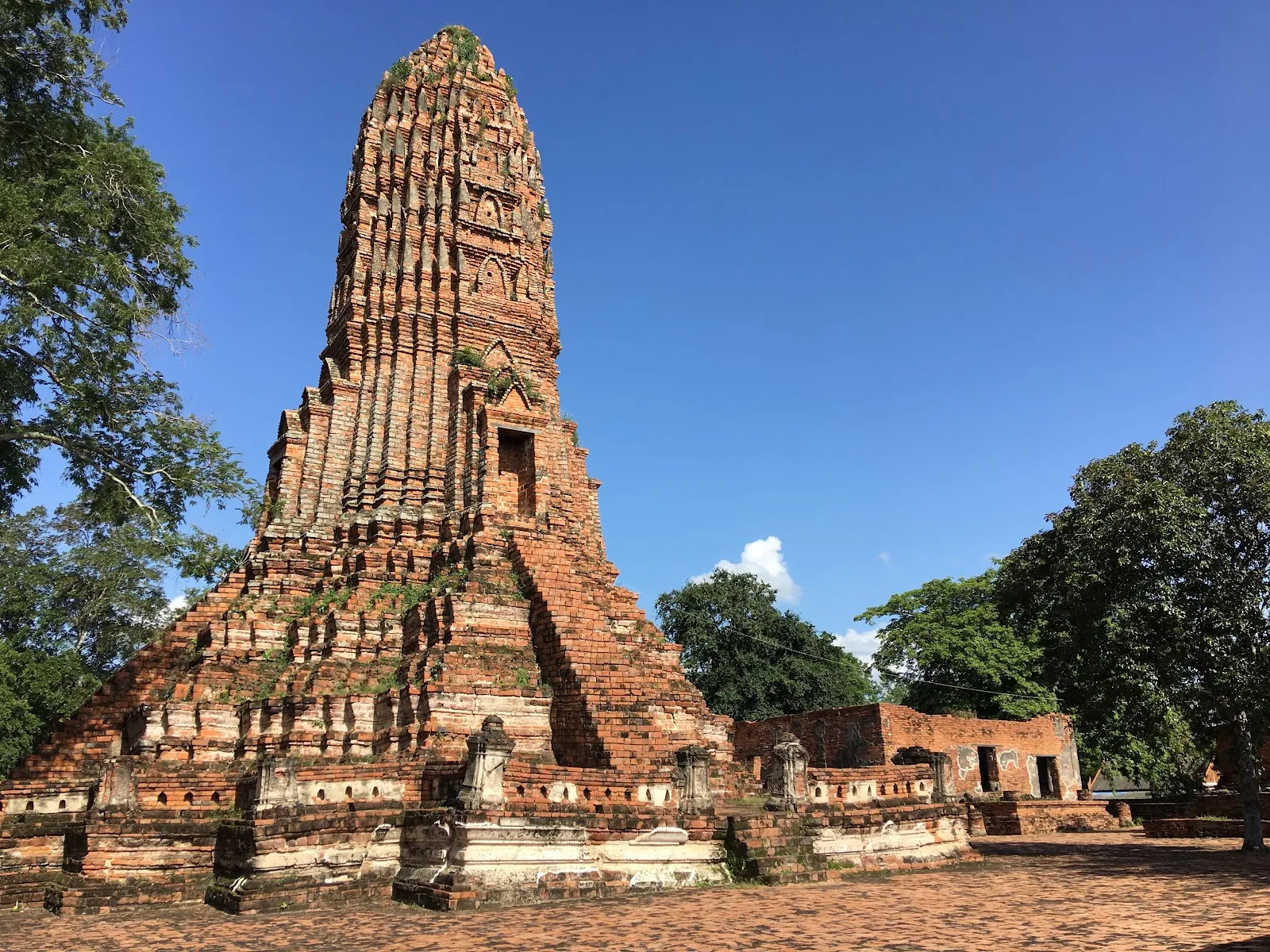
Wat Na Phra Meru Rachikaram sits on the north side of the Ayutthaya island, opposite the old Grand Palace area. It is one of the few temples in the city that escaped destruction when the Burmese took Ayutthaya in 1767, so its buildings still show how the temples of the kingdom looked. The main hall holds a large gilded Buddha in royal dress, and a separate hall holds a black stone Buddha. The grounds include a green stone Buddha from the Dvaravati period and a quiet garden at the back.
A temple that survived 1767
Wat Na Phra Meru stands on the north side of the island, opposite the old Grand Palace area. It is one of the few temples in Ayutthaya that escaped destruction when the Burmese took the city in 1767. During the final siege, the Burmese army used the site as a camp and a storehouse for weapons, and that use helped spare the buildings.
The temple was older than that war. Existing records show that it was restored under King Boromakot, who reigned from 1732 to 1758, and again during the early Bangkok period. The date of its founding is not known. In 1569, the kings of Thailand and Burma held peace talks at the temple.
The main hall and the principal Buddha
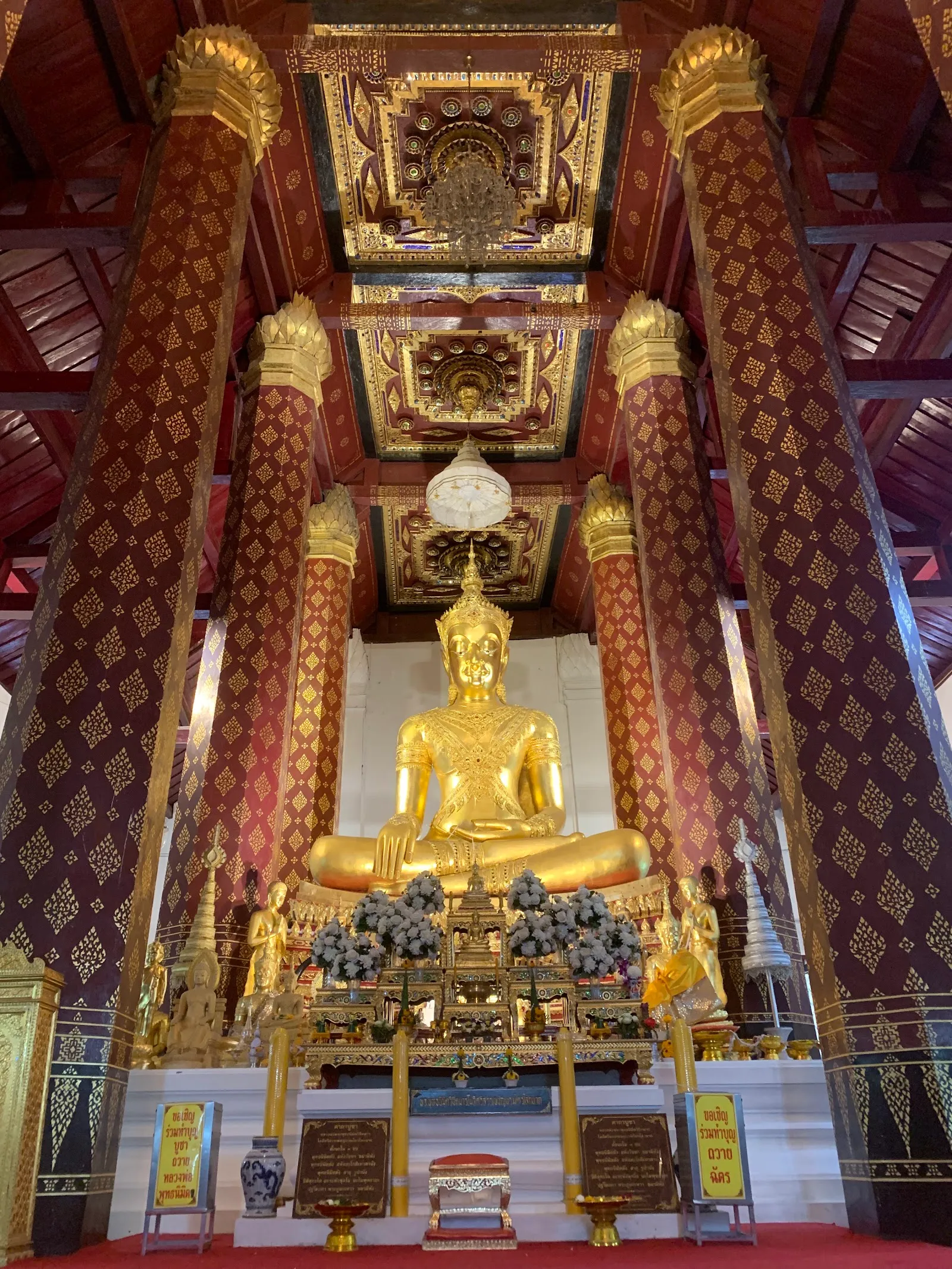
The principal image is named Phra Phutthanimit Wichit Marmoli Si Sanphet Borommatrailokanat. It is a crowned Buddha in royal attire, about six metres high. Its design blends two ideas of kingship: the Khmer devaraja, or god-king, and the Ayutthaya dharmaraja, the king who rules by the Dharma.
The main hall has gold-patterned columns and a decorated ceiling that set the tone for the image. The bot, the largest room in the temple, is large and imposing, with wood carvings on the gable and the door panels.
The other halls and the grounds
A separate hall holds a black stone Buddha, which feels quieter than the gold image in the main hall. Nearby is a seated Buddha carved in green stone from the Dvaravati period, one of the older pieces of art in the temple.
The grounds include a small koi pond and three ruined chedis. A garden at the back is a calm place to walk between the buildings.
How a visit works
The temple asks for a donation of 20 baht per person. Remove your shoes before entering any hall, and dress respectfully, since the temple is still active and holds ceremonies when needed. Families come to pray and make merit, and on busy days new robes are laid out for offering.
At the entrance, a large basin holds holy water, called nam mon, which visitors can scoop. Fridays around lunchtime bring many local visitors, so a morning visit is quieter. The entrance and the restroom are wheelchair accessible, and the paths are clearly marked.
FAQ
Is there an entry fee?
The temple asks for a donation of 20 baht per person.
How long do you need?
About 30 to 60 minutes covers the main hall, the side hall and the garden.
Do you need to take your shoes off?
Yes. Shoes are not allowed inside the temple halls.
Is the temple wheelchair accessible?
The entrance, the restroom and the parking lot are wheelchair accessible.
When is the temple quietest?
Early morning is calmer. Friday around lunchtime is busy with local visitors.