Central Suriname Nature Reserve
Travelers come for the intact rainforest, the Coppename River and Raleigh Falls, and a multi-day trip into the interior.
We may earn a commission. It never decides our picks.
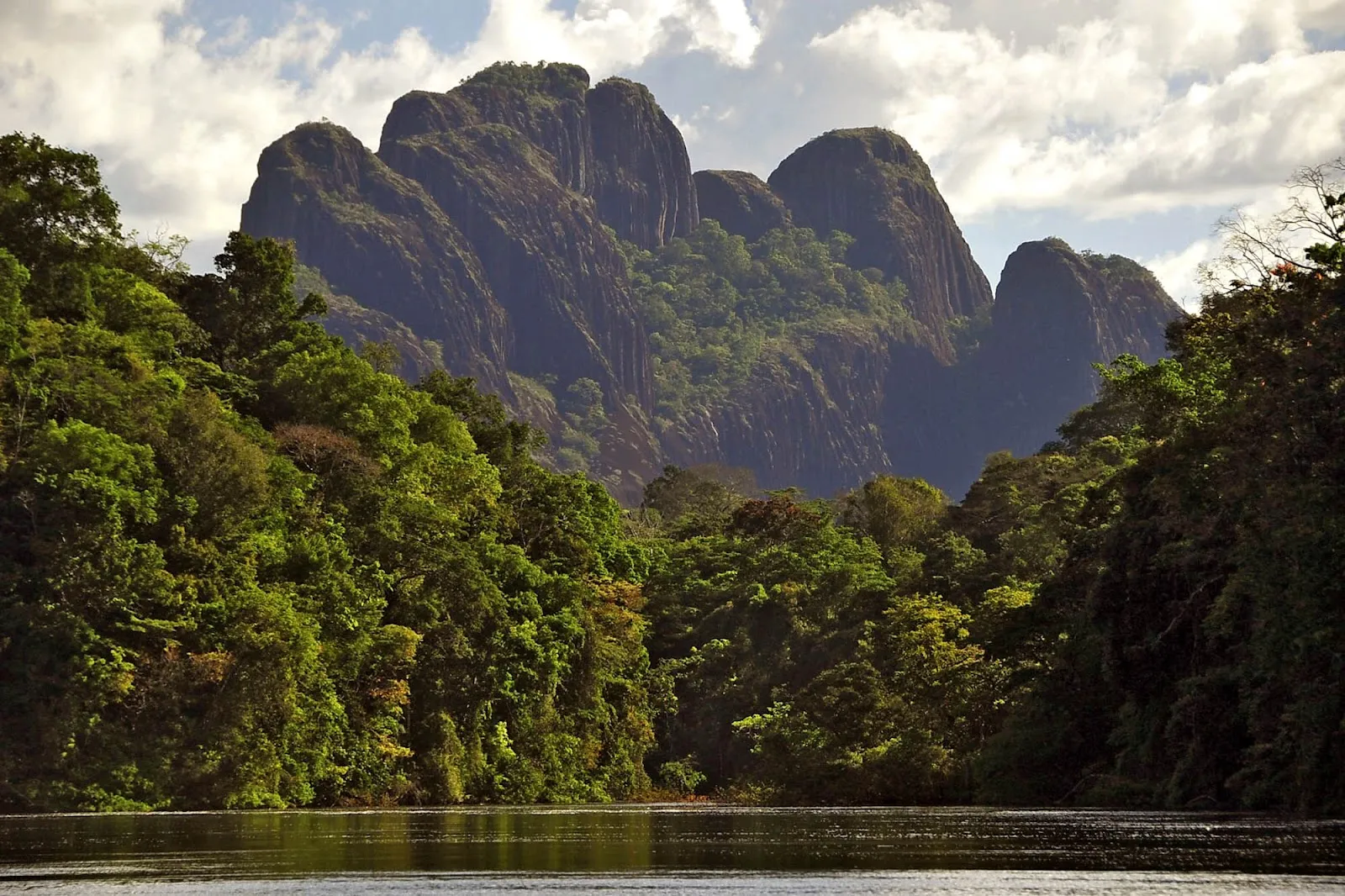
Central Suriname Nature Reserve covers about 1.6 million hectares of the interior of Suriname, on the northeast coast of South America. UNESCO listed it as a World Heritage Site in 2000 for its largely intact tropical rainforest, which spreads across hills, savanna patches and river valleys. Much of the reserve has no roads, and Maroon and Indigenous communities live in and around it.
The main draw is the Coppename River and Raleigh Falls, a cascade reached by boat through the forest. The Voltzberg, a granite outcrop, gives a view over the canopy. Visitors usually arrive by small aircraft or boat, so a trip runs for several nights rather than a single day. Book the transfer first, since the rest of the plan depends on it. Plan around the rainy seasons, roughly May to July and December to January, when water runs high and travel is harder.
Central Suriname Nature Reserve in five
- Book a flight or boat transfer earlyThe reserve has no road access. Visitors usually reach it by light aircraft or river boat, arranged through an operator in Paramaribo, so book the transfer before you plan the rest of the trip.Getting around
- Ask STINASU about permits firstSTINASU, the nature conservation foundation, handles access to Suriname's nature reserves. Ask which permits and guide requirements apply before you pay for any transport.
- Carry Surinamese dollars in cashPlan on cash outside Paramaribo. Bring enough Surinamese dollars for guides, boat fuel and food, and check the rate with your operator.Money and costs
- Ask about malaria before you travelParts of Suriname's interior are malaria-risk areas. See a travel clinic before you fly and pack insect repellent for the flight, the camp and the boat.
- Confirm your insurance covers evacuationCheck that your policy covers small-aircraft flights and evacuation from the interior before you book. Some standard policies exclude remote areas, so read the wording.Travel insurance
Things to do in Central Suriname Nature Reserve
See all attractions in Central Suriname Nature Reserve
Need to know
- Currency
- Surinamese dollar (SRD)
- Entry
- Visa needed by many nationalities; check your passport first
- Emergency
- 115 police; check the fire and ambulance numbers before you travel
- Tipping
- Not expected in most places; cash tips for guides are usual
- Time
- UTC-3, no daylight saving
Weather by month
- Best
- Good
- Mixed
- Poor
- JanuaryShort rains
- FebruaryDrier spell
- MarchDrier spell
- AprilRains return
- MayLong rains
- JuneLong rains
- JulyWet, high water
- AugustDrier spell
- SeptemberDry, hot
- OctoberDry, hot
- NovemberRains return
- DecemberRains, holidays
Right now in Central Suriname Nature Reserve
Local time, today's weather and the exchange rate, refreshed through the day.

31
- Feels like
- 35°
- Humidity
- 59%
- Wind
- 6 km/h
- Chance of rain
- 27%
Central Suriname Nature Reserve
08:52 PM
Monday, November 2
- Today34°23°27%Monday: Drizzle. High 34°, Low 23°. Chance of rain 27%.
- Tue34°23°30%Tuesday: Cloudy. High 34°, Low 23°. Chance of rain 30%.
- Wed35°23°33%Wednesday: Drizzle. High 35°, Low 23°. Chance of rain 33%.
- Thu35°23°2%Thursday: Cloudy. High 35°, Low 23°. Chance of rain 2%.
- Fri35°22°0%Friday: Cloudy. High 35°, Low 22°. Chance of rain 0%.
- Sat35°22°39%Saturday: Cloudy. High 35°, Low 22°. Chance of rain 39%.
- Sun34°24°39%Sunday: Drizzle. High 34°, Low 24°. Chance of rain 39%.
Updated 05:42 PM local time · Weather data by Open-Meteo.com
Money
Mid-market rate1 USD = 37.64 SRD
Rates from Nov 2, 2026 · Rates By Exchange Rate API
Before you go to Central Suriname Nature Reserve
Rules for Central Suriname Nature Reserve, checked
- Check entry requirements for your nationality with the Suriname embassy or consulate before you book flights.
- Declare food, plant and animal products on arrival. Customs rules are set by Suriname's customs authority, so check them before you travel.
- Do not take plants, animals, rocks or other natural material out of the reserve. Collecting there is restricted by reserve rules.
- Check which permit the reserve needs with STINASU before you enter, and carry it with you on the flight and the boat.
- Follow small-aircraft baggage and weight limits. Operators can refuse oversize luggage.
Plan around Central Suriname Nature Reserve
Entry, money and the country around the reserve
Read the guideVisas and entryEntry rules by passport and what to check before you book
Read the guideGetting around SurinameFlights, boats and transfers from Paramaribo
Read the guideTours and ticketsOperator options for flights and guided trips
Read the guideWhere to stayParamaribo bases for an early flight out
Read the guideMoney and costsCash, cards and what to budget for the trip
Read the guideCentral Suriname Nature Reserve FAQ
How do you get to Central Suriname Nature Reserve?
There are no public roads into the reserve. Visitors usually fly by light aircraft or travel by river boat, arranged through a tour or transport operator in Paramaribo. Book before you plan the rest of your trip.
Can I visit without a tour?
Transport into the interior is booked through operators, so plan on a booked tour or charter. Ask STINASU about permits before you set your dates.
Is Central Suriname Nature Reserve a UNESCO site?
Yes. It was added to the UNESCO World Heritage List in 2000 as a protected tropical rainforest area.
When is the best time to visit?
The drier months are roughly February to March and August to October. The long rains from May to July bring high water and make travel harder.
How much time do I need?
Allow a spare day in Paramaribo, because weather can delay flights into the interior. Your operator can tell you how many days the trip needs.
Do I need malaria tablets for the reserve?
Ask a travel clinic. Interior areas of Suriname carry malaria risk, and the right prevention depends on your health and your route.