Málaga Cathedral, formally the Cathedral Basilica of the Incarnation, stands in the city’s historic centre on Calle Molina Lario. Built between 1528 and 1782 on the site of the former Great Mosque, it brings together Renaissance design with Gothic and later Baroque details. Its unfinished second tower gave it the nickname La Manquita, or “the one-armed lady.” Inside, look for the soaring domed ceiling, carved cedar-wood choir stalls, chapels and religious art. The Patio de los Naranjos, with its orange trees, is a surviving part of the former mosque complex.
Built on the site of the Great Mosque
Construction of the cathedral began in 1528 on the site of Málaga’s former Great Mosque. Work continued into the late 18th century, with the building’s long construction bringing together several architectural styles. Diego de Siloe is named in the plans for the Renaissance design, while the building also has Gothic elements and later Baroque details.
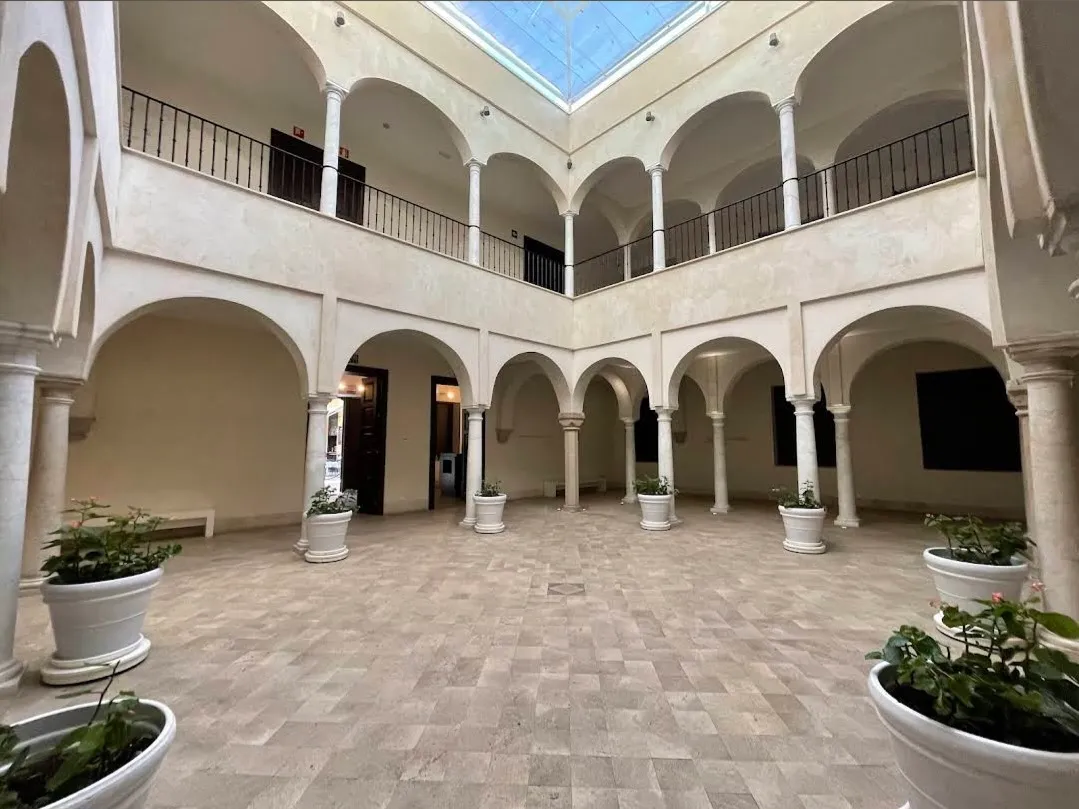
The mosque was replaced, but the Patio de los Naranjos survives. This small courtyard, planted with orange trees, offers a quieter place to notice the site’s earlier history. The cathedral’s setting in Málaga’s Old Town also places it within the area once bounded by the medieval Moorish walls.
The unfinished tower and changing styles
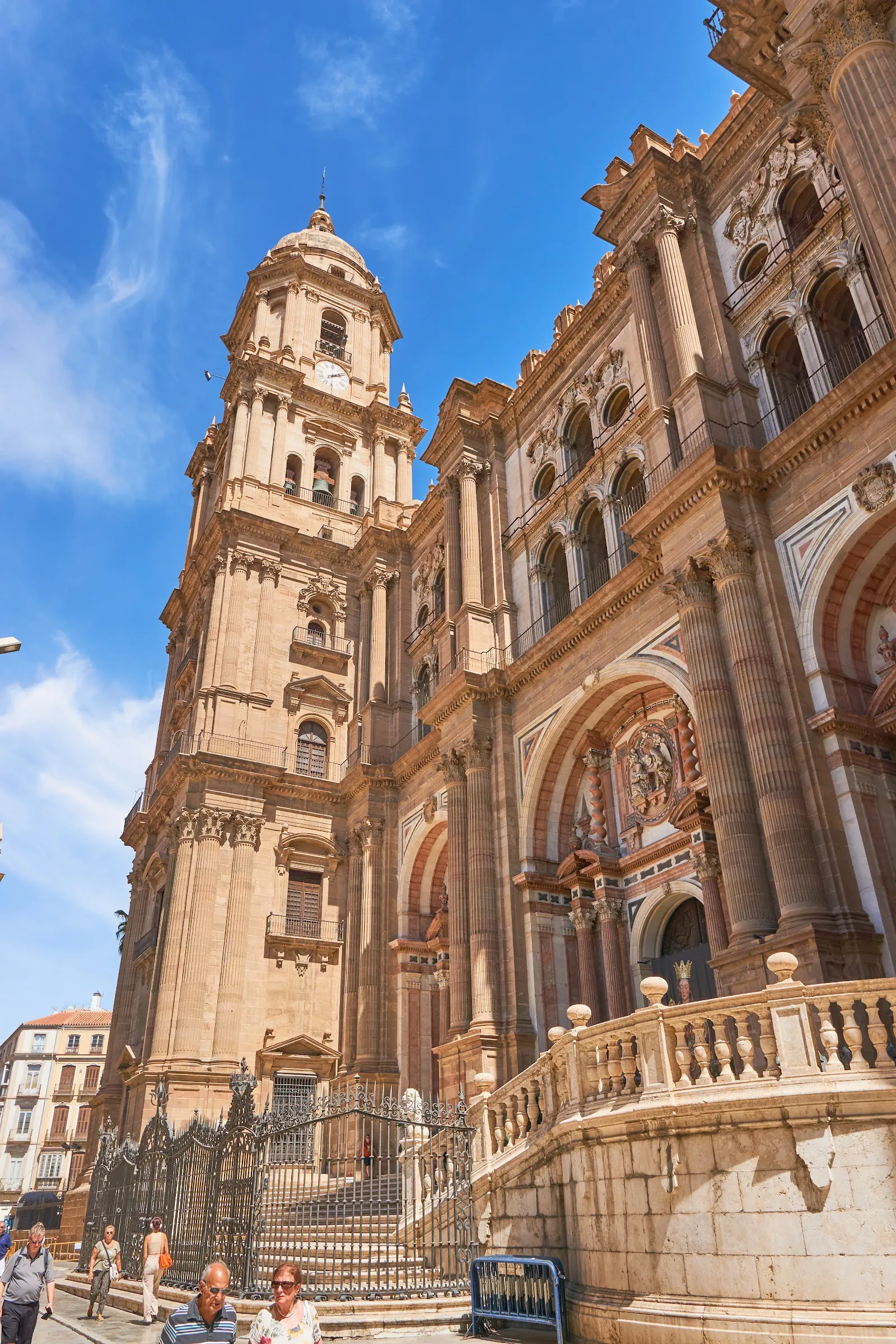
The cathedral is known locally as La Manquita, meaning “the one-armed lady.” The name refers to its unfinished second tower: only the north tower was completed. The incomplete outline is easy to pick out from the exterior and distinguishes the building’s profile.
Renaissance forms shape much of the cathedral, while the façade and interior also show later Baroque work. Construction extended from the 16th into the 18th century, so the result is not confined to a single period or style. The contrast is visible in the building’s exterior details and in the more elaborate decoration inside.
The choir, chapels and roof
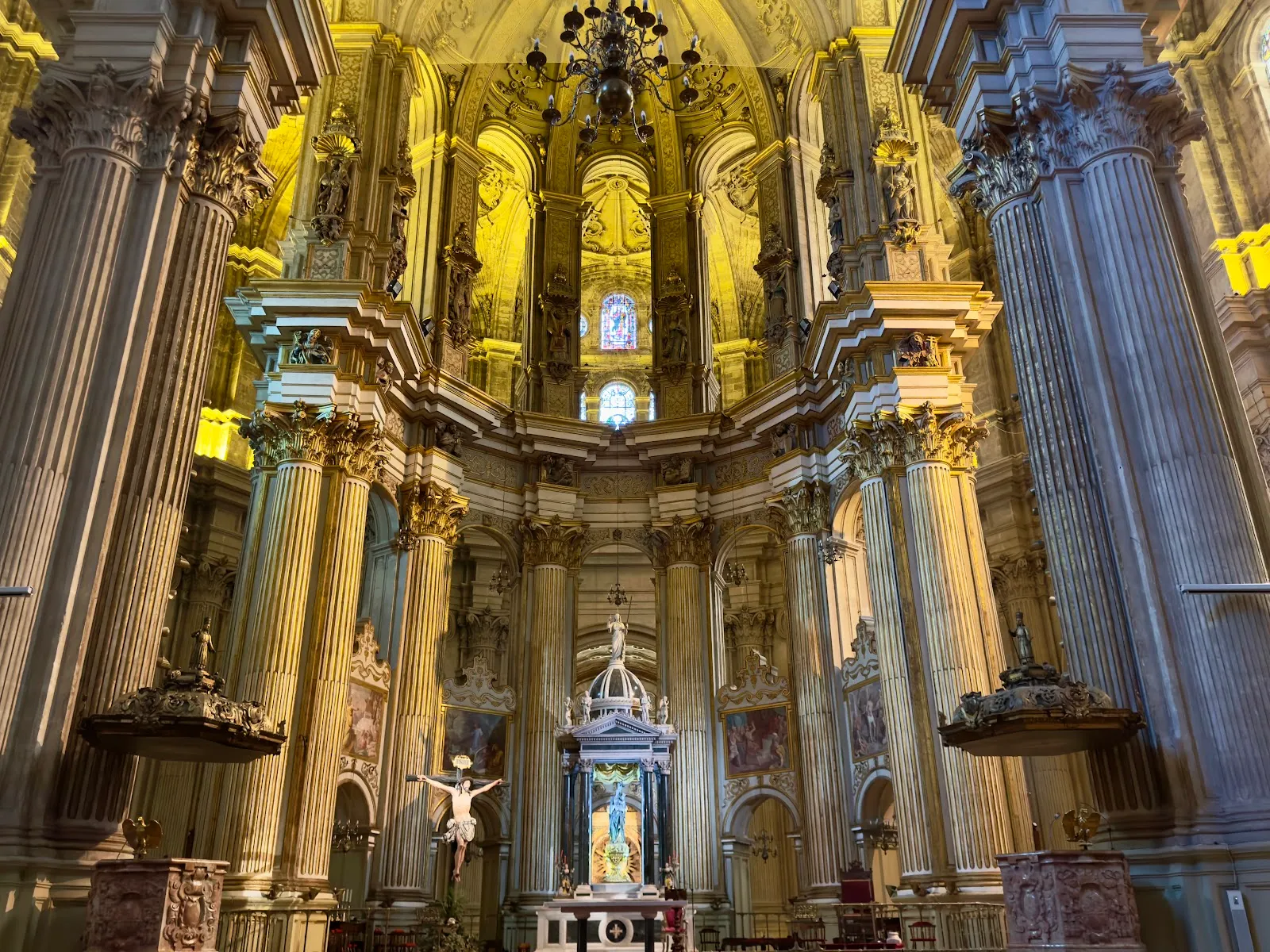
Inside, the domed ceiling rises about 40 metres above the cathedral. The broad nave is lined with columns and leads the eye towards the choir, whose cedar-wood stalls are intricately carved. The choir includes wooden sculptures by Pedro de Mena and organs dating to the 18th century, with more than 4,000 pipes.
Aisles lead to chapels around the interior. The Chapel of the Incarnation is among the spaces to look for, alongside chapels with religious art and decorative retables. Take your time moving between them; the carved work and details are easier to appreciate at a slow pace.
A guided visit to the roof gives views over the city. Roof visits run in groups and involve stairs, so they are not suitable for everyone. Check how access works before planning your visit, especially if you have difficulty with stairs.
FAQ
Why is Málaga Cathedral called La Manquita?
La Manquita means “the one-armed lady.” The nickname refers to its unfinished second tower; only the north tower was completed.
What was on the site before the cathedral?
The cathedral was built on the site of Málaga’s former Great Mosque. The Patio de los Naranjos, with its orange trees, survives from the earlier complex.
Can you visit the cathedral roof?
A guided roof visit is available in groups and involves stairs. Check access details before you go.
How long should you allow for Málaga Cathedral?
Allow at least an hour to explore the interior and chapels. A visit of around 1 to 1.5 hours gives you more time to look at the details.