Beside Granada Cathedral on Calle Oficios, the Royal Chapel is a Gothic mausoleum commissioned by Isabella I of Castile and Ferdinand II of Aragon. Its marble royal tombs, detailed stonework and religious artworks make it a focused stop for anyone interested in Granada’s history and architecture. Inside, you can see the resting places of the Catholic Monarchs and other members of their family, then visit the small museum of royal objects and art. An included audio guide helps explain the chapel’s symbolism and its place in the shift from Moorish to Catholic rule.
A royal mausoleum beside the cathedral
The Royal Chapel has its own entrance beside Granada Cathedral, in the city’s historic centre. Isabella I of Castile and Ferdinand II of Aragon commissioned it as their burial place. Construction began in the early 16th century and continued until 1517. The chapel was designed by Enrique Egas, and its style is associated with Isabelline Gothic architecture.
The monarchs’ decision to be buried in Granada linked the chapel to the city’s capture in 1492 and the consolidation of Christian rule. The building is therefore both a religious space and a monument to a period of political change. Its restrained, solemn atmosphere is part of the experience; take time to notice how the space feels as well as its decoration.
Tombs and details inside
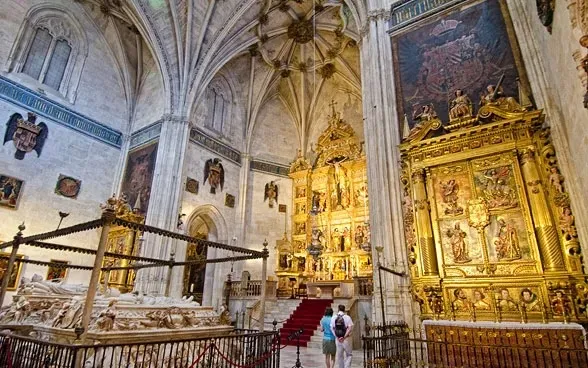
The marble tombs of Isabella and Ferdinand are the central focus. The chapel also holds the tombs of their daughter Joanna I and her husband Philip the Handsome. The family’s burial places make the building a royal mausoleum, while the surrounding religious art gives the interior a distinct devotional character.
Look for the chapel’s stained glass, carved details and altarpieces. The main altarpiece is associated with Felipe Bigarny. The interior combines Gothic structure with artistic influences from the early Renaissance, so details in the sculpture and decoration reward a slower look. Photography is not permitted inside; allow your attention to stay on the objects and architecture instead.
The museum collection
A small museum adds context to the chapel’s royal and religious history. Its collection includes paintings, sculptures, religious objects and personal items connected with the Catholic Monarchs. Among the works associated with Queen Isabella’s collection is a Flemish painting triptych by Dierick Bouts. The museum also displays royal belongings such as garments and books.
The collection is compact, so it fits naturally into a short visit rather than requiring a separate long stop. The audio guide can help connect the objects to the people and ideas behind the chapel. Take it at a measured pace, moving from the tombs to the artworks and then through the museum.
Planning your visit
The chapel is next to Granada Cathedral, but it has a separate entrance and is a distinct visit. Seeing both in one outing makes it easier to compare the chapel’s Gothic character with the cathedral’s different architectural style. The cathedral is close by, so no long transfer is needed between the two.
Allow around half an hour for the chapel, including time for the museum. Arriving early can help you avoid crowds. Tickets in advance are recommended, and the entrance is wheelchair accessible. The chapel is an active place of worship as well as a historic monument, so keep a respectful manner inside.
FAQ
How long does a visit to the Royal Chapel take?
Plan on about 30 minutes to see the chapel and its small museum.
Who is buried in the Royal Chapel of Granada?
The chapel contains the tombs of Isabella I of Castile and Ferdinand II of Aragon, as well as their daughter Joanna I and her husband Philip the Handsome.
Can you take photos inside the Royal Chapel?
Photography is not permitted inside the chapel.
Is the Royal Chapel beside Granada Cathedral?
Yes. It is next to the cathedral, with a separate entrance. You can visit both on the same outing.
Is the Royal Chapel accessible to wheelchair users?
The entrance is wheelchair accessible.