
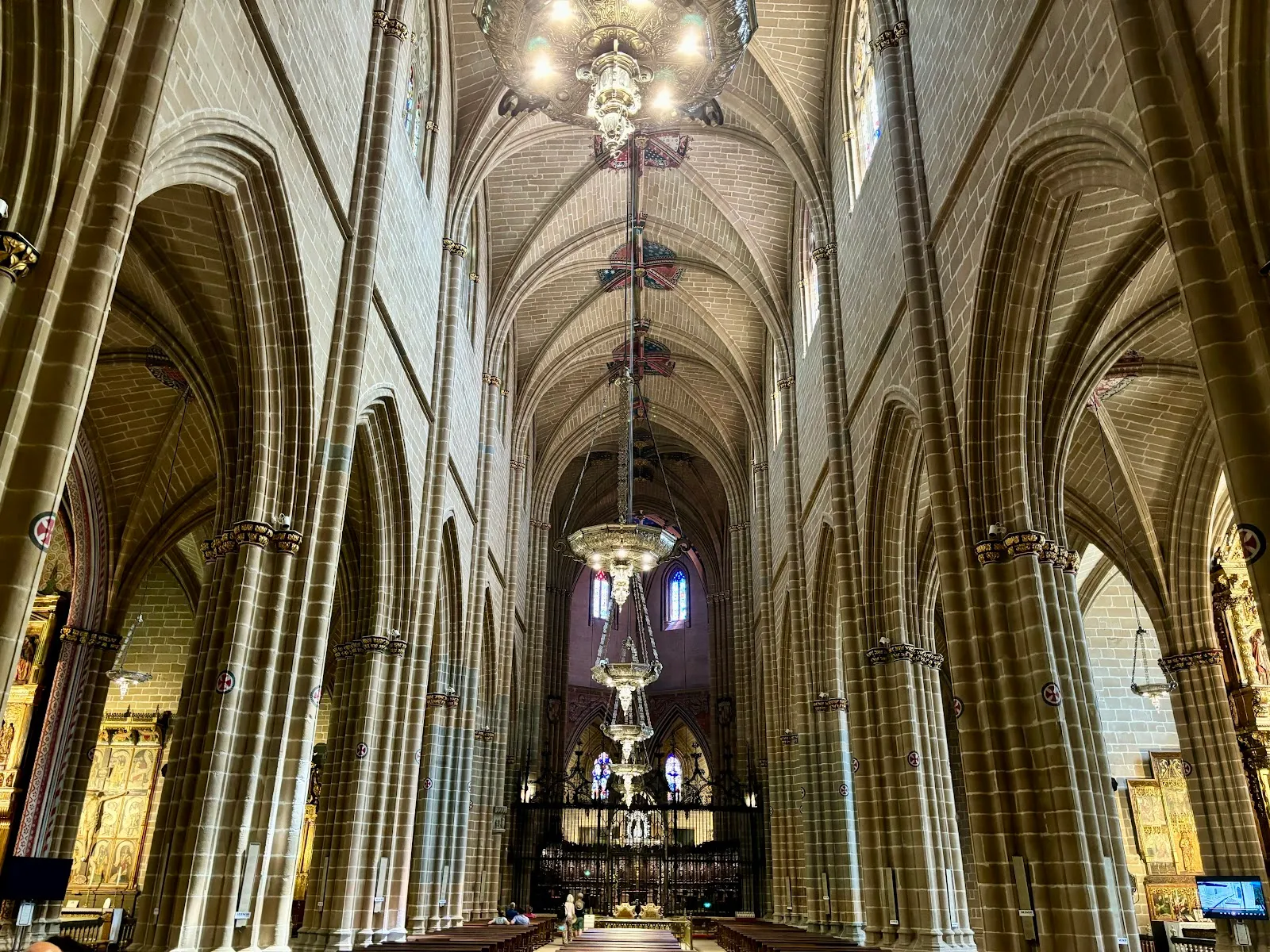
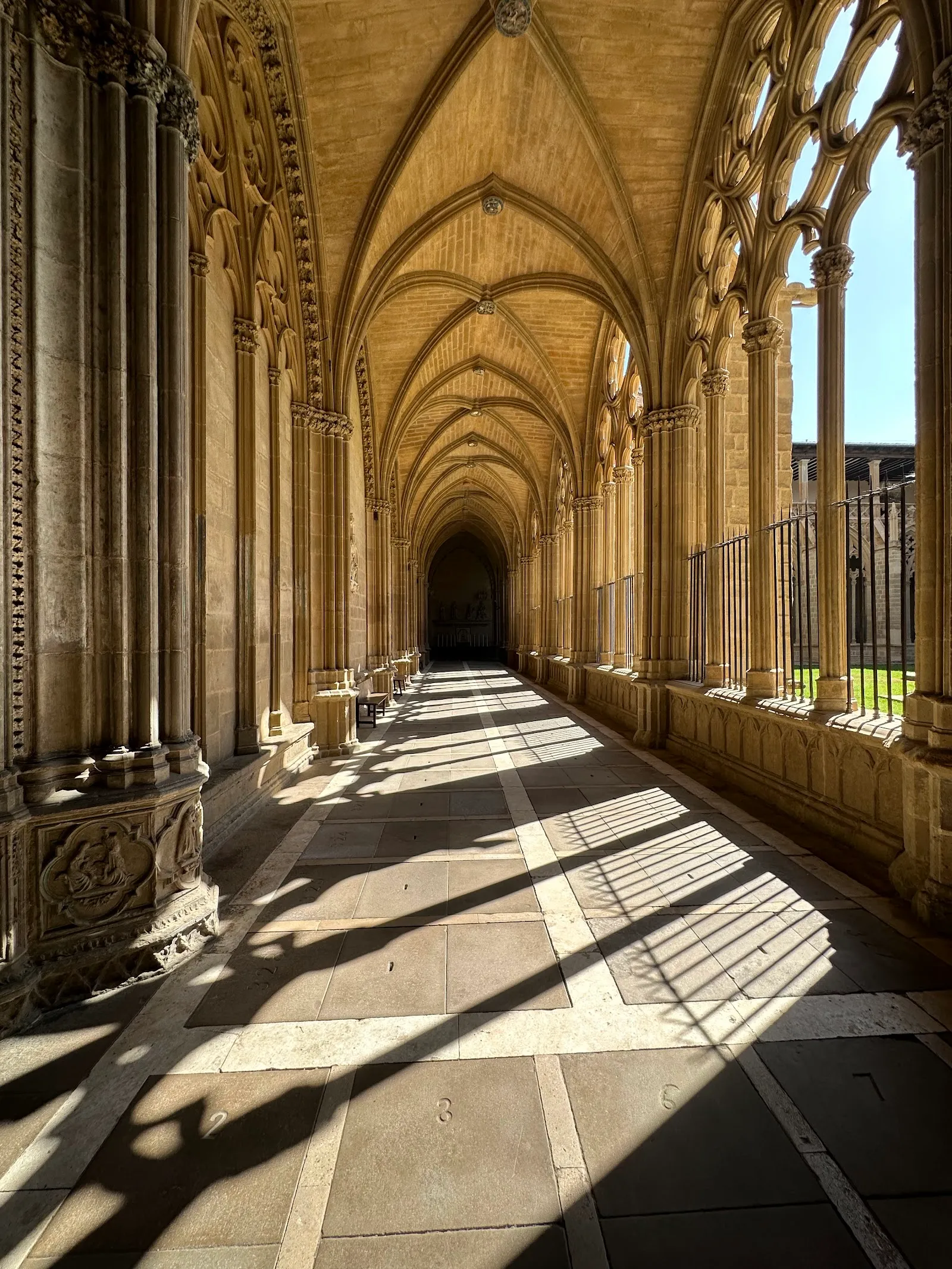
The cathedral of Santa María la Real sits in Pamplona's old town, a short walk from Plaza del Castillo. Its neoclassical façade dates from the late 1700s, but the interior is tall, Gothic and austere, with traces of its original painted decoration. The cloister is the main draw: it is among the finest Gothic cloisters in Europe, with delicate stone tracery and carved animal-shaped gargoyles. A museum, a bell tower and the alabaster tomb of King Charles III add to a visit of an hour or more.
From Romanesque church to Gothic cathedral
The cathedral was raised on the ruins of an older Romanesque cathedral that was pulled down in 1391. Building of the new Gothic church began in 1394 and carried on through the 15th century. Medieval kings of Navarre were crowned here, and several were buried in the building.
The front is a later addition. In the 18th century the Romanesque façade that had survived until then was demolished and rebuilt in a neoclassical style, and the cathedral was extended at the same time. The French writer Victor Hugo mocked the towers of this façade. Many accounts note that the front gives little hint of the Gothic interior behind it.
Inside the Gothic church
The interior is tall and austere, built in the French Gothic style with three naves. Remnants of its original painted decoration survive, and Renaissance motifs appear in the interior.
The Barbazana Chapel holds the tomb of Bishop Barbazán and wall paintings from the 14th century. The alabaster tomb of King Charles III, who ruled Navarre in the 1400s, is the subject of local legends, which many visitors remember after they leave.
The Gothic cloister
The cloister is among the finest Gothic cloisters in Europe. Its stone tracery is very delicate: thin ribs cut with precision make patterns that shift in the light. The stonework dates from the 14th century, and carved animal-shaped gargoyles decorate the cloister.
The courtyard is quiet, although the bustling Plaza de la Catedral lies just beyond its walls, so the contrast between the two is noticeable.
Museum, bell tower and bells
The museum inside shows how parts of the building were constructed. The cathedral has also hosted temporary exhibitions.
Visitors can climb the bell tower, which has about 140 steps. The north bell tower holds one of the largest bells in Spain. Guided visits are available, and some guides speak English, even on tours booked for Spanish speakers.
Planning your visit
Entry is paid, with lower prices for students, children, older visitors and pilgrims. Figures differ between sources, so confirm the fee before you come. Allow more than an hour to see the cathedral, and longer if you add the museum and the tower.
The entrance and the restroom are wheelchair accessible. Pilgrims walking the Camino Francés can collect a sello, the stamp, at the entrance on the left without going inside.
FAQ
Is there an entry fee?
Yes. Entry is paid, with discounts for students, children, seniors and pilgrims. Check the current fee on the official website, since figures in older sources differ.
How long do you need?
Most visits take more than an hour. Allow longer if you climb the bell tower and visit the museum.
Do I need to book tickets in advance?
Booking tickets in advance is recommended.
Is the cathedral wheelchair accessible?
Yes. It has a wheelchair accessible entrance and a wheelchair accessible restroom.
Can pilgrims get a stamp without going inside?
Yes. Go to the entrance on the left to collect the sello without entering.


