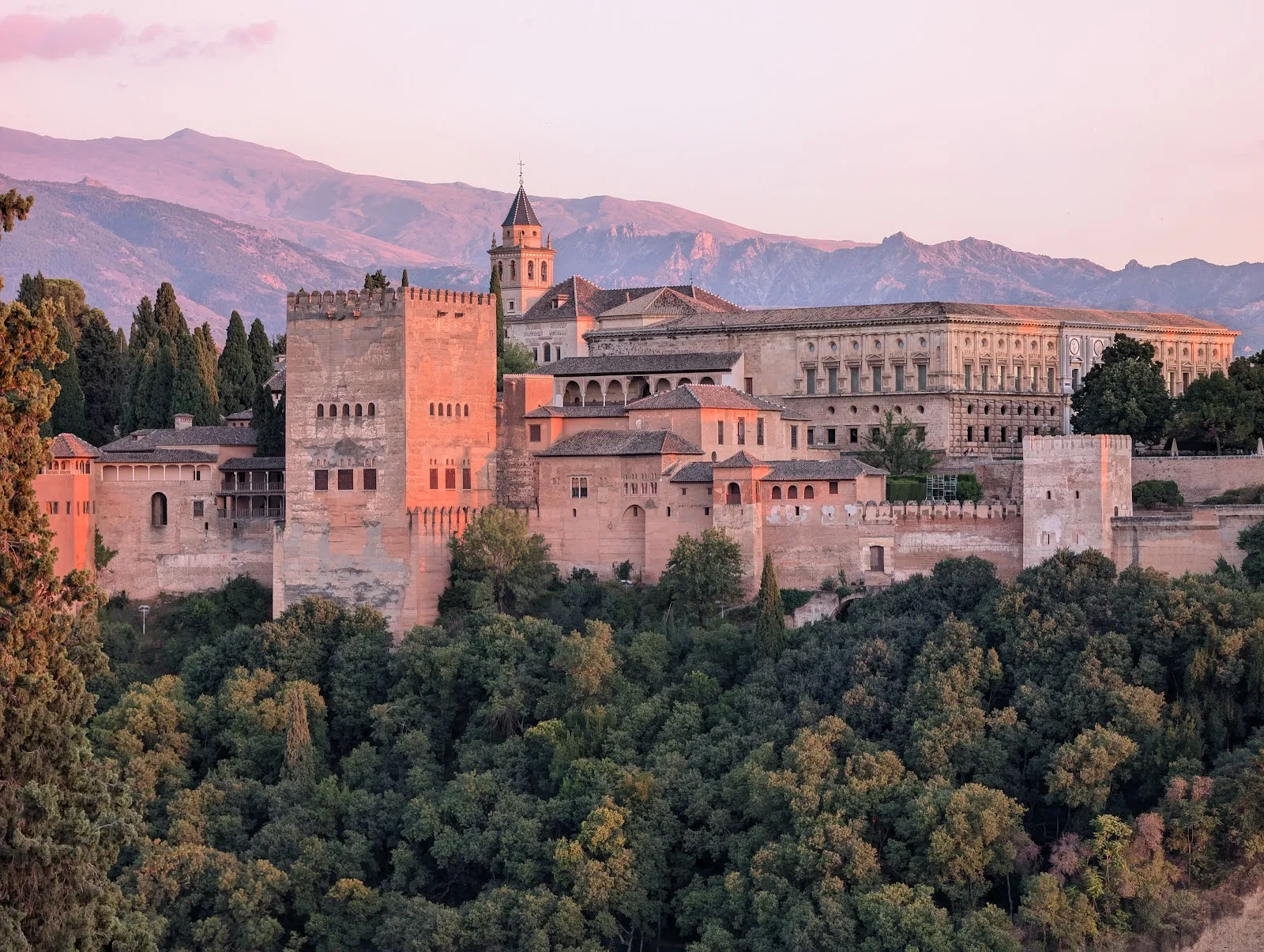
The Alhambra is a palace, fortress and garden complex on Sabika hill above Granada, with views towards the city and the Sierra Nevada. Built and expanded under Nasrid rule from the 13th century, it later became a royal residence under Christian rulers. Inside the Nasrid Palaces, look for carved stucco, geometric tilework, calligraphy and courtyards arranged around pools and fountains. The grounds also include the Alcazaba fortress, the Generalife gardens and the Renaissance Palace of Charles V. Allow several hours to explore, and arrange entry ahead of your visit.
A palace city on Sabika hill
The Alhambra occupies a strategic hill above Granada. Its name is associated with its reddish walls, while its buildings and gardens grew over several centuries. The site began as a fortified settlement and became the seat of the Nasrid rulers, who governed the Emirate of Granada. Many of the complex’s most celebrated palaces took shape between the 13th and 15th centuries.
The Nasrid dynasty’s rule ended in 1492, when Granada was taken by the Catholic Monarchs. The Alhambra then continued as a royal residence, and Christian additions became part of the site’s layered history. Its buildings reflect these different periods: Islamic palaces and fortifications sit alongside later Christian architecture.
Inside the Nasrid Palaces
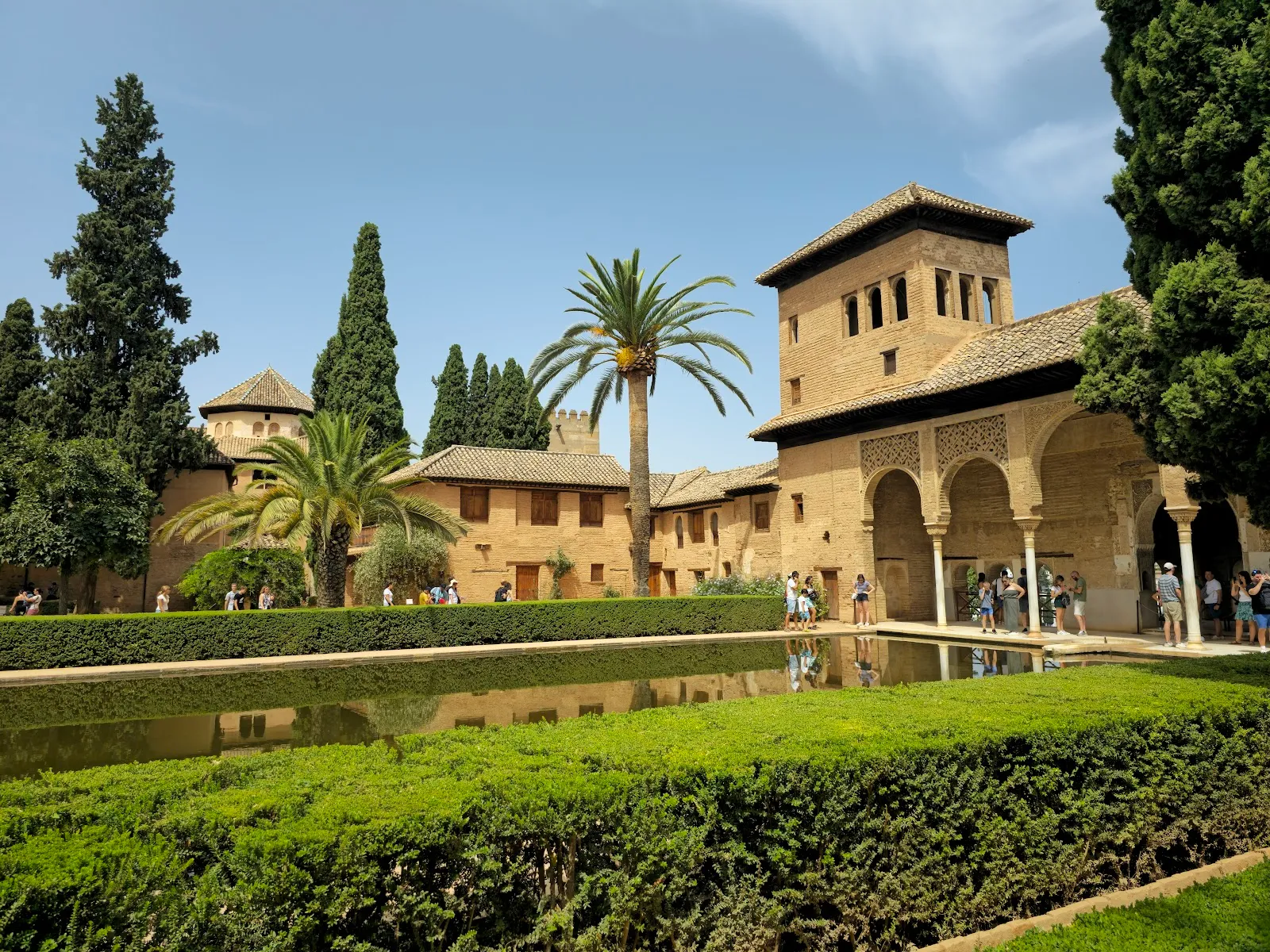
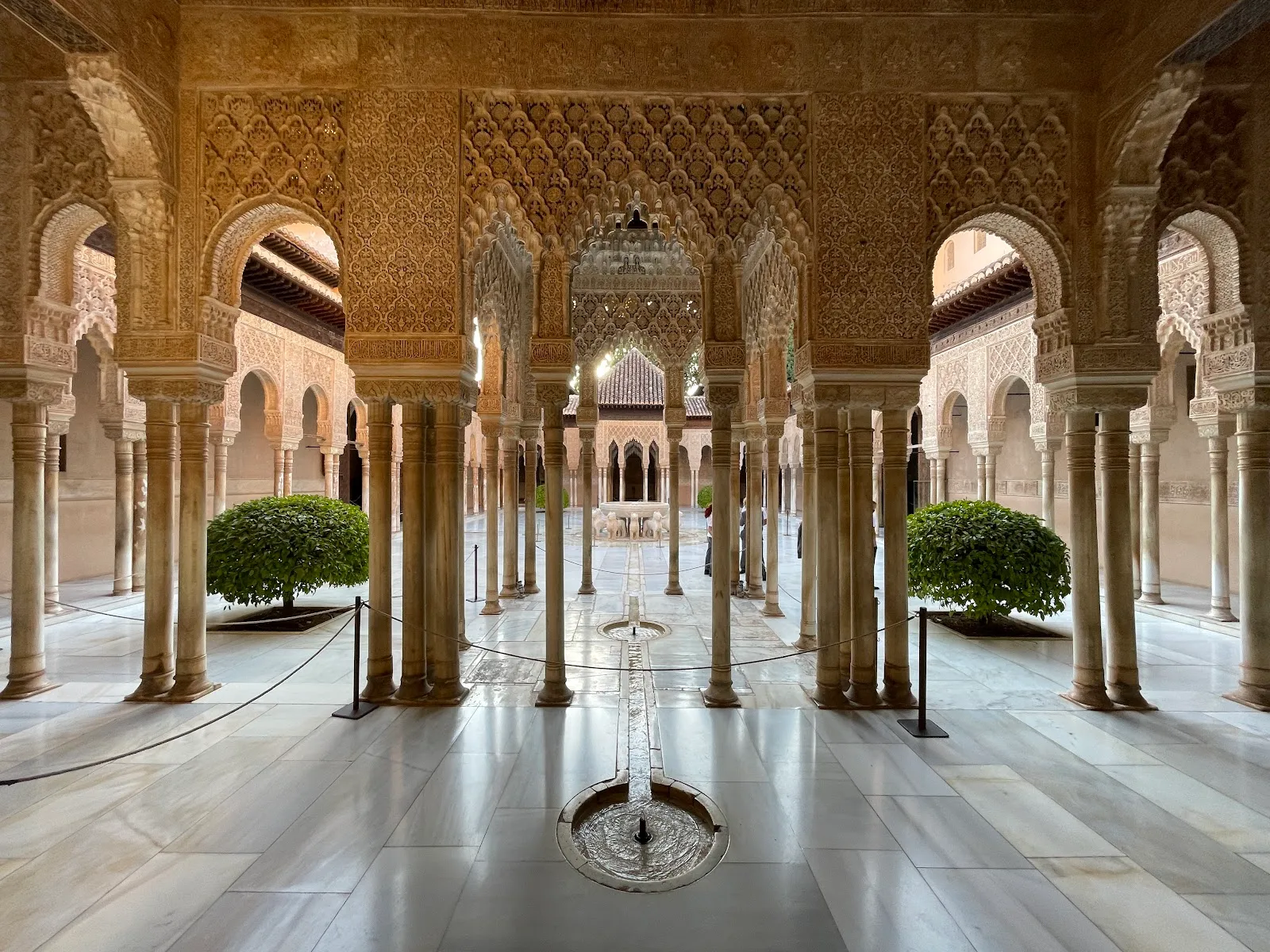
The Nasrid Palaces are the architectural centrepiece for many visitors. Their rooms and halls open onto courtyards, where water, tile and carved surfaces shape the experience of moving through the buildings. Look closely at the stucco decoration, geometric patterns and inscriptions. The ornament covers walls and arches, creating intricate surfaces rather than relying on large sculptures or furnishings.
The Court of the Lions is among the best-known spaces, with a fountain at its centre. The Court of Comares is another notable courtyard, and the complex also includes halls such as the Hall of the Two Sisters. These spaces served different roles in palace life, from public and administrative functions to more private quarters. The sequence of rooms and patios gives the palaces their distinctive rhythm.
Fortifications, gardens and later architecture
The Alhambra is more than a palace. The Alcazaba is its defensive stronghold, with walls and towers that form part of the complex’s earlier military character. The Medina was the residential and working area of the walled city. Together, these parts made the Alhambra a fortified centre of government and daily life.
Across the grounds, the Generalife served as a summer retreat for the Nasrid rulers. Its gardens and courtyards use planting and flowing water to create a quieter setting than the palace interiors. The Palace of Charles V brings a different architectural style to the site: its Renaissance design includes a striking circular courtyard within a square building. Allow time for these contrasting spaces rather than focusing only on the Nasrid Palaces.
Planning a visit
There is enough to see here for a substantial visit. A few hours can cover the principal palaces, gardens and fortifications, while a half-day gives you more time to explore the wider grounds. The route involves considerable walking and stairs, and access is challenging in some areas for people with limited mobility.
Tickets should be arranged well ahead of time because entry is limited and popular dates can sell out. Bring your passport, which is required at entry. An audio guide or guided tour can add context to the details in the palaces and explain how the different areas fit together. Late spring, early summer and late fall are suggested as good seasons to visit.
FAQ
How long should I allow for the Alhambra?
Allow about 3 to 4 hours to see the main parts of the complex. A half-day gives you more time for the palaces, gardens and fortifications.
Do I need to book Alhambra tickets in advance?
Yes. Tickets can sell out, so book well ahead of your visit.
Do I need a passport to enter the Alhambra?
Yes. A passport is required for entry.
Is the Alhambra accessible for visitors with limited mobility?
Some areas can be difficult to access. Expect extensive walking and stairs around the complex.