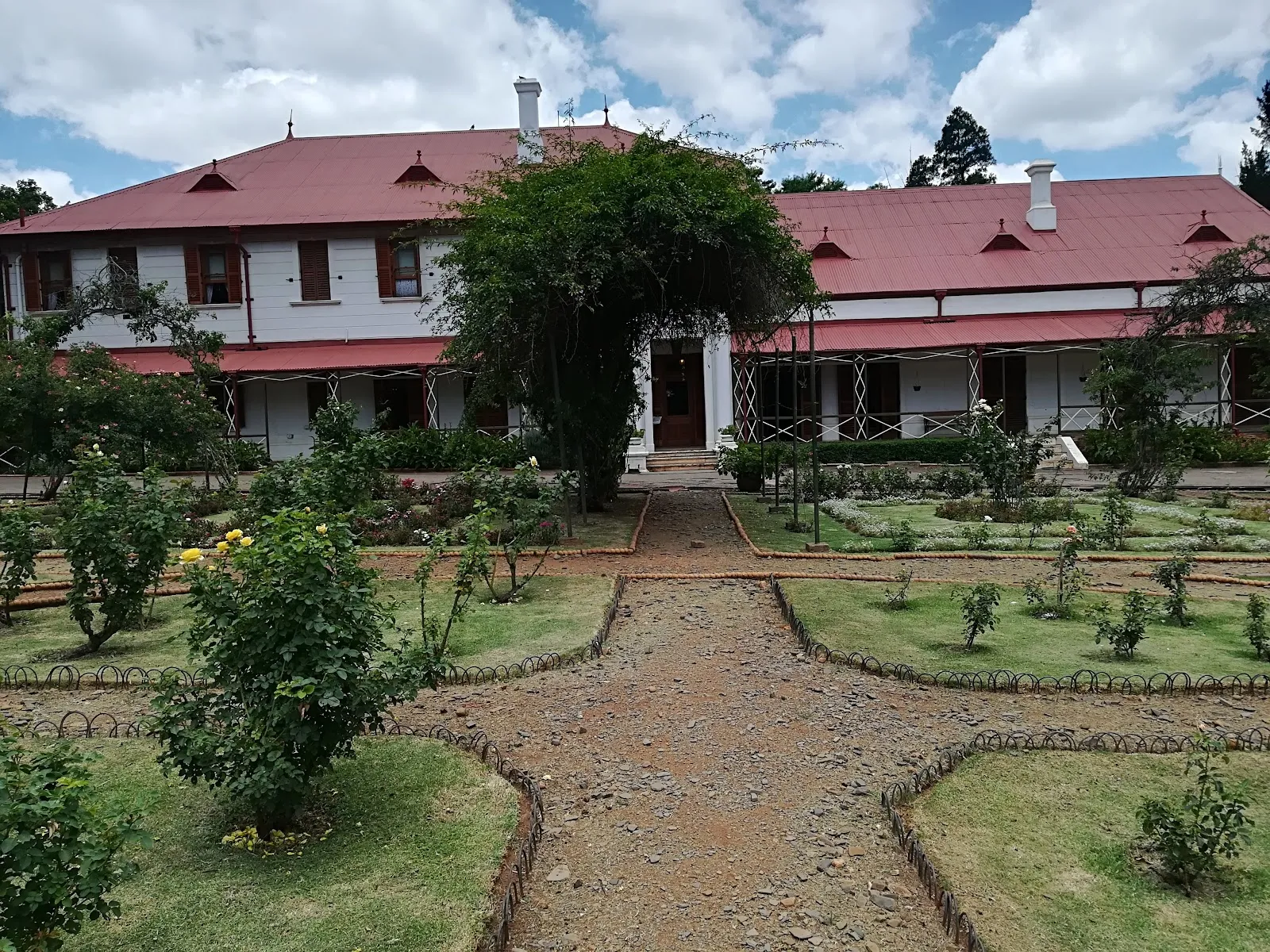
The Voortrekker Monument is a granite memorial on a hill in southern Pretoria, built to honour the Voortrekkers who left the Cape Colony on the Great Trek. The main draw is the Hall of Heroes, where a long marble frieze tells the story of the journey, ending with the Battle of Blood River. Climb to the upper level for views over the city, then walk the grounds, which lie inside a nature reserve with zebra, wildebeest and buck. Allow a good part of the day.
Why the monument was built
The monument commemorates the Voortrekkers, the Dutch-speaking settlers who left the Cape Colony between 1835 and 1854 and travelled north into the interior. Their journey is known as the Great Trek.
Construction ran from 1938 to 1949, and the architect Gerard Moerdijk designed it. The South African Heritage Resource Agency declared it a national heritage site in 2011.
The Hall of Heroes and the marble frieze
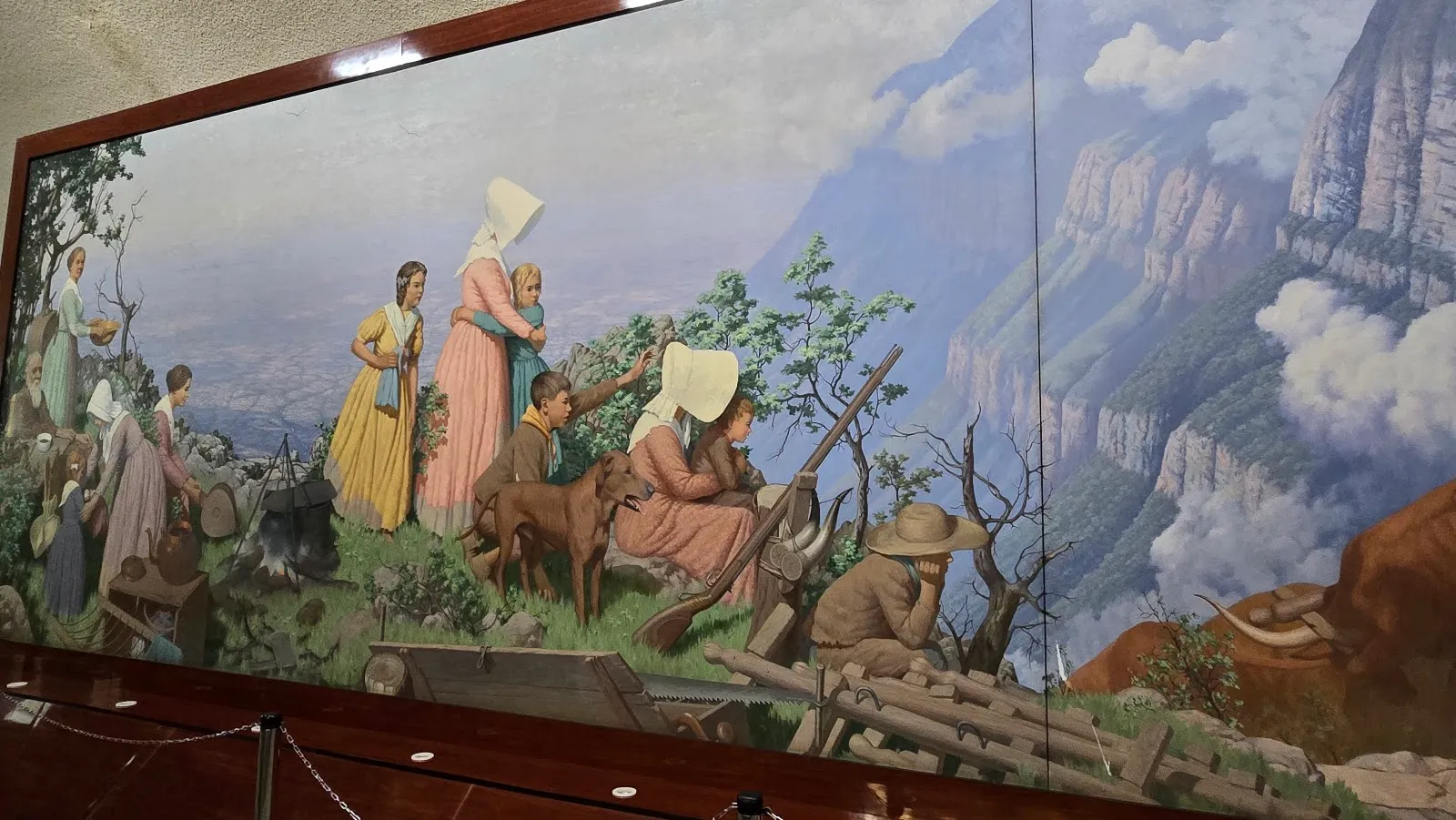
Inside, the Hall of Heroes is a high, domed space. Its walls carry a marble frieze that follows the migration of settlers across South Africa, the wars that followed, and the founding of Pretoria. The frieze is made up of 27 bas-relief panels, and it is said to be the longest historical marble frieze in the world.
The story of the Great Trek ends with the Battle of Blood River, fought on 16 December 1838. Take time with the panels, as the carvings reward a slow walk along the wall.
The cenotaph and the 16 December sunlight
The Cenotaph Room holds the cenotaph, a symbolic grave for the pioneers who died during the Great Trek. Carved on it are patriotic words.
The building was designed so that once a year, on 16 December, sunlight enters through an opening in the dome and falls on those words. Visitors who want to see this should plan a visit on that date.
The upper level and the catwalks
Stairs lead up through the building to an observation level. From there, catwalks run between the towers and connect to the top of the monument, where you can look down on the whole structure.
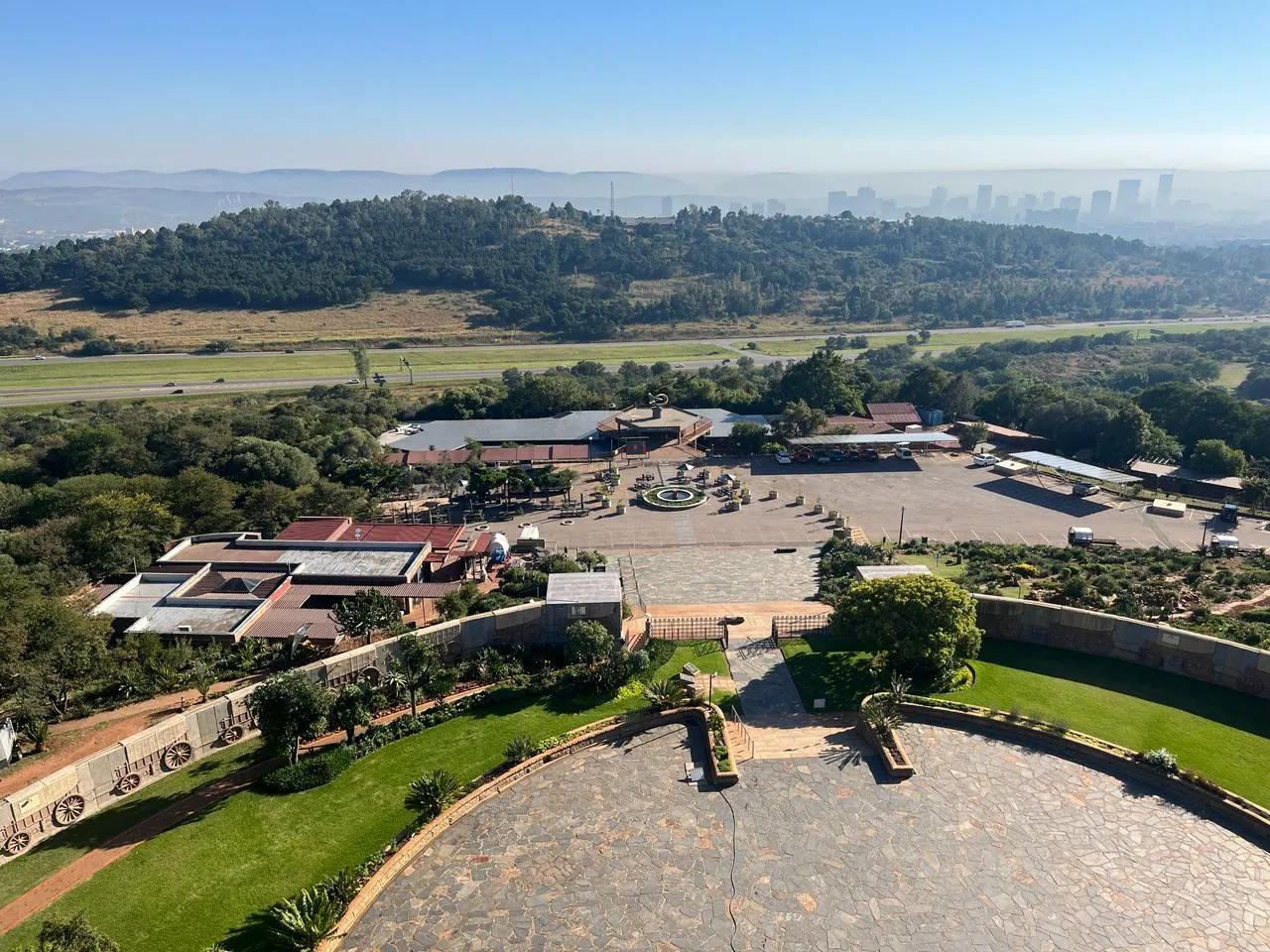
The views over Pretoria and the surrounding land are the second highlight. The approach to the building passes through the grounds, so the view opens up as you climb.
The museum and Heritage Centre
Beneath the monument, the museum displays Voortrekker memorabilia and historical artefacts. Artwork is also on sale there.
The Heritage Centre has interactive exhibits that set out the role and contributions of the Afrikaner people in South Africa. The exhibition presents that story from the Afrikaner perspective, so it is worth reading other accounts of the same period to build a fuller picture.
Grounds, nature reserve and events
The monument sits inside a 340-hectare nature reserve. Zebra, wildebeest and buck live in the area, and hiking, cycling and horse riding trails run through it. Birdwatching is possible in the gardens, and the reserve is a good place for a long walk. Around the monument, the walk can stretch to about 7 km.
On site, a small restaurant serves simple, good food. There are public toilets and gift shops. Candlelight concerts have been held in the hall, with the building lit against the night sky. One programme included Vivaldi's Four Seasons.
Planning the visit
Buy tickets in advance. The site has a free parking lot and a paid one, and street parking is available both free and paid. The entrance, restrooms, seating and parking are wheelchair accessible.
Families will find a petting zoo for children on the grounds. Allow at least half a day if you plan to walk the grounds as well as see the monument.
FAQ
Do I need to book tickets in advance?
Yes, buying tickets in advance is recommended for the Voortrekker Monument.
How long do you need at the Voortrekker Monument?
Plan for half a day if you also want to walk the grounds and nature reserve around the monument.
Is there parking at the Voortrekker Monument?
Yes. The site has a free parking lot and a paid one, and there is both free and paid street parking nearby.
Is the Voortrekker Monument suitable for children?
It is listed as good for children, and there is a petting zoo on the grounds.