In Ormonde, south of central Johannesburg and beside Gold Reef City, the Apartheid Museum traces South Africa’s apartheid era and the struggle for democracy. Photographs, artefacts, newspaper reports, film and personal accounts bring the history into focus through a largely chronological route. The displays cover the system’s rise, its effects on daily life and the movement towards its end. Allow several hours to take in the exhibitions and films, and leave time to pause in the reflection garden or visit the café.
A chronological account of apartheid
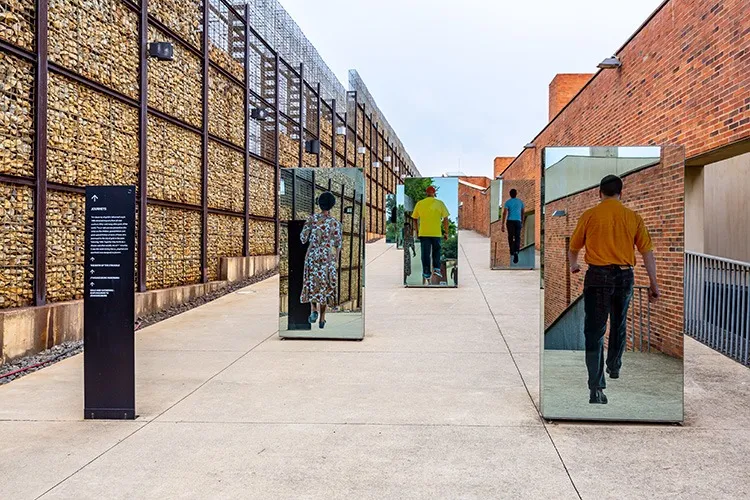
The Apartheid Museum opened in 2001 to document the rise and fall of apartheid in South Africa. Its exhibitions move through the country’s history, from the roots of segregation to the first democratic elections in 1994. Along the way, they examine how the system worked, the harm it caused and the resistance that challenged it.
The route uses a mix of photographs, historical objects, newspaper reports, documents and film footage. Personal accounts add individual experiences to the broader history. The different formats make this a substantial visit: time spent reading and watching can quickly add up, especially if you explore temporary displays as well as the permanent exhibitions.
The opening and the exhibition route
The experience begins with an entrance designed around racial separation. Visitors are assigned an entrance marked either “White” or “Non-White,” an introduction to the segregation at the centre of apartheid. The opening is deliberately confronting; the museum uses the visitor’s route to convey how racial classification shaped people’s lives.
The exhibits continue through the history of the apartheid system and the struggle against it. Film screenings are part of the visit, including two films reported to run for about 20 minutes each. Make time for them alongside the galleries. Some early sections can feel difficult to follow because they cover many names and events, so the large vertical black signs are useful for navigating the museum.
The Pillars of the Constitution
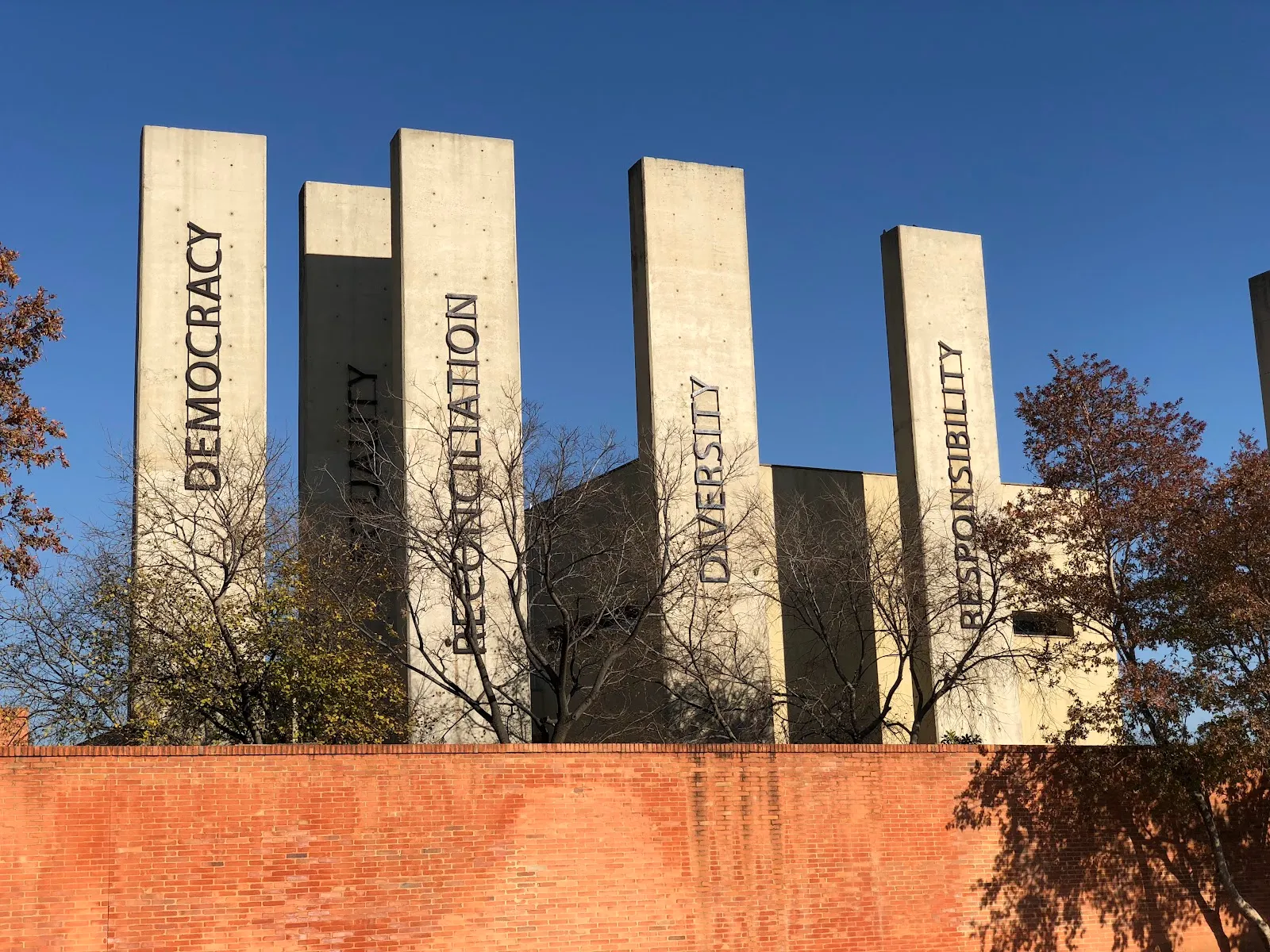
In the courtyard, the Pillars of the Constitution represent seven values: democracy, equality, reconciliation, diversity, responsibility, respect and freedom. The pillars provide a moment to reflect on the principles associated with South Africa’s constitution after the apartheid era.
The museum also has exhibitions devoted to figures including Nelson Mandela and Desmond Tutu, alongside accounts of people who took part in the struggle for freedom. Together, these displays give space to both well-known leaders and the many individuals whose stories form part of the country’s history.
Planning time for your visit
The museum is large, and a quick walk-through will leave little time for the films and written displays. Plan for at least two hours; a visit of three or four hours is a reasonable allowance if you want to move through the galleries at a considered pace. Visitors with a strong interest in the subject may want longer.
An audio guide, a self-guided tour through the museum app or a hired guide can help with context. There is a café for a break and a reflection garden outside the galleries. The museum is beside Gold Reef City, and its address is on Northern Parkway near Gold Reef Road in Ormonde. Check ticket arrangements before setting out, as advance booking is recommended. Photography is not permitted inside the museum.
FAQ
How long should I spend at the Apartheid Museum?
Allow at least two hours. The museum is large, and three or four hours gives more time for the galleries and films.
What can you see at the Apartheid Museum?
Exhibitions trace apartheid and the struggle towards democracy through photographs, artefacts, documents, newspaper reports, films and personal accounts. The courtyard has seven Pillars of the Constitution.
Can you take photographs inside the Apartheid Museum?
Photography is not allowed inside the museum.
Should I book Apartheid Museum tickets in advance?
Advance ticket booking is recommended.