Triple Bridge, or Tromostovje, crosses the Ljubljanica River beside Prešeren Square in central Ljubljana. Its three parallel spans link the square with the Old Town, and all are now for pedestrians. The central bridge dates to 1842; architect Jože Plečnik added the two side bridges in 1932, giving the crossing its distinctive form. Look for the stone balustrades and lamps, then take in the river and surrounding buildings from the bridge. The lights reflecting on the water make an evening visit especially appealing.
Three bridges in one crossing
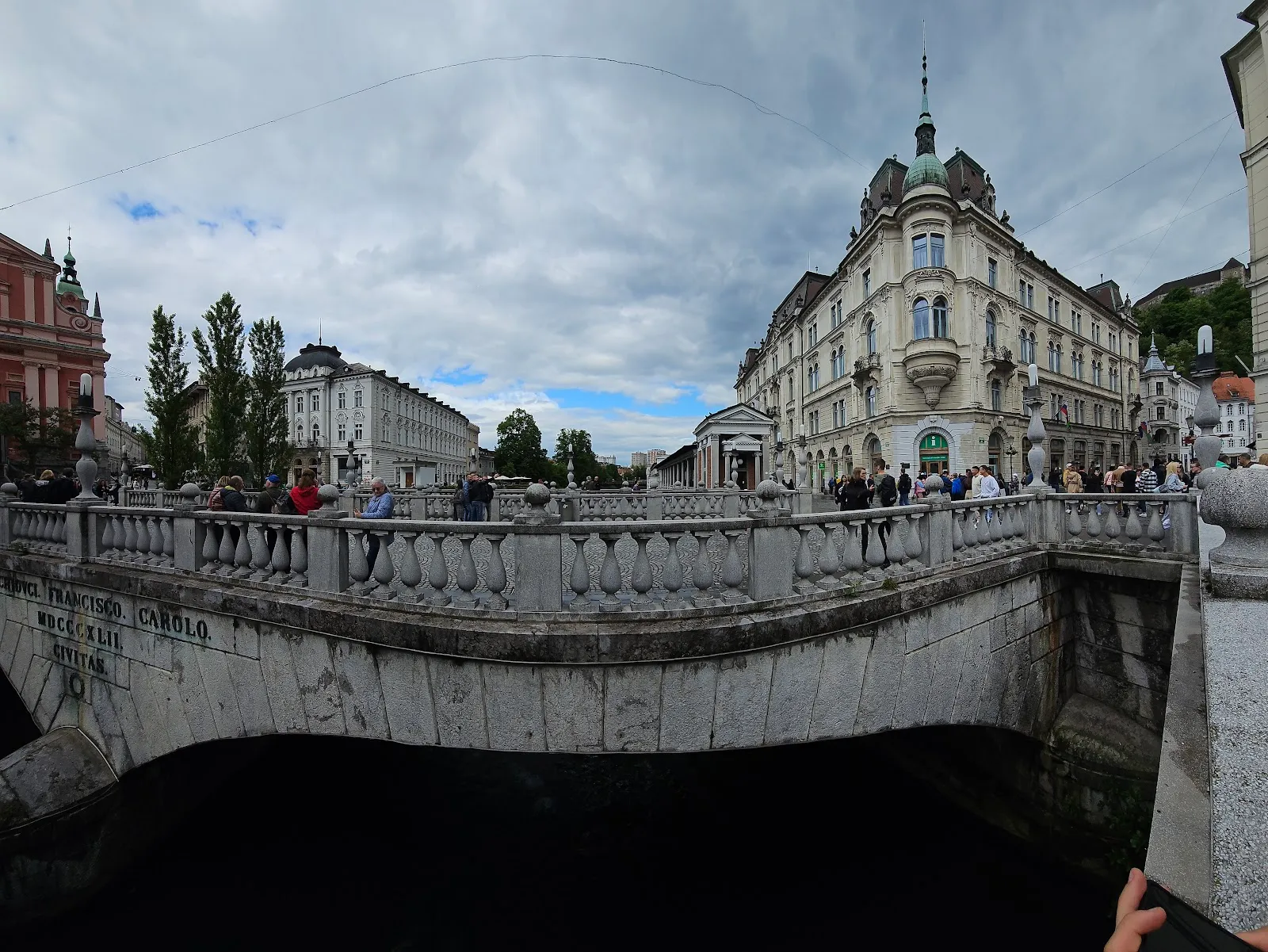
Triple Bridge, known in Slovene as Tromostovje, spans the Ljubljanica beside Prešeren Square. It connects the square and the modern centre with the historic Old Town on the opposite bank. The three adjoining spans make this a practical crossing and a distinctive piece of Ljubljana’s central streetscape.
There has been a crossing at this point for centuries. The central stone bridge, built in 1842, replaced an earlier wooden bridge. It was originally intended to carry road traffic. As movement across the river increased, the single span became a bottleneck. Jože Plečnik’s solution was to add two pedestrian bridges beside it, creating the arrangement seen today.
Plečnik’s additions
Plečnik added the side bridges in 1932 and reworked the appearance of the whole crossing. Stone balustrades run along the three spans, with lamps set above them. The new arrangement gave pedestrians separate routes across the river and turned the bridge into a more open connection between the square and the Old Town.
Walk across each span and look at how the three routes sit alongside one another. From the bridge, the riverbanks and nearby buildings frame views in both directions. The central position beside Prešeren Square also makes the crossing a useful point from which to orient yourself before exploring the streets on either side.
A starting point for the Old Town
From Prešeren Square, cross the bridge towards the Old Town. Stritarjeva Street leads inland towards Mestni trg, where Robba Fountain stands in front of the Town Hall. To follow the river instead, turn along the embankment; the riverside cafés, restaurants and shops make it easy to pause nearby.
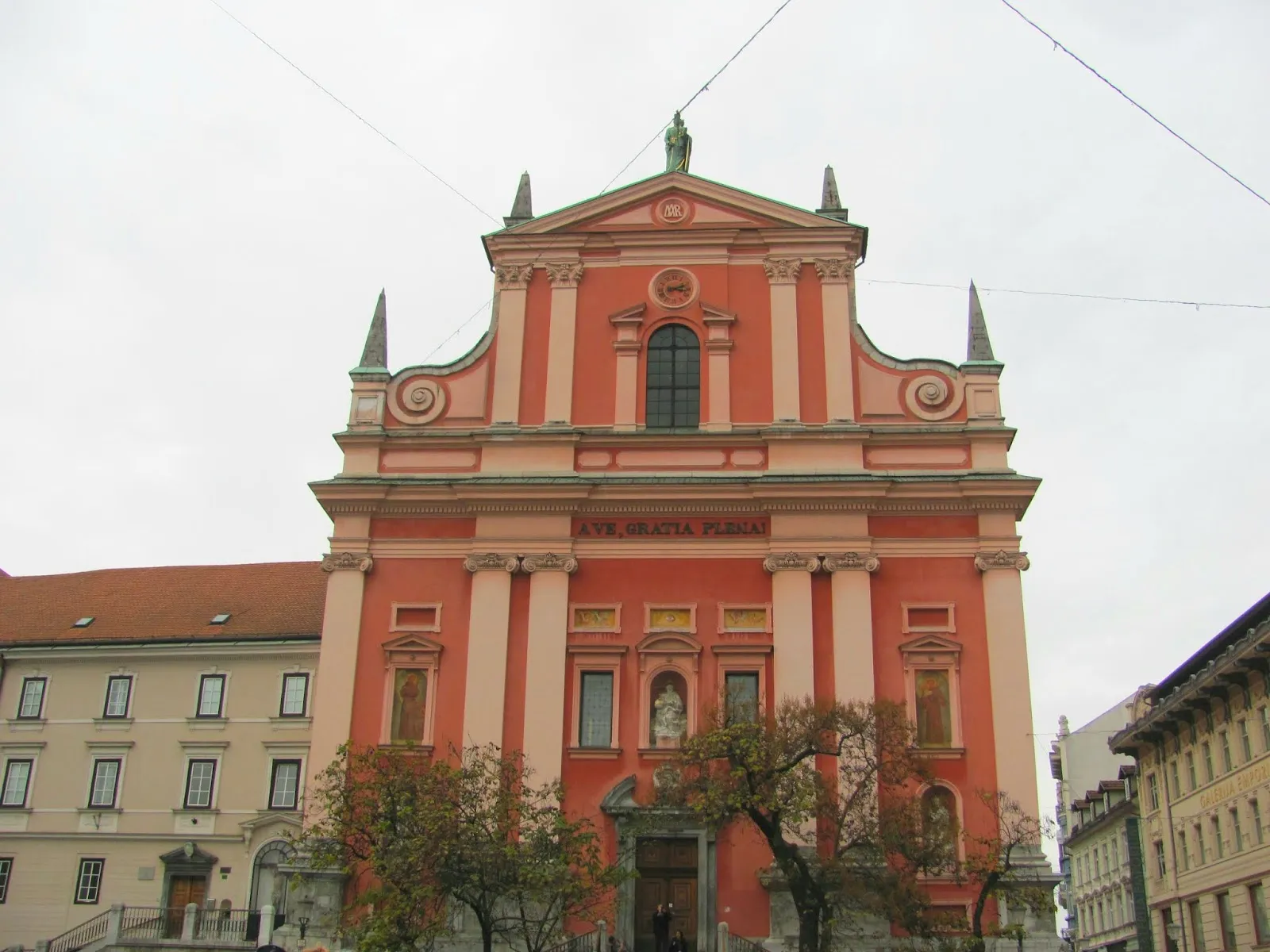
The bridge is open to pedestrians, and its setting changes with the light. In the evening, lamps illuminate the stonework and their glow falls across the Ljubljanica. A boat trip on the river provides another angle on the three spans. The crossing is also close to other central sights, including Prešeren Square and its Franciscan Church.
FAQ
What does Triple Bridge connect?
It links Prešeren Square with Ljubljana’s Old Town across the Ljubljanica River.
Why are there three bridges?
The central bridge was built in 1842. Jože Plečnik added two pedestrian spans beside it in 1932.
Can you walk across Triple Bridge?
Yes. All three spans are pedestrian-only.
When is a good time to see Triple Bridge?
Visit in the evening or after dark to see the lamps reflected on the river.