
Sultan Mosque, also called Masjid Sultan, stands on Muscat Street in Kampong Glam, the Arab Quarter of Singapore. It is the largest mosque in the city, and its golden domes and minarets are easy to spot from the surrounding streets. The first mosque on the site was built in 1824 for Sultan Hussein Shah. The present building, designed in the Indo-Saracenic style, dates to 1928. Visitors can join a guided tour of the interior at set times, then walk over to Arab Street and Haji Lane.
From 1824 to the present building
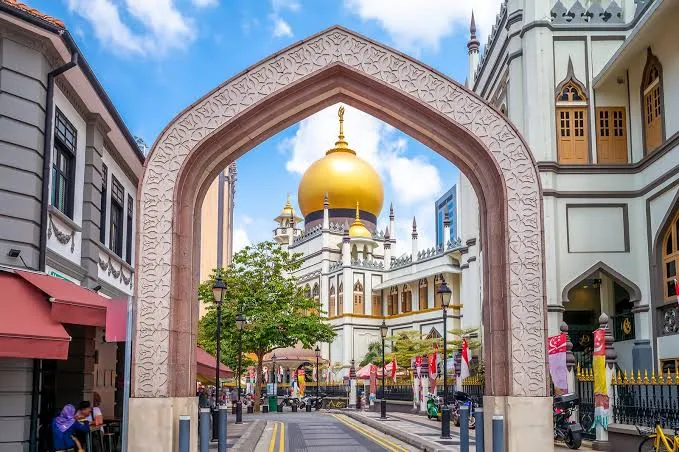
The first mosque on this site was built in the early 1820s, with a grant from the East India Company. Stamford Raffles' treaty with the sultan allowed the Malay leader to keep sovereignty over the area, and the mosque was built for Sultan Hussein Shah, the first sultan of Singapore.
Within about a century the original building had become too small for the growing Muslim community. The current mosque was completed in 1928. Its architect, Denis Santry of Swan & Maclaren, also designed the Victoria Memorial Hall. The mosque was gazetted as a National Monument in 1975.
The building is also tied to the Malay royalty who lived in the nearby Istana Kampong Glam, and to the Muslim communities that grew up around it during the British colonial period.
Architecture and the prayer hall
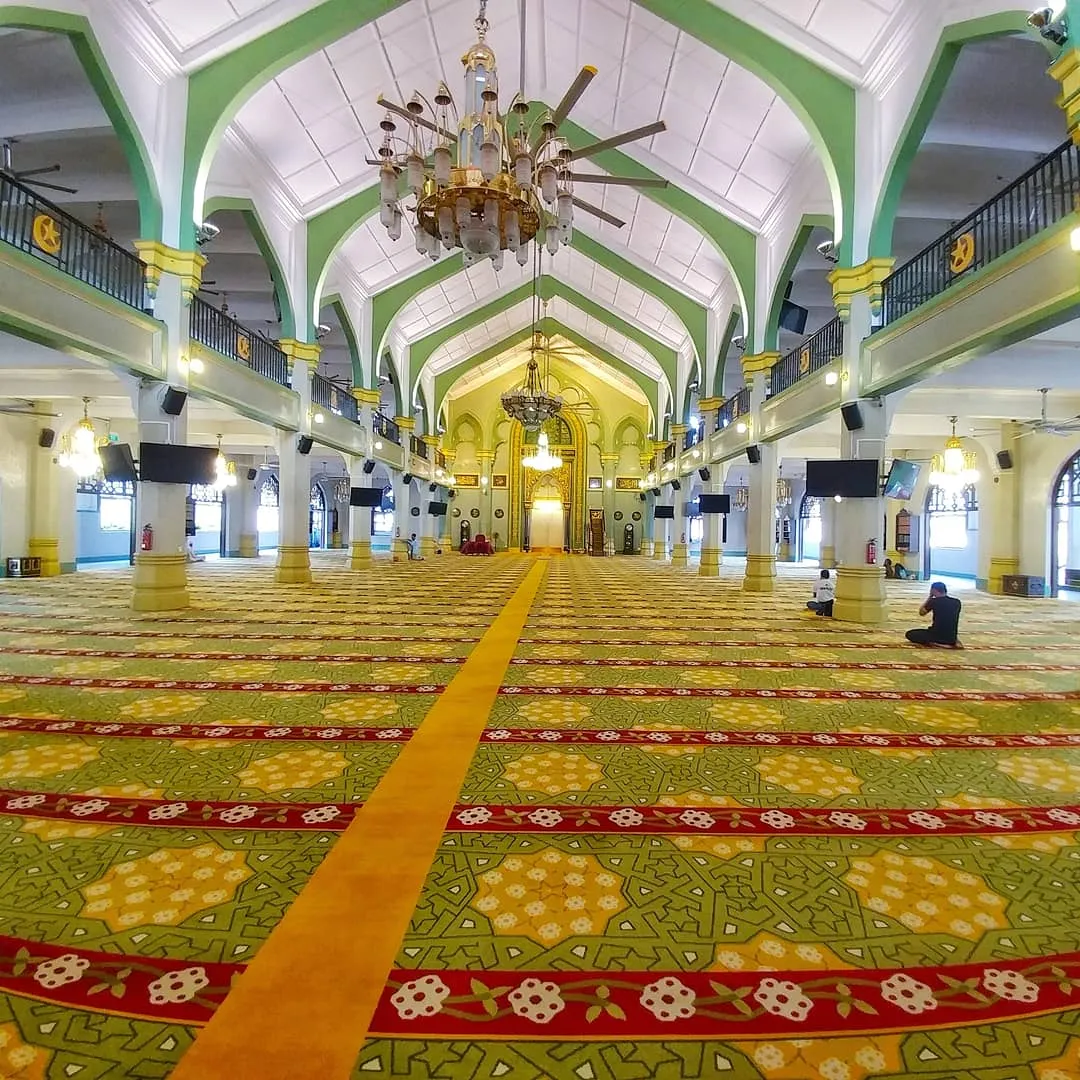
The mosque is built in the Indo-Saracenic style, with golden domes, minarets and balustrades. Its large prayer hall can hold up to 5,000 people in mass prayer.
Inside, the walls of the prayer hall are finished with green and gold mosaic tiles, and passages from the Quran are written on them in Arabic. Carpets cover the floor. Women have a separate prayer space.
Outside the gated prayer area, displays along the galleries explain the history of the mosque and its teachings.
How a visit works
Entry is free. Free guided tours run in several languages and cover the mosque's history and Islam. Non-Muslim visitors enter through the Muscat Street entrance, and most of the building is closed to them.
Shoes come off before you go in. Photography is allowed in designated areas, so check the signs before you raise your camera. Visits are not possible during prayer times.
The nearest MRT station is Bugis.
Around the mosque
Kampong Glam has narrow lanes of shophouses, carpet shops and Middle Eastern restaurants. Bussorah Street, lined with palm trees, is a short walk away, and it has become a favourite spot for photographs.
Haji Lane, a few minutes away, is known for its murals, indie boutiques and cafes. Arab Street, the main road of the quarter, has a quieter feel than Haji Lane.
For a meal, Zam Zam sits across the road from the mosque. It serves Indian-Muslim dishes such as murtabak and nasi briyani.
FAQ
Is there an entry fee?
No. Entry to Sultan Mosque is free, and the guided tours are free too.
What should I wear?
Dress modestly and take off your shoes before going in. Visitors who are not dressed appropriately can borrow covering at no cost.
Which entrance do non-Muslim visitors use?
Non-Muslim visitors use the Muscat Street entrance. Most of the building is closed to non-Muslim visitors.
Is the mosque open every day?
Visits are limited to set afternoon hours, and the mosque is closed to visitors on Fridays. Check the opening hours before you go.
How do I get there?
The nearest MRT station is Bugis. Sultan Mosque is in Kampong Glam, a short walk from the station.


