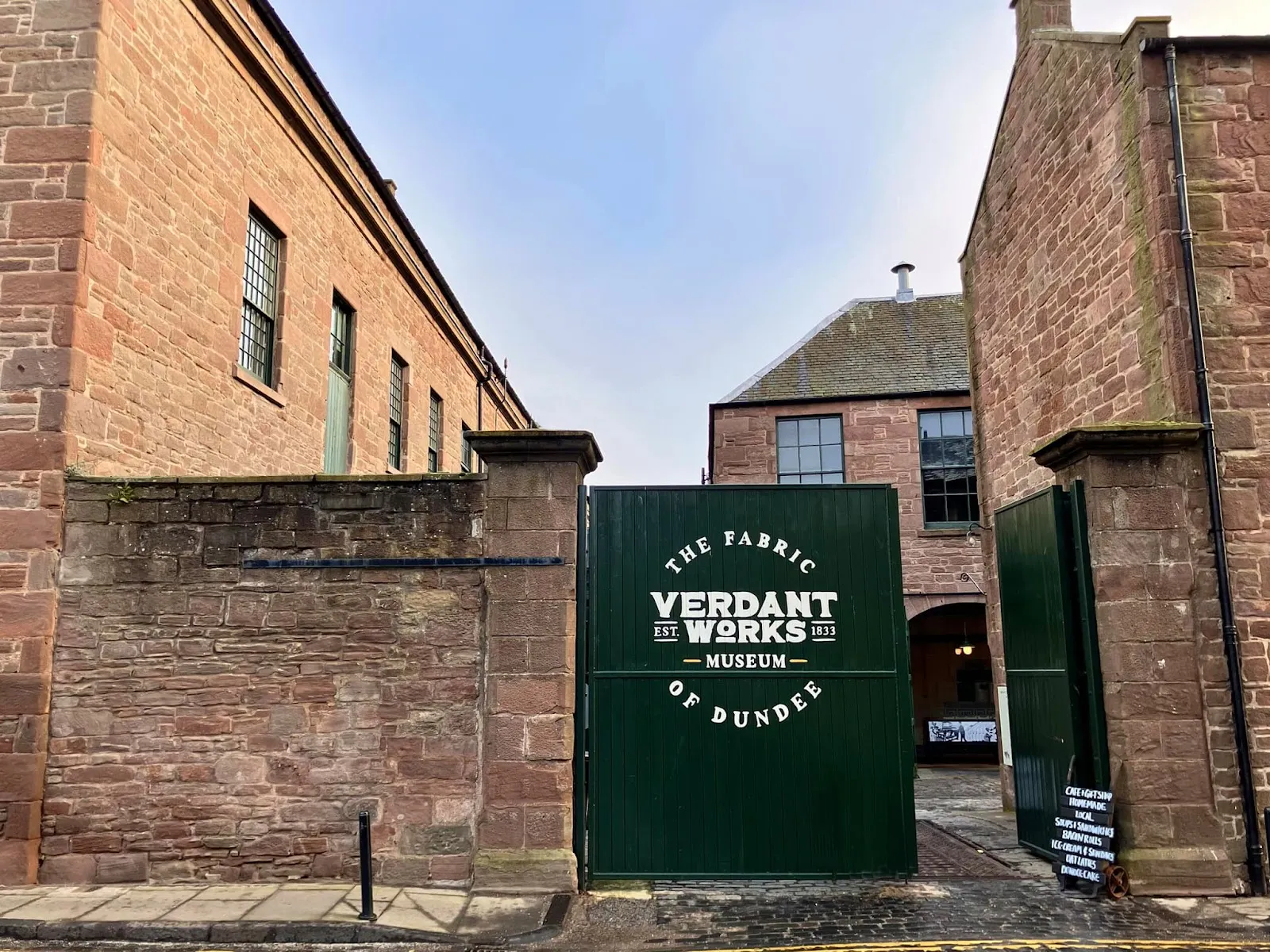
Verdant Works is a museum in a restored former jute mill on W Henderson’s Wynd in Dundee. Its displays trace the textile trade from the growing of jute in India to finished goods, and show how mill work shaped the city and the lives of its workers. Look for original machinery in operation, interactive exhibits and the mill’s historic architecture. Volunteers and former mill workers help explain the exhibits. The café is a handy lunch stop, with tomato soup and a cheese scone among the choices mentioned.
A mill built for Dundee’s textile trade
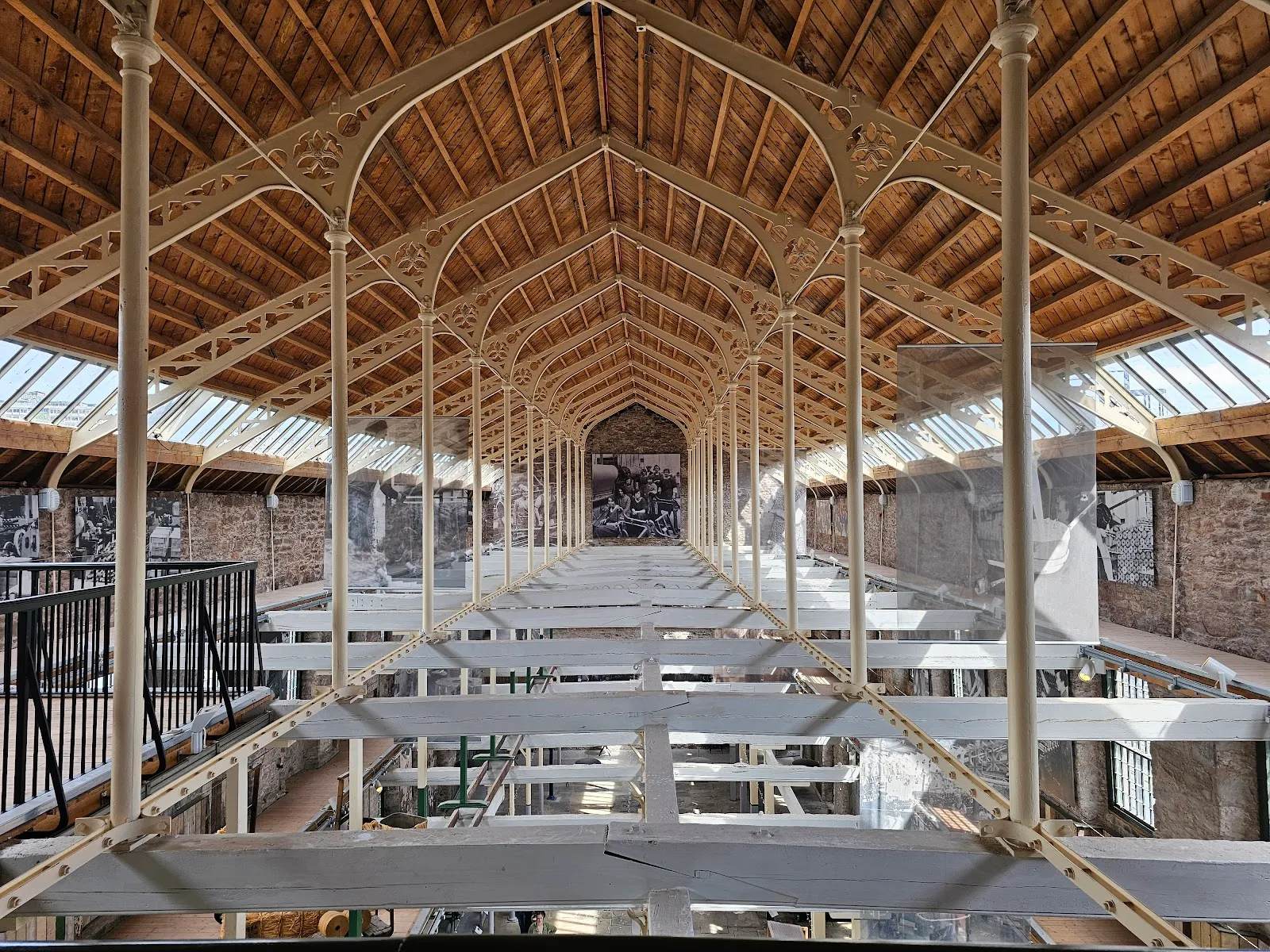
Verdant Works occupies a former mill in Dundee’s Blackness area. The High Mill was built in 1833 for flax spinner and merchant David Lindsay. When it was constructed, green fields surrounded the site, a detail behind the name Verdant. Mills grew in this part of the city from the 1790s, using water from the Scouring Burn to power steam engines and machinery.
Dundee’s textile story spans flax and linen as well as jute. The museum follows the trade from the plant’s origins in India through processing and manufacture in Dundee. Jute became a major part of the city’s economy and employment, and its products ranged from sacks and rope to sailcloth. The displays connect that industrial history with the people who worked in the mills and the city they helped shape.
Machines, work and everyday life
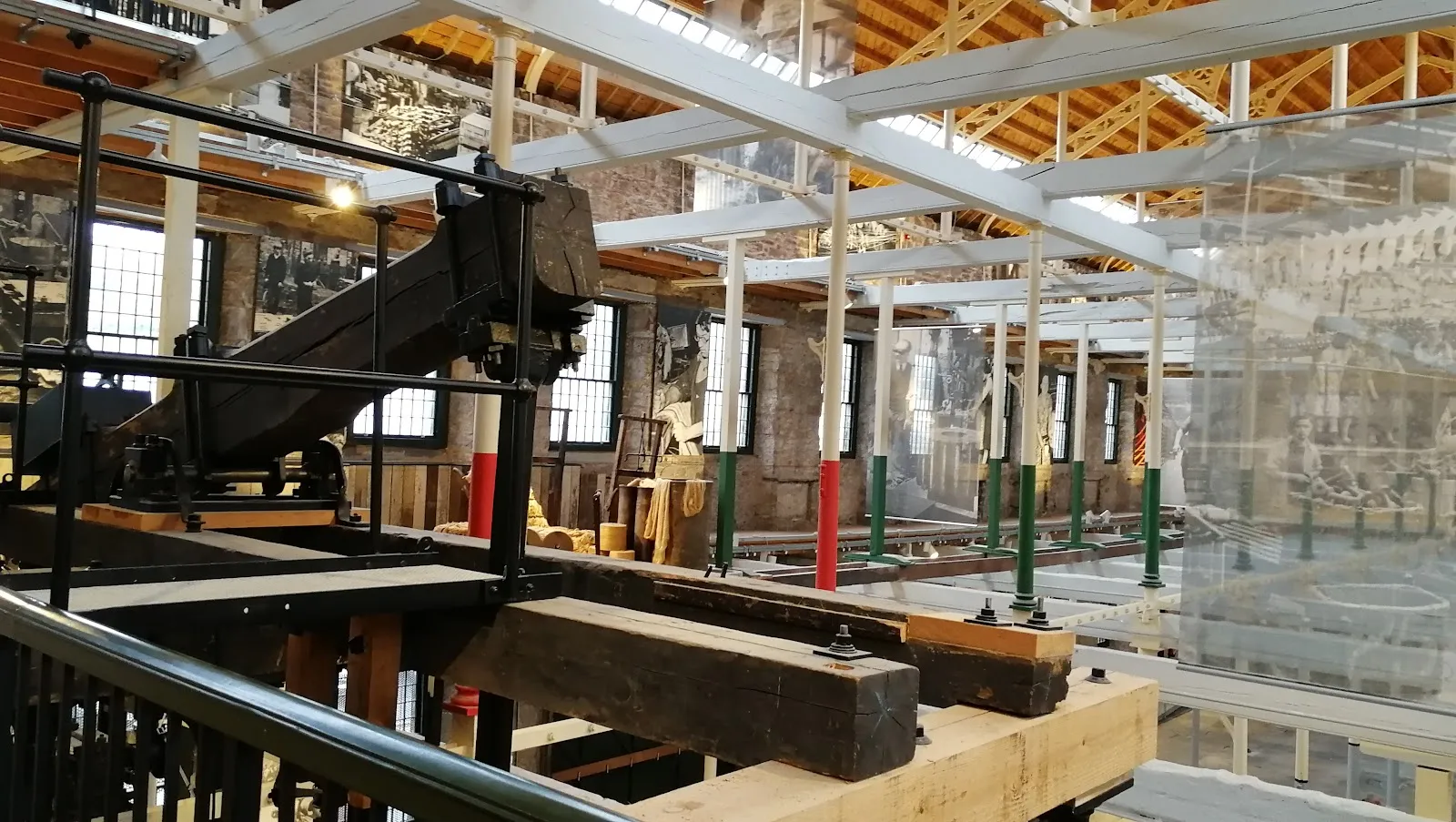
Working machinery gives the production story a physical dimension: you can see and hear equipment in operation. Former mill workers and volunteers explain how the machines worked and what the work involved. Exhibits also cover the lives of the people employed in the industry, including the difficult conditions associated with mill work.
Interactive displays and audiovisual material help make the process accessible to different ages. Rather than focusing only on manufacturing, the galleries link the textile trade to Dundee’s social history and to the influence of the industry beyond Scotland. The story includes both the wealth the trade brought to the city and the experiences of the workforce.
The restored mill building
The building is part of the visit. Its courtyard-style layout, exposed stone, white beams and high ceilings preserve details of an early industrial site, while checkerboard window panes bring light into the interior. The mill has been refurbished, but retains original features that help explain how the site was arranged and used.
Dundee Heritage Trust acquired the buildings in 1991 and restored them for museum use. The museum opened in 1996. Today, the historic setting and the working exhibits sit alongside displays that carry the story of Dundee’s textile industry through to the present day.
A break at the café
The on-site café makes it possible to pause without leaving the museum. Tomato soup with a cheese scone is one suggested lunch combination; Dundee cake and an all-day breakfast bap are also mentioned among the café’s food. If you are visiting with children, staff can blend soup on request, according to the information provided.
Allow a couple of hours for the galleries, machinery and demonstrations, with more time if you want a leisurely café break. The museum can be cold inside, so bring an extra layer. Tickets allow repeat visits during the year, which is useful if you want to return to the displays.
FAQ
How long do you need at Verdant Works?
Set aside about two to three hours for the displays and machinery demonstrations, with extra time for the café.
What can you see at Verdant Works?
The museum covers Dundee’s textile industry, the journey of jute from India to finished products, mill workers’ lives and working historic machinery.
Is Verdant Works suitable for children?
Yes. The museum has interactive activities for children, and the café can blend soup for children on request.
Can you visit Verdant Works more than once?
The ticket allows repeat visits for a year.