The Caledonian Canal runs through Scotland’s Great Glen, linking Inverness and Fort William by way of natural lochs and man-made waterways. Its 29 locks include Neptune’s Staircase, where boats rise through a series of eight locks. Walk or cycle the towpaths, watch boats work through the lock gates, or take to the water by boat or canoe. Loch Ness, Loch Oich and Loch Lochy bring Highland scenery and chances to spot wildlife along the route. Fort Augustus is a handy place to see the locks beside the village.
A waterway across the Great Glen
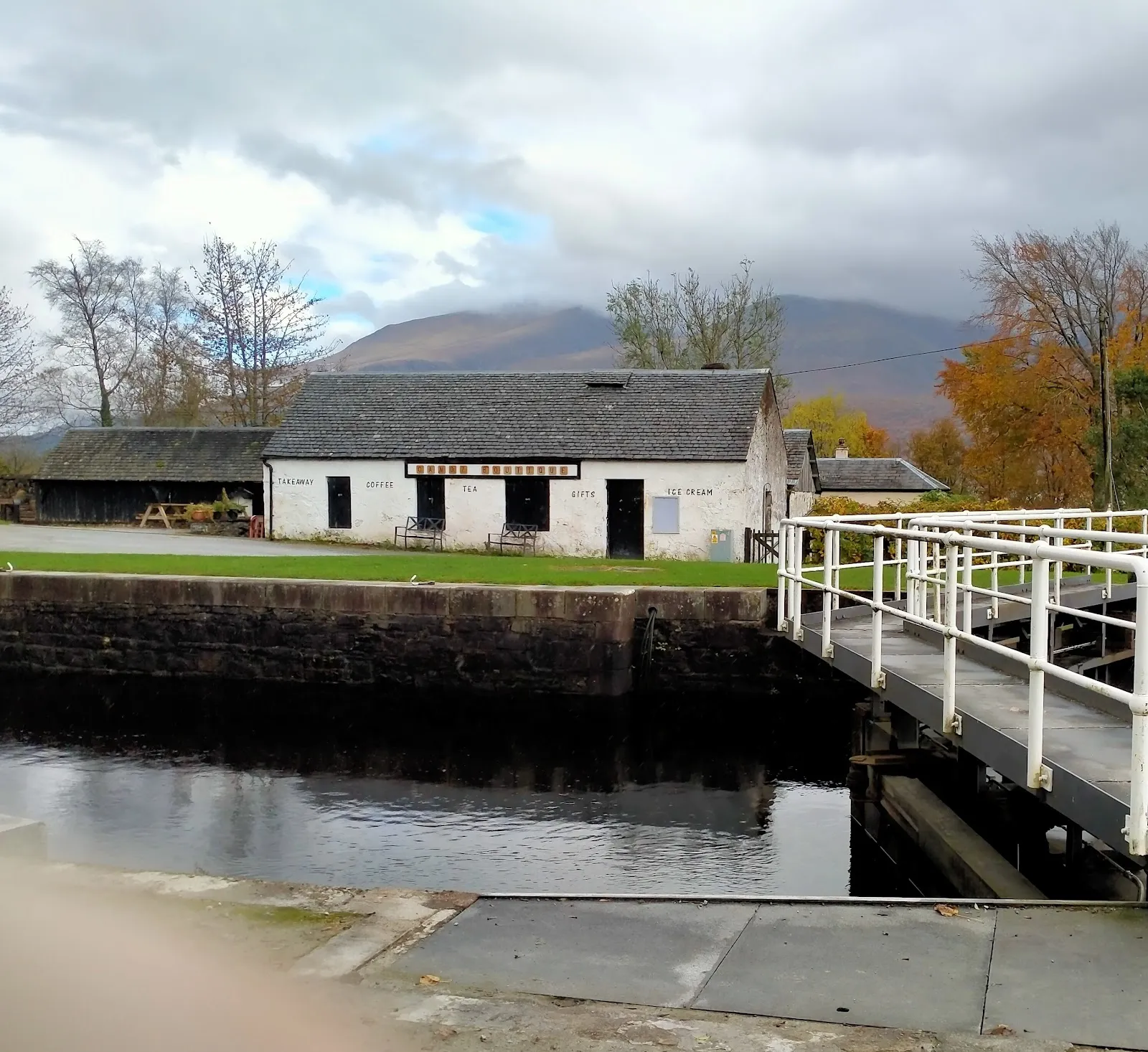
The Caledonian Canal links Inverness on Scotland’s east coast with Fort William on the west. It follows the Great Glen, joining natural lochs with man-made sections of canal. Loch Ness, Loch Oich and Loch Lochy form part of the route, so a journey along the waterway moves between canal banks and broad stretches of open water.
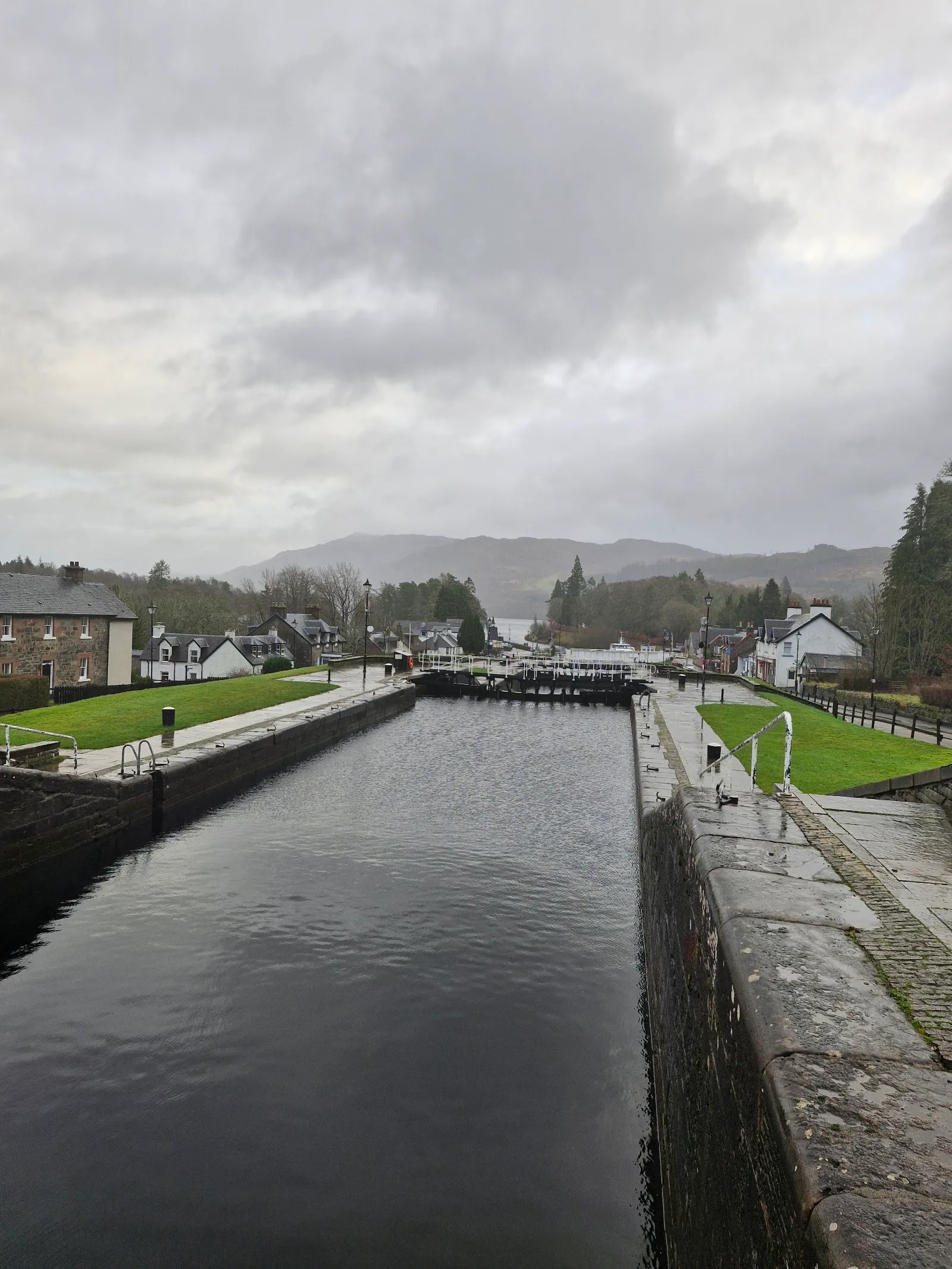
The canal has 29 locks. At Neptune’s Staircase, a series of eight locks lifts boats by 64 feet. Fort Augustus is another place to see the lock system in action, with the gates running through the village near Loch Ness.
Built for shipping, used for leisure
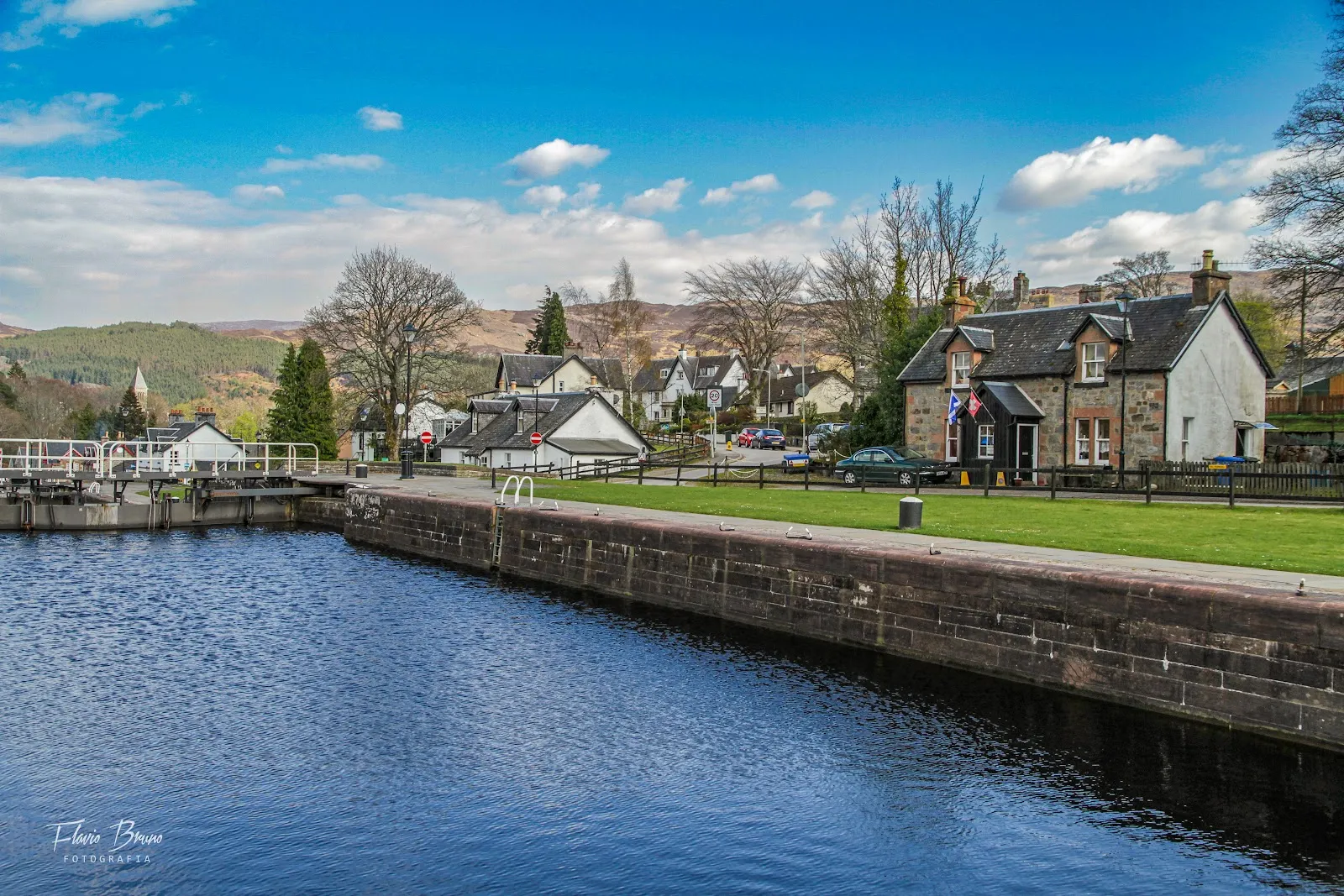
Engineer Thomas Telford designed the canal, and construction began in 1803. The first ship travelled the full route in 1822, after 18 years of work. The canal was planned as a safer passage across Scotland than the route around the northern coast. By the time it opened, however, shipping had outgrown the waterway, and it did not become the commercial success its planners had hoped for.
Its use changed over time. The canal was renovated between 1995 and 2005, and today it is used mainly for leisure. Boats, canoes, walkers and cyclists all follow sections of the route.
Walking, cycling and exploring by boat
The towpaths let you explore without taking a boat. Sections connect with the Great Glen Way and the South Loch Ness Trail, with options for a short walk or a longer outing. At the locks, pause to watch the gates change the water level as boats pass between sections.
Renting a boat or canoe gives you a closer view of the canal and its lochs. Loch Ness cruises also depart from several points. Some trips include the Caledonian Canal, while others take passengers to Urquhart Castle, where visitors can disembark. The route and departure point affect what you see, so check the trip details before choosing.
FAQ
How many locks does the Caledonian Canal have?
The canal has 29 locks. Neptune’s Staircase is a series of eight locks that lifts boats by 64 feet.
Where does the Caledonian Canal run?
It connects Inverness and Fort William through the Great Glen, using man-made canal sections and natural lochs.
Can you walk or cycle along the Caledonian Canal?
Yes. Towpaths run alongside sections of the canal, including routes linked with the Great Glen Way and the South Loch Ness Trail.
Can you take a boat trip on the canal?
Boat and canoe rentals are ways to explore the waterway. Loch Ness cruises from different departure points may include the canal or a stop at Urquhart Castle.