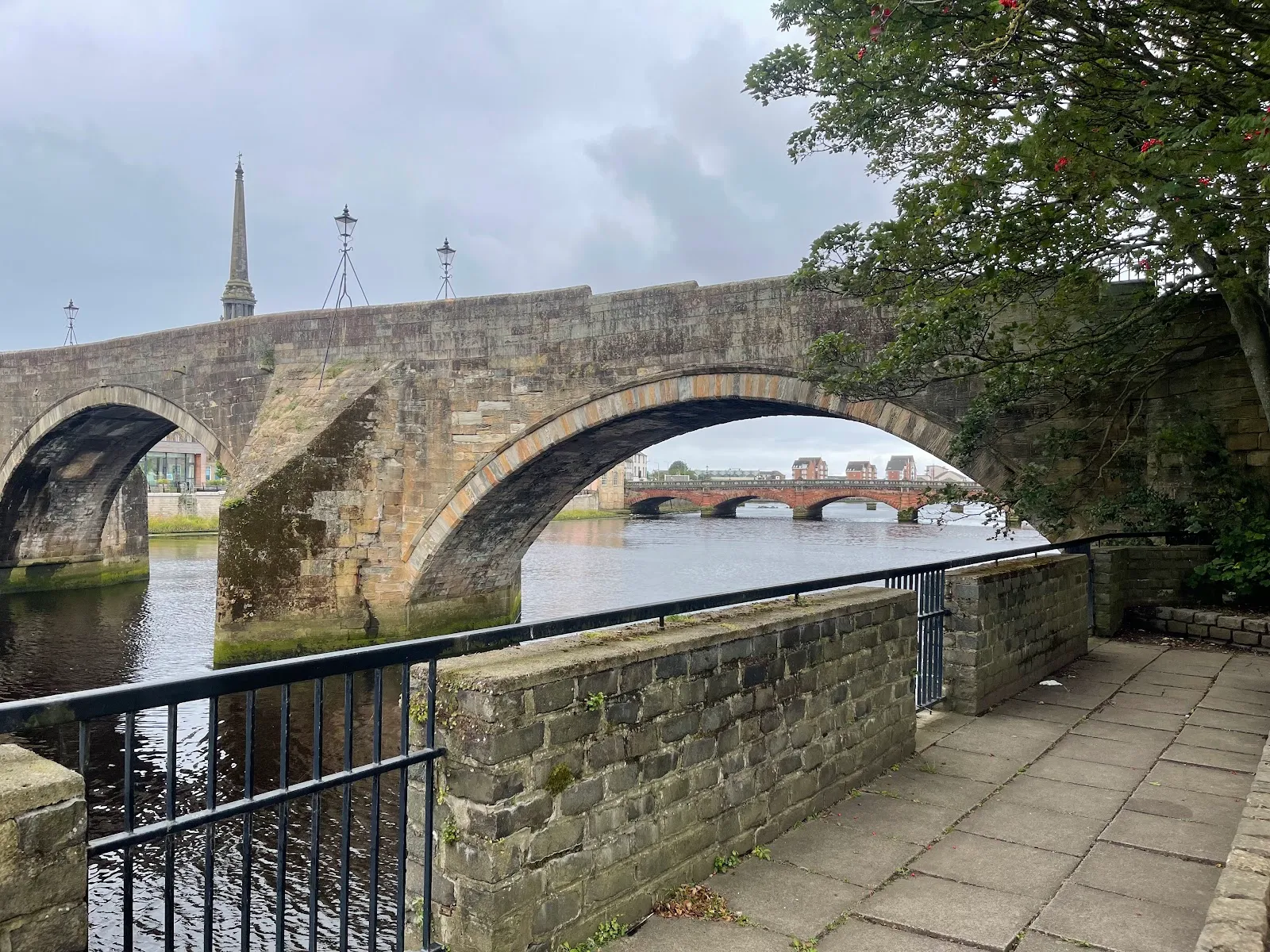
The Auld Brig is a medieval stone footbridge across the River Ayr, in the town of Ayr. Its cobbled path and quiet riverside setting make a short crossing a chance to see one of the town’s best-known landmarks. Robert Burns placed the bridge at the centre of his poem “The Brigs of Ayr”; reading it beforehand adds context to the visit. After crossing, you can continue along High Street and visit nearby Loudoun Hall. The bridge is steep in places, so take care if walking is difficult.
The old crossing and its replacement
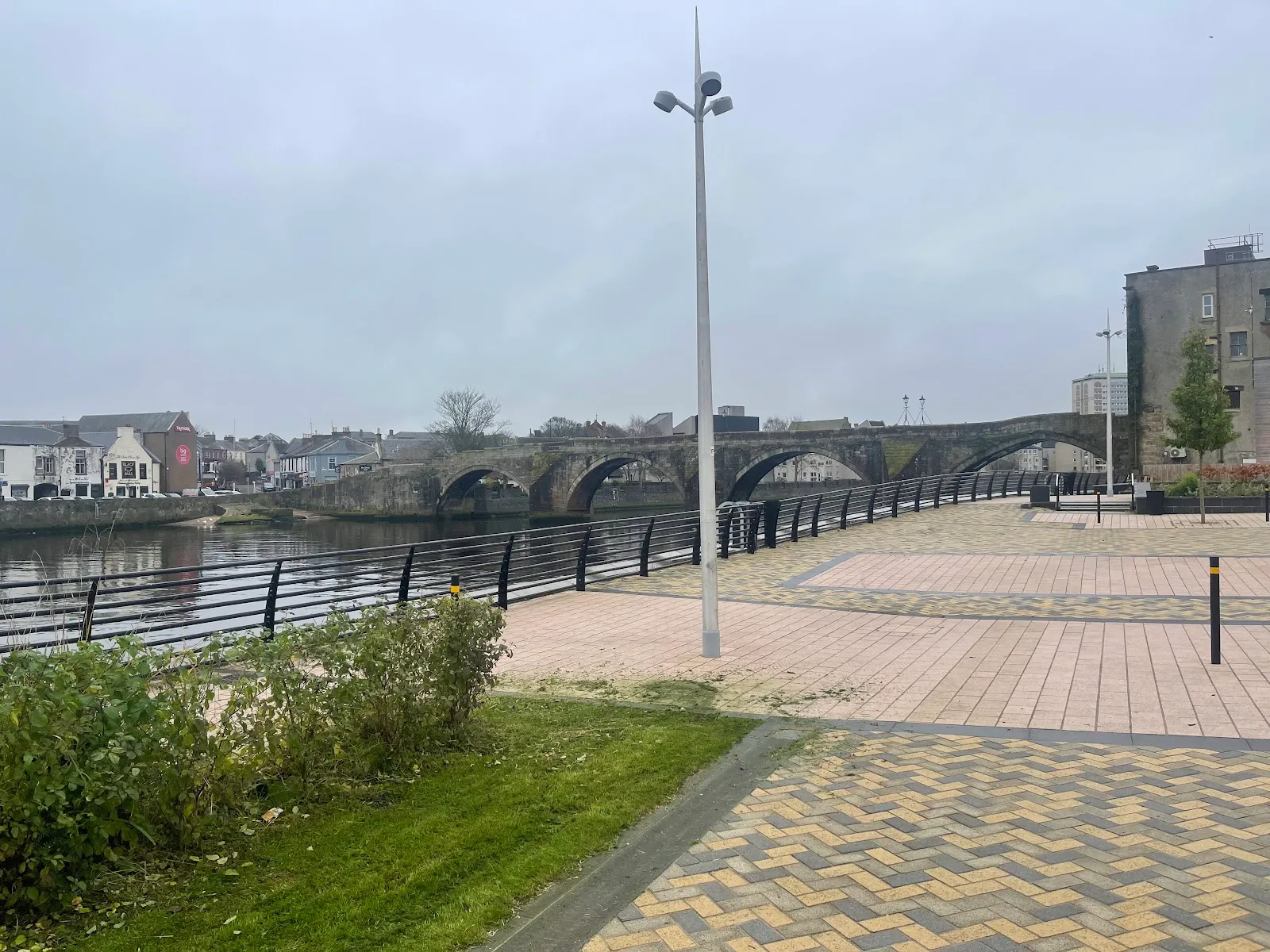
The Auld Brig spans the River Ayr and is associated with the town’s historic crossing. A new bridge, designed by Robert Adams, opened in 1788. The old bridge was then used for pedestrians rather than carts and sledges.
Flooding washed away the first new bridge in the 1870s. The Auld Brig returned to service as the main crossing until another replacement bridge was built in 1878. The accounts of the bridge’s early construction give differing dates, so its exact age is uncertain.
A walk through old Ayr
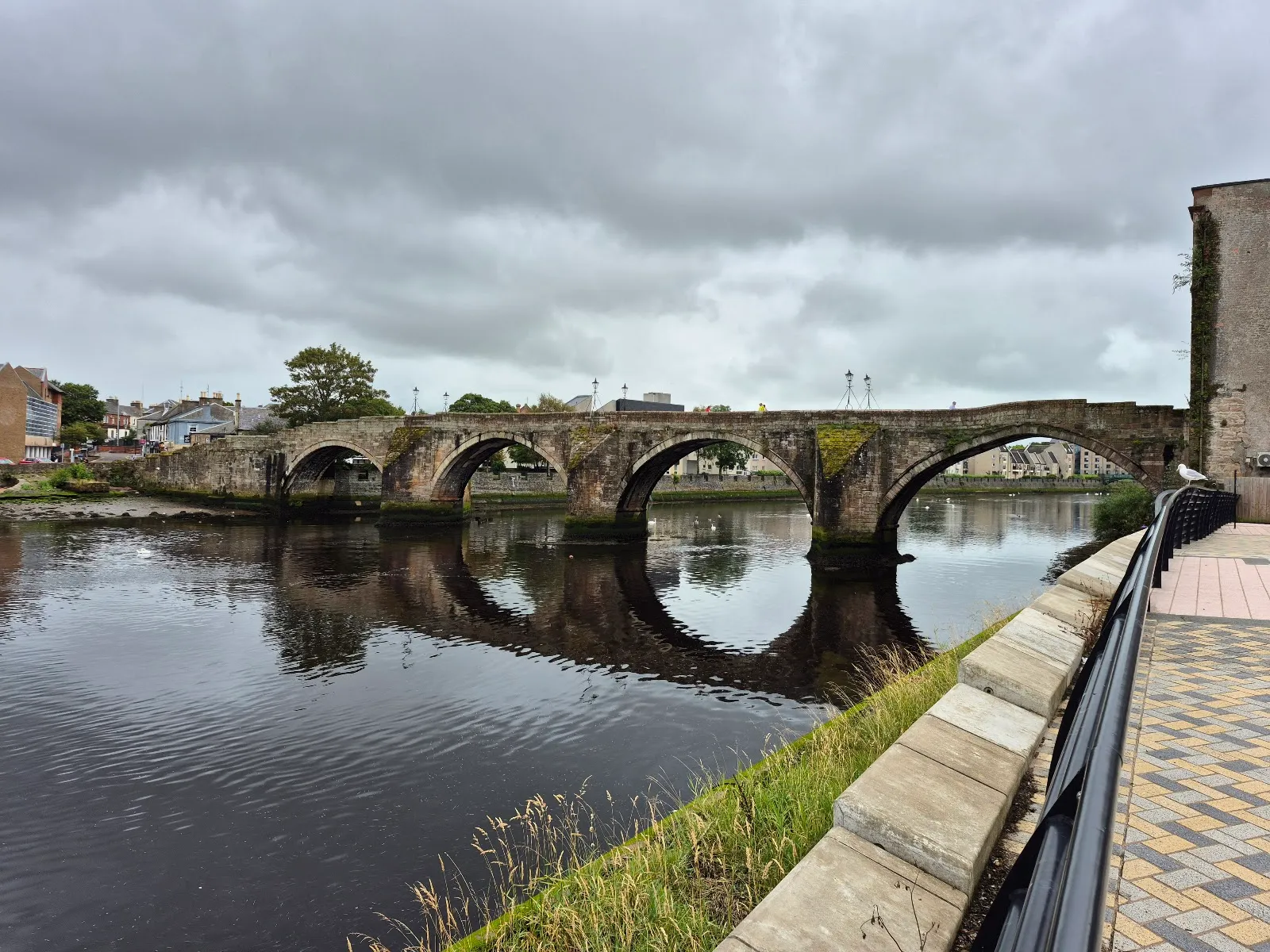
Robert Burns made the bridges of Ayr the subject of “The Brigs of Ayr”, in which the old and new bridges argue. Reading the poem before you arrive can help place the bridge in its literary context.
After crossing, turn onto High Street to continue exploring the historic centre. Loudoun Hall is nearby, in Boat Vennel.
FAQ
Where is the Auld Brig?
It crosses the River Ayr in Ayr, Scotland.
Can you walk across the Auld Brig?
Yes. The old bridge is now a pedestrian crossing.
Is the Auld Brig accessible for people with limited mobility?
The cobbled path is steep in places, which may make crossing difficult.
What is the Auld Brig known for?
It is a historic crossing over the River Ayr and the subject of Robert Burns’s poem “The Brigs of Ayr”.