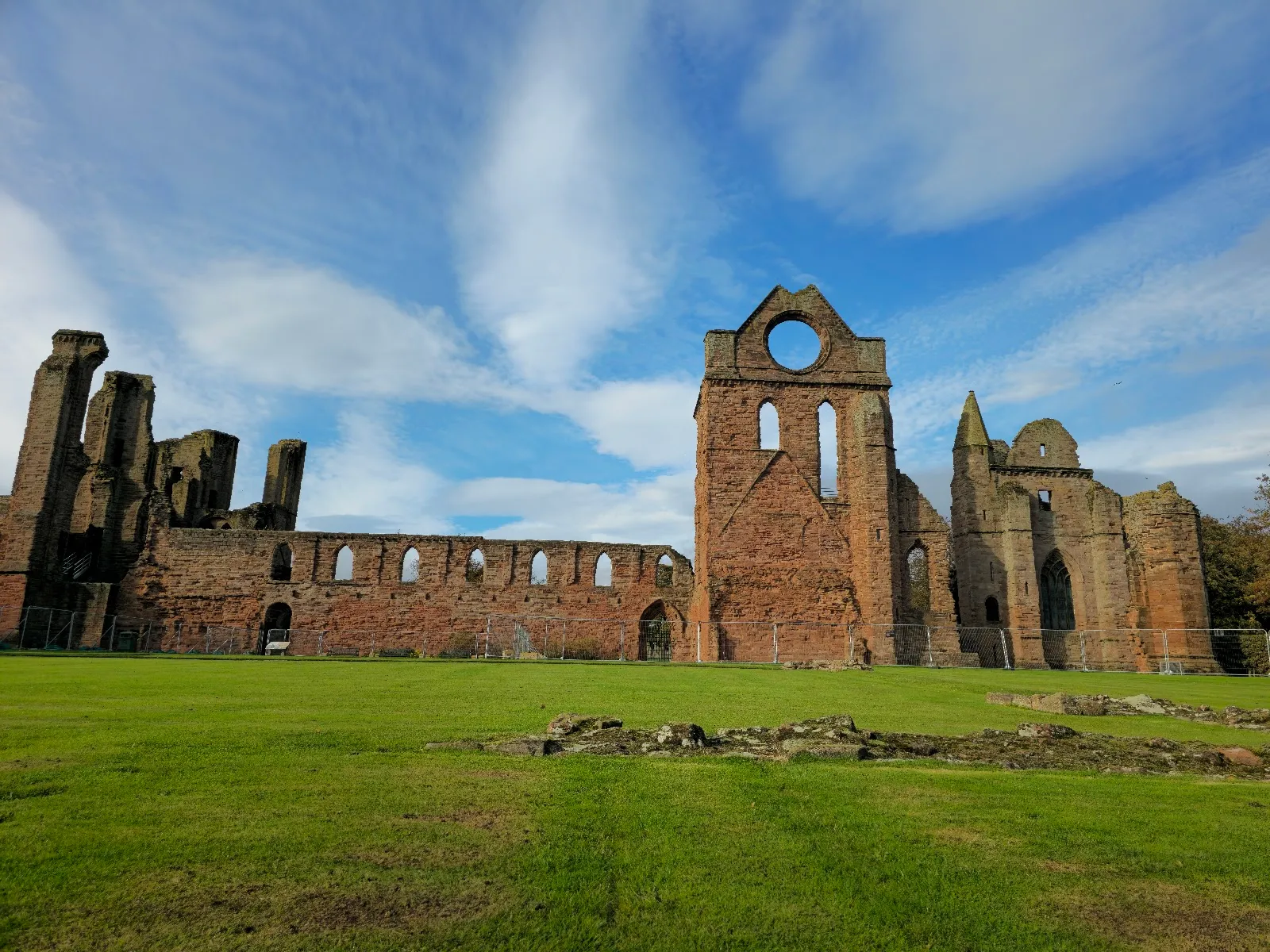
Arbroath Abbey is a red sandstone ruin in the town of Arbroath, Angus. Founded by King William the Lion in 1178, it is closely associated with the Declaration of Arbroath, sent to the Pope in 1320 to assert Scotland’s independence. Walk among the remains of the church and abbot’s house, and look for the large round window in the south transept. Displays in the visitor centre explain the abbey’s history, including its connection to the declaration. Check for restoration work before you go, as some areas can be closed.
Founded by William the Lion
King William the Lion founded Arbroath Abbey in 1178 for monks of the Tironensian order. The abbey was built over more than 60 years using local red sandstone and was consecrated in 1197. William dedicated it to Thomas Becket, whom he had known at the English court. The king was buried at the abbey in 1214.
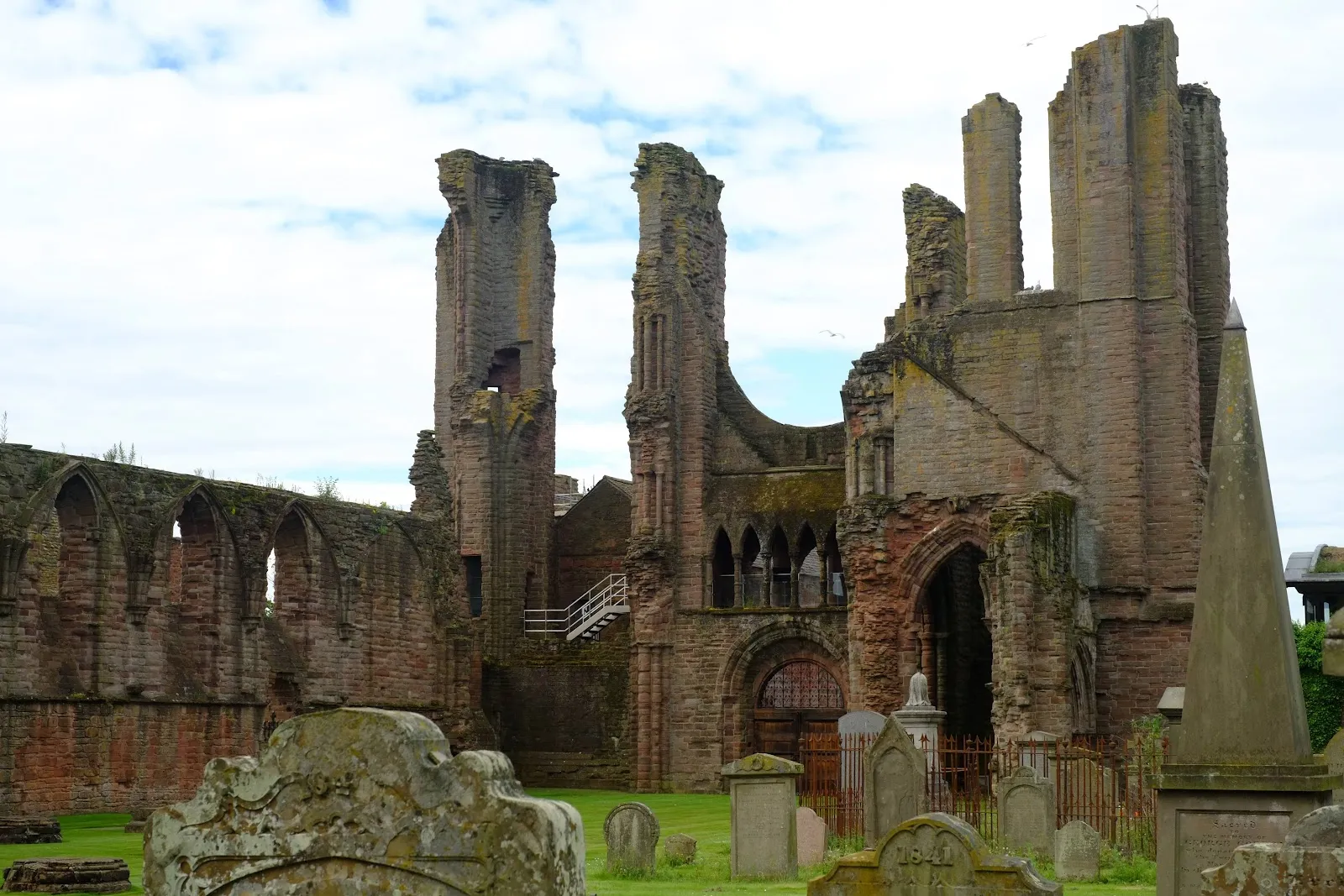
The abbey was among Scotland’s wealthiest religious houses. Its surviving remains include parts of the church and an abbot’s residence, one of the most complete examples of its kind. The scale of the red sandstone walls gives a sense of the site’s former importance, even though much of the complex now stands in ruins.
The Declaration of Arbroath
In 1320, a letter asserting Scotland’s independence was sent from Arbroath to Pope John XXII. Known as the Declaration of Arbroath, it was associated with Abbot Bernard, who was also Chancellor of Scotland under Robert the Bruce. The declaration has made the abbey a significant place in the country’s political history.
The visitor centre explains the abbey’s past and the declaration through displays and interactive material. Exhibitions also cover the story of the Stone of Destiny, which reappeared at the abbey in 1951 after being taken from Westminster Abbey. Displays and an animated film help put the surviving building remains in historical context.
What remains to see
The abbey’s red sandstone ruins still occupy a prominent place in Arbroath. Among the most recognisable details are the west front, the south transept’s round window and the abbot’s house. The church remains partly standing, while other sections have fallen into ruin. The former complex also included a gatehouse that was later used as a museum.
After the Reformation, the abbey gradually fell into disuse and decay. From 1590, stones were taken from the site for buildings in Arbroath. Restoration work can sometimes close parts of the ruins, so check current access before travelling. The visitor centre has accessible entrance and restroom facilities, and Historic Environment Scotland members are eligible for free entry.
FAQ
Where is Arbroath Abbey?
The abbey is on Abbey Street in Arbroath, Angus, Scotland.
What is Arbroath Abbey known for?
It is closely associated with the Declaration of Arbroath, sent to Pope John XXII in 1320 to assert Scotland’s independence.
What can you see at Arbroath Abbey?
Explore the remains of the church, the west front, the south transept’s round window and the abbot’s house. The visitor centre has displays about the abbey and the declaration.
Is entry free?
Historic Environment Scotland members can enter free. The supplied information does not confirm the standard admission price.