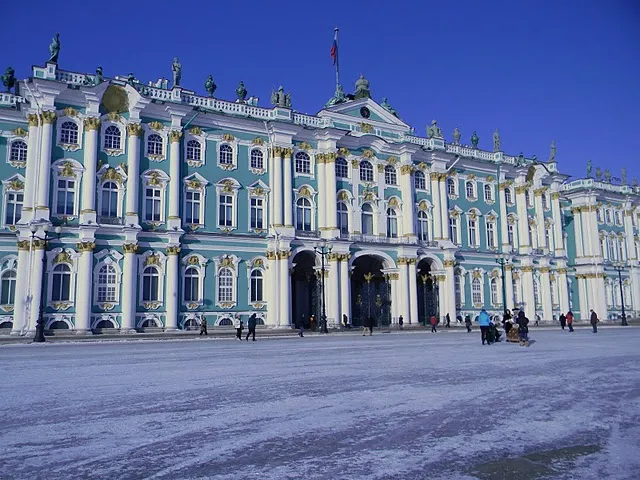
On Palace Embankment in St Petersburg, the Winter Palace is the former residence of Russia’s monarchs and the main building of the State Hermitage Museum. Its mint-green-and-white Baroque façade faces Palace Square; inside, gilded ceilings, grand staircases and ceremonial rooms make the palace as compelling as the art on display. Allow plenty of time to explore the galleries, or admire the architecture from the square if you are not visiting the museum. The palace’s history runs from imperial residence to a setting for events of the 1917 revolution.
A palace between Palace Square and the Neva
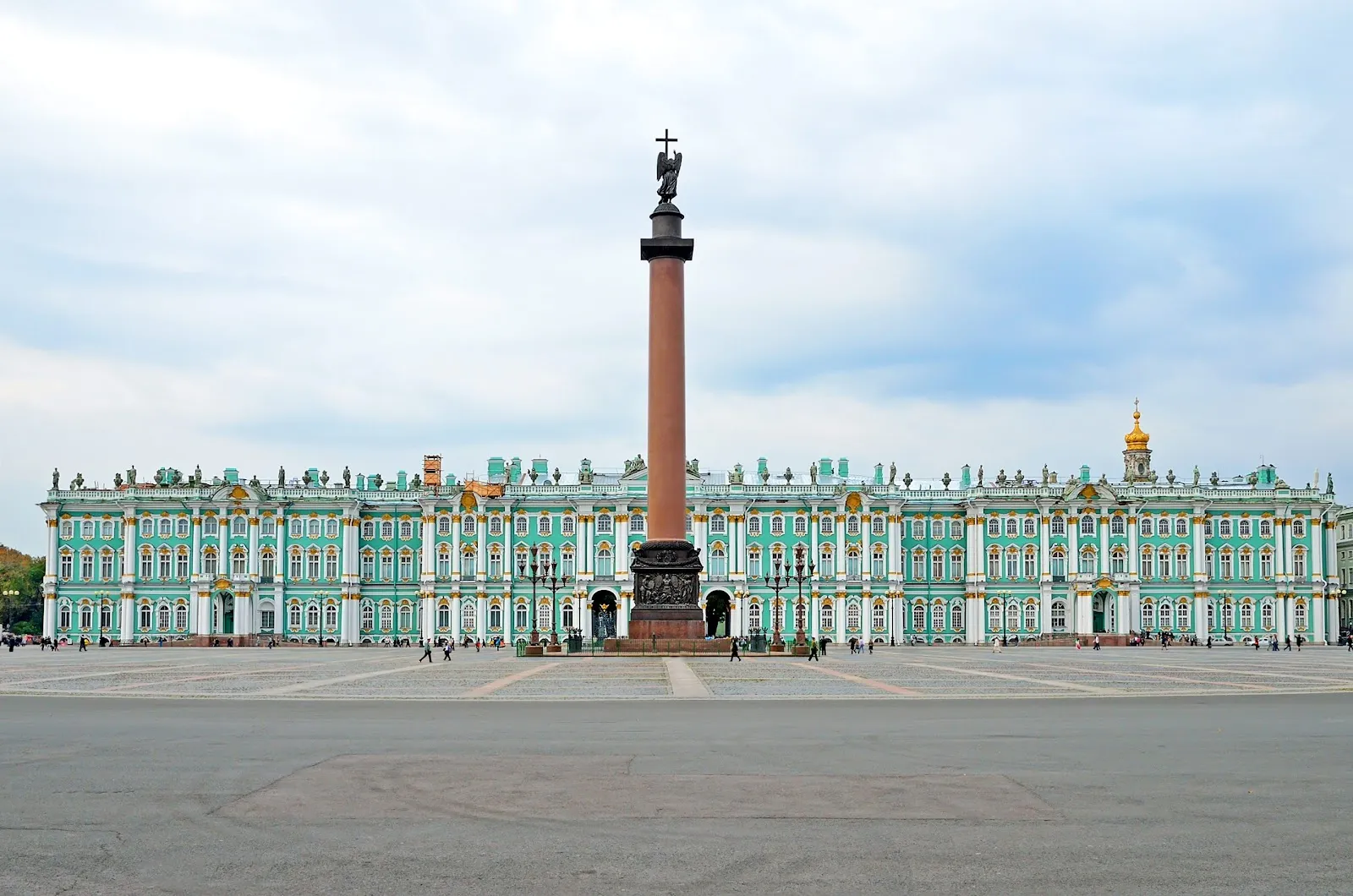
The Winter Palace stands between Palace Square and the Palace Embankment, with its long green-and-white façade facing the square. The building seen today was designed by Bartolomeo Rastrelli and constructed between 1754 and 1762. Its Baroque exterior is marked by columns, statues and elaborate decorative details.
The palace was the principal residence of Russian monarchs for much of the imperial era. It was associated with the Romanov dynasty and remained an imperial residence until 1917. Today, it forms the main building of the State Hermitage Museum.
Inside the palace
The scale of the building becomes clear in its high-ceilinged rooms, ceremonial halls and grand staircases. The Main Staircase, also known as the Ambassador’s Staircase, is distinguished by frescoes, marble balustrades and granite columns. The Malachite Room was used as the official drawing room of Alexandra Feodorovna, wife of Nicholas I.
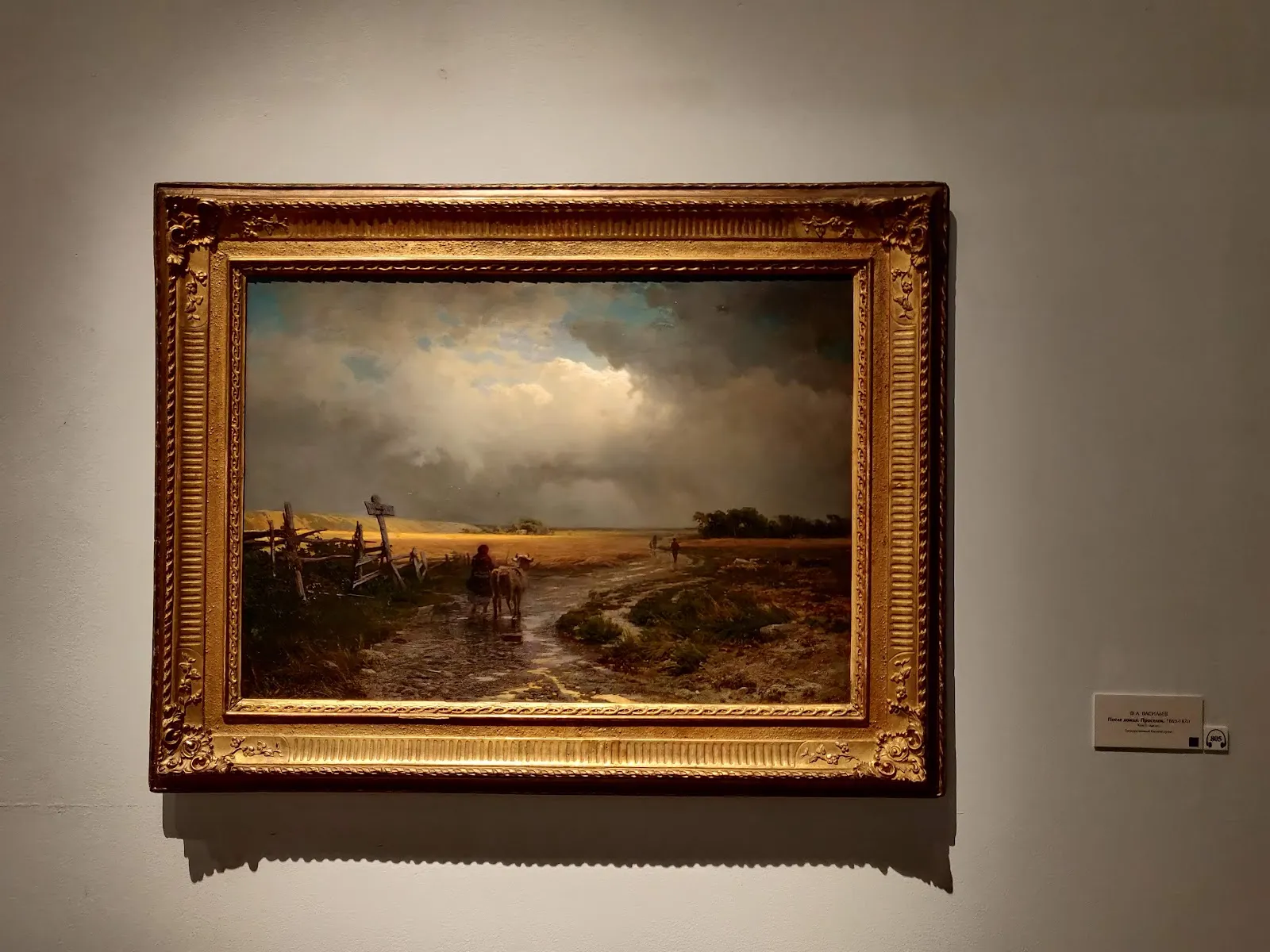
Some rooms have been restored to recall the palace interiors of the Russian Empire. The Hermitage collection also includes works by artists such as Rembrandt, Leonardo da Vinci and Picasso, alongside historic objects. The galleries and palace rooms together make this more than a visit to an art collection: the building itself is central to the experience.
From imperial residence to museum
The palace was built to serve as the home of Russia’s rulers and as a statement of imperial authority. Its history also reaches beyond the royal household: the Winter Palace was the setting for events of the October 1917 revolution. After the Bolshevik Revolution, some imperial emblems were removed and treasures were dispersed.
The Hermitage Museum grew from Catherine the Great’s private art collection, founded in 1764. The Winter Palace later became part of the museum complex, which includes several buildings. With galleries spread through the palace, the visit can take several hours; a guided tour is one way to add context about the building and Russian history.
FAQ
Where is the Winter Palace?
It is at Palace Embankment, 32, St Petersburg, between Palace Square and the Neva River.
Is the Winter Palace part of the Hermitage Museum?
Yes. The Winter Palace is the main building of the State Hermitage Museum.
How much time should I allow for a visit?
Allow several hours. There are extensive palace rooms and museum galleries to explore.
Should I book tickets in advance?
Advance ticket booking is recommended.