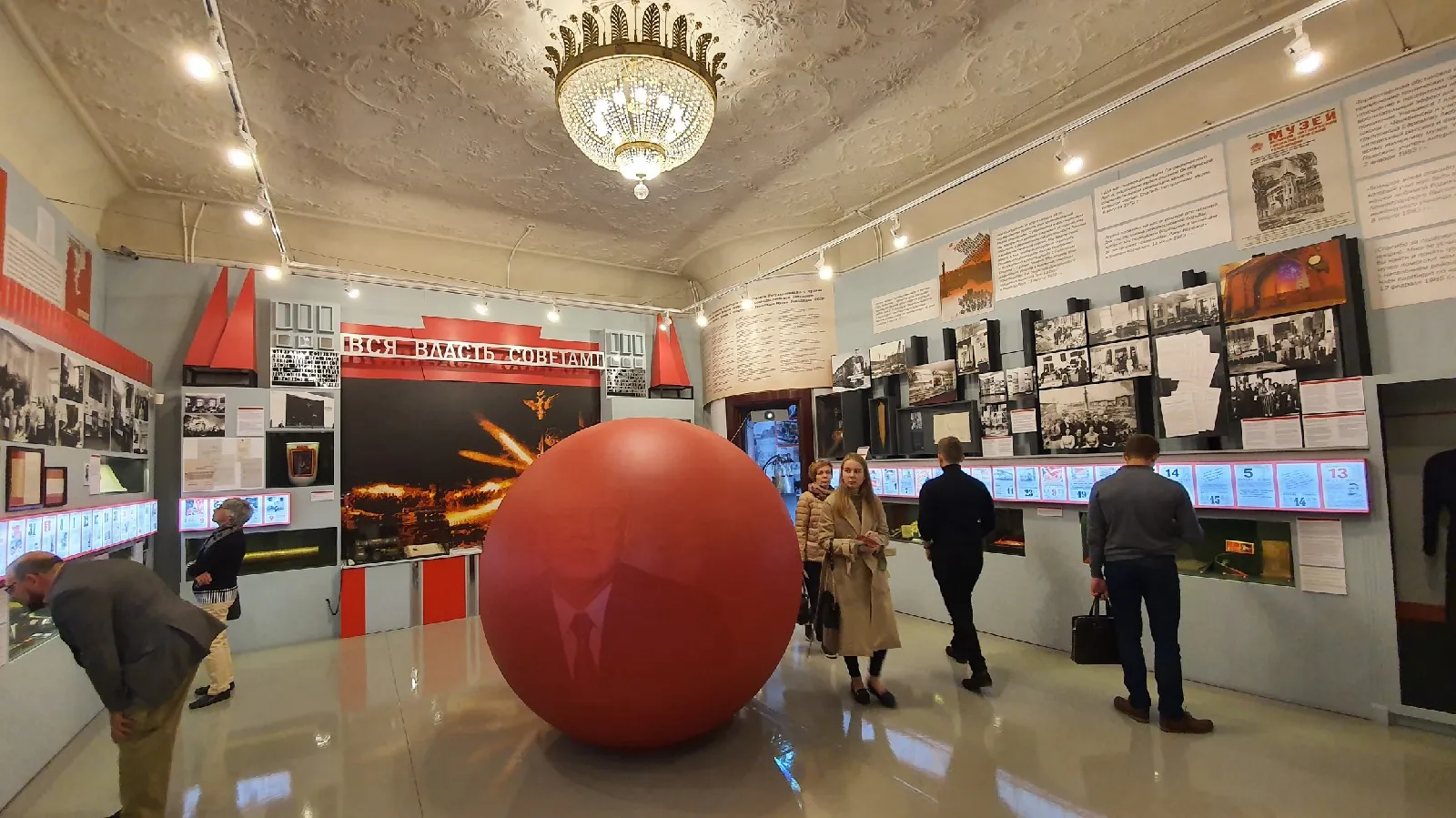
The Museum of Political History of Russia traces the country’s political story from the reign of Catherine II to the present. It occupies two historic mansions on Ulitsa Kuybysheva, including the former home of ballerina Mathilde Kschessinska, later used by the Bolsheviks. Inside, photographs, films, documents and objects follow the revolutions, Soviet rule and later political changes. See Lenin’s former study and the balcony associated with his speeches, then check the temporary exhibitions, which have covered subjects such as the Space Race and the Kronstadt rebellion.
A museum shaped by political events
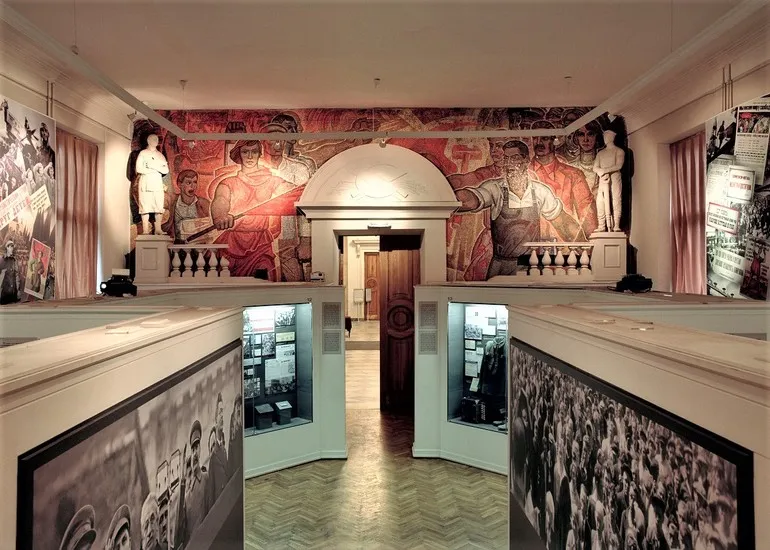
The Museum of Political History of Russia occupies two mansions on Ulitsa Kuybysheva. One belonged to Mathilde Kschessinska, a celebrated ballerina associated with Nicholas II; after the 1917 Revolution, the Bolsheviks took over the building. Lenin worked in the mansion, and a balcony there is linked to his speeches. The other mansion was built for timber merchant Baron Brandt.
The museum began in 1919 as a museum of revolution. Its collection follows political history from the era of Catherine II through later upheavals and into present-day Russia. Documents and objects connected with key historical figures sit alongside photographs and films, giving the displays material to explore beyond a straightforward chronology.
From revolution to the present
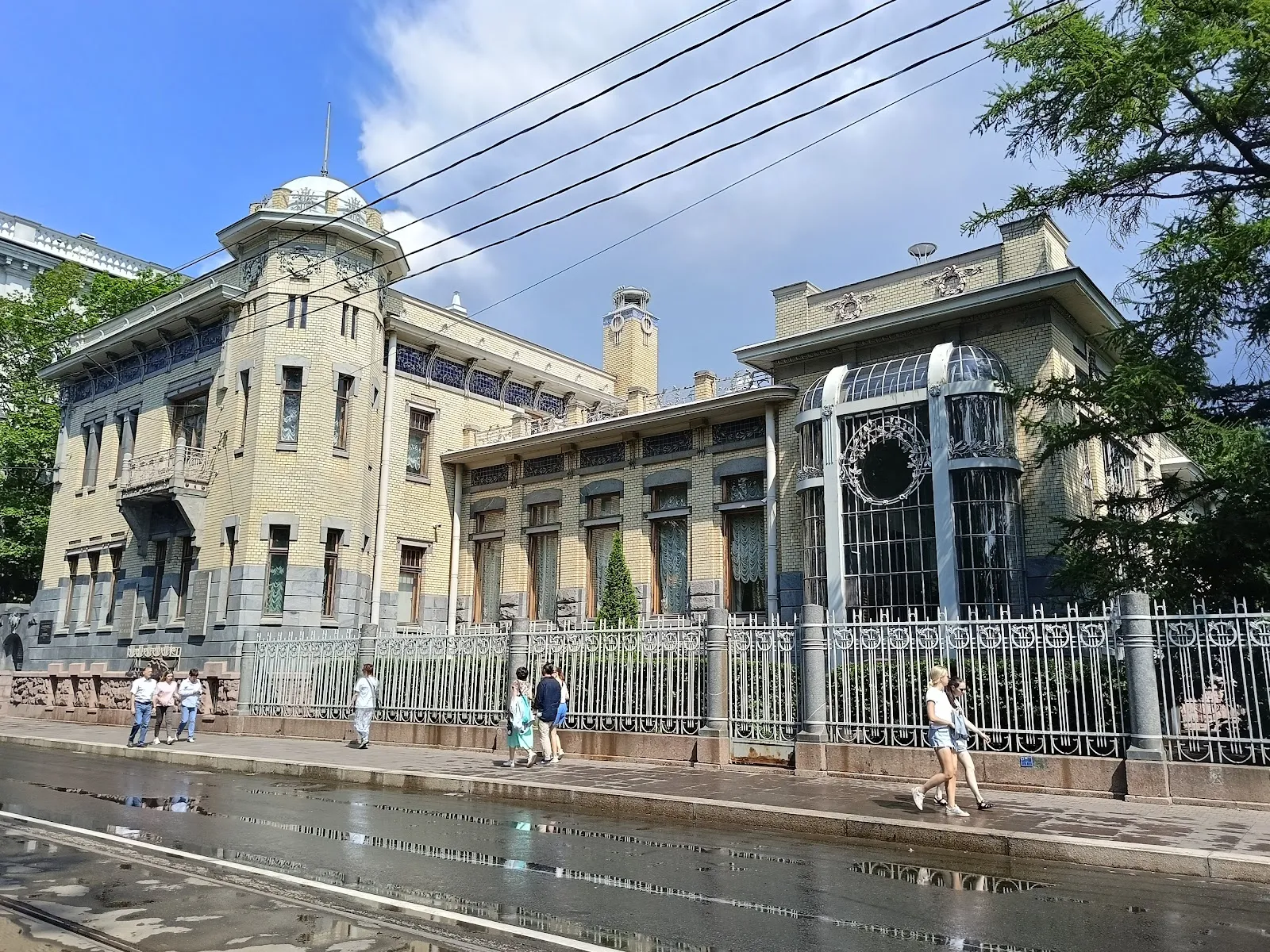
The exhibitions cover the build-up to the Russian Revolution, the fall of the tsar, the Soviet period and the country’s more recent political history. They also address the First World War, the civil war and the dissolution of the Soviet Union. The range makes this a substantial visit for anyone wanting to understand how political events altered life in Russia.
Rather than focusing only on the best-known leaders, the collection uses images, records and objects to document political events and the people involved. The displays include material on figures from different periods, with the overall story extending from the reign of Catherine II to current political leaders.
Inside the Kschessinska mansion
The former Kschessinska residence connects the museum’s political narrative with the events that took place in its rooms. Lenin’s study is among the spaces visitors can see. The mansion’s earlier life as a ballerina’s home and its later use by the Bolsheviks give the building a direct connection to the revolutionary period covered in the galleries.
The museum also uses the mansion’s history to set the scene for its exhibits on the 1917 Revolution. Its location and surviving rooms help explain why the building became part of the political story, rather than serving only as a backdrop for objects displayed inside.
Temporary exhibitions and planning a visit
Temporary displays add more focused subjects to the broader historical collection. Past exhibitions have examined the Space Race and the Kronstadt rebellion through photographs. Check the current programme before you go, since these displays change.
Plan for at least three hours to explore the museum. An audio guide or an English-speaking guide can help with context. Some material is available in English, although not every exhibit has the same level of translated explanation; using a booklet can add time to the visit. The museum is closed on Mondays, and advance ticket booking is recommended.
FAQ
How long should I plan for the museum?
Allow at least three hours. The exhibitions cover political history across several periods, and temporary displays add more to see.
What can I see inside the museum?
The collection includes political documents, photographs, films and objects. You can also visit Lenin’s former study in the Kschessinska mansion.
Is there information in English?
Some exhibition material is available in English, and translation booklets are available. An audio guide or an English-speaking guide can provide additional context.
Is the museum open on Mondays?
No. The museum is closed on Mondays; advance ticket booking is recommended.