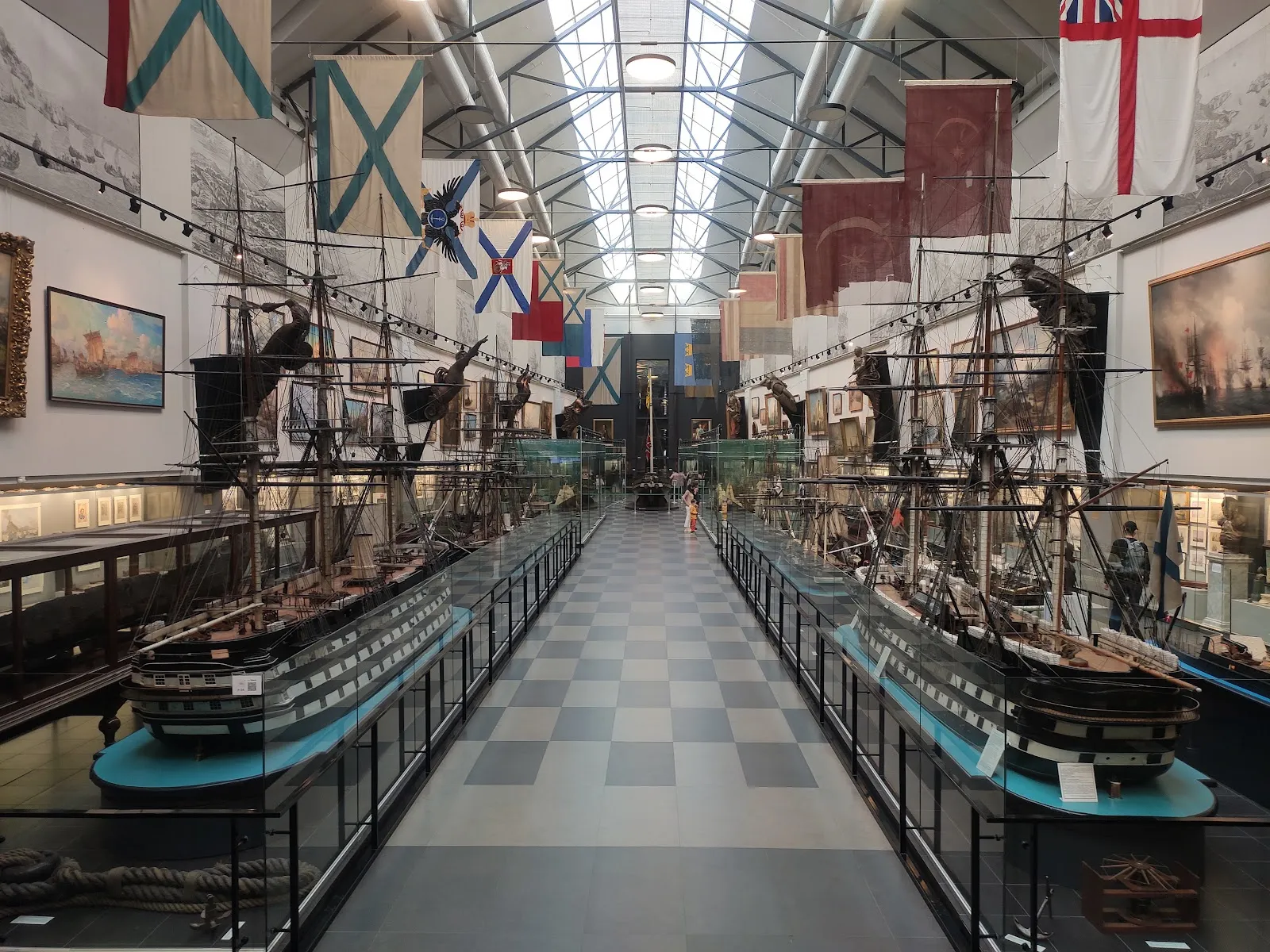
The Peter the Great Central Naval Museum is a maritime history museum on Bol'shaya Morskaya Ulitsa in central St Petersburg. Its galleries trace Russian naval history through ship models, wooden boats, submarines, aircraft and objects connected with the fleet. Look for the detailed model ships and the carved figureheads once mounted on sailing vessels. The collection also includes naval equipment, uniforms, weapons, flags and battle trophies. English explanations are limited, so ask at the entrance about the English audio guide before setting off through the galleries.
From shipbuilding models to a naval museum
The museum's beginnings lie in the St Petersburg Model Chamber, a collection of shipbuilding models and drawings associated with Peter the Great. It was kept in the Main Admiralty, where ships for the Baltic Fleet were built. The collection grew from that early link between naval design and shipbuilding into a museum devoted to the Russian Navy.
Peter's interest in ships took shape during his European tour. He visited British and Dutch shipyards, then among the leading centres of naval construction. The Model Chamber preserved the kind of plans and models that helped make shipbuilding knowledge tangible. Today, the museum's galleries place that early material within a much broader account of Russia's naval past.
What to look for in the galleries
Ship models are a central part of the collection, from vessels associated with Peter the Great's era to ships of more recent periods. Some are miniature versions; others are large enough to show details of a vessel's structure. Take time to look at the figureheads carved for sailing ships, as well as the battle trophies and other objects connected with naval service.
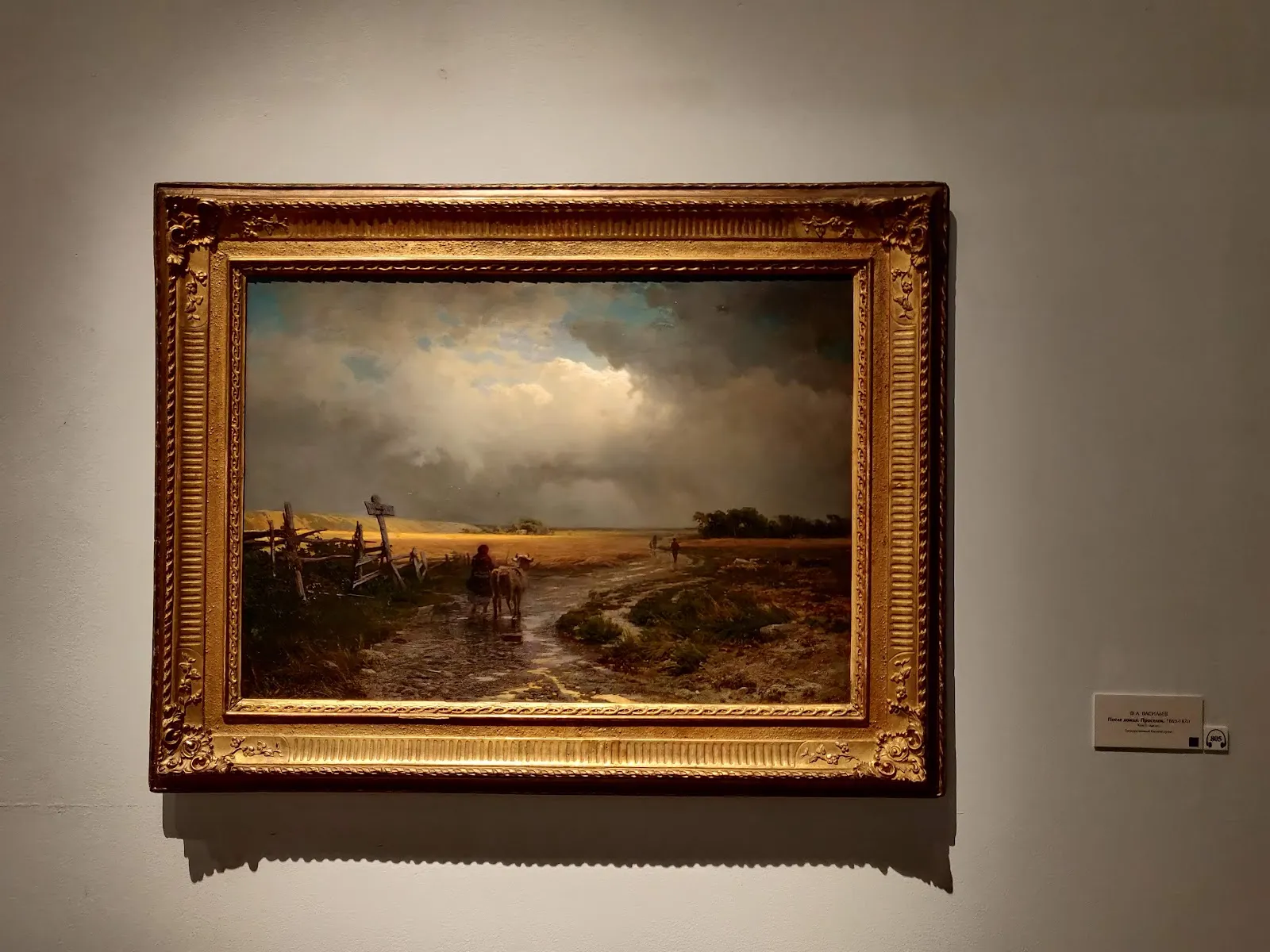
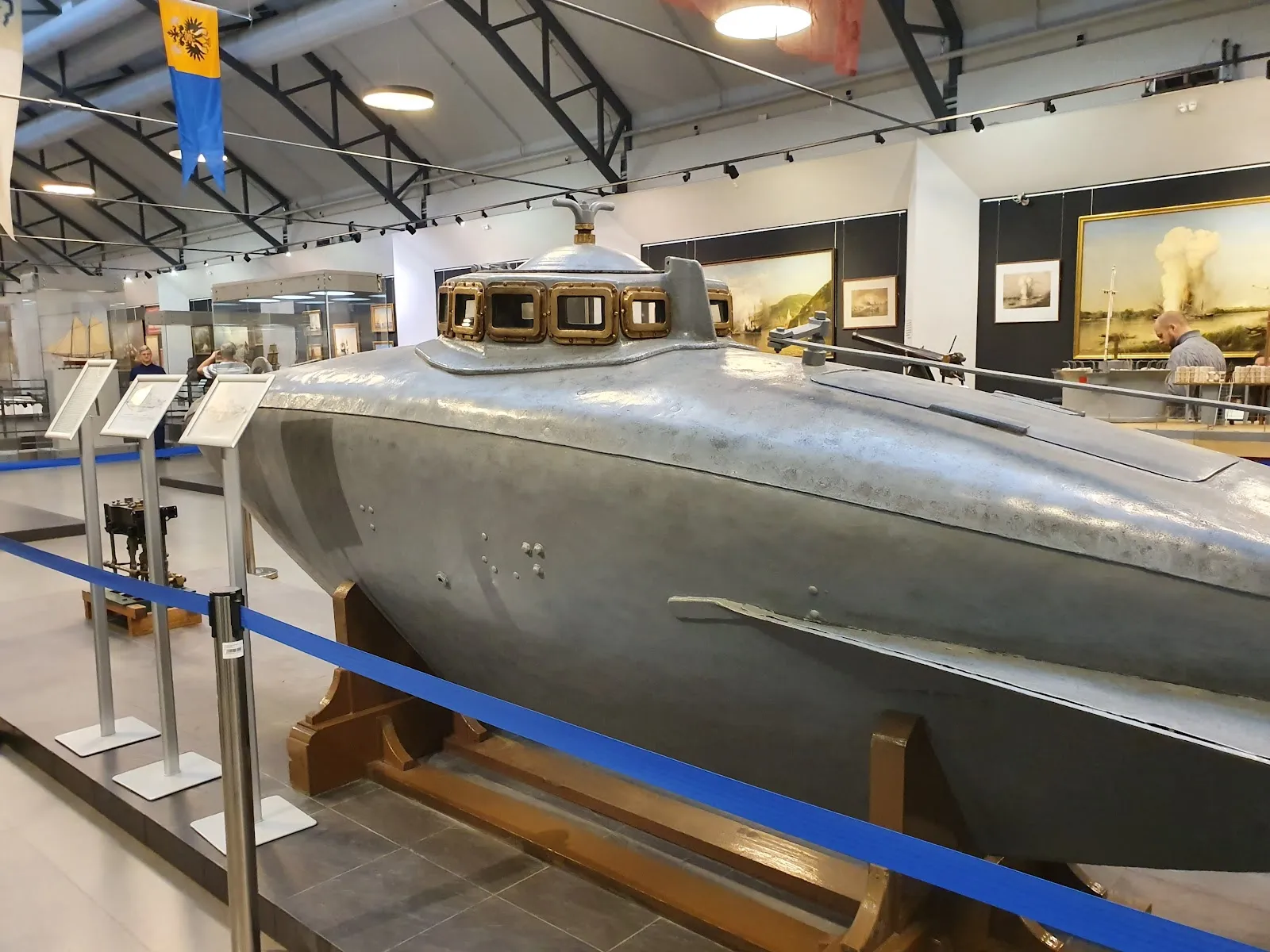
The displays extend well beyond model ships. They include naval equipment, cold weapons and firearms, uniforms, artworks, awards, flags and banners. Boats, submarines and aircraft add to the range of objects on view, connecting the history of sailing fleets with later developments in naval technology. The material is arranged across multiple halls, so a quick circuit will leave little time for the detail.
Planning your route through the museum
The museum is at 69A Bol'shaya Morskaya Ulitsa, in central St Petersburg. For a cold-season visit, one suggested approach is to arrive before 11:00 and begin in the central exhibition hall, then continue into the neighbouring galleries. Displays there include material on propulsion, navigation and weapons systems.
English text is limited in the galleries. Ask staff at the entrance whether an English audio guide is available before you begin; it can help explain what you are seeing as you move through the exhibits. The museum recommends booking tickets ahead. Allow at least four hours for a visit, or as much as eight if you want to read closely and spend time with the collections.
New Holland Island is about a 100-metre walk away and has its own links to the city's maritime history. The artificial islands were used for a shipyard and for sailors' prisons. It is a practical nearby addition if you want to continue exploring the area after the museum.
FAQ
How long should I plan for the Central Naval Museum?
Allow at least four hours. If you want to read the displays and examine the collections in detail, plan for up to eight hours.
Is there an English audio guide?
An English audio guide is available at the museum entrance. Ask about it before you start, as gallery explanations are mainly in Russian.
Should I book tickets in advance?
The museum recommends getting tickets in advance.
What is close to the museum?
New Holland Island is about a 100-metre walk away. The artificial islands have a history connected with shipbuilding and sailors' prisons.