In Tsarskoye Selo, near St Petersburg, the Alexander Palace is a restrained neoclassical residence designed by Giacomo Quarenghi. Catherine II commissioned it for her grandson, the future Alexander I, and it later became the home of Nicholas II and his family. Inside, exhibitions include historic rooms and Romanov residential apartments, with a particular connection to Russia’s last imperial family. Pair a palace visit with time in Alexander Park, where paths pass ponds and fountains. An audio guide can help make sense of the rooms and their history.
A palace built for Alexander I
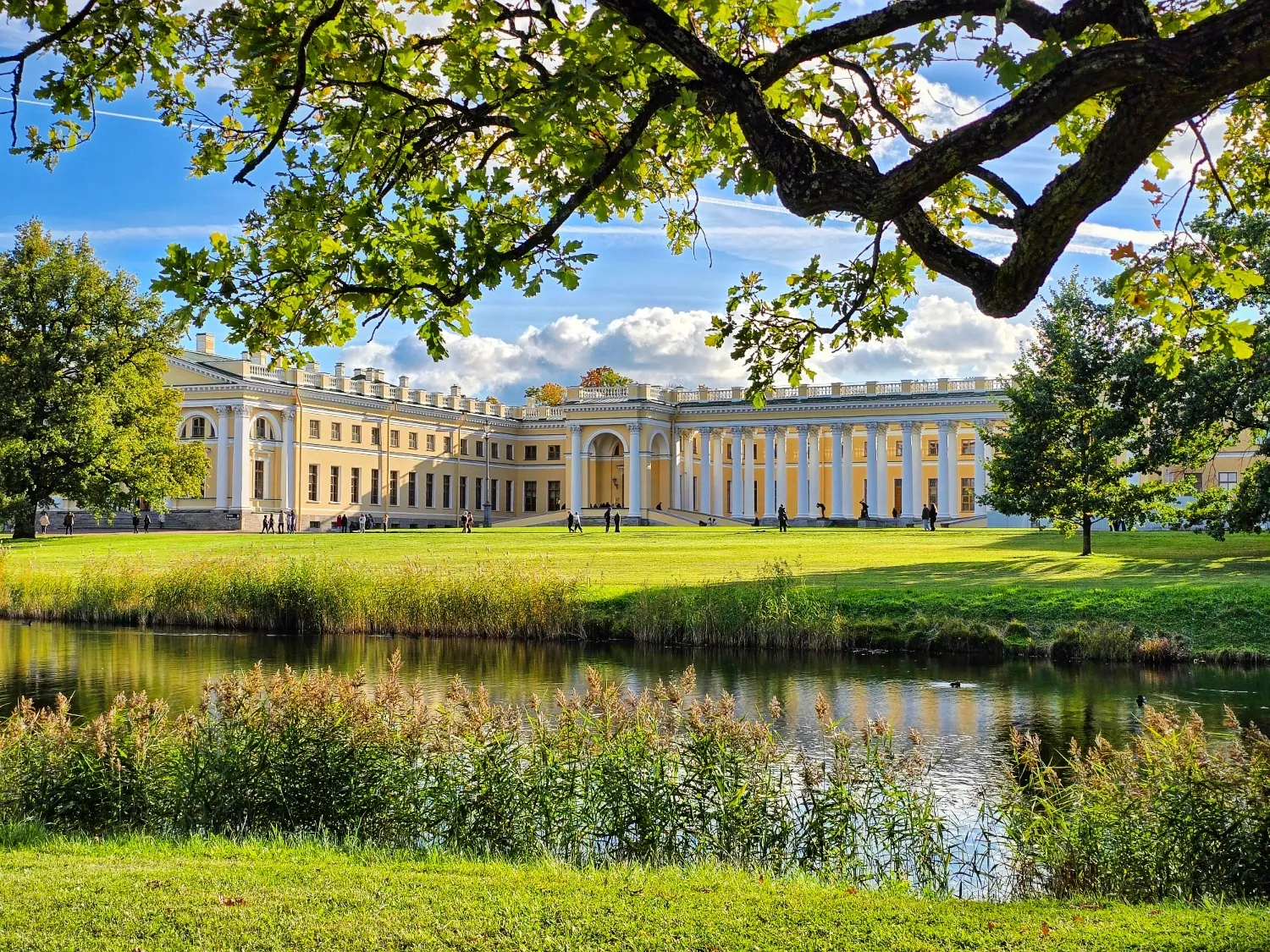
Catherine II commissioned the palace in 1792 as a wedding gift for her grandson, Grand Duke Alexander Pavlovich, the future Emperor Alexander I, and his wife, Elizabeth. Designed by Giacomo Quarenghi, the building was completed in 1796. Its classical architecture is more restrained than that of the nearby Catherine Palace.
The palace later became closely associated with Nicholas II. From 1904, it was the permanent residence of the emperor and his family. The Romanovs lived here until they were sent into exile in 1917.
Inside the palace
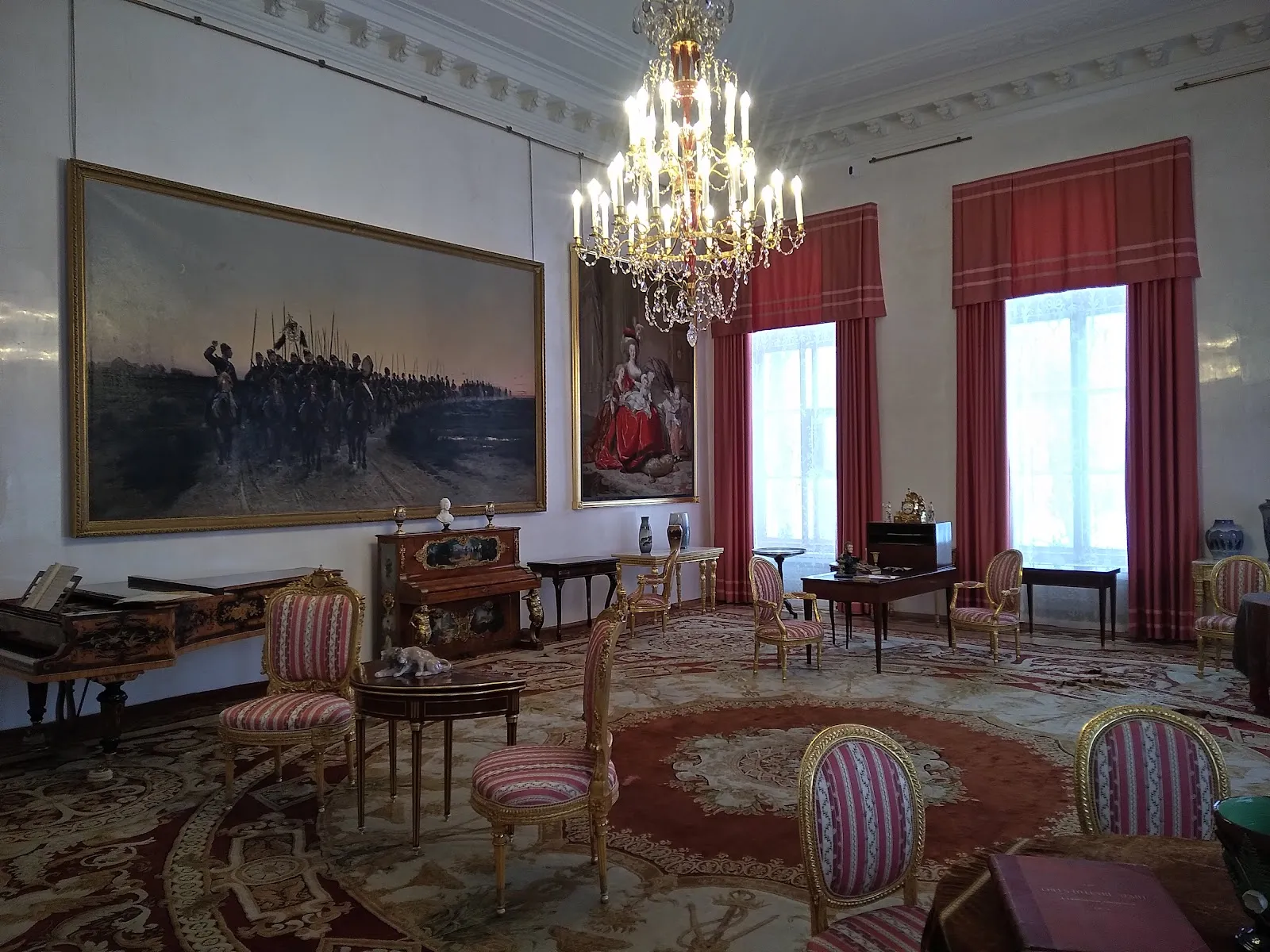
The exhibitions include historic interiors and residential apartments used by the Romanov family. Some of the palace’s rooms and exhibits help explain the family’s connection to Tsarskoye Selo and the final years of imperial rule.
The palace opened as a state museum in 1918. Its original displays included historic interiors in the central part of the first floor and Romanov apartments in the right wing. The building suffered damage during the German occupation and later neglect, and restoration work has been carried out.
Alexander Park
Alexander Park surrounds the palace and has both a geometrically laid-out New Garden and a landscape section. Ponds and fountains give the grounds a different setting from the palace interiors. The park is also connected to the history of the Second World War: fighting took place there in September 1941, and a memorial commemorates the fighter battalions that defended the city.
FAQ
How long do you need at Alexander Palace?
Allow about 1 to 1.5 hours to see the exhibitions.
Can you visit the Romanov family apartments?
The palace exhibitions include residential apartments used by the Romanov family.
Is Alexander Palace wheelchair accessible?
Call ahead to ask about access or arrange assistance before your visit.
Are tickets in advance recommended?
Yes. Advance tickets are recommended.