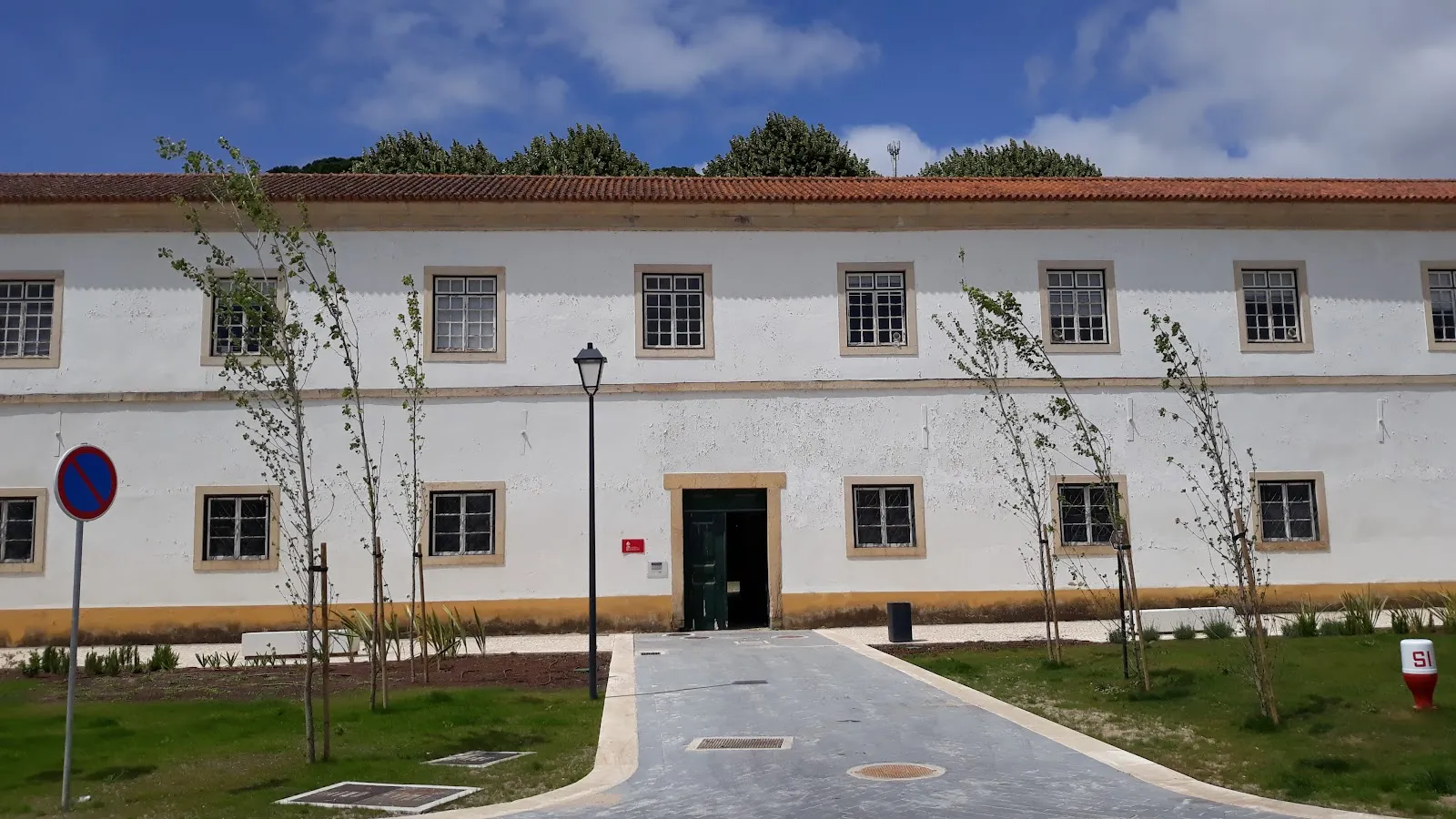
The Convent of Christ stands on a wooded hill above Tomar, inside the 12th-century walls of the Templar castle. Gualdim Pais founded it in 1160, and the Order of Christ later took it over. UNESCO listed it in 1983. The complex combines Romanesque, Gothic, Manueline and Renaissance work, added over the centuries by kings and Grand Masters. The round Templar church, the Charola, is the core of a visit, followed by the cloisters, the chapter-house window and the castle walls. Allow a couple of hours at least.
From Templar stronghold to Order of Christ
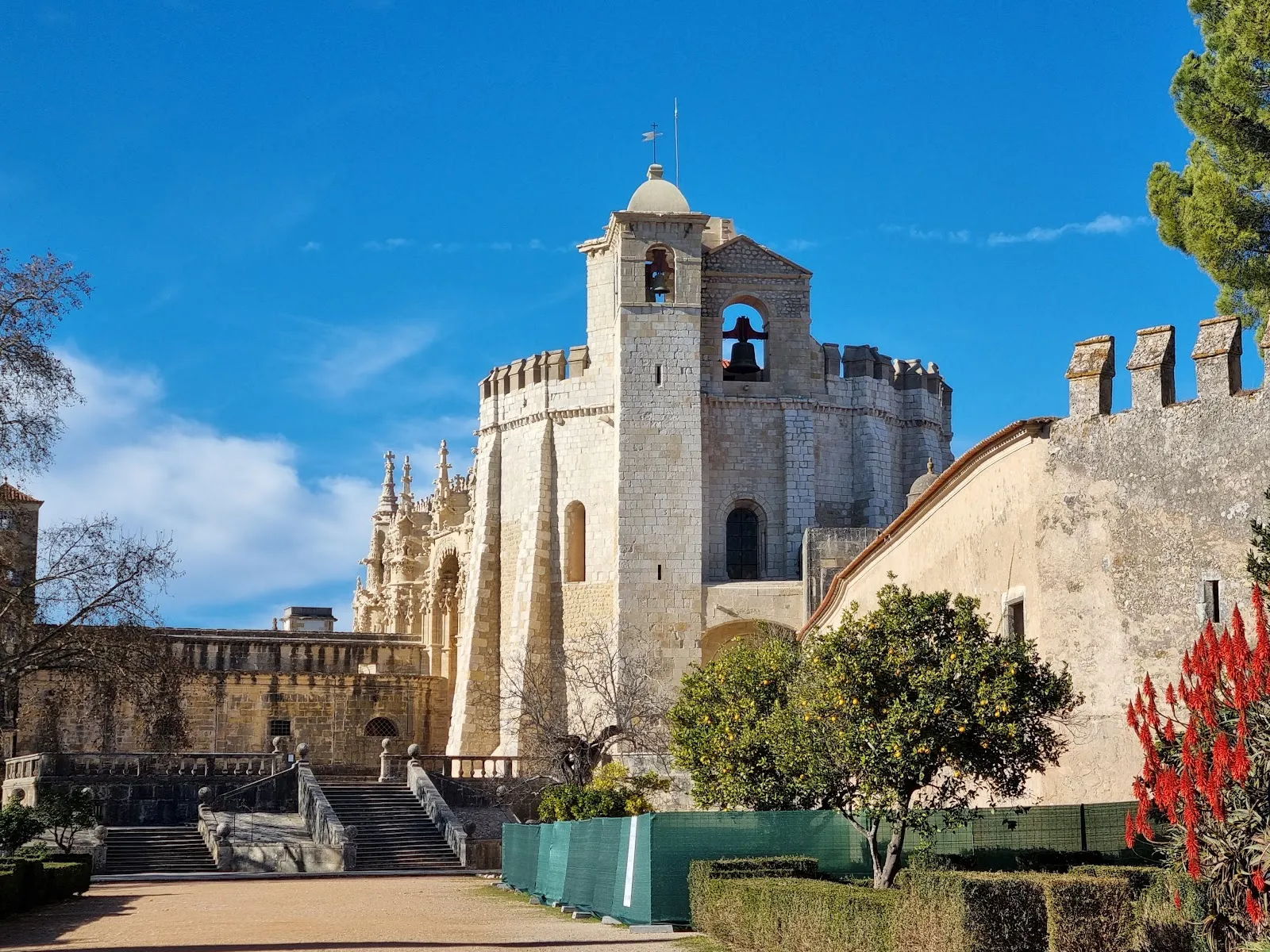
The story of the convent begins in 1160. King Afonso Henriques gave the Templar master Gualdim Pais the task of defending the region, and the Templars built their first defensive structures on this hill. These became the Castle of Tomar, and the convent grew inside its walls. For a long period the Templars held great power in Portugal.
When the Templars were dissolved in the 14th century, King Dinis persuaded the pope to pass the Order's powers to a new body, the Order of Christ. In practice it was the same Order under a new name and under the crown. Its seat moved several times and returned to Tomar in 1356.
Henry the Navigator was Grand Master from 1417 to 1460. He used the Order's wealth to fund Portugal's voyages across the oceans, and the Cross of Christ became the emblem of the age of exploration. The Order of Christ continued until 1834, when Portugal disbanded its religious orders.
The Charola and the Templar oratory
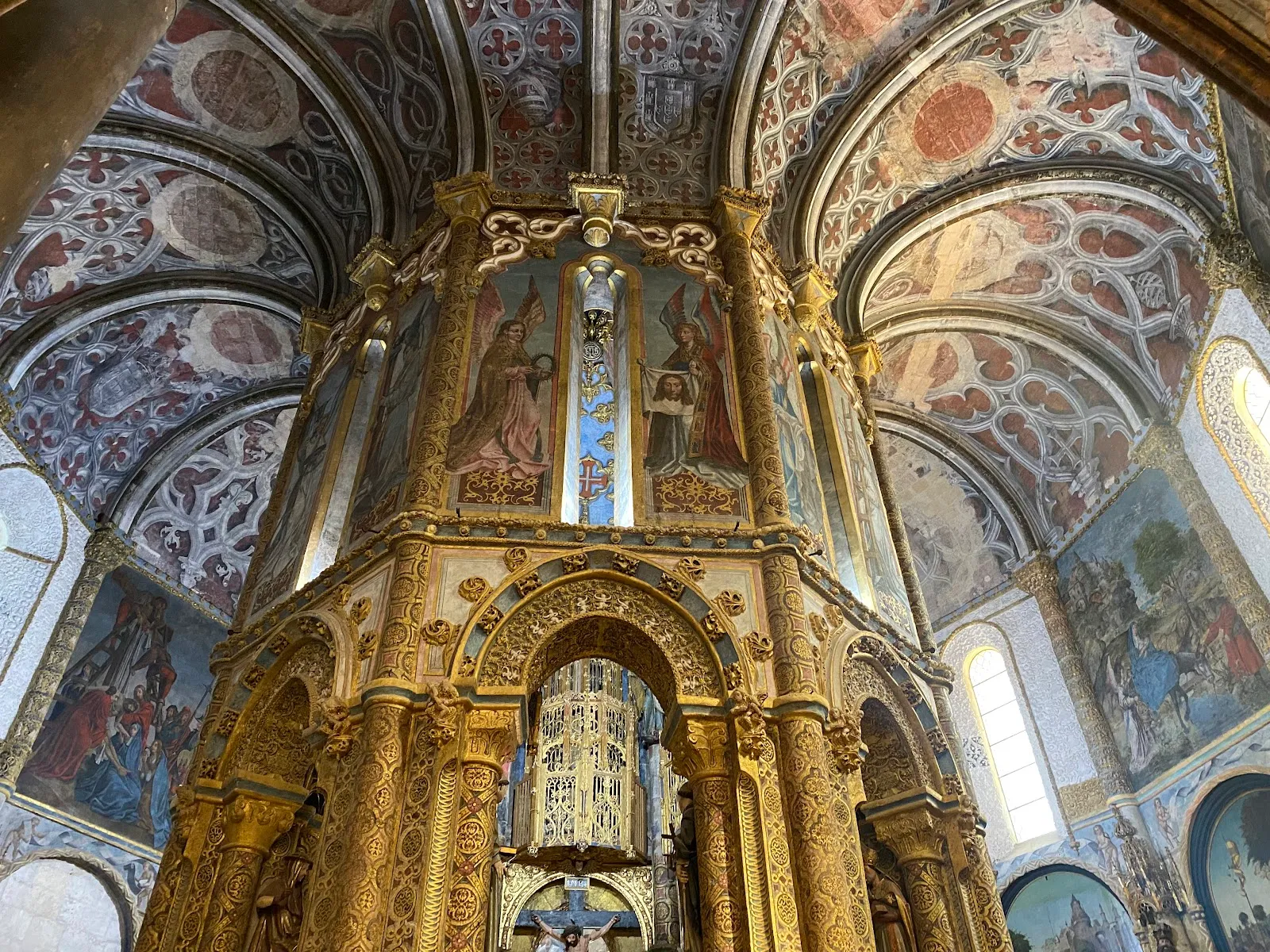
The Charola is the part of the convent most closely linked to Templar architecture, and most visits are planned around it. It is a round church with frescoes and gilded arches. Round churches were a Templar form, and this one was already the convent's centre when the order was founded here.
The convent also has a 12th-century Oratory of the Templars. It is one of the oldest parts of the complex and shows how much earlier the Templar work is than the Manueline and Renaissance additions around it.
Cloisters and the Chapter House window
Successive kings and Grand Masters added chapels, cloisters and choirs, so the styles change as you move through the complex. The Main Cloister is noted for its geometry, which shows even in small details such as the round staircases. The Cloister of King João III is a Renaissance addition.
The Manueline window of the Chapter House is the best-known single feature. It is a reference point for the Manueline style in Portugal, and its carving relates to navigation and royal power. It draws most of the attention, but the cloisters, chapels and painted and carved details deserve equal time. Some corridors have tiles, and many rooms have vaulted ceilings.
Walls, forest and the way up
The convent shares its hilltop and defensive walls with the castle next door. After you enter the castle grounds and before you reach the convent entrance, you can walk along the walls and look down over the town. The complex also includes the Pegões Aqueduct and the Immaculate Conception Hermitage, a small Renaissance chapel on the road up. It is not always open, and a short flight of steps leads to it.
Behind the convent is the former convent enclosure, now the Mata Nacional dos Sete Montes, the National Wood of Seven Hills. The Order of Christ once used it to grow and gather food. It has cypresses, oaks and old olive trees, and a miniature temple stands among them. You can park near its entrance and walk up to the convent through the trees.
The direct road from the historic centre, Avenida Dr Vieira Guimarães, is steep and has no footpaths or crossings. A car or a TUTomar bus is the safer choice. The buses are adapted for people with limited mobility.
FAQ
How long do you need at the Convent of Christ?
Plan on a couple of hours for the convent. Add time if you also want to walk the castle walls or the wood behind the convent.
How do you get to the Convent of Christ from Tomar town centre?
Go by car or take a TUTomar bus. The road up from the centre is steep and has no footpaths, so walking along it is not recommended.
Is the Convent of Christ a UNESCO World Heritage Site?
Yes. UNESCO listed the convent and the castle of Tomar in 1983.
Should you buy tickets in advance?
Buying in advance is recommended. Going early or late in the day also helps you avoid the busiest hours.
Is there a café at the Convent of Christ?
Yes, there is a coffee shop on site with coffee, cakes and sandwiches.
Is the Convent of Christ wheelchair accessible?
The entrance, the restroom and the parking lot are wheelchair accessible. TUTomar buses to the site are adapted for people with limited mobility.