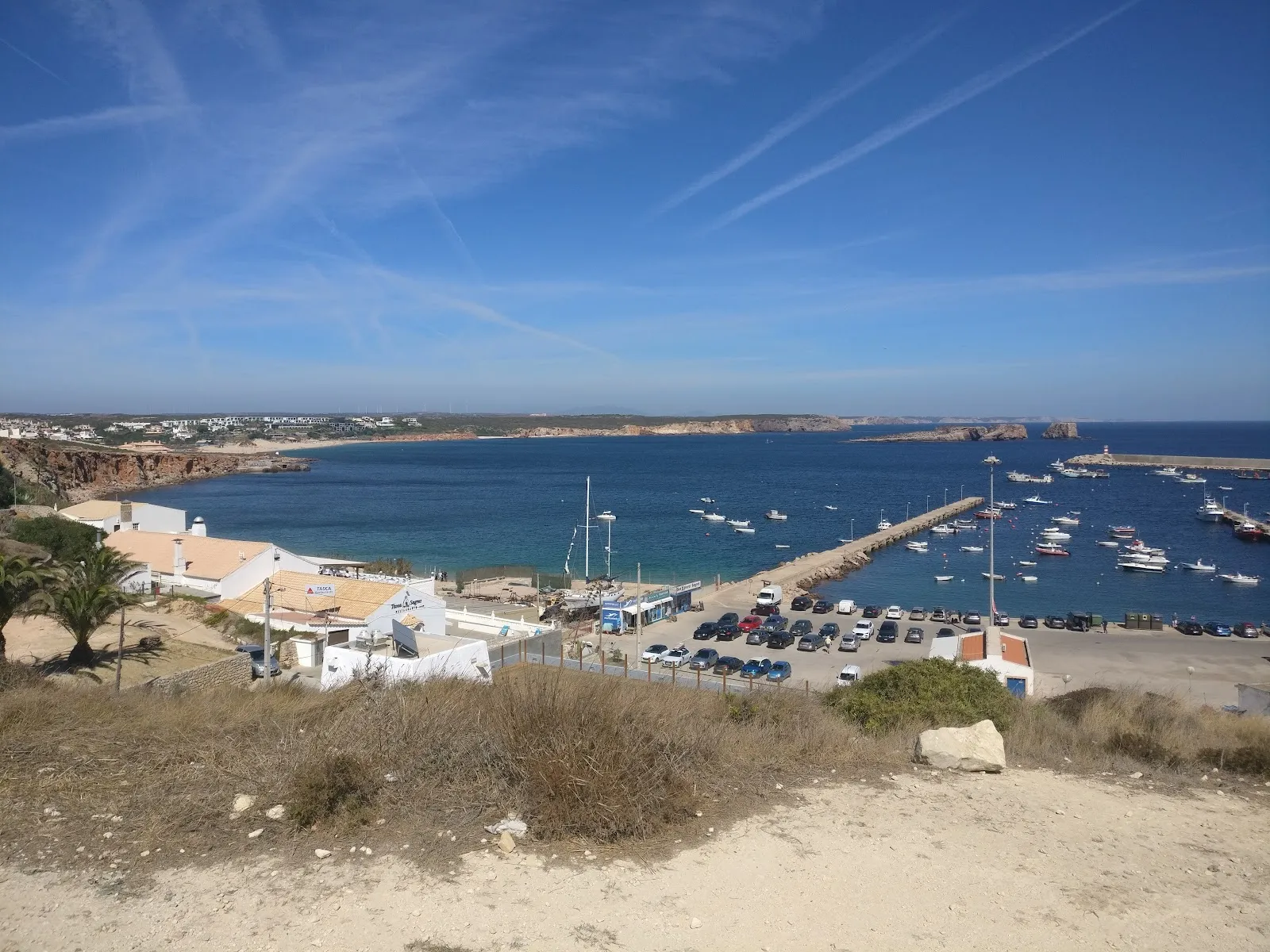
Sagres Fortress sits on the clifftop of Ponta de Sagres, at the far southwest of the Algarve, with the Atlantic on three sides. Infante D. Henrique, known as Henry the Navigator, ordered it built in the 15th century, and the site is tied to the story of Portuguese seafaring and the Discoveries. Inside you follow a flat path around open grounds, visit a small museum on the sea trades, and look out over the cliffs and the ocean. The adult ticket is €10. The wind is strong here, so bring a jacket.
Henry the Navigator and the School of Sagres
The fortress was ordered built in the 15th century by Infante D. Henrique, Henry the Navigator, the main promoter of Portuguese overseas expansion. Sagres became a centre of maritime activity, and tradition says cartographers, astronomers and sea historians from different countries gathered here. That is why the place is linked to the name School of Sagres, and why many people believe some of the best-known explorers trained here.
The buildings have not survived untouched. Sir Francis Drake's raid on the southern coasts of Portugal and Spain in the 16th century destroyed the original fortress, and it was rebuilt in the 18th century. The 1755 earthquake also sent a giant wave over the cliffs and the fortress. The site was classified as a national monument in 1910.
The setting and what stands inside
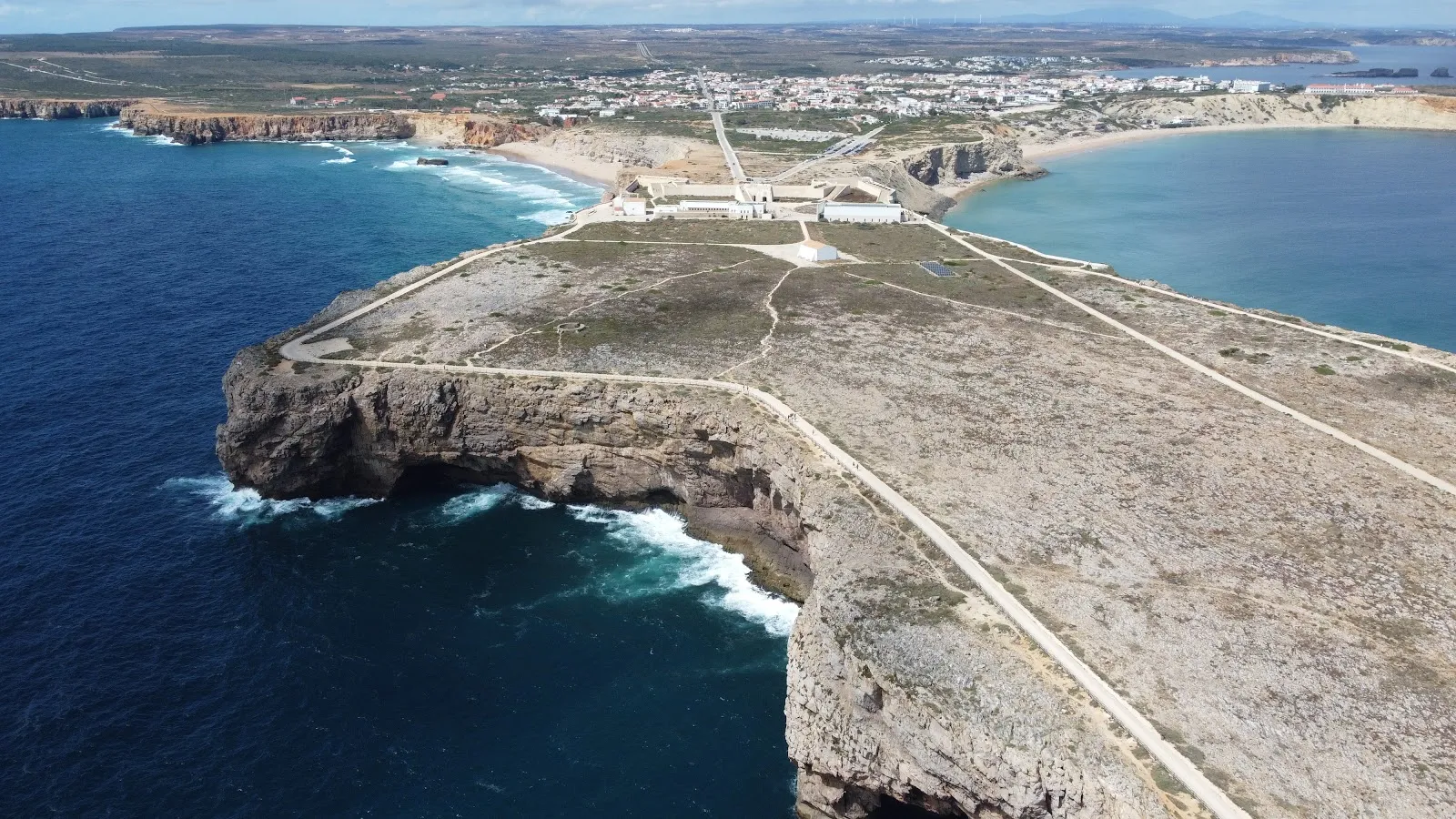
The fortress lies on a natural peninsula, protected on three sides by jagged rocks, cliffs of about 200 feet and the sea below. On the landward side a single defence wall closes it off at the southern end of the town, and the walls can be seen rising on the cliffs from several directions.
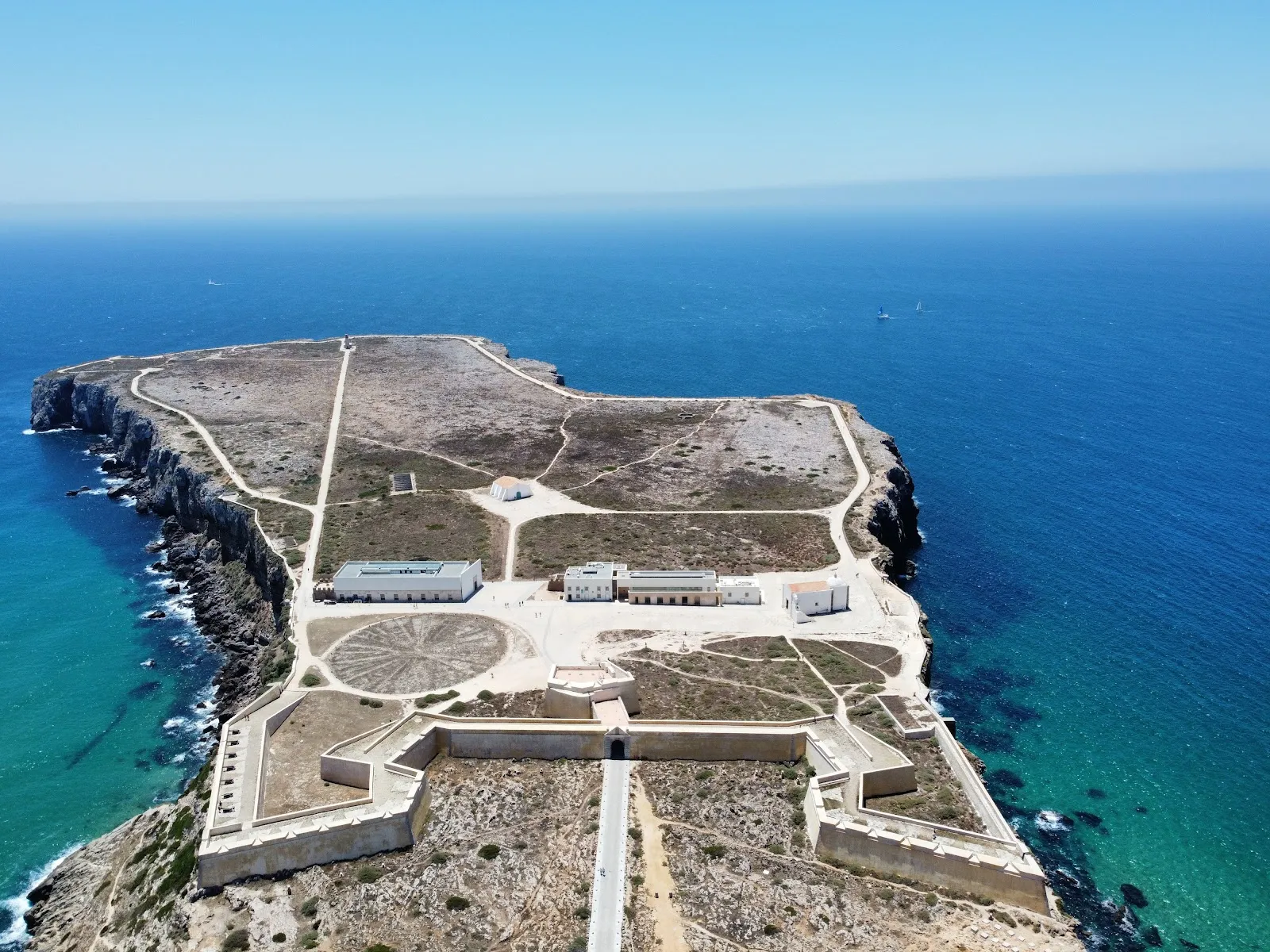
Past the wall you reach a large open area with a few buildings. The museum is small and covers the sea trades and the era of the Discoveries. Information boards describe the plants and birds of the headland. The fortress also holds a former 16th-century monastery and a 14th-century chapel, which is believed to mark the grave of São Vicente. The church and the armory have at times been closed to visitors.
The grounds hold the Compass Rose, a huge compass 43 metres across. A circular structure with a grid over a hole in the ground makes a low sound when the wind passes through it. The wind tunnel and the Chamber of Sound are the interactive displays people mention most.
Walking the cliffs
A good path goes all the way around the inside of the walls. It is flat and open, so the walk is easy, though the wind can be strong. A fenced walk of about half a mile follows the cliff edge, past cannon batteries and viewpoints over the coves of Sagres, Cape São Vicente and the Atlantic. Stay on the fenced path. Beyond the fort, a nature trail continues along the clifftop.
Fishermen work from the high rocks here, and watching them is part of the scene. The view is similar from the free ground outside the walls, so the ticket mainly pays for the museum, the grounds and the walkways inside.
Planning around the fortress
There is free parking outside, and the entrance and the parking lot are wheelchair accessible. Tickets are recommended in advance. The wide grounds give children room to run along the walls.
Cape St Vincent, the southwesternmost point of continental Europe, is 7 km from the centre of Sagres and reachable by bus. It has a lighthouse and cliffs about 60 metres high. Both the Cape and the Sagres promontory are known for their sunsets. On summer evenings the Cape fills up, so drivers should arrive about an hour before sunset to find parking. Spending a few hours at the fortress first, then heading to the Cape, makes an easy day.
FAQ
How much does it cost to enter Sagres Fortress?
The adult ticket is €10. Tickets are recommended in advance, and the fortress website has current prices.
How long do you need at Sagres Fortress?
Plan on two to three hours to see the museum and walk the grounds and cliff path. A quick look at the museum and the walls takes less.
Is everything at the fortress open to visitors?
Not always. Renovation has closed parts of the site, including the church and the armory at times. The museum, the grounds and the walking paths remain the main things to see.
Is there parking at Sagres Fortress?
Yes, there is a free parking lot outside, and free street parking nearby.
Is Sagres Fortress good for children?
Yes. The grounds are wide and open, and the interactive displays and walls suit young visitors. Hold hands on the windy cliff walk.
Is the fortress wheelchair accessible?
The entrance and the parking lot are wheelchair accessible, and there is accessible seating on site.