Igreja do Carmo is an 18th-century church on Rua do Carmo in central Porto, known for the blue-and-white azulejo panel covering its side wall. The tiles were added in 1912, long after the church was built between 1756 and 1768. Look closely at the pair of adjoining churches: a narrow house, Casa Escondida, stands between Igreja do Carmo and Igreja dos Carmelitas. Inside, you can see Rococo decoration, explore different levels and visit the catacombs.
The tiled side façade
Igreja do Carmo was built for the Carmelite order between 1756 and 1768. Its side wall became one of Porto’s best-known displays of azulejos when the blue-and-white tile panel was added in 1912. The tiled surface forms a large image, set against the church’s stone exterior.
The façade is a natural place to pause and look closely at the tilework. For a photograph that includes the full panel, take it from across the street. The light reaches the wall earlier in the day, so a visit before early afternoon can help you see the tiles in the sun.
Two churches and one narrow house
Igreja do Carmo stands beside Igreja dos Carmelitas. From the street, their façades can look like one large church, but the buildings are separate. Casa Escondida, a house about one metre wide, sits between them. Its position has been linked to keeping the monks of Carmo and the nuns of Carmelitas apart.
The small house is easy to overlook between the two larger buildings. A visit to Igreja do Carmo includes access to Casa Escondida, according to the available visit information. The house was lived in until the 1980s.
Inside the church
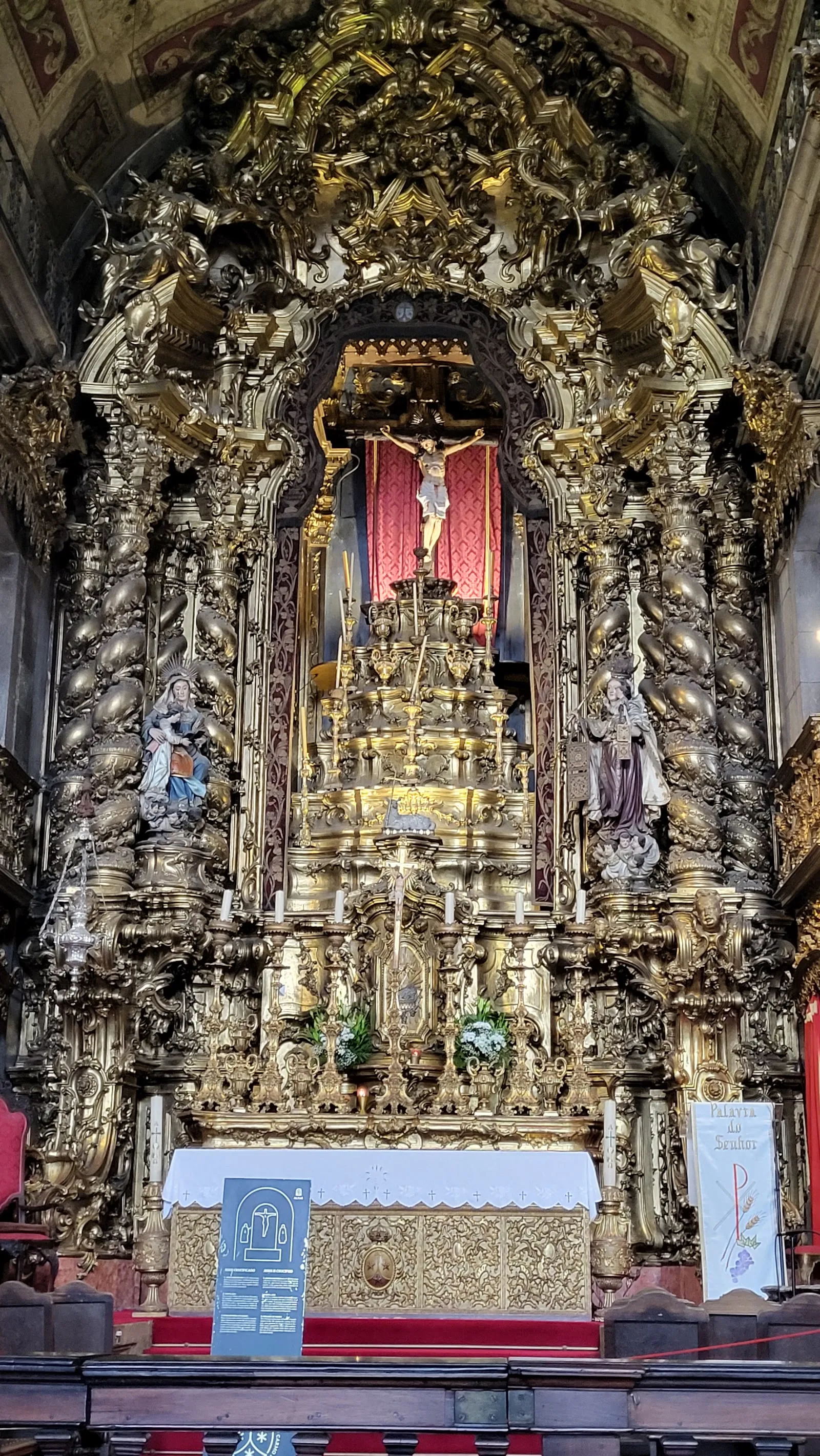
The interior has Rococo decoration, and the church visit also includes the catacombs. Several balconies and levels give you different views inside the building, so allow time to explore beyond the main space. The contrast between the detailed interior and the broad tiled wall outside makes the church worth seeing from both sides.
FAQ
When was Igreja do Carmo built?
Construction took place between 1756 and 1768. The blue-and-white tile panel on the side façade was added in 1912.
What is Casa Escondida?
It is a narrow house, about one metre wide, between Igreja do Carmo and Igreja dos Carmelitas. It was lived in until the 1980s.
What can you see inside Igreja do Carmo?
The church has Rococo decoration, balconies on different levels and catacombs.