
Belém Tower stands beside the Tagus in Lisbon’s Belém district, where its carved stonework recalls the city’s maritime past. Built in the early 16th century as a fortress to defend the harbour, it later became a ceremonial gateway and a starting point for voyages of exploration. Look for the carved ropes, armillary spheres and other maritime details in its Manueline architecture. From the riverfront, you can photograph the tower and enjoy the views without going inside; entry brings a closer look at the historic rooms and river from above.
A fortress at the harbour entrance
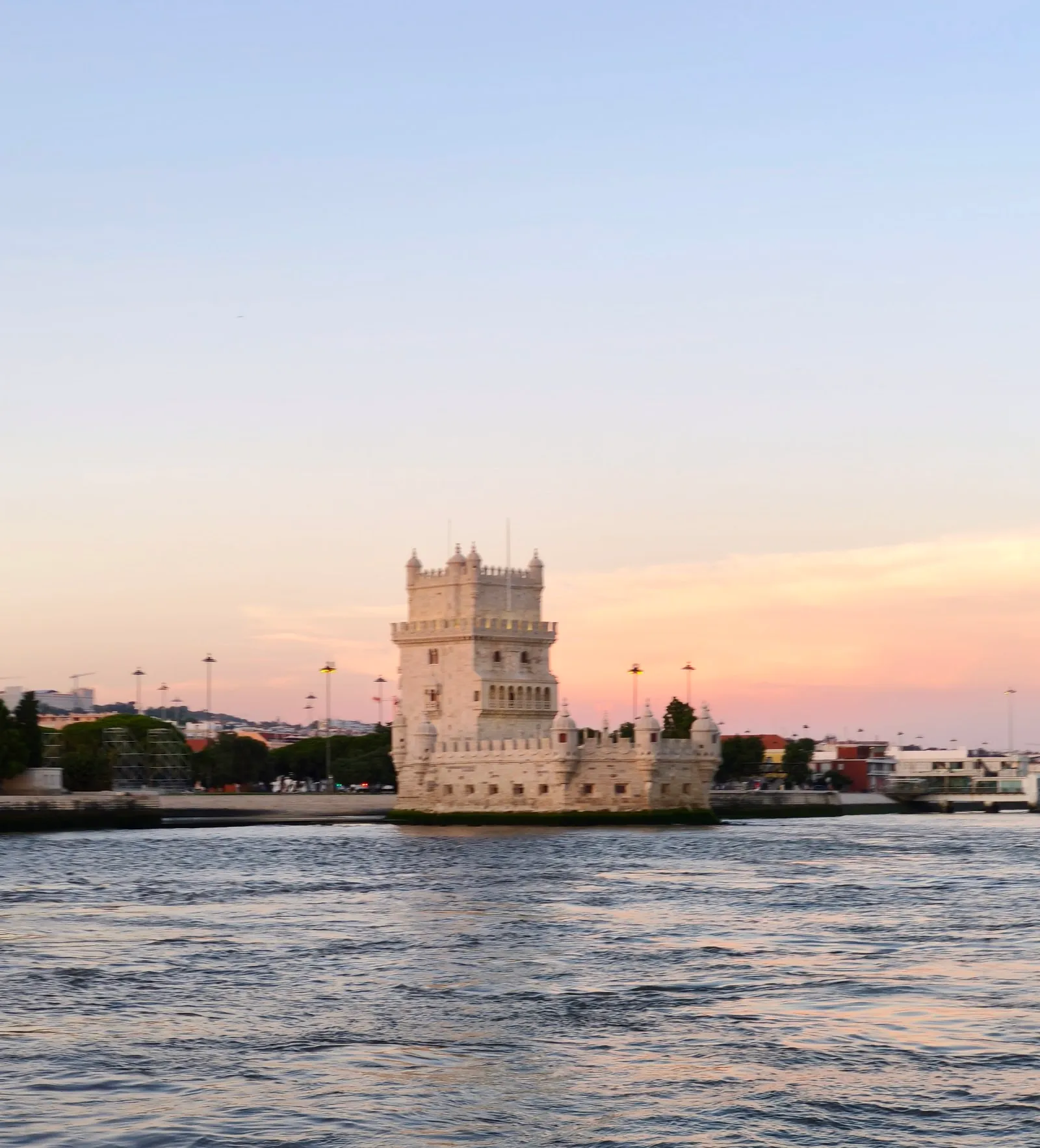
Belém Tower was built between 1514 and 1520, during the reign of King Manuel I. Designed by military architect Francisco de Arruda, it formed part of a defensive system at the mouth of the Tagus and helped guard Lisbon’s harbour. Its position also made it a ceremonial gateway to the city.
The tower is closely tied to Portugal’s maritime expansion. Ships setting out on voyages of exploration passed this stretch of river, and the tower became a landmark associated with those departures. Its history is not limited to defence: it later served other purposes, including as a prison.
Reading the stonework
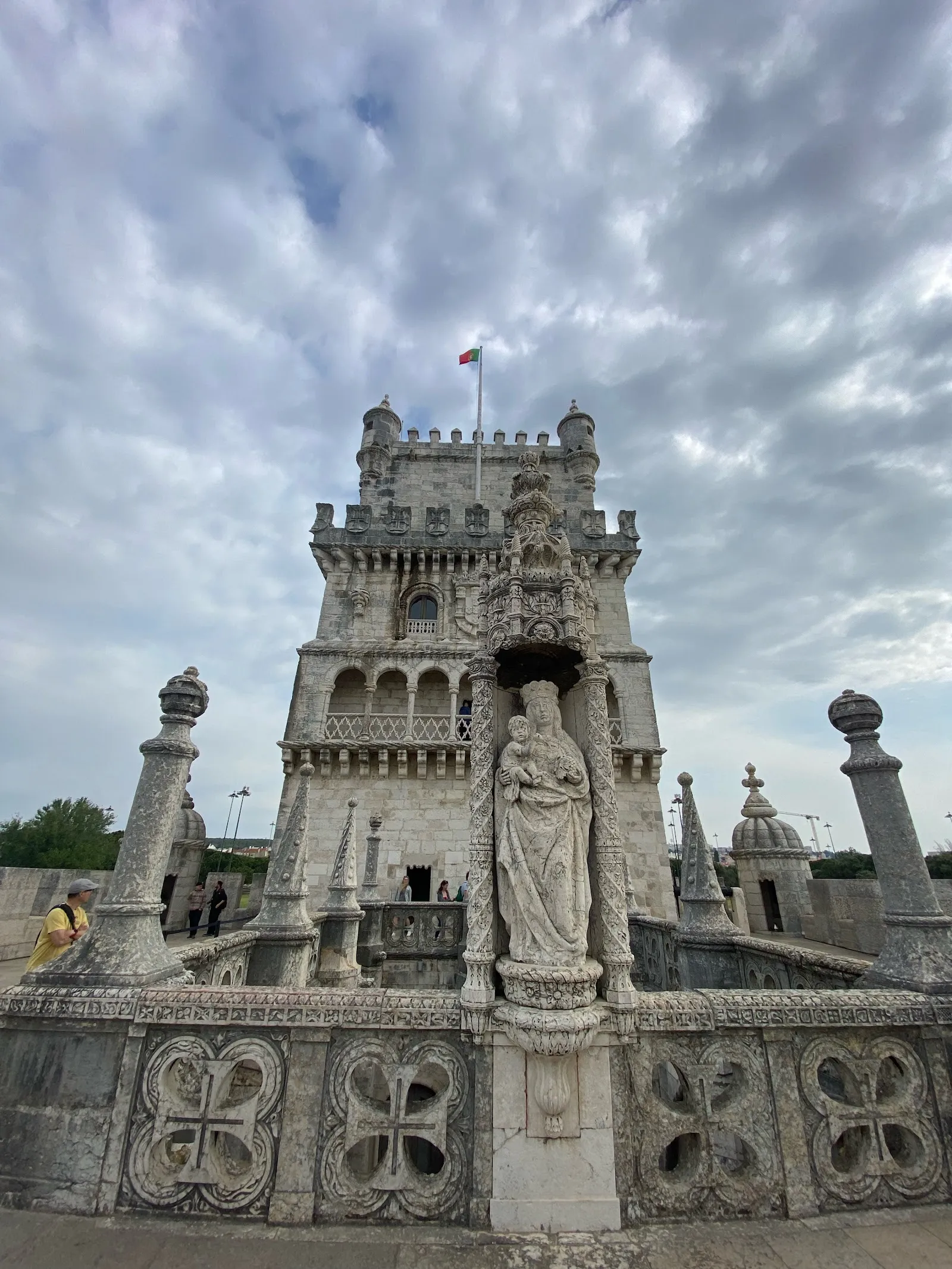
The tower is a major example of Manueline architecture, a Portuguese style associated with the early 16th century. Look closely at the exterior for carved ropes, armillary spheres and other maritime motifs. The rope detail winds around the structure and ends in decorative knots and crosses. The building also incorporates Moorish and Venetian elements, visible alongside its fortified design.
The stone carvings reward a slow walk around the outside. From the riverfront, the tower’s setting makes it easy to see how closely its appearance and original purpose connect to the Tagus. Belém Tower was inscribed on UNESCO’s World Heritage list in 1983.
Visiting the tower and waterfront
If you enter, the visit involves climbing narrow stairs through the historic interior to the upper levels and terrace. The ascent can feel confined, especially when the tower is busy. Views from above take in the Tagus and the surrounding waterfront. Buying a ticket in advance is recommended, as queues can build up.
You can also make the tower an outdoor stop. The surrounding riverfront has open space for walking, photographs and a rest by the water, and the nearby park has lawns and benches. The outdoor area is mostly flat and paved, but access inside the historic tower is limited for wheelchair users. Jerónimos Monastery is another nearby landmark to include in a visit to Belém.
FAQ
Where is Belém Tower?
It is in Lisbon’s Belém district, beside the Tagus River, at Avenida Brasília.
Do you need to book Belém Tower tickets in advance?
Advance booking is recommended. Queues to enter can be long.
Can you visit Belém Tower without going inside?
Yes. You can view and photograph the tower from the waterfront and spend time in the surrounding outdoor area.
How accessible is Belém Tower?
The outdoor area is mostly flat and paved, and an accessible restroom is nearby. Access inside the historic tower is limited for wheelchair users.


