
The Santuário de Nossa Senhora dos Remédios stands on Monte de Santo Estêvão above Lamego, in the Douro region of northern Portugal. Its 686-step Baroque staircase is the main draw. Blue azulejo tiles, granite fountains and sculptures line the flights and terraces as you climb. At the top, a Baroque church with Rococo detailing has a white granite facade, and the view runs out over the Douro Valley's vineyards. Inside, gold details and candlelight fill the church. The gardens, planted with roses and herbs, offer a quiet place to sit.
From a 14th-century chapel to the present church
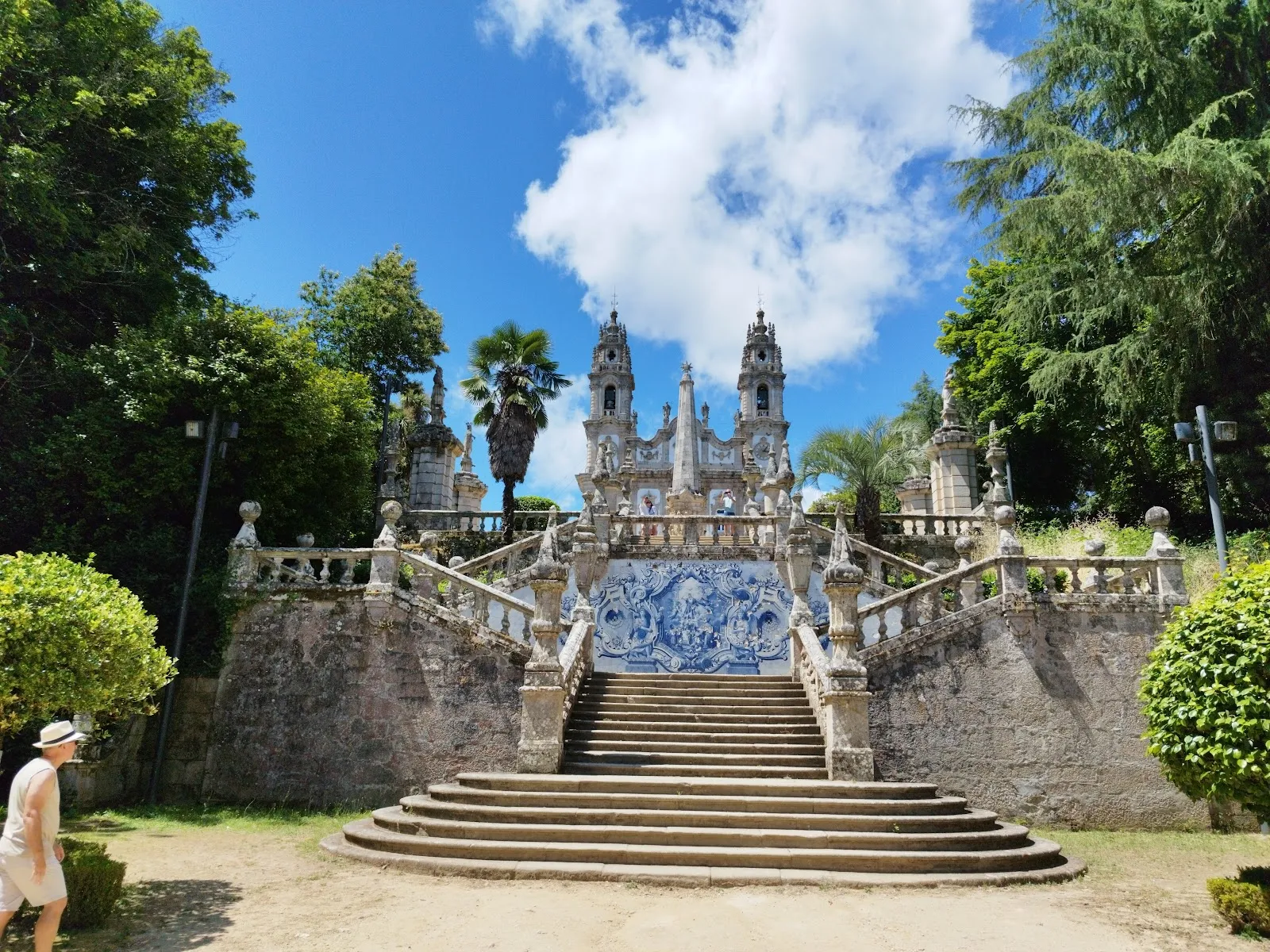
The hill was a place of devotion long before the present church. In the 14th century a small chapel stood here, dedicated to Saint Stephen, whose name the hill still carries. In the 16th century the devotion shifted to the Virgin Mary, and the site became a place of pilgrimage for people seeking a cure for illness. The church you see today was built between 1750 and 1761.
The building is Baroque with Rococo detailing, and its white facade is finished in granite. Inside, gold details and painted tiles fill the church. Since 1984 the sanctuary, including its staircase and park, has been classified as a monument of public interest in Portugal.
The staircase and its terraces
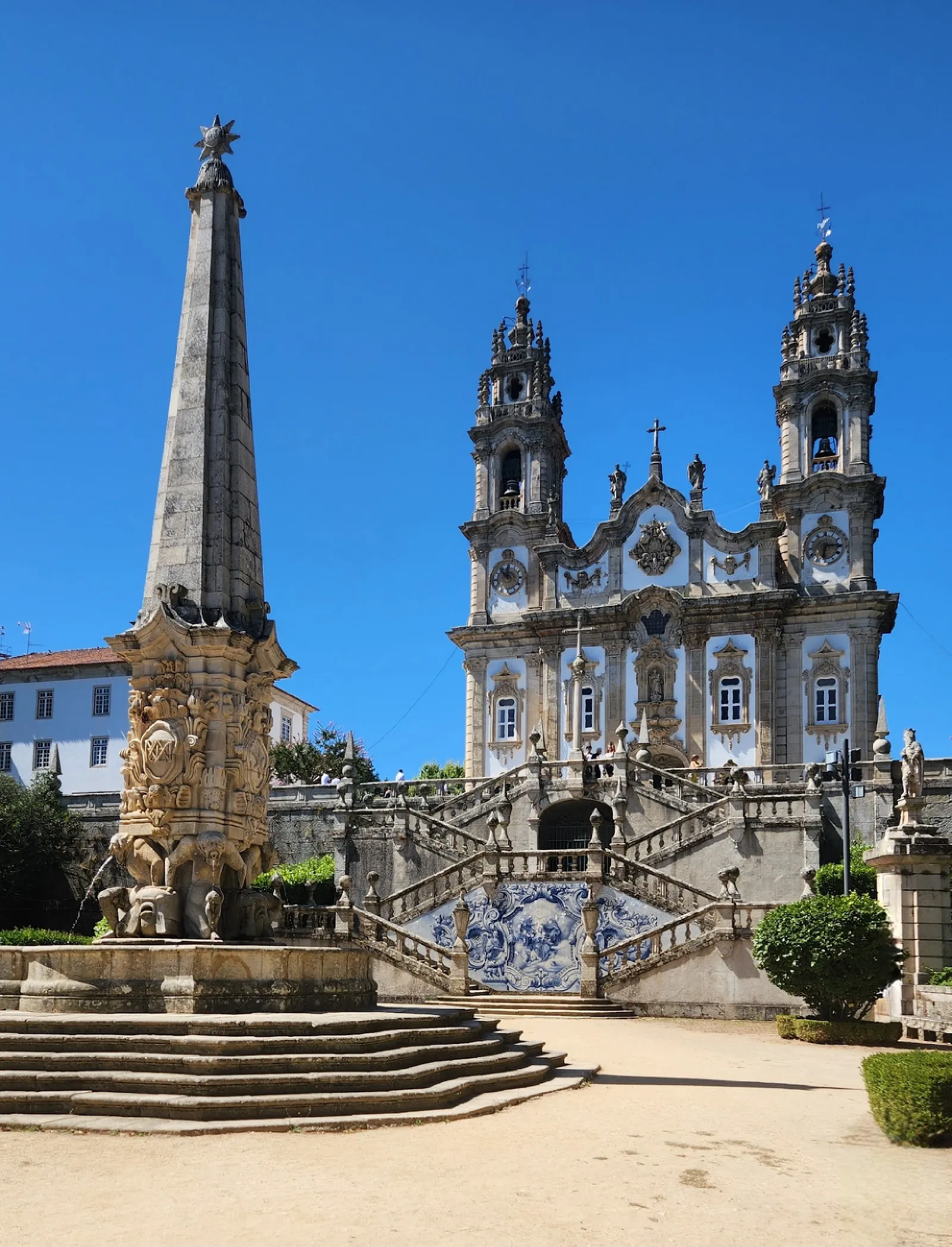
The staircase has 686 steps and zigzags up the hillside in converging and diverging flights. Along the way you pass azulejo tiles, fountains, statues, chapels and obelisks, with terraces where you can stop. The first landing has the Pelican Fountain. Work on the staircase began in 1777 and was not finished until the 20th century. The design shows Italian influence, and the sanctuary is linked to the Bom Jesus sanctuary in Braga.
At the top, the Pátio dos Reis holds a fountain 22 metres high and an obelisk with Marian symbols. The hilltop sits at about 600 metres above sea level, and from here the Douro Valley opens out below you.
The September festival
The sanctuary draws pilgrims and visitors every year, with the largest crowds in September. The festivities reach their peak on 8 September, the Nativity of the Virgin, when pilgrims come from across Portugal to the hilltop. Celebrations usually include fireworks and musical performances. Some pilgrims climb the steps as part of their devotion, so plan for crowds on that day.
FAQ
How many steps are there to the sanctuary?
The staircase has 686 steps. It zigzags up the hill, with terraces and fountains along the way.
Can you drive or take a taxi to the top?
A taxi can take you up the hill. The site has a wheelchair accessible parking lot.
Is the sanctuary wheelchair accessible?
The sanctuary has a wheelchair accessible entrance and a restroom. The main route up to the church is the staircase.
When is the main festival?
The peak of the festivities for Our Lady of Remedies is 8 September, the Nativity of the Virgin. Fireworks and musical performances usually take place around it.


