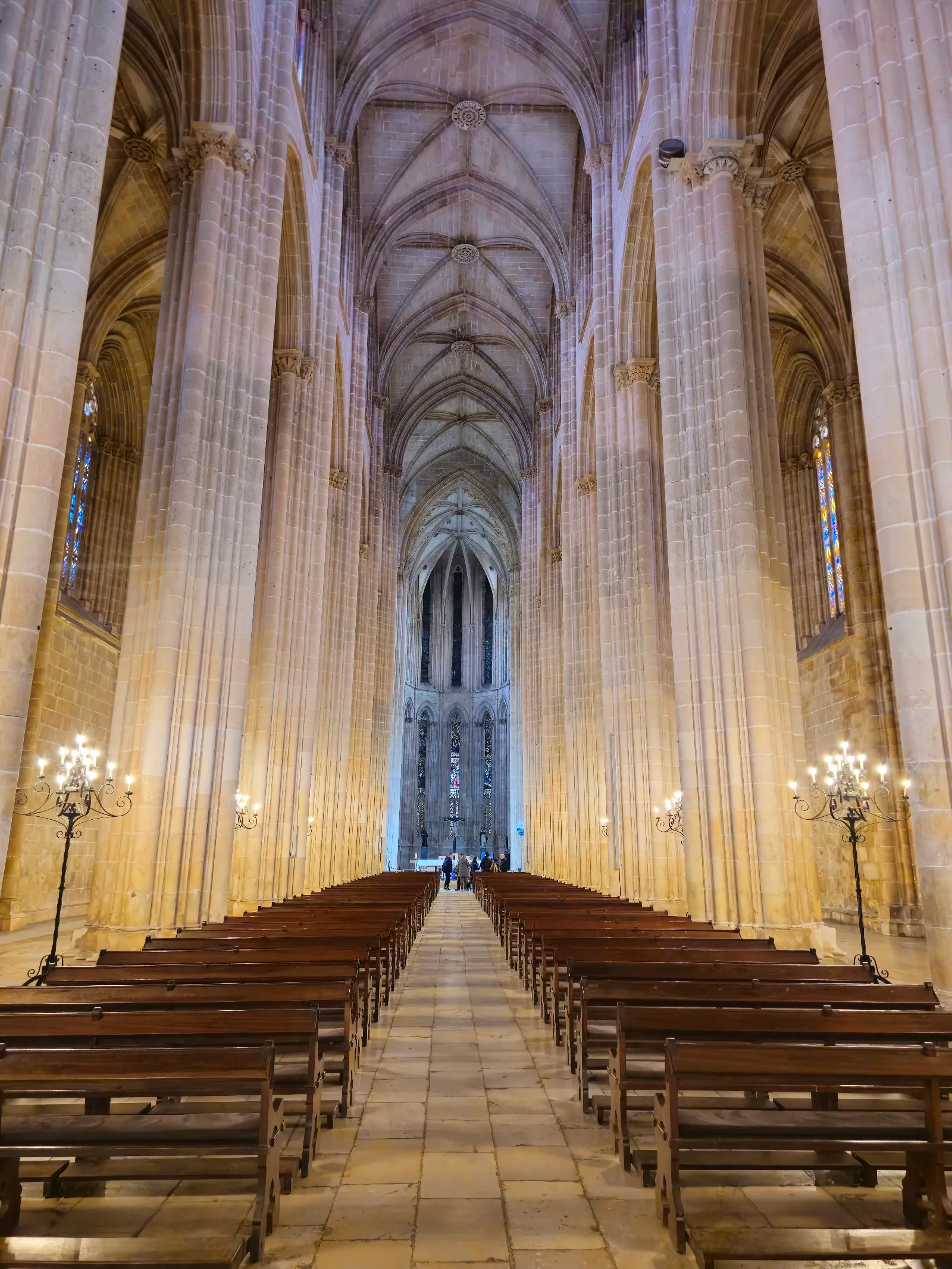
Batalha Monastery, officially the Monastery of Santa Maria da Vitória, is in the town of Batalha, in the Leiria district of central Portugal. King João I had it built and dedicated it to the Virgin Mary in thanks for the 1385 victory over the Castilians at Aljubarrota. The church and cloisters are late Gothic, with ornate Manueline additions from the 15th and 16th centuries. Inside, look for the vaults of the main nave, the royal tombs in the Founder's Chapel, the Royal Cloister, the stained glass and the Unfinished Chapels. It is a UNESCO World Heritage Site.
Why the monastery was built
The Battle of Aljubarrota was fought in 1385, just south of the town of Batalha, and ended in a Portuguese victory over the Castilians. King João I dedicated a monastery to the Virgin Mary in thanks, which is why its official name is the Monastery of Santa Maria da Vitória, Saint Mary of the Victory.
Construction began in 1386. Most of the monument was finished by 1434 in Flamboyant Gothic style, but building went on through the 15th and 16th centuries, and the work was completed in 1517. The result is a site that records more than a century of changing taste.
Gothic framework, Manueline ornament
The first phase was led by the architect Afonso Domingues, who set the Gothic framework. The design drew on European cathedrals and stressed height, symmetry and the way light enters the building. The church is regarded as a leading example of Gothic architecture in Portugal.
The later additions bring in Manueline decoration, the highly ornamental style of the 16th century. The two styles sit side by side, and the contrast is easiest to see in the stonework: clean vertical lines in the older parts, dense carving in the newer ones. The sculpture and vaulting of the church are the main draw for anyone interested in architecture or late medieval Portuguese history.
What to see inside
Start in the main nave. The scale of the space and the light through the stained glass windows are the first thing most people notice on stepping in.
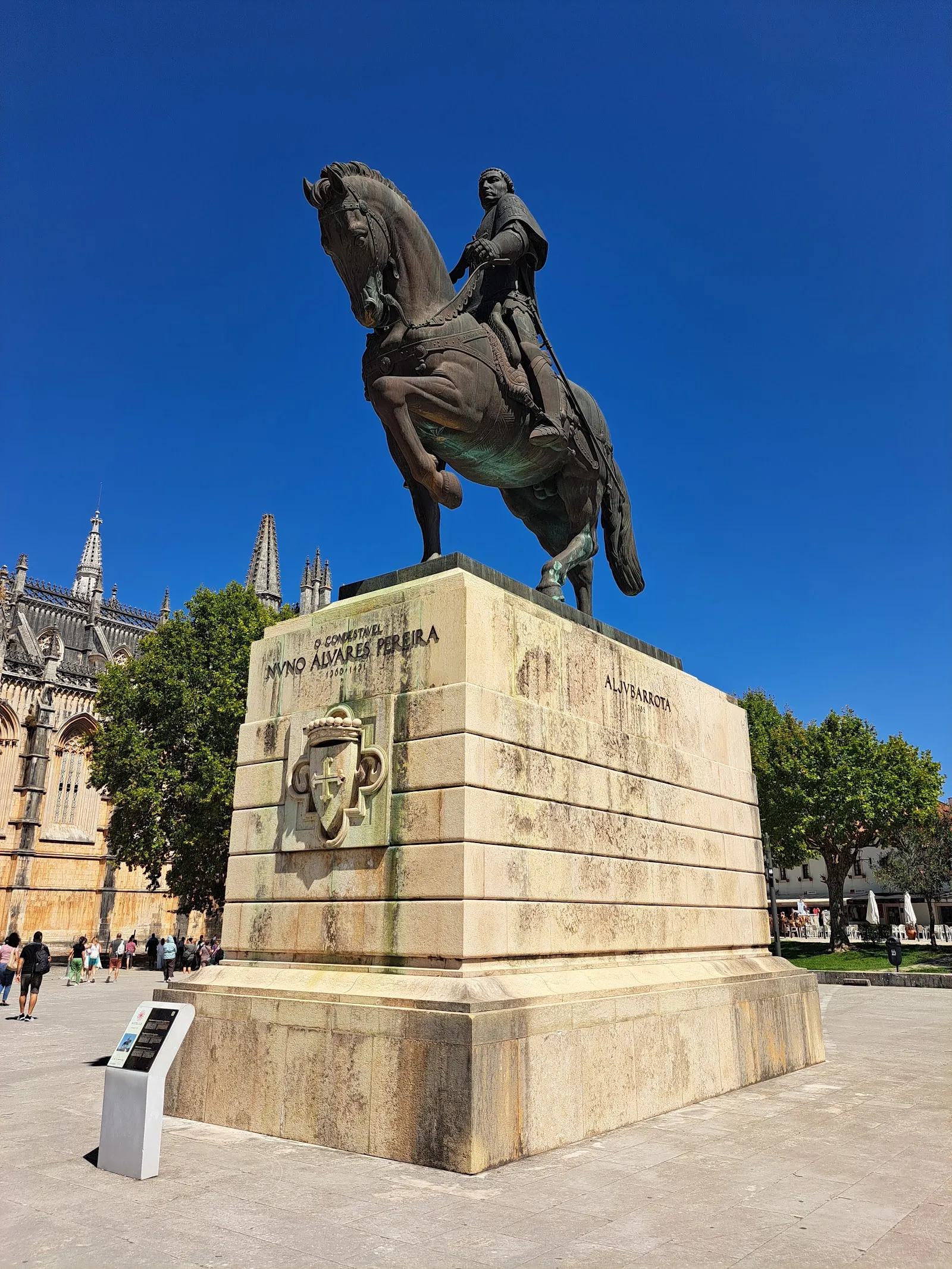
The Founder's Chapel contains royal tombs, and the church as a whole houses the tombs of past Portuguese royalty. The Royal Cloister is the other main stop, with carved stonework around its galleries. A statue of Nuno Álvares Pereira, a figure of the Aljubarrota period, is also part of a visit, and the monastery includes a museum.
The Unfinished Chapels are the most striking example of the Manueline additions. Their stone carving is among the most elaborate on the site, and they are left out of many visits, so they are worth seeking out.
Planning the visit
The monastery is in the centre of Batalha, on Largo Infante Dom Henrique, and the building is large enough to stand out from everything around it. It is about 120 km north of Lisbon and can be reached by car on the A1 or A8 motorways. It is a natural stop between Lisbon and Porto, and a car also makes it easy to explore the surrounding region.
Entry to the church is free. A few euros extra covers the Royal Cloister. Booking tickets ahead is recommended. A ticket combined with a self-guided audio tour on your own device is also available if you want historical context as you walk. The entrance and the parking lot are wheelchair accessible, and there are restrooms on site.
FAQ
Is there an entry fee for Batalha Monastery?
The church can be visited for free. Areas such as the Royal Cloister need a ticket costing a few euros. Buying tickets in advance is recommended.
Why was Batalha Monastery built?
King João I built it in thanks for the Portuguese victory over the Castilians at the Battle of Aljubarrota in 1385. It was dedicated to the Virgin Mary.
How do you get to Batalha Monastery from Lisbon?
The monastery is about 120 km north of Lisbon. You can drive there on the A1 or A8 highways.
What are the Unfinished Chapels?
They are Manueline additions from the 15th and 16th centuries, known for very ornate stone carving. Not every visitor reaches them, so plan time to see them.
Is Batalha Monastery wheelchair accessible?
The entrance and the parking lot are wheelchair accessible, and restrooms are available on site.