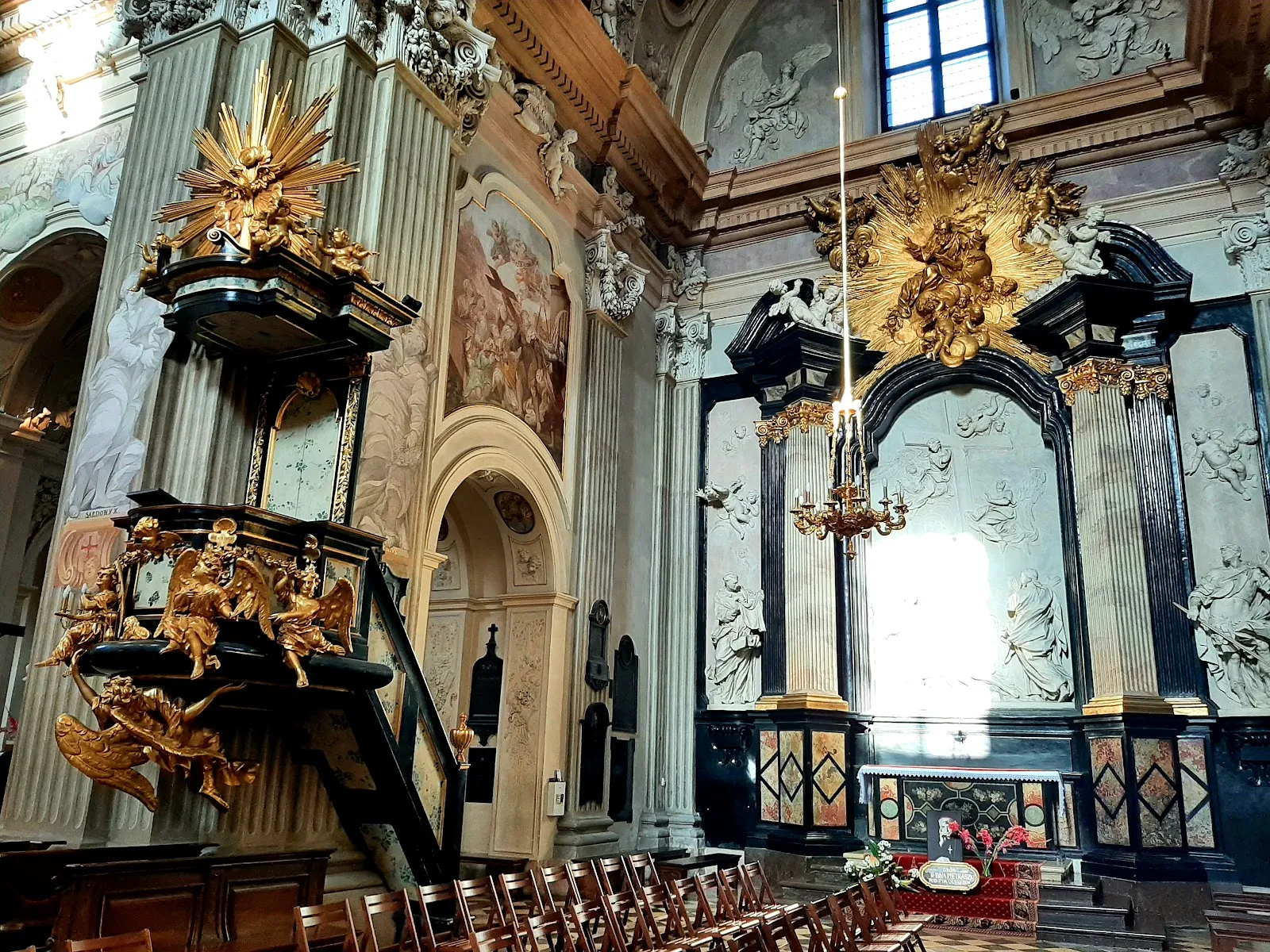
On Świętej Anny Street in Kraków’s Old Town, this working Catholic church is a notable example of Polish Baroque architecture. Its present building dates to the 17th century and was completed in 1703. Step inside to see richly decorated walls and ceilings, gilded angels, carved stone details and a large dome. Entry is free, so it is an easy stop for architecture as well as a place for quiet reflection. Visit respectfully, as worship continues here.
A Baroque church beside the university
The Church of St. Anne stands on Świętej Anny Street in Kraków’s Old Town, across from the Jagiellonian University campus. Its history reaches back to the 14th century, when a Gothic church stood on the site. That building was destroyed by fire, and a replacement was built in the 17th century in the Baroque style. The present church was completed in 1703.
The church is associated with the university. Masses mark the beginning and end of the academic year, so visitors may encounter worship as well as sightseeing. It remains an active church, and a visit should leave space for people who have come to pray.
Details to notice inside
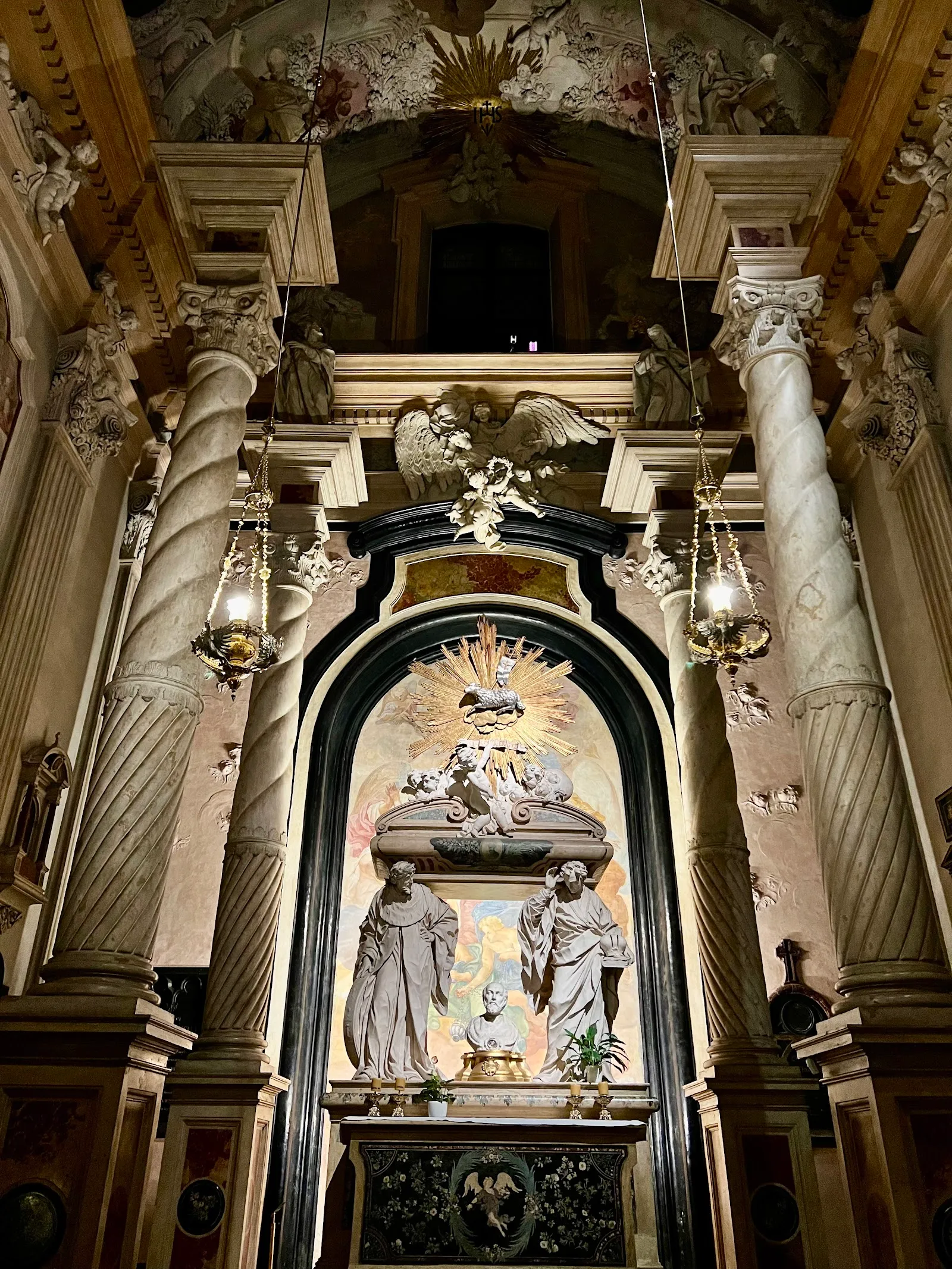
The interior is known for its elaborate Baroque decoration. Look for gilded angels, carved stonework, frescoes, marble columns and alabaster details. The dome draws the eye upward, while ornament continues across the walls and ceilings. Give yourself time to take in the overall design and then notice the smaller carvings and decorative work.
Entry is free. For a calmer look around, visit early in the morning, and check the church website before you go for current visiting hours. Keep your voice low and behave with the care expected in a place of worship.
FAQ
Is entry to the Church of St. Anne free?
Yes, entry is free.
How long does a visit take?
No visit duration is specified. Allow time to look over the dome and the church’s detailed interior.
When is a good time to visit?
Early morning is suggested for a quieter visit. Check the church website for current hours.
Is the Church of St. Anne still used for worship?
Yes. It is a working church, and masses mark the beginning and end of the Jagiellonian University academic year.